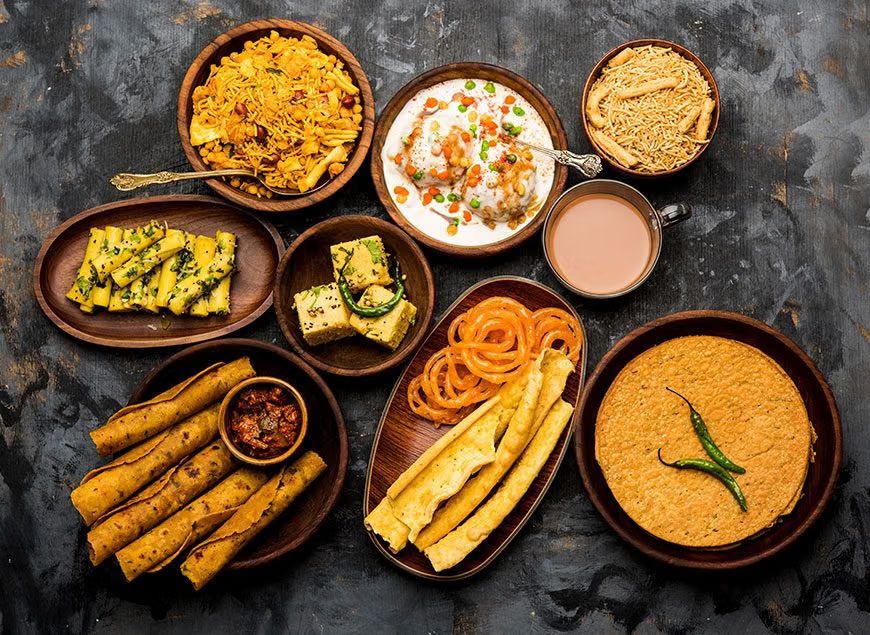
Indian street food is all about big flavors, contrasting textures, and food that feels exciting from the very first bite. A good plate of chaat can combine something crunchy, something tangy, something spicy, something sweet, and something creamy—all in the same dish. A freshly prepared kathi roll can turn a simple paratha into a complete meal. And a hot vada pav can deliver the comfort and punch of a Mumbai street-food classic in just a few bites.
For anyone searching for the best Indian street food in West Village, there is one important detail to understand: some of the strongest street-food destinations are technically in neighboring Greenwich Village, just a short walk from West Village. That actually works in the diner’s favor because Bleecker Street, MacDougal Street, Washington Square, and the surrounding downtown blocks create a compact area where you can explore several different Indian street-food traditions.
One of the most recognizable destinations is Masala Times at 194 Bleecker Street. Its current concept centers on Indian street-food flavors, and its menu includes dishes such as vada pav, samosa pav, batata vada, samosa chaat, papadi chaat, and bhel puri.
A few blocks away, Mint Masala on MacDougal Street offers another Indian option in the heart of Greenwich Village. For diners specifically interested in rolls and chaat, however, Thelewala at 112 MacDougal Street is one of the area’s most important stops. Its own website describes the restaurant as specializing in Nizami rolls, chaats, and other popular Indian street foods.
Thelewala has also received significant attention from New York food publications. The Infatuation highlights its kathi rolls and chaat and describes it as particularly well suited to late-night eating and takeout.
What makes this part of Manhattan particularly interesting is the regional diversity of street food.
Mumbai has its vada pav and bhel puri.
Kolkata is famous for kathi rolls and jhal muri.
Delhi is known for its chaat culture.
South India brings dishes such as dosa, vada, and idli.
And across India, every city and region has its own interpretation of quick, affordable, intensely flavorful food.
That diversity means you shouldn’t think of Indian street food as one category.
A vada pav is completely different from a kathi roll.
A bhel puri has a completely different texture from samosa chaat.
And pani puri offers an entirely different experience from a crispy dosa.
This guide will explore the best places to find these flavors around West Village and nearby Greenwich Village, while also explaining what to order, which dishes are vegetarian or vegan-friendly, what works best for takeout, and how to recognize genuinely good Indian street food.
If you’re looking for a quick lunch, a budget-friendly dinner, a late-night snack after exploring MacDougal Street, or simply want to experience something beyond the usual butter chicken and naan, Indian street food around West Village is an excellent place to start.
And the best part?
You don’t need a formal reservation or a three-course meal.
Sometimes the perfect Indian meal is simply a hot roll wrapped in paper, a plate of tangy chaat, or a crispy snack eaten while walking through Greenwich Village.
Why West Village Has Great Indian Street Food
West Village may be famous for its cafés, historic streets, and sophisticated restaurants, but the surrounding West Village–Greenwich Village area is also a surprisingly good destination for Indian street food.
What makes this part of Manhattan especially interesting is that you don’t have to travel across the city to experience completely different Indian street-food traditions. Within a relatively compact area, you can find Mumbai-inspired snacks, Kolkata-style rolls, South Indian dosa, chaat, samosas, vada pav, and other quick-service Indian favorites.
For anyone searching for the best Indian street food in West Village, the first thing to understand is that the strongest concentration is actually spread across Bleecker Street, MacDougal Street, Washington Square, and nearby Greenwich Village.
A Neighborhood Built for Casual Food
West Village and Greenwich Village naturally suit street food.
People walk everywhere. Students move between NYU buildings. Tourists explore Washington Square Park and Bleecker Street. Locals stop for quick lunches, dinners, snacks, and late-night food.
That creates exactly the kind of environment in which street-food restaurants thrive.
Instead of requiring a formal dining experience, Indian street food fits naturally into the neighborhood’s rhythm:
Walk → order → eat → explore.
That’s particularly useful for dishes such as kathi rolls, vada pav, samosas, and chaat.
Mumbai Street Food Has a Strong Presence
One of the clearest examples is Masala Times on Bleecker Street.
Its current concept describes the restaurant as bringing the energy of Mumbai’s street-food scene to Greenwich Village, with Bollywood music and dishes designed around bold Indian street flavors. The restaurant says its menu grew out of feeding late-night crowds with Mumbai-inspired food and now includes street-food classics such as samosa chaat, bhel puri, vada pav, and kathi rolls.
Its current menu includes:
- Samosas
- Batata vada
- Samosa pav
- Vada pav
- Samosa chaat
- Papadi chaat
- Bhel puri
- Puri chole
The restaurant says its dishes are made fresh to order, which is particularly important for fried street food and chaat.
This makes Bleecker Street an excellent starting point for someone who wants to explore Mumbai-style Indian street food in New York.
Chaat Is One of the Biggest Attractions
Indian street food isn’t just about fried snacks.
Chaat is arguably one of the most exciting categories because it combines multiple flavors and textures in one dish.
A typical plate might contain:
- Crispy papdi
- Potatoes
- Chickpeas
- Yogurt
- Tamarind chutney
- Cilantro chutney
- Sev
- Onions
- Spices
The result can be simultaneously:
sweet + sour + spicy + salty + creamy + crunchy.
Masala Times currently serves several chaat options, including Samosa Chaat, Papadi Chaat, and Bhel Puri. Its Samosa Chaat combines smashed crispy samosa with chickpeas, yogurt, tamarind chutney, cilantro chutney, sev, and onions.
That’s exactly the kind of dish that demonstrates why Indian street food is so much more than “quick food.”
Kolkata-Style Street Food Adds Another Dimension
MacDougal Street is particularly important for diners interested in kathi rolls.
Thelewala is known for its Indian street-food-style rolls and chaat, giving Greenwich Village a connection to Kolkata’s famous street-food culture.
The restaurant’s current website describes its offerings around rolls and chaats, making it particularly relevant to anyone searching for Indian street food rather than a traditional curry restaurant.
Thelewala has also been repeatedly mentioned by NYC diners looking for Kolkata-style food. Recent FoodNYC discussion in 2026 specifically identifies it as a street-food-style option, although some diners have differing opinions about how closely particular dishes match Kolkata versions.
That disagreement is actually useful for this guide.
Authenticity is subjective, and one restaurant shouldn’t automatically be treated as the definitive version of an entire regional cuisine.
South Indian Street Food Brings Another Flavor Profile
The street-food experience around West Village isn’t limited to North or West Indian snacks.
NY Dosas, near Washington Square, provides a casual South Indian option centered around dosa.
Dosa offers a completely different experience from chaat or kathi rolls:
- Fermented rice-and-lentil batter
- Crisp texture
- Potato fillings
- Sambar
- Coconut chutney
- Tomato chutney
For someone trying Indian street food for the first time, comparing a Mumbai-style vada pav with a South Indian masala dosa is an excellent way to understand India’s regional diversity.
Street Food Works Especially Well for Budget Dining
Another reason the West Village area works well for Indian street food is that you can create a satisfying meal without spending the amount you might at an upscale restaurant.
At Masala Times, current menu prices include:
- Vada Pav — $8.69
- Bhel Puri — $12.99
- Samosa Chaat — $13.55
- Papadi Chaat — $13.55
- Batata Vada — $12.99
- Samosa Pav — $14.99
That makes it possible to sample several dishes and build a meal around snacks rather than ordering a traditional multi-course dinner.
Late-Night Dining Is Another Strength
Indian street food and late-night eating naturally go together.
After spending an evening around Greenwich Village, Bleecker Street, or MacDougal Street, a handheld kathi roll or vada pav can be considerably more appealing than sitting down for a formal dinner.
Masala Times’ current website lists late operating hours and specifically positions the restaurant around the energy of Mumbai’s street-food culture and late-night crowds.
Thelewala is also regularly highlighted by NYC food guides for its suitability as a late-night and takeout destination.
Different Indian Regions, One Neighborhood
This is perhaps the biggest reason to explore Indian street food around West Village.
You can experience food inspired by different parts of India without traveling between distant neighborhoods.
Mumbai
Try:
- Vada pav
- Batata vada
- Bhel puri
- Samosa pav
- Pav bhaji
Kolkata
Look for:
- Kathi rolls
- Jhal muri
- Puchka-style snacks
Delhi and North India
Explore:
- Samosa
- Samosa chaat
- Papdi chaat
- Aloo tikki
- Chole
South India
Try:
- Dosa
- Idli
- Vada
- Sambar
That variety is what makes the area particularly valuable for an Indian food guide.
The Difference Between Indian Restaurant Food and Indian Street Food
Traditional Indian restaurants often focus on:
- Curries
- Rice
- Naan
- Tandoori dishes
- Biryani
- Thalis
Street-food restaurants focus more heavily on:
- Handheld foods
- Fried snacks
- Chaat
- Rolls
- Pav
- Quick meals
- Small plates
Neither is inherently more authentic.
They’re simply different parts of India’s enormous food culture.
A restaurant serving butter chicken doesn’t necessarily understand Indian street food.
Likewise, a restaurant specializing in vada pav doesn’t need to offer a 30-item curry menu.
The best street-food restaurants understand the specific foods they specialize in.
Freshness Matters Even More With Street Food
Indian street food often depends heavily on texture.
Consider a samosa.
Freshly fried, it should have:
crisp pastry + hot filling + fresh chutney.
After sitting for a long time, the pastry can become soft.
The same is true for bhel puri.
The puffed rice and sev provide the dish’s signature crunch. Too much moisture or too much time can destroy that texture.
That’s why Masala Times’ emphasis on dishes being made fresh to order is important when evaluating a street-food restaurant.
Street Food Is Perfect for Sharing
Another advantage is that you don’t have to commit to one large entrée.
For two people, a better strategy can be:
1 Samosa Chaat
1 Vada Pav
1 Bhel Puri
1 Kathi Roll
Now you’ve experienced four completely different styles of Indian street food.
That’s much more interesting than ordering two identical curries.
Why Tourists Should Explore Beyond West Village’s Exact Boundaries
If you’re staying in West Village, don’t search only for restaurants whose addresses literally say “West Village.”
The neighborhood borders Greenwich Village, where several of the most useful street-food options are located.
Bleecker Street and MacDougal Street are particularly convenient because they allow you to combine food exploration with sightseeing.
A visitor can walk:
Washington Square Park → MacDougal Street → Bleecker Street → West Village
and encounter several different Indian dining styles along the way.
That makes Indian street food an excellent part of a downtown Manhattan walking itinerary.
What Makes This Area Special
Ultimately, West Village and Greenwich Village aren’t special because they contain the largest number of Indian street-food restaurants in New York.
They are special because of accessibility and variety.
Within a manageable walking area, you can experience:
Mumbai-style street food → Kolkata-style rolls → South Indian dosa → North Indian chaat
That’s an unusually convenient introduction to India’s regional food culture.
And you can do it without spending a fortune.
The Best Way to Explore Indian Street Food Here
If this is your first time, don’t order a full meal immediately.
Start small.
Try:
Samosa → Bhel Puri → Vada Pav → Kathi Roll
Then, if you want something more substantial, move on to:
Dosa or a larger roll.
This approach allows you to understand how dramatically Indian street food can change from one dish to another.
The Bottom Line
West Village and neighboring Greenwich Village have become an interesting destination for Indian street food in downtown Manhattan because they combine accessibility, casual dining, regional diversity, and a strong walking-and-late-night culture.
For Mumbai-style snacks, Masala Times on Bleecker Street is an important destination, with a current menu featuring vada pav, samosa pav, batata vada, bhel puri, and multiple chaat dishes.
For Kolkata-inspired rolls and street-food flavors, Thelewala on MacDougal Street is another key stop.
And for South Indian street-food-style dining, NY Dosas near Washington Square provides a completely different experience.
The result is a neighborhood where you can spend an afternoon or evening eating your way through crunchy, spicy, tangy, sweet, savory, and deeply aromatic Indian flavors—one street-food dish at a time.
Top Places for Indian Street Food in West Village and Nearby Areas
When looking for the best Indian street food in West Village, the most useful approach is to include the immediate Greenwich Village area as well. The strongest street-food options are concentrated around Bleecker Street, MacDougal Street, and Washington Square, all within an easy walk of West Village.
Rather than listing ordinary Indian restaurants simply because they happen to serve one street-food dish, this guide focuses on places with a genuine connection to Indian street-food-style eating.
1. Masala Times — Best for Mumbai-Style Street Food
Location: 194 Bleecker Street, Greenwich Village
Masala Times is arguably the most important stop for this particular food guide. The restaurant describes itself as bringing the energy of Mumbai street food to Greenwich Village, with fresh-made dishes, bold spices, Bollywood music, and a menu built around street-food classics.
Its current menu includes an impressive selection of Indian snacks:
- Vada Pav
- Batata Vada
- Samosa Pav
- Samosa Chaat
- Papadi Chaat
- Bhel Puri
- Samosas
- Kathi Rolls
- Puri Chole
The current menu lists Vada Pav at $8.69, Bhel Puri at $12.99, Samosa Chaat at $13.55, and several kathi rolls around $12–17, giving diners plenty of opportunities to build a relatively affordable street-food meal.
The restaurant also states that its food is made fresh to order and that it avoids artificial colors and food dyes.
Best order: Vada Pav + Bhel Puri + Samosa Chaat
Best for: Mumbai street food, chaat, late-night dining, groups, and first-time visitors.
2. Thelewala — Best for Kathi Rolls and Indian Street Snacks
Location: 112 MacDougal Street
Thelewala is one of the most recognizable Indian street-food destinations around Greenwich Village, particularly for kathi rolls and chaat.
Its street-food approach makes it very different from a traditional Indian restaurant. The focus is on food that can be eaten quickly, carried away, or enjoyed as a casual meal.
The restaurant’s current website presents its menu around rolls and chaats, while New York food publications have highlighted it as a useful destination for Indian street food and late-night eating.
Its location on MacDougal Street is particularly convenient because the surrounding area is packed with restaurants, bars, cafés, and nightlife.
Best order: Kathi Roll + Bhel Puri
Best for: Kolkata-inspired street food, quick meals, late nights, and takeout.
One caveat: recent local discussion about Kolkata-style Indian food shows that diners disagree about how closely Thelewala’s food represents Kolkata’s traditional flavors. That’s worth keeping in mind if you’re specifically seeking a highly regional interpretation rather than simply a tasty street-food meal.
3. The Kati Roll Company — Best Dedicated Kati Roll
Location: 99 MacDougal Street
If your main objective is a kathi roll, The Kati Roll Company deserves a place near the top of the list.
The restaurant’s Greenwich Village location is at 99 MacDougal Street, and its current hours extend late into the evening, with Friday and Saturday service listed until 3 AM.
The company’s story is particularly relevant to this article. It says founder Payal Saha opened the first Kati Roll Company in Greenwich Village in 2002 after moving from Kolkata, and the restaurant was inspired by the street food of her hometown.
The company describes its kati rolls as skewer-grilled fillings wrapped in paratha with chutneys and spices.
Its current website emphasizes both meat and vegetarian rolls, served hot and ready to eat on the go.
Best order: Chicken Kati Roll or Paneer Kati Roll
Best for: Kathi-roll specialists, quick lunches, late-night food, and takeout.
4. Mint Masala — Best for Exploring Beyond Street Food
Location: 95 MacDougal Street
Mint Masala is not as narrowly street-food-focused as Masala Times or The Kati Roll Company, but its location makes it useful when you’re exploring Indian food around West Village and Greenwich Village.
It’s particularly helpful for groups.
One person might want a street-food snack, while another wants a more substantial Indian meal.
Best for: Casual Indian dining, mixed groups, and exploring MacDougal Street.
5. NY Dosas — Best South Indian Street-Food Experience
Location: Washington Square South
If your definition of Indian street food includes South Indian favorites, NY Dosas is a completely different experience from the Mumbai- and Kolkata-focused restaurants above.
Located near Washington Square, the casual operation specializes in dosa and vegetarian South Indian food.
The biggest attraction is the contrast:
Masala Times → Mumbai
The Kati Roll Company → Kolkata
NY Dosas → South India
That makes it a particularly useful stop if you’re trying to understand how dramatically Indian street food varies between regions.
Best order: Masala Dosa
Best for: Vegetarian diners, South Indian food lovers, tourists, and inexpensive lunches.
6. Gandhi Cafe — Best Casual West Village Indian Option
Location: 283 Bleecker Street
Gandhi Cafe is another casual Indian restaurant directly within the broader West Village food scene.
It’s not as specifically focused on street food as Masala Times or The Kati Roll Company, so I would treat it as an Indian food alternative rather than a dedicated street-food destination.
Current local listings place it in the $10–20 price range, making it suitable for casual dining.
Best for: Casual Indian food, affordable meals, and diners who want more than snacks.
Best Indian Street Food by Restaurant
| Restaurant | Specialty | Best For |
|---|---|---|
| Masala Times | Vada Pav, Chaat, Kathi Rolls | Mumbai street food |
| Thelewala | Kathi Rolls, Chaat | Kolkata-inspired street food |
| The Kati Roll Company | Kathi Rolls | Dedicated roll experience |
| NY Dosas | Dosa | South Indian street food |
| Mint Masala | Indian cuisine | Casual mixed dining |
| Gandhi Cafe | Indian cuisine | Affordable casual meal |
Best Overall Street Food Experience
Masala Times
Its combination of Mumbai-inspired dishes, chaat, vada pav, rolls, late hours, and fresh-made street food makes it the strongest all-around choice.
Best Kathi Roll
The Kati Roll Company
Its Greenwich Village location has been part of the neighborhood’s Indian food scene since 2002, and the company’s entire concept is built around Kolkata-style kati rolls.
Best for Chaat
Masala Times
The current menu includes Samosa Chaat, Papadi Chaat, and Bhel Puri, giving diners several different chaat styles to compare.
Best for South Indian Street Food
NY Dosas
Choose this if your idea of street food includes dosa, chutneys, sambar, and vegetarian South Indian snacks.
Best for Late Night
The Kati Roll Company and Masala Times
The Kati Roll Company’s Greenwich Village location currently operates until midnight on several nights and until 3 AM Friday and Saturday.
Masala Times currently lists hours extending to 4 AM on Friday and Saturday, making it particularly relevant for late-night street-food cravings.
A Perfect Indian Street-Food Crawl
If you’re visiting West Village and want to turn Indian street food into an afternoon or evening food crawl, don’t order a full meal at every stop.
Instead, share dishes.
Stop 1 — Masala Times
Start with:
Vada Pav
This gives you the classic Mumbai street-food experience.
Stop 2 — The Kati Roll Company
Walk toward MacDougal Street and share:
Chicken or Paneer Kati Roll
This introduces you to Kolkata’s famous handheld street food.
Stop 3 — NY Dosas
If you’re still hungry, finish with:
Masala Dosa
Now you’ve sampled three distinctly different Indian street-food traditions.
Mumbai → Kolkata → South India
That’s a much better food crawl than ordering three similar curries.
Best Places for Vegetarians
Vegetarians have plenty of options.
At Masala Times, current street-food options include:
- Vada Pav
- Batata Vada
- Bhel Puri
- Samosa
- Samosa Chaat
- Papadi Chaat
- Aloo Roll
- Chana Masala Roll
- Tandoori Mushroom Roll
The current menu identifies its Chana Masala Roll as fully vegan.
The Kati Roll Company also offers vegetarian kati rolls, making MacDougal Street a particularly useful destination for vegetarian diners.
Best Places for a Quick Lunch
For a quick lunch, prioritize:
Masala Times
or
The Kati Roll Company
Both offer food designed around quick, portable eating.
The Kati Roll Company’s website specifically describes its rolls as hot, ready-to-eat food designed for eating on the go.
Best Places for Takeout
Street food generally travels better than dosa, although individual dishes vary.
Excellent Takeout Choices
- Kathi rolls
- Vada pav
- Samosas
- Kebab rolls
- Batata vada
More Sensitive to Travel
- Bhel puri
- Papadi chaat
- Pani puri
The crunchy components of chaat can soften when mixed with chutneys and moisture.
For maximum texture, eat chaat shortly after ordering.
Why MacDougal Street Is So Important
If you’re specifically interested in Indian street food near West Village, MacDougal Street deserves special attention.
The Kati Roll Company is at 99 MacDougal Street, while Mint Masala is at 95 MacDougal Street. Thelewala is also on MacDougal Street.
That creates an unusually convenient stretch for Indian food exploration.
You can walk down one street and experience several different approaches to Indian cuisine.
What Should You Order First?
If this is your first Indian street-food experience, I’d recommend this sequence:
1. Samosa — classic fried snack
2. Vada Pav — Mumbai-style street burger
3. Bhel Puri — sweet, sour, spicy and crunchy
4. Kathi Roll — Kolkata-inspired handheld meal
5. Masala Dosa — South Indian classic
That five-dish progression gives you an excellent introduction to the breadth of Indian street food.
Final Recommendation
If you only have time for one restaurant, choose Masala Times for the broadest street-food experience.
If you specifically want kathi rolls, go to The Kati Roll Company.
If you’re interested in Kolkata-style street food, add Thelewala to your itinerary.
If you want South Indian street food, look toward NY Dosas.
And if you’re exploring Indian food more broadly, MacDougal Street and Bleecker Street give you the flexibility to move between street food, casual Indian restaurants, and other cuisines without traveling far.
The biggest advantage of this part of Manhattan isn’t that every restaurant specializes in exactly the same thing.
It’s the opposite.
You can experience Mumbai, Kolkata, and South India within a relatively small downtown walking area.
That regional variety is what makes the West Village–Greenwich Village area such an interesting destination for anyone searching for authentic Indian street food in New York City.
Best Neighborhoods and Areas for Indian Street Food Around West Village
If you’re searching for the best Indian street food in West Village, the smartest approach is to think of the area as a connected downtown food district rather than limiting yourself to the neighborhood’s exact boundaries.
The strongest options are concentrated around Bleecker Street, MacDougal Street, Washington Square, and nearby Greenwich Village. These streets give you access to Mumbai-style snacks, Kolkata-inspired kati rolls, South Indian dosa, chaat, samosas, and other quick Indian favorites.
Bleecker Street — Best for Mumbai-Style Street Food
Bleecker Street is one of the most important starting points for Indian street food near West Village.
The standout is Masala Times at 194 Bleecker Street. Its official description specifically positions the restaurant around Mumbai street food, with fresh-made dishes and classics including samosa chaat, bhel puri, kathi rolls, and other street-style favorites. (Masala Times)
The current menu includes street-food snacks such as samosas and batata vada, along with kathi rolls and other quick dishes. (Masala Times)
Best for:
- Mumbai street food
- Vada pav
- Bhel puri
- Samosa chaat
- Kathi rolls
- Late-night eating
MacDougal Street — Best for Kati Rolls
If your priority is Indian street-food rolls, head toward MacDougal Street.
The biggest name here is The Kati Roll Company at 99 MacDougal Street.
The company’s own history says its first New York location opened in Greenwich Village in 2002 and was inspired by founder Payal Saha’s hometown of Kolkata. Kati rolls originated as a Kolkata street food, traditionally combining skewer-grilled fillings, paratha, chutneys, and spices. (The Kati Roll Company)
The Greenwich Village location currently operates late, including until 3 AM Friday and Saturday, making MacDougal Street particularly useful for late-night Indian food. (The Kati Roll Company)
Nearby, Mint Masala at 95 MacDougal Street gives diners another Indian option.
Best for:
- Kati rolls
- Late-night food
- Quick meals
- Vegetarian rolls
- Kolkata-inspired flavors
Greenwich Village — Best Overall Indian Street-Food Area
If you don’t want to focus on one specific dish, Greenwich Village is probably the best overall area to explore.
You can move between:
Bleecker Street → MacDougal Street → Washington Square
and experience several different styles of Indian food.
The area is particularly convenient because restaurants are close enough together to make a casual food crawl practical.
For example:
Masala Times → The Kati Roll Company → NY Dosas
gives you three very different experiences:
Mumbai → Kolkata → South India
That regional diversity is one of the biggest strengths of downtown Manhattan’s Indian street-food scene.
Washington Square — Best for South Indian Street Food
Washington Square is especially important for diners who consider dosa and South Indian snacks part of Indian street-food culture.
NY Dosas is located at 50 Washington Square South and currently operates as an Indian takeaway with a $10–20 price range.
Its location makes it particularly convenient for people spending time around Washington Square Park.
Best for:
- Dosa
- Vegetarian food
- Quick lunch
- Budget dining
- South Indian flavors
It also gives you a useful contrast with the chaat and rolls found around Bleecker and MacDougal Streets.
West Village Proper — Best for Casual Indian Dining
Once you move west from Greenwich Village into the core West Village, the street-food selection becomes more limited, but you still have casual Indian options.
Gandhi Cafe at 283 Bleecker Street is a convenient option for a broader Indian meal.
It’s not as street-food-specialized as Masala Times or The Kati Roll Company, so I would consider it an Indian restaurant alternative, rather than the primary destination for street food.
Best for:
- Casual Indian meals
- Groups
- Diners wanting more than snacks
- Affordable sit-down dining
Seventh Avenue South — Useful for Exploring West Village
The streets around Seventh Avenue South are another practical area to keep in mind when exploring West Village.
The advantage here is less about having a large concentration of dedicated Indian street-food restaurants and more about being close to the broader Greenwich Village food scene.
If you’re already walking through West Village, you can easily continue toward Bleecker Street and MacDougal Street rather than limiting your search to one block.
Best Areas by Indian Street-Food Style
| Area | Best For | Must-Try Style |
|---|---|---|
| Bleecker Street | Mumbai street food | Vada pav, chaat |
| MacDougal Street | Kati rolls | Chicken/paneer rolls |
| Greenwich Village | Overall variety | Chaat, rolls, dosa |
| Washington Square | South Indian | Dosa |
| West Village | Casual Indian dining | Indian snacks + meals |
| Downtown Manhattan | Broader exploration | Regional Indian food |
Best Area for Chaat
For chaat, start around Bleecker Street and Masala Times.
Chaat works particularly well as street food because it combines multiple flavors and textures in one dish.
Look for:
- Samosa chaat
- Papdi chaat
- Bhel puri
- Aloo-based chaat
- Sev
- Tamarind chutney
- Cilantro chutney
Masala Times specifically promotes street-food classics such as samosa chaat and bhel puri as part of its Mumbai-inspired menu.
Best Area for Kati Rolls
MacDougal Street is the clear starting point.
The Kati Roll Company’s Greenwich Village location is at 99 MacDougal Street, while Thelewala is also nearby at 112 MacDougal Street. Thelewala has been highlighted by The Infatuation for its kati rolls, chaat, portability, and late-night appeal.
The Kati Roll Company also describes its rolls as hot, ready-to-eat food designed for eating on the go.
Best Area for Budget Indian Street Food
For budget-friendly exploration, concentrate on:
Washington Square → Bleecker Street → MacDougal Street
This route gives you several casual options without requiring an expensive sit-down dinner.
NY Dosas is currently listed at $10–20, while Masala Times’ current menu provides many individual street-food items that can be ordered separately rather than committing to a large entrée.
Best Area for Late-Night Indian Food
If you’re eating late, MacDougal Street and Bleecker Street should be near the top of your list.
The Kati Roll Company’s Greenwich Village location currently operates until 3 AM Friday and Saturday.
Masala Times currently lists service until 4 AM Friday and Saturday, making it another particularly useful late-night option.
That makes the area ideal for:
- Kati rolls
- Vada pav
- Samosas
- Chaat
- Quick Indian meals
Best Area for Vegetarians
Vegetarian diners have plenty of choices around Greenwich Village.
A good route would be:
Washington Square → Bleecker Street → MacDougal Street
You can find:
- Dosa
- Vada
- Samosa
- Bhel puri
- Vegetable rolls
- Paneer rolls
- Chaat
- Potato-based snacks
For vegan diners, check ingredients carefully because chutneys, yogurt, ghee, butter, and paneer can appear in otherwise vegetarian dishes.
The Kati Roll Company specifically says it offers vegetarian choices and notes that its standard parathas contain butter, while vegans can request roasted whole-wheat roti instead.
Best Area for a Street-Food Crawl
If you want to make Indian street food the centerpiece of an afternoon or evening, try this route:
Stop 1 — Washington Square
Start with a South Indian snack or dosa at NY Dosas.
Stop 2 — MacDougal Street
Move toward The Kati Roll Company and try a kati roll.
Stop 3 — Bleecker Street
Finish at Masala Times with a Mumbai-style snack such as bhel puri or samosa chaat.
This gives you three different regional experiences without requiring a long trip across Manhattan.
Mumbai vs. Kolkata vs. South India
One of the most interesting things about this area is how clearly the street food can be divided by regional influence.
Mumbai
Bleecker Street / Masala Times
Think:
- Vada pav
- Batata vada
- Bhel puri
- Samosa pav
- Chaat
Masala Times explicitly describes its food as bringing Mumbai’s street-food energy to Greenwich Village.
Kolkata
MacDougal Street / Kati Roll Company
Think:
- Kati rolls
- Paratha
- Skewer-grilled fillings
- Chutneys
- Pickled onions
The Kati Roll Company traces its concept directly to Kolkata street food.
South India
Washington Square / NY Dosas
Think:
- Dosa
- Sambar
- Chutney
- Idli
- Vada
The result is an unusually diverse street-food experience within a compact downtown area.
Don’t Limit Your Search to “West Village”
This is the biggest takeaway for anyone researching Indian street food in West Village.
If you only search businesses whose addresses are technically inside West Village, you may miss some of the strongest options.
The dining geography is more fluid.
West Village + Greenwich Village + Washington Square + MacDougal Street + Bleecker Street
is a much more useful search area.
That’s where you’ll find the strongest combination of Indian street food, casual Indian restaurants, South Indian food, and late-night options.
Final Recommendation
If you’re looking for Mumbai-style Indian street food, head to Bleecker Street and start at Masala Times.
If you’re craving kati rolls, explore MacDougal Street and compare The Kati Roll Company with Thelewala.
If you’re interested in South Indian street food, head toward Washington Square and NY Dosas.
And if you want to experience the greatest variety, explore Greenwich Village as a whole rather than restricting yourself to one neighborhood boundary.
The real advantage of this area is the ability to experience several regional Indian food traditions within a short walking distance.
Mumbai’s chaat and vada pav.
Kolkata’s kati rolls.
South India’s dosa.
That’s what makes the West Village–Greenwich Village area such an appealing destination for anyone searching for authentic Indian street food in New York City.
Popular Indian Street Foods You Should Try in West Village
One of the best reasons to explore Indian street food around West Village and Greenwich Village is the incredible variety. Indian street food isn’t one single cuisine. It changes dramatically from Mumbai to Kolkata, Delhi to South India, and each region brings its own ingredients, textures, spices, and cooking traditions.
If you’re new to Indian street food, don’t feel that you need to understand the entire menu before ordering. Start with a few classics and experience the contrast between crispy, spicy, tangy, sweet, savory, and creamy flavors.
Vada Pav — Mumbai’s Iconic Street Burger
If you try only one Mumbai street-food dish, make it Vada Pav.
A spicy potato fritter is placed inside a soft pav bun and typically finished with garlic chutney, green chutney, and chilies.
At Masala Times on Bleecker Street, the current menu describes vada pav as a Mumbai street-food classic and currently lists a single serving at $8.69.
The combination is simple but powerful:
Soft pav + crispy potato vada + garlic chutney + chili
It is inexpensive, portable, filling, and packed with flavor.
Best for: First-time street-food diners, vegetarians, quick lunches.
Samosa — The Classic Indian Snack
The samosa is probably one of the most recognizable Indian street foods in the United States.
It’s a triangular pastry filled with spiced potatoes and peas, then fried until crisp.
Masala Times currently describes its samosas as fried-to-order pastry shells filled with spiced potatoes and peas and served with cilantro and tamarind chutneys.
A freshly fried samosa should have:
- Crisp pastry
- Warm filling
- Aromatic spices
- A little heat
- Sweet-tangy chutney
Best for: Everyone, especially first-time Indian food diners.
Samosa Chaat — When One Samosa Isn’t Enough
Samosa chaat takes the familiar samosa and turns it into a much more elaborate dish.
The crispy samosa is broken apart and combined with chickpeas, yogurt, chutneys, sev, onions, and spices.
Masala Times currently serves Samosa Chaat with smashed crispy samosa, chickpeas, yogurt, tamarind chutney, cilantro chutney, sev, and raw onions.
This creates an extraordinary combination of:
Crunchy + creamy + sweet + sour + spicy + savory
If you’ve never had Indian chaat before, this is one of the easiest places to start.
Best for: Chaat beginners and diners who want lots of flavor in one dish.
Bhel Puri — Mumbai’s Crunchy Snack
Bhel Puri is lighter than many other Indian street foods but arguably more complex in flavor.
The foundation is puffed rice mixed with ingredients such as:
- Potatoes
- Onions
- Peanuts
- Sev
- Green chilies
- Cilantro
- Tamarind chutney
Masala Times currently describes its Bhel Puri as a Bombay street-food snack built around puffed rice, onions, potatoes, peanuts, green chilies, and sweet-and-sour and cilantro chutneys.
The defining characteristic is crunch.
Eat it quickly after preparation because moisture from the chutneys gradually softens the puffed rice and sev.
Best for: Light meals, sharing, and adventurous first-time diners.
Papdi Chaat — The Ultimate Flavor Combination
If you want to understand why chaat is so popular, try Papdi Chaat.
Crispy papdi wafers are layered with chickpeas and potatoes and topped with yogurt, tamarind chutney, cilantro chutney, and sev.
Masala Times currently lists Papadi Chaat with this combination of ingredients.
Every bite can taste slightly different.
One bite might be:
Tangy + crunchy
while the next might be:
Creamy + spicy + sweet
That’s part of the fun.
Best for: Chaat lovers and people who enjoy contrasting textures.
Batata Vada — Crispy Potato Goodness
Batata Vada is another classic Mumbai snack.
A spiced potato mixture is coated in chickpea batter and fried until golden.
Masala Times currently serves three batata vada pieces with cilantro and tamarind chutneys.
The outside should be crisp, while the potato interior remains soft and flavorful.
Best for: Vegetarian diners and fried-snack lovers.
Samosa Pav — A Mumbai Street-Food Upgrade
Imagine a samosa combined with the convenience of vada pav.
That’s essentially Samosa Pav.
The samosa is placed inside a soft pav bun and finished with chutneys.
Masala Times currently serves two samosa pav pieces with cilantro and garlic chutney and a fried green chili.
It’s especially useful when you’re looking for something handheld rather than a plated snack.
Best for: Quick meals, takeout, and late-night eating.
Kathi Roll — Kolkata’s Famous Handheld Street Food
A Kathi Roll is one of the most important Indian street foods to try around MacDougal Street.
Traditionally associated with Kolkata, the dish consists of a paratha or other flatbread wrapped around a seasoned filling with sauces, chutneys, onions, and spices.
The Kati Roll Company traces its Greenwich Village concept directly to Kolkata street food and has operated its Greenwich Village location since 2002.
Thelewala is another important local destination for kathi rolls.
For first-timers, consider:
Chicken Kathi Roll
or
Paneer Kathi Roll
Vegetarians can choose paneer or vegetable fillings, while meat lovers can explore chicken or other options.
Best for: Full meals, takeout, late nights.
Paneer Kathi Roll
If you’re vegetarian but want something more substantial than chaat, a Paneer Kathi Roll is an excellent choice.
Paneer provides a rich, soft texture inside the crisp or flaky wrap, while chutneys and onions provide acidity and freshness.
It’s a good example of how Indian street food can be both portable and filling.
Best for: Vegetarians and cheese lovers.
Chicken Kathi Roll
For meat eaters, the Chicken Kathi Roll is one of the easiest Indian street foods to understand.
Seasoned chicken is wrapped in bread with onions, sauces, chutneys, and spices.
It’s essentially an Indian street-food meal you can eat with one hand.
That’s why kathi rolls are particularly popular for:
- Lunch
- Takeout
- Late-night meals
- Quick dinners
Puri Chole — A Hearty Indian Street Meal
If you want something more substantial, try Puri Chole.
This combines deep-fried puris with a hearty chickpea curry.
Masala Times currently describes its Puri Chole as fluffy fried puris served alongside slow-cooked chickpea curry flavored with spices, tomatoes, and onions.
Unlike bhel puri or samosa, this is substantial enough to function as a full meal.
Best for: Hungry diners and comfort-food lovers.
Burmese Samosa — A Cross-Cultural Street Snack
For something less familiar, Masala Times currently offers Burmese Samosa.
Instead of simply serving the fried samosa with chutney, the pieces are placed in yellow dal and finished with green chutney, tamarind chutney, onions, and cilantro.
It’s an interesting example of how Indian street food has interacted with neighboring South and Southeast Asian food cultures.
Best for: Adventurous diners.
Dosa — South India’s Street-Food Classic
No Indian street-food guide around West Village would be complete without Dosa.
A fermented rice-and-lentil batter is spread thinly on a hot griddle and cooked until crisp.
Classic versions include:
- Masala Dosa
- Sada Dosa
- Mysore Dosa
- Gunpowder Dosa
- Paper Dosa
- Rava Dosa
NY Dosas at Washington Square is particularly relevant for diners wanting a casual South Indian experience. NY Dosas
Best for: Vegetarian diners, South Indian food lovers, and anyone wanting something different from chaat.
Idli — Soft Instead of Crispy
If dosa is all about crispness, Idli goes in the opposite direction.
These steamed rice-and-lentil cakes are soft, fluffy, and usually served with sambar and chutney.
They’re an excellent choice if you’re looking for something lighter than fried street food.
Best for: Breakfast, lighter meals, and South Indian beginners.
Medu Vada — Crispy Lentil Fritters
Medu Vada is another South Indian favorite.
Made from lentil batter and fried into ring-shaped fritters, vada has a crisp exterior and softer center.
It’s commonly served with sambar and chutney.
For a South Indian street-food-style meal, try:
Vada + Sambar + Coconut Chutney
Best for: Savory-snack lovers.
Pani Puri — The Interactive Street Food
Pani Puri is one of India’s most famous street foods.
Small hollow puris are filled with ingredients such as potato or chickpeas and then filled with flavored spiced water.
The result is:
Crispy shell → soft filling → spicy/tangy water
And you’re generally expected to eat it quickly.
This dish is particularly sensitive to preparation and freshness, so it should ideally be eaten immediately.
Best for: Adventurous diners and people who enjoy interactive food experiences.
Aloo Tikki Chaat
Aloo Tikki Chaat centers around crispy potato patties topped with chutneys, yogurt, chickpeas, spices, and crunchy toppings.
The potato provides warmth and substance while the chutneys bring the sweet, sour, and spicy elements associated with chaat.
It’s especially good if you enjoy the flavors of samosa chaat but want something different.
Best for: Potato lovers and chaat fans.
Jhal Muri
Jhal Muri is a Bengali street-food snack built around puffed rice, mustard oil, vegetables, spices, and crunchy ingredients.
Compared with bhel puri, it tends to have a more savory and pungent profile, with mustard oil playing an important role.
Thelewala is particularly relevant when exploring Bengali-influenced street food around Greenwich Village. Current local discussions also identify it as a destination for Kolkata-style street food, although diners differ on how closely every dish matches traditional Kolkata versions.
Best for: Adventurous diners and people exploring Bengali flavors.
Which Street Foods Should You Try First?
If you’re completely new to Indian street food, don’t order everything at once.
Start with these five:
1. Samosa
The easiest introduction.
2. Vada Pav
The Mumbai street-food classic.
3. Samosa Chaat
A perfect introduction to chaat.
4. Kathi Roll
A complete handheld meal.
5. Masala Dosa
Your introduction to South Indian street food.
Together, these five dishes cover several different Indian food traditions.
Best Street Food for Different Preferences
| If You Want… | Try… |
|---|---|
| Something classic | Samosa |
| Mumbai flavor | Vada Pav |
| Lots of textures | Samosa Chaat |
| Something crunchy | Bhel Puri |
| A full meal | Kathi Roll |
| Vegetarian | Vada Pav / Chaat |
| South Indian | Masala Dosa |
| Something light | Bhel Puri |
| Something spicy | Gunpowder Dosa / Vada Pav |
| Something adventurous | Burmese Samosa / Jhal Muri |
| Late-night food | Kathi Roll |
| Comfort food | Puri Chole |
Best Street Foods for Vegetarians
Vegetarians have an especially wide selection.
Start with:
- Vada Pav
- Batata Vada
- Samosa
- Samosa Chaat
- Bhel Puri
- Papdi Chaat
- Puri Chole
- Paneer Kathi Roll
- Masala Dosa
- Idli
- Medu Vada
At Masala Times, the current menu contains several vegetarian street-food classics, while its menu also identifies a Chana Masala Roll as vegan.
Remember that vegetarian does not automatically mean vegan. Chaat can contain yogurt, and some breads or fillings can contain butter or ghee.
Best Street Foods for Sharing
If you’re dining with friends, street food becomes even more fun.
Order:
1 Samosa Chaat
1 Bhel Puri
2 Vada Pav
1 Kathi Roll
Now everyone can taste several completely different dishes.
The combination gives you:
Crunch + spice + tang + sweetness + softness + heat
That’s the real appeal of Indian street food.
A Street-Food Meal for Under $30
If you’re trying to keep the meal affordable, you can build a satisfying spread around smaller dishes.
For example:
Vada Pav
Bhel Puri
Samosa
At Masala Times, the current individual prices are $8.69, $12.99, and $12.99 respectively, before tax and any other charges.
That gives you three different Mumbai street-food experiences without ordering an expensive entrée.
The Most Important Rule: Eat Street Food Fresh
Street food often depends on texture.
Samosas are best when crisp.
Bhel puri is best before the puffed rice becomes soft.
Papdi chaat is best when the papdi still has some crunch.
Dosa is best immediately after it comes off the griddle.
Kathi rolls are more forgiving and therefore excellent for takeout.
Understanding this difference will help you choose not only what to order, but also whether to eat it at the restaurant or take it home.
Final Recommendation
If you have only one afternoon to explore Indian street food around West Village, start with Mumbai-style snacks at Masala Times, then explore kathi rolls around MacDougal Street, and finish with South Indian dosa near Washington Square.
That one food journey can take you through several very different Indian culinary traditions without leaving downtown Manhattan.
And that’s ultimately what makes Indian street food so exciting: one country, hundreds of flavors, and an almost endless number of ways to eat.
Vegetarian and Vegan Indian Food Options in and Around West Village
One of the biggest advantages of exploring Indian food around West Village and Greenwich Village is the sheer number of vegetarian choices. Indian cuisine has an enormous tradition of plant-based cooking, so vegetarian diners don’t have to rely on a small selection of side dishes.
For vegan diners, however, it’s important to look beyond the word “vegetarian.” Ghee, butter, paneer, yogurt, and cream are common in Indian cooking, so a dish can be completely vegetarian while still containing dairy.
Around West Village, the best strategy is to look for restaurants with clearly identified plant-based dishes and then confirm ingredients when necessary.
Masala Times — Excellent Vegetarian and Vegan Street Food
Masala Times at 194 Bleecker Street is one of the strongest choices for vegetarian Indian street food near West Village.
Its current menu includes vegetarian favorites such as samosas, batata vada, bhel puri, samosa chaat, papadi chaat, aloo rolls, chana masala rolls, and tandoori mushroom rolls.
For vegan diners, the Chana Masala Roll is particularly useful because the current menu explicitly describes it as fully vegan.
Best Vegetarian Orders at Masala Times
Try:
- Samosa
- Batata Vada
- Bhel Puri
- Samosa Chaat
- Papadi Chaat
- Chatpata Aloo Roll
- Tandoori Mushroom Roll
- Chana Masala Roll
For a complete vegetarian street-food meal, try:
Samosa + Bhel Puri + Tandoori Mushroom Roll
For vegan diners:
Bhel Puri + Chana Masala Roll
Always confirm the current preparation if you have a strict allergy or dietary restriction.
The Kati Roll Company — Best Vegetarian Rolls
The Kati Roll Company at 99 MacDougal Street is another excellent option for vegetarian diners.
The restaurant’s current menu includes:
- Aloo Masala Roll
- Achari Paneer Roll
- Chana Masala Roll
- Vegan Momos
The company specifically says it offers a variety of vegetarian choices.
Aloo Masala Roll
This is a great choice if you want something simple and filling.
The roll combines mashed potato with tomatoes, green peppers, and spices.
Achari Paneer Roll
This is ideal for vegetarians who eat dairy.
Paneer is Indian farmer’s cheese, and the current menu describes it as marinated in spicy pickle and grilled.
Chana Masala Roll
Chickpeas provide a hearty, protein-rich filling.
It’s one of the better choices if you’re looking for a substantial vegetarian meal.
Important Vegan Note
The Kati Roll Company states that its regular parathas are made with butter, but vegans can request a roasted whole-wheat roti instead.
That’s an excellent example of why vegan diners should ask about the bread even when the filling itself is plant-based.
NY Dosas — Best for South Indian Vegetarian Food
NY Dosas at 50 Washington Square South is one of the most useful options for vegetarian diners looking for a casual South Indian experience.
Its specialty is dosa, making it a completely different experience from the chaat and kathi rolls around Bleecker and MacDougal Streets.
A classic vegetarian order would be:
Masala Dosa + Sambar + Chutney
Dosa is particularly satisfying for vegetarian diners because the meal doesn’t feel like a meat dish with the meat removed. The entire dish is traditionally built around rice, lentils, vegetables, spices, and chutneys.
Ananda — Best for Dosa Variety and Dietary Choices
Ananda at 210 Thompson Street is another strong choice just outside the strict West Village boundary.
It’s especially useful when you’re looking for different types of vegetarian and vegan dosa rather than just one standard option.
The current menu includes numerous dosa varieties, and several are identified as vegan and gluten-free.
Good choices include:
- Sada Dosa
- Masala Dosa
- Gunpowder Dosa
- Mysore Dosa
- Pondicherry Masala Dosa
- Moong Dosa
This makes Ananda particularly useful for groups where several diners have different dietary preferences.
Vegetarian vs. Vegan: What’s the Difference?
This distinction is essential when ordering Indian food.
Vegetarian
A vegetarian Indian dish may contain:
- Milk
- Yogurt
- Paneer
- Butter
- Ghee
- Cream
Vegan
A vegan dish should contain none of those dairy ingredients.
For example:
Paneer Kathi Roll = Vegetarian, not vegan
because paneer is dairy.
Ghee Roast Dosa = Vegetarian, not vegan
because ghee is clarified butter.
Chana Masala Roll = Vegan, when prepared as currently described by Masala Times.
Best Vegan Indian Street Foods
Some Indian street foods are naturally easy to make vegan, although preparation should always be confirmed.
Bhel Puri
Usually built around puffed rice, vegetables, peanuts, sev, chutneys, and spices.
Vada Pav
The potato vada itself can be vegan, but confirm the bun, butter, and chutneys.
Batata Vada
A potato fritter made with chickpea batter can be vegan depending on preparation.
Chana Masala
Chickpeas cooked with tomatoes, onions, and spices are naturally plant-based when prepared without dairy.
Chana Masala Roll
Masala Times currently identifies this as fully vegan.
Vegetable Kathi Rolls
Ask for a vegan bread option and make sure the filling and sauces contain no dairy.
Best Vegetarian Indian Street Food for First-Timers
If you’re new to Indian food, start with:
1. Samosa
Crispy and familiar.
2. Vada Pav
A delicious introduction to Mumbai street food.
3. Samosa Chaat
A more adventurous combination of textures and flavors.
4. Masala Dosa
A classic South Indian experience.
5. Paneer Kathi Roll
A substantial vegetarian handheld meal.
This progression lets you experience several different regional Indian food traditions.
Best Vegan Meal for One
For a vegan diner, a simple order could be:
Bhel Puri
plus
Chana Masala Roll
At Masala Times, the current menu specifically identifies the Chana Masala Roll as fully vegan.
This gives you one light, crunchy dish and one more substantial meal.
Best Vegetarian Meal for Two
For two vegetarian diners, try:
- Samosa
- Bhel Puri
- Paneer Kathi Roll
- Masala Dosa
This gives you:
Crispy + tangy + creamy + spicy + fermented + savory
without requiring a traditional curry-based dinner.
Vegetarian Chaat
Chaat is one of the easiest categories for vegetarians.
Excellent choices include:
- Samosa Chaat
- Papadi Chaat
- Bhel Puri
- Aloo Tikki Chaat
- Sev Puri
- Pani Puri
But watch for yogurt.
Masala Times’ current Samosa Chaat and Papadi Chaat descriptions explicitly include yogurt.
If you’re vegan, ask for the dish without yogurt or choose a dish that is explicitly marked vegan.
Paneer: Great for Vegetarians
If you’re vegetarian but eat dairy, paneer opens up another major category of Indian food.
Paneer is particularly good in:
- Kathi rolls
- Tikka
- Curries
- Bhurji
- Grilled dishes
The Kati Roll Company’s current Greenwich Village menu includes both Achari Paneer Roll and other vegetarian options.
The Achari Paneer Roll is especially appealing if you like spicy, tangy flavors.
Best Vegetarian Indian Food on a Budget
Indian street food can be remarkably affordable compared with many West Village dining options.
The Kati Roll Company’s current Greenwich Village menu lists vegetarian rolls such as:
- Aloo Masala Roll — $6.20
- Chana Masala Roll — $7.20
- Achari Paneer Roll — $7.70
Prices can change, so check the current menu before ordering.
That makes kathi rolls one of the best ways to get a filling vegetarian Indian meal without paying for a full sit-down entrée.
Best Vegan Options for Takeout
Vegan Indian street food can work particularly well for takeout.
Good choices include:
- Chana Masala Roll
- Aloo Roll with vegan bread
- Vegetable Kathi Roll with vegan bread
- Samosa
- Bhel Puri
- Batata Vada
Kathi rolls are especially convenient because they remain relatively easy to eat after transportation.
Chaat is more sensitive because crispy ingredients can soften.
Don’t Assume Chutney Is Vegan
This is an easy detail to overlook.
Many chutneys are plant-based, but recipes vary.
Always ask about:
- Yogurt-based chutney
- Raita
- Cream
- Butter
- Ghee
- Dairy-based sauces
The same applies to bread.
A vegetable filling may be vegan while the paratha contains butter.
The Kati Roll Company explicitly addresses this issue by noting that its parathas contain butter and offering roasted whole-wheat roti for vegan diners.
Gluten-Free and Vegan Are Not the Same
These dietary categories shouldn’t be confused.
A dish can be:
Vegan but contain gluten
or:
Gluten-free but contain dairy
or:
Vegetarian but contain both gluten and dairy.
For example, a wheat-based kathi roll can potentially be vegan if prepared without butter, but it isn’t gluten-free.
If you have celiac disease or a serious allergy, ask the restaurant about cross-contact, not just ingredients.
Best Restaurants by Dietary Need
| Dietary Need | Best Starting Point | What to Try |
|---|---|---|
| Vegetarian street food | Masala Times | Samosa, Bhel Puri, Aloo Roll |
| Vegan street food | Masala Times | Chana Masala Roll |
| Vegetarian rolls | The Kati Roll Company | Aloo / Paneer / Chana Roll |
| Vegan roll | The Kati Roll Company | Chana Roll with vegan roti |
| South Indian vegetarian | NY Dosas | Masala Dosa |
| Dosa variety | Ananda | Masala / Mysore / Gunpowder Dosa |
| Vegetarian chaat | Masala Times | Samosa Chaat / Bhel Puri |
| Budget vegetarian meal | The Kati Roll Company | Aloo or Chana Roll |
A Vegetarian Indian Food Crawl
If you’re vegetarian and want to explore several Indian food styles around West Village, try this route:
Stop 1 — Masala Times
Order:
Bhel Puri
Stop 2 — The Kati Roll Company
Try:
Achari Paneer Roll
Stop 3 — NY Dosas
Finish with:
Masala Dosa
You’ll experience three distinct styles:
Mumbai street food → Kolkata-inspired roll → South Indian dosa
That’s a fantastic introduction to vegetarian Indian cuisine.
For a vegan version, replace the paneer roll with a Chana Masala Roll using vegan bread.
Budget-Friendly Indian Street Food in and Around West Village
Eating in the West Village can become expensive quickly, but Indian street food is one of the easiest ways to enjoy a flavorful meal without committing to a high-priced dinner. The key is to look for quick-service restaurants, handheld foods, chaat, and smaller plates rather than traditional full-service Indian restaurants.
For this guide, it also makes sense to include nearby Greenwich Village, because several of the strongest Indian street-food options are clustered just outside the strict West Village boundary. Eater’s recent West Village street-food guide specifically notes that the neighborhood still has affordable quick-serve and grab-and-go options despite its generally high dining costs.
Masala Times — One of the Best Budget Street-Food Choices
Masala Times
Ahmedabad Street Food world Address: Manek Chowk, Old City, Khadia, Ahmedabad, Gujarat 380001, India
194 Bleecker Street, Greenwich Village
Masala Times is particularly useful for budget-conscious diners because you can order individual street-food dishes instead of committing to a large entrée.
Its current menu lists:
- Vada Paav — $8.69
- Bhel Puri — $12.99
- Samosa Chaat — $13.55
- Papadi Chaat — $13.55
- Burmese Samosa — $13.55
- Samosa Paav — $14.99
- Batata Vada — $12.99
That makes it easy to build a meal around one or two smaller dishes.
For example:
Vada Paav + Bhel Puri
gives you a substantial snack-style meal without ordering a traditional curry, rice, and bread combination.
Best Indian Street Food Under $10
If you’re trying to stay strictly around $10, the choices become more limited in this expensive part of Manhattan, but a few options stand out.
At Masala Times, the current single Vada Paav is $8.69, making it one of the clearest inexpensive Indian street-food choices around Greenwich Village.
Vada pav is particularly good value because it combines:
Potato fritter + pav + garlic chutney + cilantro chutney + chili
into one handheld meal.
You don’t need to order additional rice or bread.
Best Indian Street Food Under $15
A $15 budget gives you considerably more flexibility.
At Masala Times, you can choose from:
- Samosa
- Batata Vada
- Bhel Puri
- Samosa Chaat
- Papadi Chaat
- Burmese Samosa
Most of these currently fall between $12.99 and $13.55. vv
Best $15 Strategy
If you’re hungry:
Samosa Chaat
If you want something lighter:
Bhel Puri
If you want a handheld meal:
Vada Paav
If you’re sharing:
Samosa + Bhel Puri
Best Budget Meal for Two
Indian street food becomes particularly affordable when two people share.
Instead of ordering two full meals, try:
1 Vada Paav
1 Samosa Chaat
1 Bhel Puri
At current Masala Times menu prices, that’s about $35 before tax and other charges.
You’ll get three completely different experiences:
- Handheld Mumbai street food
- Chaat
- Crunchy puffed-rice snack
That’s considerably more interesting than ordering two identical entrées.
Best Budget Food for Vegetarians
Vegetarian diners have a major advantage when it comes to Indian street food.
Some of the most iconic inexpensive dishes are already vegetarian:
- Vada Pav
- Samosa
- Batata Vada
- Bhel Puri
- Samosa Chaat
- Papadi Chaat
- Chana Masala
- Aloo rolls
- Dosa
Masala Times’ current menu is especially useful because many of its street-food snacks are vegetarian, while its Chana Masala Roll is currently identified as vegan.
Best Budget Vegan Options
Vegan diners should look beyond dishes simply labeled “vegetarian.”
Some Indian street foods may contain:
- Yogurt
- Butter
- Ghee
- Paneer
- Cream
A good budget vegan choice is a Chana Masala Roll, provided the bread and sauces are prepared without dairy.
You can also consider:
Bhel Puri
or
Vada Pav
after confirming the bun, chutneys, and preparation.
For strict dietary requirements, always verify ingredients directly with the restaurant.
Kathi Rolls Are Excellent Budget Meals
Kathi rolls deserve special attention because they combine street-food convenience with a full meal.
Instead of ordering:
Curry + rice + naan
you can order:
One roll
and get a combination of:
- Bread
- Protein or vegetables
- Onions
- Chutneys
- Spices
This makes kathi rolls particularly attractive for students, office workers, tourists, and anyone eating on the go.
The Kati Roll Company has a long-standing Greenwich Village presence, having opened its first New York location there in 2002, and its concept is directly inspired by Kolkata street food.
For budget dining, vegetarian rolls can be especially economical.
Dosa Is Another Strong Value
South Indian dosa can also be excellent value because a single dosa can function as a complete meal.
A typical masala dosa comes with:
Dosa + potato masala + sambar + chutney
You aren’t necessarily paying separately for rice, bread, curry, and side dishes.
For diners willing to walk toward Washington Square or nearby Greenwich Village, casual South Indian restaurants can therefore be a good alternative to higher-priced West Village dining.
Chaat Gives You More Flavor for Less Money
One of the biggest advantages of chaat is that you don’t need a large portion to feel satisfied.
A single plate can contain:
- Potatoes
- Chickpeas
- Yogurt
- Chutneys
- Papdi
- Sev
- Onions
- Spices
That’s a lot of flavor and texture in one relatively compact dish.
Masala Times’ current Samosa Chaat and Papadi Chaat are both $13.55, while Bhel Puri is $12.99.
For a light lunch, that can be considerably more practical than ordering a large curry entrée.
Best Budget Indian Food for Tourists
Tourists often don’t want to spend two hours sitting inside a restaurant.
Indian street food solves that problem.
You can:
Order → eat → walk → explore
A great budget itinerary is:
Washington Square Park → MacDougal Street → Bleecker Street → West Village
Along the way, you can stop for:
- Dosa
- Kathi rolls
- Samosas
- Chaat
- Vada pav
This lets you combine sightseeing and food without turning every meal into a major expense.
Best Late-Night Budget Indian Food
Late-night food is one of the strongest reasons to explore Indian street food around Greenwich Village.
Handheld foods are especially convenient after an evening out.
Look for:
- Kathi rolls
- Vada pav
- Samosa pav
- Samosas
- Chaat
The Kati Roll Company’s Greenwich Village location has historically been particularly suited to late-night dining, while Masala Times also operates late and emphasizes its street-food identity. Check current hours before visiting because restaurant schedules can change.
How to Save Money on Delivery
Delivery can quickly turn a $12 street-food order into a $20+ purchase once fees and tips are added.
If you’re trying to stay on budget:
Choose Pickup
Pickup avoids delivery fees and gives you more control over timing.
Order Nearby
Shorter delivery distances can also help preserve food quality.
Avoid Ordering One Small Dish
A $13 dish can become expensive when delivery fees are added.
If ordering delivery, consider combining several dishes for one order.
Compare Restaurant Pickup Prices
Where possible, check the restaurant’s own ordering site before using a third-party platform.
Best Budget Indian Street Food by Price
Around $10
Vada Paav
One of the strongest options when you want a filling handheld snack.
Around $13
Bhel Puri
Light, crunchy, flavorful, and easy to share.
Around $14
Samosa Chaat
More substantial and packed with flavor.
Around $15
Samosa Paav
A combination of two classic Mumbai street-food ideas.
$15–20
Kathi Roll or Dosa
Better if you’re looking for something that feels like a complete meal.
How to Get the Most Food for Your Money
Don’t automatically choose the largest item on the menu.
Instead, think about flavor density.
A good plate of chaat can provide multiple flavors and textures for around the same price as a simple entrée.
A kathi roll combines bread and filling into one meal.
A dosa comes with sambar and chutneys.
A vada pav combines the bread and potato filling in one inexpensive package.
That’s why Indian street food can be such good value.
Best Budget Street-Food Combination
If I were creating a budget Indian food crawl around West Village, I’d choose:
Stop 1
Vada Paav
Stop 2
Samosa Chaat
Stop 3
Kathi Roll
This gives you three completely different experiences while keeping individual orders relatively manageable.
For two people, share the chaat and order separate handheld items.
Budget Doesn’t Mean Less Authentic
It’s important not to confuse low price with low quality.
Some of India’s most iconic foods are street foods precisely because they were designed to be:
- Affordable
- Portable
- Fast
- Filling
- Flavorful
Vada pav isn’t trying to be a fine-dining dish.
Neither is bhel puri.
Their appeal comes from freshness, technique, seasoning, texture, and regional tradition.
That’s why a $9 street-food item can sometimes be a more memorable experience than a $30 entrée.
Best Budget Choices at a Glance
| Category | Best Choice |
|---|---|
| Best under $10 | Vada Paav |
| Best under $15 | Bhel Puri / Samosa Chaat |
| Best handheld meal | Kathi Roll |
| Best vegetarian value | Vada Paav |
| Best vegan value | Chana Masala Roll, with preparation confirmed |
| Best South Indian value | Masala Dosa |
| Best sharing dish | Samosa Chaat |
| Best late-night option | Kathi Roll / Vada Paav |
| Best budget food crawl | Vada Paav + Chaat + Kathi Roll |
Final Recommendation
For the best budget-friendly Indian street food near West Village, start with Masala Times on Bleecker Street.
Its current menu gives you multiple inexpensive ways to experience Indian street food, including Vada Paav at $8.69 and several chaat and snack dishes around $13–14.
For a more complete meal, look toward kathi rolls or dosa.
For a light meal, choose bhel puri or chaat.
For the cheapest satisfying handheld option, vada pav is hard to beat.
And if you’re exploring the neighborhood as a tourist, don’t spend your entire food budget on one sit-down dinner. Build a small food crawl through Washington Square, MacDougal Street, Bleecker Street, and West Village.
You can experience several regional Indian flavors—Mumbai street food, Kolkata-style rolls, South Indian dosa, and North Indian chaat—while keeping the meal relatively affordable.
That’s ultimately the beauty of Indian street food in this part of Manhattan: you can eat well, eat quickly, try several dishes, and still have money left to keep exploring New York.
Fine Dining and Elevated Indian Street Food Experiences Around West Village
Indian street food is traditionally associated with quick, affordable meals, but New York has increasingly brought those flavors into more sophisticated dining rooms. Around West Village, the best example is Semma, where South Indian flavors are presented as part of a chef-driven, upscale experience rather than simply as inexpensive street food.
This distinction is important. A fine-dining interpretation may use familiar street-food ingredients and techniques, but the experience, presentation, ingredients, service, and overall menu are very different from eating street food from a roadside stall in India.
Semma — The Best Elevated Indian Experience in West Village
Semma
60 Greenwich Avenue, West Village
Semma is the standout destination if you want to experience Indian cuisine at the premium end of the West Village dining scene.
The restaurant is led by James Beard Award-winning chef Vijay Kumar, whose cooking is rooted in his Tamil Nadu upbringing. Its menu focuses on southern Indian regions including Tamil Nadu, Kerala, Karnataka, Goa, and Andhra Pradesh.
That regional focus is what makes Semma particularly interesting for this street-food guide.
Rather than simply taking familiar Indian snacks and making them expensive, the restaurant presents South Indian cuisine through a much broader regional lens.
The Gunpowder Dosa
The most obvious connection to this article is Semma’s gunpowder dosa.
Eater describes the triangular dosa as one of the best around, while Condé Nast Traveler highlights it as a crispy, potato-stuffed crepe and one of the restaurant’s signature dishes.
The dish demonstrates how a relatively humble South Indian staple can become part of an elevated dining experience.
Instead of treating dosa as simply a cheap vegetarian meal, Semma places it alongside sophisticated regional dishes, carefully presented accompaniments, and a more formal restaurant setting.
Best for:
- Premium South Indian cuisine
- Date nights
- Special occasions
- Food enthusiasts
- Regional Indian food exploration
Why Semma Is Different From Street Food
A traditional street-food experience is usually about:
Speed + affordability + portability + bold flavor
Semma is about:
Technique + ingredients + presentation + regional context + hospitality
Neither is inherently better.
They’re simply different experiences.
A $10–15 street-food meal may actually be more appropriate when you’re craving a quick snack.
A premium restaurant makes more sense when you want to sit down, explore unfamiliar dishes, and spend an evening experiencing Indian cuisine.
Recent coverage continues to describe Semma as one of New York’s most difficult Indian reservations, reflecting its popularity.
Street-Food Flavors in an Upscale Setting
One of the most interesting things about modern Indian dining is that chefs don’t necessarily have to abandon traditional food when moving into fine dining.
Instead, they can preserve recognizable elements while changing:
- Presentation
- Portion size
- Ingredient quality
- Cooking technique
- Flavor layering
- Service style
Semma’s gunpowder dosa is a good example.
You can still recognize the dish immediately.
It’s still dosa.
It’s still associated with South Indian food.
But it’s presented within a carefully designed restaurant experience.
Semma Goes Beyond Dosa
If you’re visiting Semma, don’t make the mistake of ordering only the dosa.
The restaurant’s appeal comes from its broader exploration of South Indian cuisine.
Eater’s current guide highlights dishes beyond dosa, including regional preparations and ingredients that aren’t commonly found on standard Indian restaurant menus.
Depending on the current menu, diners may encounter dishes involving:
- Seafood
- Lamb
- Goat
- Rice
- Fermented preparations
- Regional vegetables
- Coconut
- Chilies
- Tamarind
- South Indian spices
This is where the restaurant becomes much more than an elevated street-food destination.
It’s really a regional South Indian dining experience.
Kanyakumari — Another Premium South Indian Option Nearby
Kanyakumari
20 East 17th Street, New York
If you’re willing to leave West Village and explore nearby downtown Manhattan, Kanyakumari is another interesting premium South Indian restaurant.
Its current business listing places it in the $50–100 price range and identifies it specifically as a South Indian restaurant.
It isn’t technically a West Village restaurant, so it shouldn’t be presented as one.
Instead, consider it a nearby option for diners who want to continue exploring elevated South Indian cuisine after visiting West Village.
Recent NYC diner discussions also mention Kanyakumari as an elevated South Indian alternative to Semma.
Why Expensive Doesn’t Automatically Mean Better
This is particularly important for Indian street food.
A $20+ dosa isn’t necessarily “better” than a $12 dosa in every sense.
The cheaper dosa may actually be:
- More filling
- More casual
- More traditional in format
- Better for everyday eating
- Better value
The expensive version may offer:
- Better presentation
- More sophisticated service
- More regional context
- Higher-end ingredients
- A memorable dining room
- A special-occasion experience
Think of them as different categories rather than direct competitors.
Best Fine-Dining Indian Experience for a Date
For a date night in West Village, Semma is the obvious choice.
The intimate atmosphere combined with a regional South Indian menu makes it very different from grabbing a quick kathi roll or vada pav.
Condé Nast Traveler currently describes Semma as a West Village legend and notes that it has been one of New York City’s hardest reservations since opening.
The restaurant also has a bar area intended for walk-ins, so diners without a traditional reservation may still have an opportunity to experience it. Availability isn’t guaranteed, however.
Best Fine-Dining Indian Experience for Food Enthusiasts
Food enthusiasts should go beyond the familiar.
Instead of ordering:
Butter Chicken + Garlic Naan
consider exploring:
Gunpowder Dosa + Regional South Indian Specialties
This gives you a much better sense of what makes Semma different.
Eater’s 2026 review specifically emphasizes chef Vijay Kumar’s Tamil Nadu roots and his focus on the broader edible traditions of South India.
What to Order if You Want a Street-Food-Inspired Meal
If your goal is to keep the meal connected to Indian street-food traditions, start with:
Gunpowder Dosa
This is the obvious choice.
Then add one or two regional dishes to understand how the restaurant expands beyond street food.
Don’t order five large dishes just because you’re excited about the menu.
The best strategy is to share.
That lets everyone experience several flavors without making the meal unnecessarily expensive.
Fine Dining vs. Street Food
| Category | Street Food | Fine Dining |
|---|---|---|
| Price | Low–moderate | High |
| Speed | Fast | Relaxed |
| Portions | Often filling | Often smaller |
| Presentation | Simple | Detailed |
| Atmosphere | Casual | Upscale |
| Regional focus | Varies | Often stronger |
| Best for | Everyday eating | Special occasions |
| Portability | Excellent | Poor |
| Dosa experience | Traditional/casual | Elevated |
| Chaat experience | Street-style | Potentially reinterpreted |
When You Should Choose Street Food Instead
Don’t choose fine dining simply because you’re searching for the “best” Indian food.
If you’re:
- Hungry after sightseeing
- Looking for a quick lunch
- Traveling on a budget
- Exploring several dishes
- Looking for takeout
- Eating late at night
then street food is probably the better choice.
Go for:
Vada Pav
Bhel Puri
Samosa Chaat
Kathi Roll
Dosa
These dishes are designed for exactly that type of experience.
When Fine Dining Makes More Sense
Choose Semma when you’re:
- Celebrating something
- Planning a date
- Exploring regional Indian cuisine
- Interested in chef-driven cooking
- Looking for a memorable dinner
- Comfortable with a higher budget
The restaurant’s popularity and reservation demand reinforce its role as a destination rather than a quick meal.
The Rising Profile of Indian Fine Dining in NYC
The growth of restaurants such as Semma reflects a broader change in New York’s restaurant culture.
Indian food is increasingly being presented not simply as inexpensive comfort food, but as a cuisine capable of supporting:
- Regional specialization
- Fine-dining techniques
- Premium ingredients
- Sophisticated beverage programs
- Tasting-style experiences
- High-end restaurant design
Recent 2026 coverage has highlighted Indian restaurants as some of New York’s most sought-after reservations, with Semma among the establishments generating significant demand.
That shift is important because it allows diners to experience Indian cuisine at many different price points.
You can have an $8–10 street-food snack one day and a sophisticated regional Indian dinner another day.
Both experiences can be valuable.
Best Elevated Indian Food Around West Village
Best Overall
Semma
Best Signature Dish
Gunpowder Dosa
Best Regional Focus
Semma’s Tamil Nadu-rooted South Indian menu
Best Nearby Alternative
Kanyakumari
Best for a Date
Semma
Best for a Special Occasion
Semma
Best Budget Alternative
Masala Times or The Kati Roll Company
Best Casual Experience
Indian street food around Bleecker and MacDougal Streets
A Perfect West Village Indian Food Day
If you want to experience both sides of Indian cuisine, don’t choose between street food and fine dining.
Do both.
Afternoon
Explore Greenwich Village and grab:
Vada Pav
or
Bhel Puri
Early Evening
Walk through West Village and explore the neighborhood.
Dinner
Visit Semma and try:
Gunpowder Dosa
alongside regional South Indian dishes.
Now you’ve experienced Indian food at two completely different levels:
Casual street food → elevated regional dining
And that’s perhaps the best way to understand the diversity of Indian cuisine.
Takeout and Delivery Tips for Indian Street Food in West Village
Indian street food is naturally suited to takeout, but not every dish travels equally well. A crispy samosa, hot kathi roll, or vada pav can remain enjoyable after a short trip, while dishes such as bhel puri, papdi chaat, and dosa are much more sensitive to time and moisture.
For anyone searching for the best Indian street food in West Village, the smartest approach is to choose the dish based not only on flavor, but also on how well it travels.
Masala Times — One of the Best Takeout Options
Masala Times at 194 Bleecker Street is particularly convenient for takeout because its menu is built around portable Indian street food.
Its current online ordering system offers both pickup and delivery, and the restaurant says its dishes are made fresh to order.
The menu includes:
- Samosas
- Batata Vada
- Vada Paav
- Samosa Paav
- Bhel Puri
- Samosa Chaat
- Papadi Chaat
- Kathi Rolls
- Puri Chole
The restaurant’s current menu also lists its Chana Masala Roll as fully vegan, making it a useful takeout option for plant-based diners.
Best Masala Times Takeout Choices
Best overall: Chicken Kathi Roll
Best vegetarian: Tandoori Mushroom Roll
Best vegan: Chana Masala Roll
Best quick snack: Vada Paav
Best sharing option: Samosas
Best for immediate eating: Bhel Puri
The Kati Roll Company — Excellent Food for Eating on the Go
The Kati Roll Company at 99 MacDougal Street is practically designed for takeout.
The company’s own website describes its kati rolls as hot, ready-to-eat food designed for eating on the go, with both meat and vegetarian options.
That makes kathi rolls one of the safest choices when you’re ordering Indian food to eat while walking around Greenwich Village or taking it back to your hotel or apartment.
Why Kathi Rolls Travel Well
A good kathi roll has:
Paratha + filling + onions + chutney + spices
all wrapped tightly together.
Unlike chaat, there isn’t a large amount of liquid sitting directly against the crunchy components.
That means the texture remains relatively stable during transportation.
The Greenwich Village location is at 99 MacDougal Street and currently operates until midnight on most nights, with service until 3 AM Friday and Saturday.
Thelewala — Great for Late-Night Takeout
Thelewala at 112 MacDougal Street is another useful option when you’re looking for portable Indian street food.
Its late operating hours make it particularly relevant for evening and late-night takeout.
Thelewala is especially associated with kathi rolls, bhel puri, and Bengali-inspired street food, so it gives you something different from the Mumbai-focused menu at Masala Times.
For takeout, prioritize:
- Kathi rolls
- Other wrapped foods
- Drier snacks
Be more cautious with dishes where crisp ingredients are mixed with chutney well before you eat them.
The Best Indian Street Foods for Takeout
Not all Indian street foods are created equal when it comes to transportation.
Excellent Takeout Choices
1. Kathi Roll
Probably one of the best Indian street foods for takeout.
2. Vada Pav
Compact, filling, and easy to eat.
3. Samosa
The crispy shell generally holds up well during a short trip.
4. Samosa Pav
A handheld combination that’s convenient for eating away from the restaurant.
5. Batata Vada
Another strong choice when you want something fried and portable.
6. Chana Masala Roll
Particularly good for vegetarian and vegan diners.
Indian Street Foods That Are Better Eaten Immediately
Some dishes lose their appeal quickly.
Bhel Puri
Bhel puri depends heavily on crunch.
Once chutneys soak into the puffed rice, the texture changes.
Masala Times describes its Bhel Puri as puffed rice, vegetables, peanuts, chilies, and chutneys, so the dish is naturally more sensitive to moisture.
Tip: Eat it as soon as possible.
Papadi Chaat
Papdi is supposed to provide a crispy base.
Too much time in a sealed container with yogurt and chutney can soften it.
Tip: Ask for chutneys separately when possible.
Samosa Chaat
The samosa itself travels well.
The assembled chaat doesn’t.
Tip: If ordering for later, keep toppings and chutneys separate if the restaurant allows it.
Dosa
Dosa is best immediately after preparation.
The crisp exterior can soften considerably inside a delivery container.
Tip: Choose pickup and eat immediately rather than ordering it for a long-distance delivery.
Pickup vs. Delivery
When should you choose pickup?
Choose Pickup When:
- You’re already nearby
- The restaurant is within walking distance
- You’re ordering dosa
- You’re ordering chaat
- You care about maximum crispness
- You want to eat immediately
Choose Delivery When:
- You’re staying farther away
- You’re ordering kathi rolls
- You’re ordering curries
- You’re ordering rice dishes
- You need food delivered late at night
- Convenience matters more than maximum texture
Masala Times currently lists both pickup and delivery through its online ordering system.
Don’t Let Delivery Destroy the Crunch
The biggest enemy of Indian street food during delivery is steam.
Freshly fried food releases steam.
If that steam becomes trapped inside a tightly sealed container, the food can become soft.
That’s why a crispy samosa that tastes fantastic at the restaurant may be noticeably softer after a long delivery.
For fried foods:
Short trip = better
Long trip = softer texture
This isn’t necessarily a problem with the food itself.
It’s simply how fried food behaves inside a closed container.
Ask for Chutneys Separately
This is one of the easiest ways to improve takeout quality.
If you’re ordering:
- Samosa
- Chaat
- Bhel Puri
- Papdi
- Vada
- Kathi Rolls
consider asking whether chutneys can be packed separately.
This is especially useful for crunchy foods.
Instead of:
Crispy food + wet chutney + 30-minute delivery
you get:
Crispy food + separate chutney → combine when ready
That gives you much better control over texture.
Order Directly When Possible
If a restaurant offers its own online ordering system, it’s worth checking that option before automatically choosing a third-party delivery platform.
For example, Masala Times provides direct online ordering with pickup and delivery options.
Direct ordering can sometimes provide:
- More accurate menu information
- Current restaurant pricing
- Direct communication with the restaurant
- Better control over pickup
- Restaurant-specific promotions
Third-party platforms are still useful for convenience, especially when comparing delivery options.
Check the Delivery Distance
For Indian street food, distance matters.
A restaurant five minutes away can deliver a completely different experience from the same restaurant 30 minutes away.
For example:
5–10 minutes:
Samosas, vada pav, rolls, chaat can work well.
20–30 minutes:
Rolls and curries are safer than crispy chaat.
30+ minutes:
Choose dishes specifically designed to travel well.
This is particularly important for dosa and bhel puri.
Best Takeout Choices for Families
If you’re ordering for several people, choose foods that can be shared.
A good order might include:
Samosas
Vada Pav
Chicken Kathi Rolls
Paneer Kathi Rolls
Chana Masala
Rice
Naan or roti
This gives everyone different options without relying on fragile crispy dishes.
Best Takeout Choices for Office Lunch
For an office lunch, portability becomes especially important.
The best options are:
Kathi Rolls
Easy to eat and relatively mess-free.
Vada Pav
Quick and inexpensive.
Chana Masala Roll
Excellent vegetarian/vegan choice.
Samosas
Easy to share with coworkers.
Avoid ordering a large quantity of messy chaat if your office doesn’t have proper dining space.
Best Takeout Choices for a Picnic or Park Visit
If you’re heading toward Washington Square Park, portable food becomes even more useful.
Choose:
- Kathi rolls
- Vada pav
- Samosas
- Batata vada
- Paneer rolls
Avoid anything that requires immediate assembly unless you’re eating it right away.
Best Takeout Choices for Late Night
The West Village–Greenwich Village area is particularly convenient for late-night Indian food.
The Kati Roll Company’s Greenwich Village location currently operates until 3 AM Friday and Saturday, while Masala Times currently lists hours extending to 4 AM Friday and Saturday.
For late-night orders, choose:
Kathi Roll
Vada Pav
Samosa Pav
Chicken Roll
These are much easier to transport and eat than delicate chaat.
Vegetarian and Vegan Takeout
Vegetarian takeout is particularly easy around this part of Manhattan.
Good choices include:
- Vada Pav
- Samosa
- Bhel Puri
- Aloo Roll
- Paneer Roll
- Tandoori Mushroom Roll
- Chana Masala Roll
- Dosa
For vegan diners, pay particular attention to:
Butter
Ghee
Yogurt
Paneer
Cream
Paratha
The Kati Roll Company notes that its standard parathas contain butter and offers roasted whole-wheat roti as an option for vegan diners.
How to Keep Indian Food Warm at Home
If you’re picking up food yourself, don’t leave it sitting in your car or outside for a long period.
Once you get home:
- Open containers briefly to release excess steam.
- Keep crispy foods uncovered or loosely covered for a short period.
- Reheat fried foods in an oven or air fryer when appropriate.
- Keep chutneys refrigerated if you’re not eating immediately.
- Don’t microwave crispy foods for too long because they can become chewy.
For kathi rolls, gentle reheating is usually better than aggressive heating.
For chaat, don’t reheat it.
What to Order for a Perfect Takeout Meal
For two people, a strong Indian street-food takeout order could be:
2 Kathi Rolls
1 Samosa
1 Bhel Puri
1 Chana Masala
But eat the bhel puri first.
Why?
Because it has the shortest window for maximum crunch.
Then move on to the samosa and rolls.
This simple ordering strategy can make the meal noticeably better.
Final Takeout and Delivery Tips
The easiest rule to remember is:
Dry + wrapped = excellent delivery food.
Crispy + wet = eat immediately.
So if you’re ordering Indian street food around West Village:
Choose Kathi Rolls when:
You want the safest delivery option.
Choose Vada Pav when:
You want something inexpensive and handheld.
Choose Samosas when:
You’re ordering snacks for several people.
Choose Bhel Puri when:
You’re eating immediately.
Choose Papdi Chaat when:
You’re picking up and eating soon.
Choose Dosa when:
You can eat it immediately after pickup.
Choose Chana Masala Roll when:
You want a filling vegan option.
The current Masala Times menu, for example, offers a wide range of these street-food styles and supports both pickup and delivery.
Ultimately, the best Indian street food for delivery isn’t necessarily the same as the best Indian street food overall.
A dish can be incredible at the restaurant but lose its signature texture after 30 minutes in a delivery container.
That’s why smart ordering matters.
If you’re nearby, pick up the food and eat it fresh.
If you’re farther away, choose kathi rolls, vada pav, samosas, or other foods designed to travel well.
And if you absolutely want chaat or dosa, minimize the travel time and eat it as soon as it arrives.
That small difference can turn a good Indian street-food meal into a genuinely memorable one.
How to Find Authentic Indian Street Food in West Village
Finding authentic Indian street food in West Village isn’t simply about choosing the restaurant with the word “Indian” on the sign. Indian street food represents dozens of regional traditions, and authenticity can mean very different things depending on whether you’re looking for Mumbai chaat, Kolkata kati rolls, Delhi snacks, or South Indian dosa.
The best approach is to look at regional identity, ingredients, preparation, freshness, specialization, and the story behind the food.
West Village itself has fewer dedicated Indian street-food specialists than the broader Greenwich Village area, so expanding your search to nearby Bleecker Street, MacDougal Street, and Washington Square will give you a much better selection.
Start With Regional Identity
One of the easiest ways to identify authentic Indian street food is to ask:
“What region is this food supposed to represent?”
A restaurant that specializes in one regional style can often provide a more focused experience than a menu attempting to represent every part of India.
For example, Masala Times explicitly describes its concept as bringing the energy of Mumbai’s street-food scene to Greenwich Village. Its current menu includes street-food classics such as samosas, batata vada, samosa pav, bhel puri, chaat, and kathi rolls.
Meanwhile, The Kati Roll Company traces its concept directly to Kolkata. Its founder, Payal Saha, opened the first location in Greenwich Village in 2002 after moving from Kolkata, and the company describes kati rolls as a popular street food throughout Kolkata.
That’s a much stronger authenticity signal than simply seeing “Indian street food” printed on a menu.
Look for Restaurants That Specialize
A restaurant doesn’t need to serve 100 Indian dishes to be authentic.
In fact, specialization can be a positive sign.
Consider a restaurant where the menu focuses heavily on:
- Kathi rolls
- Chaat
- Dosa
- Vada pav
- Regional snacks
rather than a generic menu containing:
Butter chicken + naan + biryani + sushi + tacos + dosa + pizza.
Specialization usually means the restaurant has made a deliberate choice about its culinary identity.
The Kati Roll Company is a good example. Its menu is centered around kati rolls, with options ranging from aloo masala and chana masala to paneer, chicken tikka, shami kabab, and steak.
Authenticity Doesn’t Mean Extremely Spicy
This is one of the biggest misconceptions about Indian food.
Authentic Indian food does not automatically mean extremely spicy.
Indian cuisine uses spice for complexity, aroma, acidity, warmth, sweetness, and depth—not simply for heat.
A good chaat might balance:
Sweet tamarind + tangy chutney + salty seasoning + fresh herbs + chili
without becoming painfully hot.
Similarly, a well-made kathi roll should have layers of flavor rather than simply being covered in chili sauce.
When ordering, tell the restaurant what level of heat you actually enjoy.
Look at the Ingredients
Authentic street food often depends on relatively straightforward ingredients used correctly.
For example:
Vada Pav
Look for:
- Potato
- Chickpea batter
- Pav
- Garlic chutney
- Green chutney
- Chili
Bhel Puri
Look for:
- Puffed rice
- Sev
- Potatoes
- Peanuts
- Onion
- Chutneys
- Herbs
Kathi Roll
Look for:
- Flatbread
- Grilled filling
- Onions
- Chutney
- Indian spices
Dosa
Look for:
- Fermented rice-and-lentil batter
- Potato filling when ordered as masala dosa
- Sambar
- Chutney
When a dish retains its defining ingredients and regional character, you’re more likely to get an experience connected to its original tradition.
Freshness Is More Important Than Fancy Presentation
Indian street food is often at its best when it is freshly prepared.
A beautifully plated samosa that has been sitting for 30 minutes isn’t necessarily better than a simple samosa that came straight from the fryer.
Masala Times says its dishes are made fresh to order, including its street-food snacks.
The Kati Roll Company similarly says its rolls are made fresh daily, with fillings marinated and prepared in-house.
When evaluating a street-food restaurant, pay attention to:
- Freshly fried snacks
- Warm bread
- Fresh chutneys
- Crisp textures
- Fresh herbs
- Properly cooked fillings
These details often matter more than restaurant décor.
Watch How the Food Is Prepared
Preparation can tell you a lot.
For a kathi roll, you want to see the bread warmed or grilled and the filling properly cooked before everything is wrapped together.
The Kati Roll Company says its fillings are marinated and grilled in-house and that it uses hand-ground spices.
For fried snacks, freshly frying samosas or vada can make a major difference.
For chaat, the timing of assembly matters.
For dosa, watching the batter spread across the hot griddle and crisp around the edges is part of the experience.
Pay Attention to Chutneys
Chutneys aren’t simply decoration.
They are an essential part of many Indian street foods.
A good street-food restaurant may use several different chutneys to create contrast.
Tamarind Chutney
Usually sweet, tangy, and slightly sour.
Cilantro Chutney
Fresh, herbaceous, and often spicy.
Garlic Chutney
Pungent and savory, particularly important in some Mumbai snacks.
Yogurt
Cooling and creamy, particularly common in chaat.
The balance between these elements can completely change the dish.
If a samosa is excellent by itself but becomes even better with chutney, that’s exactly what you’re looking for.
Authentic Kathi Rolls Should Have Character
Kathi rolls are particularly useful when evaluating authenticity because they’re closely associated with Kolkata.
The Kati Roll Company’s own history explains that the word “kati” refers to the skewer traditionally used for grilling the ingredients and that the food originated as Kolkata street food.
Its current rolls combine grilled fillings, flatbread, onions, chutney, and spices.
When ordering one, look for:
Warm bread
Well-seasoned filling
Fresh onions
Chutney
A balance of richness and acidity
The roll shouldn’t simply taste like a generic wrap with Indian seasoning.
Authentic Chaat Should Have Multiple Textures
Good chaat is about contrast.
You should experience:
Crunch
from papdi or sev.
Softness
from potato or chickpeas.
Creaminess
from yogurt when included.
Sweetness and acidity
from tamarind chutney.
Freshness
from cilantro and onions.
If everything arrives as one wet mixture, some of the textural magic can disappear.
This is also why chaat is generally best eaten immediately.
Best Places to Start Your Authenticity Search
Mumbai Street Food
Start with Masala Times on Bleecker Street.
Its own description explicitly centers on Mumbai street food, and its current menu includes vada pav, batata vada, samosa pav, bhel puri, and chaat.
Kolkata-Style Kathi Rolls
Try The Kati Roll Company on MacDougal Street.
Its company history is directly connected to Kolkata, and its Greenwich Village location dates to 2002.
Bengali Street-Food Exploration
Thelewala on MacDougal Street is another option, particularly for diners interested in kathi rolls and Bengali-influenced street snacks. Local NYC discussions frequently mention it, although opinions about authenticity vary.
South Indian Cuisine
For South Indian food, expand your search beyond street food specialists and look for restaurants specializing in dosa and regional South Indian dishes.
Authentic Vegetarian and Vegan Indian Food
Authenticity also matters for vegetarian and vegan diners.
Indian vegetarian cuisine is not simply meat dishes with the meat removed.
Look for dishes that are naturally plant-centered:
- Chana masala
- Aloo masala
- Bhel puri
- Vada pav
- Dosa
- Idli
- Vegetable kathi rolls
- Batata vada
Masala Times currently identifies its Chana Masala Roll as fully vegan.
The Kati Roll Company offers vegetarian options including aloo masala, achari paneer, and chana masala rolls, while noting that its traditional paratha contains butter and that vegans can request whole-wheat roti.
That’s exactly the kind of ingredient transparency vegan diners should look for.
Authenticity and Takeout
Takeout doesn’t automatically make food less authentic.
However, some dishes are much better fresh.
Excellent for Takeout
- Kathi rolls
- Vada pav
- Samosas
- Batata vada
- Chana masala rolls
Better Immediately
- Bhel puri
- Papdi chaat
- Pani puri
- Dosa
The reason is simple:
texture.
Authentic preparation can be undermined by 30 minutes of steam inside a delivery container.
Use the Menu as a Clue
A menu can reveal whether a restaurant understands Indian regional food.
Look for specific names rather than generic descriptions.
For example:
Kathi Roll
is more informative than:
Indian Wrap
Vada Pav
is more informative than:
Spicy Potato Sandwich
Bhel Puri
is more informative than:
Indian Puffed Rice Salad
Regional terminology often tells you that the restaurant is engaging with the original food tradition rather than simply creating a generalized “Indian-inspired” dish.
Final Guide: Best Indian Street Food in West Village
Finding the best Indian street food in West Village is less about choosing one restaurant and more about understanding the different regional styles available around West Village and neighboring Greenwich Village.
This small area gives food lovers an opportunity to move from Mumbai-style snacks to Kolkata-inspired kati rolls and South Indian dosa, often within a short walk. That variety makes the neighborhood especially interesting for anyone who wants to experience Indian food beyond the familiar curry-and-naan combination.
If you’re visiting for the first time, don’t try to order everything. Instead, choose dishes based on the experience you’re looking for.
Best Overall Indian Street Food Experience
Masala Times on Bleecker Street is one of the strongest all-around choices for Indian street food in the area.
Its current menu includes Mumbai-inspired favorites such as:
- Vada Pav
- Batata Vada
- Samosa Pav
- Bhel Puri
- Samosa Chaat
- Papadi Chaat
- Kathi Rolls
- Puri Chole
The restaurant describes its concept as bringing Mumbai street-food culture to Greenwich Village.
If you only have time for one street-food stop, this is a logical place to begin.
Best Kathi Rolls
For Kathi Rolls, head toward MacDougal Street.
The Kati Roll Company is particularly relevant because its Greenwich Village location traces its history back to 2002, and the company connects its food directly to Kolkata’s street-food tradition.
A kathi roll is ideal when you want something that is:
Portable + filling + flavorful + easy to eat.
Choose chicken if you want a meat-based option, paneer or aloo for vegetarian choices, or chana-based options if you’re looking for something plant-based.
Best Chaat
For chaat, Masala Times is again one of the strongest choices.
Its current menu includes:
Samosa Chaat
Papadi Chaat
Bhel Puri
These dishes showcase the defining characteristics of chaat:
sweet + sour + spicy + creamy + crunchy.
For a first-time visitor, Samosa Chaat is probably the easiest introduction.
For something lighter, choose Bhel Puri.
For maximum texture, choose Papadi Chaat.
Best Bengali-Inspired Street Food
Thelewala on MacDougal Street is worth considering if you’re particularly interested in Bengali-influenced street food.
Its menu and reputation center around items such as kati rolls, bhel puri, and jaal muri.
The biggest reason to visit is the opportunity to try something different from the more Mumbai-focused street food found elsewhere nearby.
Jaal muri is particularly interesting if you enjoy:
- Puffed rice
- Mustard oil
- Fresh vegetables
- Spices
- Crunch
Best South Indian Street Food
For South Indian flavors, look toward Washington Square and nearby areas.
Dosa provides a completely different street-food experience from vada pav and chaat.
A good masala dosa combines:
Crispy fermented crepe + spiced potato filling + sambar + chutney.
For vegetarian diners, this is one of the best ways to experience Indian food without feeling like you’re simply eating a meat-free version of another dish.
Best Vegetarian Indian Street Food
Vegetarian diners have an enormous range of choices.
Some of the best options include:
- Vada Pav
- Samosa
- Bhel Puri
- Samosa Chaat
- Papadi Chaat
- Batata Vada
- Masala Dosa
- Paneer Kathi Roll
- Aloo Kathi Roll
- Chana Masala Roll
Indian street food is particularly well suited to vegetarian dining because many iconic street foods were traditionally plant-based.
Best Vegan Indian Street Food
Vegan diners need to pay more attention to ingredients because vegetarian Indian food can contain:
- Ghee
- Butter
- Yogurt
- Paneer
- Cream
One particularly useful option is the Chana Masala Roll at Masala Times, which the current menu identifies as fully vegan.
At other restaurants, ask about the bread and sauces before ordering.
A vegetable filling may be vegan while the paratha is prepared with butter.
Best Budget Indian Street Food
If you’re trying to eat well without spending too much, focus on:
Vada Pav
Samosas
Bhel Puri
Kathi Rolls
Dosa
These dishes provide much better value than ordering a full curry dinner with multiple sides.
At Masala Times, the current menu lists Vada Pav at $8.69, while Bhel Puri and Samosa Chaat are around $13–14. Prices can change, so check the current menu before visiting.
Best Late-Night Indian Street Food
For late-night eating, MacDougal Street and Bleecker Street are particularly useful.
Kathi rolls and vada pav are ideal because they’re:
- Portable
- Filling
- Easy to eat
- Relatively affordable
- Less fragile than chaat
Masala Times and The Kati Roll Company both have late operating hours, although schedules can change, so checking the restaurant’s current hours before heading out is always recommended.
Best Food for Takeout
If you’re ordering Indian food to go, prioritize foods that can survive transportation.
Excellent Takeout Choices
Kathi Roll
Vada Pav
Samosa
Samosa Pav
Chana Masala Roll
Better Eaten Immediately
Bhel Puri
Papadi Chaat
Pani Puri
Dosa
The reason is texture.
A crispy dish can become soft when trapped inside a delivery container, while chutneys can quickly soften chaat.
The Best Indian Street-Food Crawl
If you have an afternoon or evening to explore the neighborhood, create your own mini food tour.
Stop 1: Washington Square
Start with a South Indian snack or dosa.
Stop 2: MacDougal Street
Try a Kathi Roll.
Stop 3: Bleecker Street
Finish with Mumbai-style street food.
Try:
Vada Pav
or
Samosa Chaat
This gives you a progression through:
South India → Kolkata → Mumbai
without needing to travel across the city.
What Should You Order if You Have Only One Meal?
If you’re visiting West Village for the first time and have just one Indian street-food meal, I’d recommend:
Start With
Samosa
This gives you a familiar introduction.
Add
Bhel Puri
Now you’ll experience Mumbai-style crunch and tang.
Main Dish
Chicken or Paneer Kathi Roll
This gives you a filling handheld meal.
If you’re vegetarian or vegan, substitute accordingly.
What Should You Order if You’re With Friends?
Sharing is one of the best ways to experience Indian street food.
Order:
Samosa
Bhel Puri
Samosa Chaat
Vada Pav
Kathi Rolls
Everyone gets to try something different.
This is much more interesting than each person ordering an identical curry.
Don’t Limit Yourself to West Village’s Exact Boundary
This may be the most important practical tip in the entire guide.
When searching for Indian street food in West Village, don’t restrict your search to restaurants whose official neighborhood designation says “West Village.”
The most relevant street-food options are distributed across the nearby Greenwich Village area, particularly around:
- Bleecker Street
- MacDougal Street
- Washington Square
- Seventh Avenue South
- West Village
These areas overlap naturally for pedestrians and food explorers.
For a visitor, the difference between West Village and Greenwich Village can be much less important than the quality and style of food you’re looking for.
Authenticity: What Should You Really Look For?
Don’t judge authenticity by:
- Restaurant price
- Interior design
- Number of Indian dishes
- Spice level
- Fancy presentation
Instead, look for:
Regional identity
Fresh preparation
Traditional ingredients
Correct textures
Balanced chutneys
Knowledgeable staff
Specialization
A restaurant that specializes in Mumbai street food is more useful for a vada pav search than a large Indian restaurant that happens to have vada pav buried somewhere on its menu.
Street Food vs. Fine Dining
West Village gives you an interesting opportunity to experience both ends of Indian dining.
For a casual meal:
Vada Pav + Chaat + Kathi Roll
For an elevated experience:
South Indian cuisine at Semma
These aren’t competing experiences.
They’re two different ways of experiencing Indian food.
Street food gives you:
Speed + affordability + portability
Fine dining gives you:
Technique + atmosphere + regional exploration
Choose based on what kind of experience you want.
The Perfect Indian Food Day in West Village
Here’s a simple itinerary for food lovers.
Morning / Early Afternoon
Explore Washington Square and nearby Greenwich Village.
Lunch
Try:
Masala Dosa
Afternoon Snack
Walk toward MacDougal Street and grab:
Kathi Roll
Evening
Explore Bleecker Street and West Village.
Dinner or Late-Night Snack
Finish with:
Vada Pav + Samosa Chaat
This lets you experience multiple Indian food traditions while also exploring one of Manhattan’s most walkable neighborhoods.
Final Verdict
The best Indian street food in West Village isn’t represented by one single dish or one single restaurant.
It’s a combination of experiences.
For Mumbai street food, start with Masala Times.
For Kolkata-inspired kathi rolls, explore The Kati Roll Company and Thelewala.
For South Indian flavors, look toward dosa specialists around Washington Square and nearby downtown neighborhoods.
For vegetarian and vegan diners, Indian street food provides an exceptionally broad range of choices, but always confirm dairy ingredients when necessary.
For budget travelers, choose vada pav, samosas, chaat, rolls, and dosa rather than a full-service dinner.
For takeout, choose rolls and handheld foods that travel well.
And for authenticity, focus on regional identity, preparation, ingredients, freshness, and specialization rather than price or presentation.
The Five Dishes You Shouldn’t Miss
If you remember nothing else from this guide, remember these:
Vada Pav — Mumbai’s iconic street burger
Samosa Chaat — the perfect introduction to chaat
Bhel Puri — crunchy, tangy Mumbai street food
Kathi Roll — Kolkata’s famous handheld meal
Masala Dosa — South India’s crispy classic
Together, they demonstrate just how diverse Indian street food can be.
And that’s ultimately why exploring Indian food around West Village and Greenwich Village is so rewarding.
You don’t have to travel across India to experience different regional flavors.
You can simply walk a few downtown blocks and go from Mumbai to Kolkata to South India—one delicious street-food dish at a time.