
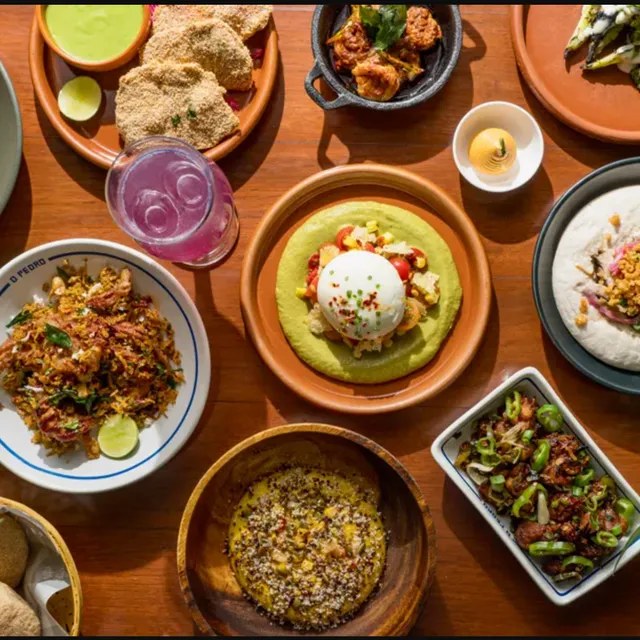
Indian cuisine has become one of New York City’s most exciting fine-dining categories. What was once commonly associated with casual curry houses, neighborhood takeout, and familiar dishes such as butter chicken and chicken tikka masala has evolved into a sophisticated dining scene built around regional traditions, heirloom recipes, premium ingredients, creative cocktails, and highly polished service.
For diners searching for the best fine dining Indian restaurants in West Village, the neighborhood offers an especially interesting starting point.
West Village isn’t packed with Indian restaurants, but the Indian restaurants that have established themselves here represent very different approaches to the cuisine. The most prominent example is Semma, chef Vijay Kumar’s acclaimed South Indian restaurant on Greenwich Avenue. Current coverage describes Semma as a destination for South Indian cooking rooted in Kumar’s Tamil Nadu upbringing, while Michelin and other major food publications have recognized its distinctive regional approach.
The neighborhood also has contemporary options such as Bombay Bistros, where Indian dishes are combined with cocktails and a more theatrical dining-room atmosphere. Its current menu includes paneer tikkas, crispy okra, tandoori prawns, lamb chops, and other Indian-inspired preparations.
But luxury Indian dining isn’t simply about higher prices or attractive interiors.
The best Indian fine-dining restaurants succeed because they give diners a stronger sense of place, heritage, technique, and culinary identity.
A beautifully presented paneer dish isn’t automatically fine dining.
A $100 dinner isn’t automatically authentic.
And an expensive restaurant isn’t necessarily better than a small neighborhood Indian restaurant.
Instead, exceptional Indian fine dining usually comes from combining traditional cooking with thoughtful execution.
You might encounter a dish inspired by a chef’s childhood in Tamil Nadu, a seafood preparation influenced by India’s coastal regions, a traditional dosa presented as a signature course, or a familiar Indian spice blend used in an unexpected way.
That’s what makes luxury Indian dining in New York so fascinating.
What Makes Indian Dining Feel Luxurious?
A premium Indian restaurant typically pays attention to several elements simultaneously:
- Ingredient quality
- Regional authenticity
- Cooking technique
- Presentation
- Service
- Dining-room atmosphere
- Beverage pairing
- Menu storytelling
- Portion design
- Seasonality
The result isn’t necessarily a meal that feels unfamiliar.
Instead, it can make familiar ingredients feel newly interesting.
Take paneer, for example.
At a casual restaurant, paneer might arrive in a generous bowl of curry.
At an upscale restaurant, the chef may grill, smoke, marinate, or pair it with seasonal ingredients and carefully selected spices.
The ingredient hasn’t changed.
The treatment has.
Fine Dining Doesn’t Mean “Less Indian”
Some diners assume that modern Indian restaurants become less authentic as presentation becomes more sophisticated.
That’s not necessarily true.
A restaurant can use contemporary plating while remaining deeply connected to Indian culinary traditions.
Semma provides a strong example. Current reporting emphasizes that its cooking is rooted in Chef Vijay Kumar’s Tamil Nadu upbringing rather than simply presenting generic “Indian fusion” food.
That regional focus is important.
India isn’t one cuisine.
It is a collection of extraordinarily diverse culinary traditions.
Tamil Nadu is different from Punjab.
Kerala is different from Gujarat.
Goa is different from Rajasthan.
Bengal is different from Karnataka.
A fine-dining restaurant that focuses on one region can therefore offer a more meaningful experience than a huge menu attempting to represent every part of India.
Why West Village Is Interesting for Luxury Indian Dining
West Village has a reputation for destination restaurants, intimate dining rooms, date-night restaurants, and restaurants where atmosphere matters almost as much as the food.
That makes it a natural environment for contemporary Indian cuisine.
Current neighborhood restaurant guides describe the West Village as a destination for special meals, including boundary-pushing Indian cooking. Condé Nast Traveler specifically highlights Semma among the neighborhood’s notable restaurants and describes it as one of the area’s sought-after reservations.
The neighborhood also makes a good base for exploring Indian restaurants outside its strict boundaries.
If you want a broader selection of luxury Indian dining, nearby areas such as the East Village, Flatiron/NoMad, Tribeca, and Midtown offer additional destinations.
That distinction will matter throughout this guide.
Not every restaurant mentioned will be physically inside West Village.
Nearby restaurants will be clearly identified as alternatives for readers who are willing to travel for an exceptional Indian fine-dining experience.
What This Guide Will Help You Find
Whether you’re planning a romantic dinner, anniversary, business meal, birthday, or memorable New York dining experience, this guide will help you compare Indian restaurants based on what actually matters.
We’ll look at:
- The best luxury Indian restaurants in West Village
- Regional Indian fine dining
- Upscale Indian restaurants nearby
- Signature dishes
- Vegetarian and vegan fine dining
- Restaurants for special occasions
- Budget-friendly alternatives
- Takeout and delivery
- Authenticity
- Neighborhoods worth exploring
- How much Indian fine dining typically costs
- What to order when dining for two or in a group
The goal isn’t simply to identify the most expensive restaurant.
It’s to help you find the Indian dining experience that best matches the occasion.
For some readers, that may mean a hard-to-get reservation at Semma.
For others, it may mean an intimate contemporary Indian dinner with cocktails.
For vegetarian diners, it may mean a restaurant where vegetables and regional preparations are treated as the centerpiece rather than an afterthought.
And for visitors who want the ultimate luxury experience, it may mean traveling a few neighborhoods beyond West Village to discover another destination-worthy Indian restaurant.
That’s the beauty of Indian fine dining in New York.
You can start with the familiar and end up somewhere completely unexpected.
Why West Village Has Great Indian Restaurants
West Village may not have the density of Indian restaurants found in some other parts of Manhattan, but it has something arguably more valuable for fine dining: a strong destination-restaurant culture.
The neighborhood is built around restaurants that encourage people to make an evening out of dinner. That environment creates an excellent setting for Indian cuisine that goes beyond quick lunches and casual takeout.
Current listings identify six Indian restaurants in the West Village category, including Semma, Surya, Bombay Bistros, Gandhi Cafe, and Thali.
That isn’t a huge number.
But the presence of Semma in particular has significantly raised the profile of Indian cuisine in the neighborhood.
Semma Changed the Conversation
When discussing fine dining Indian food in West Village, it’s difficult to begin anywhere other than Semma.
Chef Vijay Kumar’s restaurant focuses on South Indian cuisine rooted in Tamil Nadu, drawing from the food and memories of his upbringing. Eater’s 2026 coverage describes the restaurant as a West Village destination centered on the edible bounty of South India.
The MICHELIN Guide likewise highlights the connection between the menu and Kumar’s childhood memories, noting that his cooking is deeply informed by the food he grew up eating with his mother and grandmother.
That personal connection is part of what makes Semma different from a generic upscale Indian restaurant.
The restaurant isn’t simply asking:
“How can we make Indian food look luxurious?”
It’s asking:
“How can we present a specific Indian culinary tradition to a New York audience at a very high level?”
That’s a much more interesting question.
Regional Indian Cuisine Is Driving Fine Dining
One of the biggest developments in Indian dining in New York is the growing attention given to regional cuisine.
For decades, many American Indian restaurants relied on a relatively familiar collection of dishes.
Fine dining has helped broaden that conversation.
Suddenly, diners may encounter:
- Tamil Nadu specialties
- Kerala seafood
- Goan preparations
- Andhra-style spice
- Gujarati vegetarian cuisine
- Bengali flavors
- Kashmiri dishes
- Regional breads
- Lesser-known Indian ingredients
This is valuable for diners because it challenges the idea that Indian cuisine can be summarized by naan, tikka masala, and curry.
West Village Encourages Destination Dining
The neighborhood’s atmosphere also plays a role.
West Village is particularly suited to:
Date nights
Anniversaries
Birthdays
Business dinners
Food-focused travel
Celebratory meals
That means Indian restaurants here aren’t competing only on food.
They’re competing on the entire evening.
The dining room matters.
The cocktails matter.
The service matters.
The pacing matters.
And the ability to create a memorable experience matters.
Condé Nast Traveler’s current West Village restaurant guide specifically describes the neighborhood as a place for special meals and highlights Semma as one of its notable destinations.
Bombay Bistros Adds a Different Style
Bombay Bistros provides another example of how Indian restaurants can approach upscale dining differently.
Its current official website emphasizes fine food and drinks, with a menu that includes paneer tikkas, crispy okra, jumbo tandoori prawns, aloo tikki, tandoori lamb chops, and braised Yorkshire short ribs.
The restaurant also has a substantial cocktail program.
That makes it particularly relevant for diners who think of fine dining as an evening experience, rather than simply an expensive meal.
You can order Indian food, explore cocktails, enjoy the atmosphere, and spend several hours making an evening of it.
Luxury Indian Dining Is About More Than Price
One of the most important lessons when exploring Indian fine dining is that luxury and authenticity aren’t synonyms.
A restaurant can charge $100 per person and still serve generic food.
Another restaurant can charge much less and serve an extraordinary regional meal.
So when evaluating fine dining Indian restaurants, consider:
Does the restaurant have a clear culinary identity?
Does the menu tell a regional story?
Are ingredients treated carefully?
Is the service knowledgeable?
Are the dishes technically precise?
Does the restaurant offer something you can’t easily find elsewhere?
Those questions are much more useful than simply looking at the price.
Why This Matters for Visitors
If you’re visiting New York, you may only have one opportunity to experience Indian fine dining.
Choosing a restaurant simply because it appears expensive can be a mistake.
Instead, decide what you want to remember.
Maybe it’s a remarkable dosa.
Maybe it’s a regional seafood dish.
Maybe it’s an unforgettable cocktail pairing.
Maybe it’s discovering an Indian region you’ve never experienced before.
Maybe it’s simply having a beautiful dinner with someone important.
West Village gives you a particularly strong starting point because the neighborhood combines a major Indian fine-dining destination with a broader restaurant culture designed around memorable evenings.
And if your ideal restaurant isn’t inside the neighborhood itself, Manhattan’s compact geography makes it relatively easy to expand your search.
Top Fine Dining Indian Restaurants in West Village and Nearby Manhattan
When you’re searching for the best fine dining Indian restaurants in West Village, one important distinction immediately becomes clear: the neighborhood has a relatively small Indian restaurant scene, but it includes a genuine destination restaurant in Semma. Other nearby restaurants offer different interpretations of upscale Indian dining, so it’s worth expanding the search slightly if you’re looking for a special-occasion meal.
Semma — Best Overall for Luxury Indian Dining in West Village
Semma
Location: 60 Greenwich Ave, West Village
Style: Regional South Indian
Approximate cost: $50–$100+ per person before drinks, tax, and gratuity
Best for: Special occasions, food lovers, regional Indian cuisine
If you’re looking for one restaurant that best represents fine dining Indian food in West Village, Semma is the obvious starting point.
The restaurant is built around Chef Vijay Kumar’s South Indian heritage, particularly the cuisine of Tamil Nadu. Its official website describes Semma as a personal and regional expression of Southern Indian cooking, rooted in family kitchens, farm life, and culinary traditions rarely encountered outside South India.
The menu goes well beyond the standard American Indian restaurant repertoire. Eater highlights dishes such as the gunpowder dosa, Goan oxtail, lobster tail, and paniyaram, while Condé Nast Traveler points to preparations including Dungeness crab and regional South Indian specialties.
One of the most interesting things about Semma is that its luxury comes from culinary specificity rather than simply expensive ingredients. You are getting a restaurant with a clear point of view.
For adventurous diners, this is arguably the strongest choice in West Village.
Bombay Bistros — Contemporary Indian Dining in the Village
Bombay Bistros – West Village
Location: 31 Cornelia St, West Village
Style: Contemporary Indian
Best for: Cocktails, social dinners, modern Indian dishes
Bombay Bistros has been associated with a more contemporary interpretation of Indian dining, combining Indian food with cocktails and a lively atmosphere.
Its official website has highlighted dishes such as paneer tikka, crispy okra, jumbo tandoori prawns, aloo tikki, lamb chops, and braised Yorkshire short ribs.
Important current-status note: business listings now show the West Village location as permanently closed, so it should not be presented as a currently bookable restaurant. Bombay Bistros – West Village
This is a useful reminder that restaurant information changes quickly in New York. Older articles and restaurant guides may still mention a venue even after its operating status has changed.
For a current article, Semma should therefore remain the primary West Village fine-dining recommendation.
Passerine — Premium Indian Dining in Flatiron
Passerine
Location: 36 E 20th St, Flatiron
Style: Upscale Indian
Approximate cost: $100+ per person
Best for: Luxury dinners, special occasions, serious food enthusiasts
If you’re willing to leave West Village, Passerine is an interesting option for diners specifically seeking a more expensive Indian dining experience.
Located in Flatiron, it provides a different atmosphere from West Village and is better suited to readers who define fine dining by price point, service, presentation, and destination appeal.
For a visitor building an Indian-food itinerary across Manhattan, this is the type of restaurant worth considering after experiencing a more regionally focused restaurant such as Semma.
Bungalow — Modern Indian Dining in the East Village
Bungalow
Location: 24 1st Ave, East Village
Style: Modern Indian
Approximate cost: $100+ per person
Best for: Celebrations, group dinners, contemporary Indian food
Bungalow is another destination for diners willing to travel beyond West Village.
Condé Nast Traveler describes its menu as a broad exploration of Indian cooking, extending from Kashmir in the north to Kerala in the south.
That makes Bungalow particularly interesting for diners who want a pan-Indian luxury experience rather than the more focused regional approach found at Semma.
The East Village location also makes it easy to combine dinner with the neighborhood’s nightlife and cocktail scene.
Dravida — Luxury Indian Dining in the East Village
Dravida
Location: 211 1st Ave, East Village
Style: Indian fine dining
Approximate cost: $100+ per person
Best for: Premium dinners and culinary exploration
Dravida is another higher-priced Indian restaurant worth considering when expanding beyond West Village.
Its current business listing places it in the $100+ category, putting it firmly into the premium-dining conversation.
For readers staying in West Village, it is best treated as a destination alternative, not as a West Village restaurant.
Adda — Regional Indian Dining in the East Village
Adda
Location: 107 1st Ave, East Village
Style: Regional Indian
Approximate cost: $50–$100 per person
Best for: Indian-food enthusiasts and shared meals
Adda provides another option for diners willing to travel downtown.
Eater currently describes Adda as a pan-Indian regional restaurant in the East Village, making it particularly relevant for diners who want to explore beyond the most familiar Indian-American dishes.
It’s a useful comparison with Semma: rather than focusing specifically on Southern Indian cuisine, Adda gives diners another window into India’s broader regional diversity.
Indienne NYC — Modern Indian Fine Dining in Midtown
Indienne NYC
Location: 515 W 38th St, Midtown
Style: Modern Indian
Approximate cost: $100+ per person
Best for: Luxury dining and tasting-menu-style experiences
For travelers staying around Times Square, Hudson Yards, or Midtown, Indienne NYC can be a more convenient luxury option than traveling downtown.
Its positioning as a modern Indian restaurant makes it especially relevant to diners interested in contemporary presentation and a more formal dining experience.
It also demonstrates why a West Village search shouldn’t necessarily stop at the neighborhood boundary.
New York’s Indian fine-dining scene is spread across Manhattan.
Musaafer — Luxury Indian Dining in Tribeca
Musaafer
Location: 133 Duane St, Tribeca
Style: Upscale Indian
Approximate cost: $100+ per person
Best for: Special occasions, group dinners, luxury dining
Musaafer is another destination-style Indian restaurant for diners looking for a polished experience.
Its Tribeca location makes it especially attractive for visitors combining Indian dining with downtown sightseeing.
For someone starting in West Village, this is a longer trip than Semma, but still practical for a special evening in Manhattan.
Ishq — Contemporary Indian Dining in the East Village
Ishq
Location: 202 Avenue A, East Village
Style: Contemporary Indian
Approximate cost: $40–$90 per person
Best for: Modern Indian dining without the highest luxury price tier
Ishq provides an interesting middle ground.
It’s more upscale than a traditional casual Indian restaurant but generally falls below the $100+ luxury category represented by some of the destination restaurants above.
That makes it a good option for readers who want a special Indian dinner without committing to the highest fine-dining budget.
INDN Small Plates & Cocktails — Modern Indian Night Out
INDN Small Plates & Cocktails
Location: 30 W 30th St, Midtown
Style: Indian small plates and cocktails
Approximate cost: $50–$100 per person
Best for: Groups, cocktails, contemporary Indian dining
INDN takes a format that works particularly well for groups: small plates and cocktails.
Instead of everyone ordering a single entrée, diners can share multiple dishes.
This makes it a useful option if your definition of luxury dining includes a lively evening with drinks and several dishes moving around the table.
Which Restaurant Should You Choose?
If you’re staying in West Village and want the strongest combination of location, culinary identity, and fine-dining credentials, start with Semma.
If you’re willing to travel, your options expand considerably.
For regional South Indian cuisine: Semma
For modern pan-Indian dining: Bungalow
For premium downtown dining: Musaafer
For a high-end East Village experience: Dravida or Adda
For Midtown luxury: Indienne NYC
For modern small plates and cocktails: INDN
For a lower-cost upscale experience: Ishq
The important distinction is that these restaurants shouldn’t all be described as being in West Village. Only restaurants actually located in the neighborhood belong in the core West Village list; the others are recommended as nearby or destination alternatives.
One Restaurant Stands Out
For the specific search “best fine dining Indian restaurant in West Village,” Semma remains the clearest recommendation.
It has the regional identity, chef-driven approach, destination reputation, and culinary depth that make an Indian restaurant feel genuinely special rather than simply expensive. Current Eater coverage calls it a West Village destination for South Indian cooking, while its official site emphasizes its Tamil Nadu roots and regional approach.
And if you can’t get a reservation, don’t immediately give up.
Condé Nast Traveler reports that Semma has been one of the neighborhood’s hardest reservations, while also noting that its 12 full-service bar seats are available for walk-ins.
That makes an early arrival at the bar another strategy worth considering.
Best Neighborhoods and Areas for Fine Dining Indian Food Near West Village
One of the best things about looking for fine dining Indian restaurants in West Village is that you don’t have to limit your search to a few blocks.
West Village is an excellent starting point, but Manhattan’s Indian fine-dining scene extends well beyond the neighborhood. A short taxi ride, subway trip, or walk can take you from a regional South Indian restaurant to a modern pan-Indian dining room, a luxury tasting experience, or a restaurant specializing in Indian small plates and cocktails.
For visitors and locals, the right neighborhood depends largely on the type of experience you’re looking for.
West Village: Best for Regional Indian Fine Dining
West Village should be your first choice if you want Indian fine dining without leaving the neighborhood.
The biggest attraction is Semma at 60 Greenwich Avenue.
Semma’s focus on South Indian cuisine makes it particularly valuable for diners who want something more specific than a generic Indian menu. Its cooking is strongly connected to Tamil Nadu and Chef Vijay Kumar’s culinary background.
The neighborhood itself is also ideal for an evening out.
You can combine dinner with:
- A walk through Greenwich Avenue
- Drinks nearby
- Washington Square Park
- Bleecker Street
- West Village nightlife
This makes West Village particularly attractive for date-night Indian dining, anniversaries, and visitors who want dinner to be part of a broader New York experience.
Greenwich Village: Best for Exploring Beyond Luxury Dining
Greenwich Village surrounds West Village and gives diners additional Indian choices.
This area is useful if your priority is culinary exploration rather than strictly fine dining.
You can find restaurants offering:
- Vegetarian Indian food
- Casual Indian meals
- South Indian specialties
- Thali
- Indian snacks
- Takeout
- More affordable alternatives
This makes Greenwich Village a useful second stop if you’re comparing different styles of Indian cuisine.
The biggest advantage is that you don’t necessarily need to spend $100 per person to experience interesting Indian food.
A casual restaurant can sometimes provide a more traditional dish than a luxury restaurant.
East Village: Best for Modern and Experimental Indian Food
The East Village is one of the most interesting neighborhoods for diners willing to travel beyond West Village.
It has become a destination for restaurants that approach Indian food with a more contemporary perspective.
Bungalow is one of the better-known examples, with a modern menu drawing inspiration from different regions of India. Its current positioning makes it particularly interesting for diners who want a broad, contemporary Indian experience rather than a narrowly focused regional restaurant.
The neighborhood is also convenient for combining dinner with:
- Cocktails
- Bars
- Live music
- Nightlife
- Late-night dining
For a younger group or celebratory dinner, East Village can therefore provide a livelier atmosphere than West Village.
Flatiron and NoMad: Best for Upscale Indian Dining
Flatiron and NoMad are worth considering if your definition of fine dining includes polished service, sophisticated surroundings, and premium pricing.
Passerine, located on East 20th Street, falls into this broader destination-dining category.
This part of Manhattan is particularly convenient for:
- Business dinners
- Luxury hotels
- Corporate travelers
- Special occasions
- Pre-theater dinners
- Upscale date nights
The neighborhood also puts you close to Union Square, Madison Square Park, and several major Manhattan attractions.
For tourists staying around Midtown, Flatiron can be an especially convenient compromise between downtown and uptown.
Midtown: Best for Business and Luxury Hotel Dining
Midtown is another important area to consider when searching for luxury Indian restaurants in NYC.
Its biggest advantage is convenience.
If you’re staying near:
- Times Square
- Hudson Yards
- Bryant Park
- Rockefeller Center
- Penn Station
you may find it easier to dine in Midtown than travel downtown.
Indienne NYC is one modern Indian option in this area.
Midtown Indian restaurants can be particularly suitable for business dinners because many are designed around a more formal evening experience.
They’re also convenient for travelers who want to have dinner before returning to a nearby hotel.
Tribeca: Best for Luxury Downtown Dining
Tribeca offers another style of upscale dining.
Musaafer, located on Duane Street, is a destination option for diners looking for a premium Indian restaurant outside the West Village.
Tribeca is particularly attractive for:
- Anniversary dinners
- Birthday celebrations
- Group dining
- Luxury hotel guests
- Downtown sightseeing
You can combine an Indian dinner with attractions such as the World Trade Center, Hudson River waterfront, or SoHo.
For someone already spending the day downtown, this can make more sense than traveling all the way to Midtown.
Lower East Side: Best for Indian Food With a Neighborhood Feel
The Lower East Side is another useful area for Indian-food enthusiasts.
It’s particularly interesting if you want to combine Indian food with a broader downtown nightlife experience.
The area offers a mix of:
- Indian restaurants
- Cocktail bars
- Small plates
- Contemporary restaurants
- Casual dining
- Late-night options
It’s less formal than some Midtown destinations, which can make it appealing to younger diners and groups.
Why Neighborhood Matters When Choosing Fine Dining
Location can change the entire dining experience.
Consider three scenarios.
Scenario 1: Date night
Start in West Village, have dinner at Semma, then walk through the neighborhood afterward.
Scenario 2: Business dinner
Stay around Midtown and choose an upscale Indian restaurant nearby.
Scenario 3: Downtown celebration
Spend the afternoon in SoHo or Tribeca, then finish with dinner at a premium Indian restaurant nearby.
The restaurant doesn’t exist in isolation.
The surrounding neighborhood becomes part of the experience.
Popular Indian Dishes to Try at Fine Dining Restaurants
One of the best parts of exploring luxury Indian dining in West Village is realizing that fine dining isn’t simply about taking familiar dishes and making them more expensive.
The most exciting Indian restaurants in New York use fine dining to explore regional ingredients, traditional techniques, family recipes, seasonal produce, and lesser-known Indian dishes.
That means your best meal may not include butter chicken or chicken tikka masala at all.
At a restaurant such as Semma, the menu is rooted in Southern Indian cooking, with dishes inspired by Tamil Nadu and other parts of South India. Its current menu includes paniyaram, gunpowder dosa, tiger prawn thokku, day-boat scallops, banana-leaf-wrapped branzino, lobster moilee, goat biryani, and Dungeness crab.
At Passerine in Flatiron, Chef Chetan Shetty takes another approach, combining Indian spice traditions with seasonal ingredients from New York. Its current tasting menu includes dishes such as tuna, uttapam, crab, cod, ghee-roasted quail, beef short rib, and a pistachio dessert.
This variety is exactly what makes Indian fine dining so interesting.
Start With Indian Small Plates
Indian cuisine has an incredible tradition of snacks and small plates.
In a casual restaurant, these might be treated as simple appetizers.
In a fine-dining restaurant, however, they can become highly refined courses.
Some worth looking for include:
- Paniyaram
- Dhokla
- Aloo tikki
- Chaat
- Samosas
- Uttapam
- Paneer tikka
- Regional fritters
- Seafood starters
The idea is to begin with something relatively small but packed with flavor.
Paniyaram
Paniyaram is a South Indian preparation made from fermented rice and lentil batter.
At Semma, the current menu describes its paniyaram as a rice-and-lentil dumpling served with asafoetida and a family-style chutney.
This is a great example of why regional Indian dining can be so rewarding.
Someone unfamiliar with South Indian cuisine might walk into an upscale restaurant expecting naan and paneer.
Instead, they encounter a completely different culinary tradition.
The exterior can have a lightly crisp texture while the interior remains soft and fermented, with chutney providing additional acidity and spice.
Gunpowder Dosa
Dosa is one of the most recognizable South Indian dishes, but fine dining restaurants can present it in ways that make it feel completely different.
Semma’s current menu features Gunpowder Dosa with a rice-and-lentil crepe, potato masala, and sambar.
Dosa is particularly appealing because it combines:
Crispness
Fermentation
Spice
Potato
Tangy sambar
Chutney
It can also be an excellent choice for vegetarians.
If you’ve never tried dosa before, a restaurant such as Semma is an excellent environment for discovering it.
Uttapam
Uttapam is another South Indian fermented batter preparation.
Unlike the thin and crisp structure of a traditional dosa, uttapam is generally thicker and softer.
At Passerine, the current tasting menu features an uttapam preparation with aged cheese, demonstrating how Indian techniques can interact with ingredients that aren’t traditionally associated with the dish.
This is a perfect example of modern Indian fine dining.
The foundation remains recognizable.
The execution becomes contemporary.
Paneer Tikka
For diners who prefer something familiar, paneer tikka is a great starting point.
Paneer is Indian fresh cheese, while tikka refers broadly to marinated pieces cooked at high heat.
A premium version can showcase:
- Better-quality paneer
- More complex marinades
- Charred edges
- Carefully balanced spice
- Fresh herbs
- Sophisticated accompaniments
Vegetarians shouldn’t feel as though they’re getting the “less exciting” menu.
Indian cuisine has an enormous vegetarian tradition, and fine dining gives chefs room to showcase it.
Chaat
Chaat is one of India’s great street-food traditions.
It combines contrasting elements such as:
- Sweet
- Sour
- Spicy
- Salty
- Crunchy
- Creamy
A luxury Indian restaurant may reinterpret chaat using premium ingredients and more refined presentation.
Passerine’s current menu, for example, includes Bombay Ragda Chaat with sweet yogurt, tamarind, and mint.
The basic idea remains rooted in Indian street food.
The presentation and ingredients are elevated.
Dhokla
Dhokla is another excellent example of a traditional Indian vegetarian food appearing in a contemporary setting.
Passerine’s current materials reference chickpea-based dhokla and its chef’s Gujarati influences, including spice blends connected to his family in Pune.
For diners interested in vegetarian Indian cuisine, this is exactly the sort of dish worth trying.
It demonstrates that fine dining Indian food doesn’t have to revolve around meat.
Indian Tandoori and Grilled Dishes
Tandoor cooking has become one of the most recognizable elements of Indian restaurant dining.
The traditional tandoor is used to cook:
- Naan
- Chicken
- Lamb
- Paneer
- Seafood
- Kebabs
In fine dining, the same high-heat cooking technique can be paired with premium ingredients.
Tandoori Prawns
Large prawns can be marinated with yogurt, spices, ginger, garlic, and other aromatics before being cooked at high heat.
The result combines:
Smokiness + sweetness + spice + char
This is particularly appealing to seafood lovers who aren’t looking for a heavy curry.
Lamb Chops
Indian-spiced lamb chops are another popular luxury-dining choice.
A good version should balance the richness of the meat with aromatic spices rather than simply making it extremely hot.
Look for preparations involving:
- Black cardamom
- Cumin
- Coriander
- Chili
- Ginger
- Garlic
- Fenugreek
At Semma, the current menu features Ghee Roast Lamb Chops with vegetable pulao and salna.
This is a good example of how a familiar Western fine-dining ingredient can be interpreted through Indian culinary traditions.
Indian Seafood: One of the Most Exciting Categories
Indian coastal cooking is extraordinarily diverse.
If you’re dining at a high-end Indian restaurant, seafood is often worth prioritizing.
Look for:
- Crab
- Lobster
- Prawns
- Scallops
- Branzino
- Monkfish
- Regional fish curries
Semma’s current menu includes Meen Pollichathu, a banana-leaf-wrapped branzino preparation with ginger and shallots.
It also features Valiya Chemmeen Moilee, a lobster-tail dish prepared with mustard, turmeric, and coconut milk.
These dishes show why coastal Indian cuisine deserves much more attention in American Indian dining.
Crab
Crab is particularly interesting because it can absorb rich Indian spice blends while retaining its natural sweetness.
Semma currently offers Kanyakumari Nandu Masala, featuring Dungeness crab with parotta and coconut rice. The restaurant lists it as a limited-availability dish for two and requests pre-ordering.
If you’re celebrating a special occasion, this type of limited dish can be exactly what you’re looking for.
It also gives diners a sense of regional storytelling.
“Kanyakumari” refers to the southern tip of India, so the dish connects the ingredient and preparation to a specific geographic tradition.
Lobster Moilee
Moilee is associated with South Indian coastal cooking and is generally characterized by a fragrant, coconut-based sauce.
Semma’s current lobster-tail version combines:
- Lobster
- Mustard
- Turmeric
- Coconut milk
For someone who enjoys seafood but doesn’t want a heavily tomato-based curry, this can be an excellent choice.
South Indian Goat Biryani
Biryani is one of India’s most internationally recognized dishes.
But there isn’t one universal biryani.
Different regions use different rice varieties, spices, cooking methods, meats, and accompaniments.
Semma’s current Dindigul Biryani uses goat and seeraga samba rice with garam masala and raita.
That’s very different from the long-grain basmati biryani many American diners may know.
This is exactly why regional Indian dining is so valuable.
You can eat “biryani” multiple times and have completely different experiences.
Beef and Lamb in Indian Fine Dining
Indian cuisine is not exclusively vegetarian or chicken-based.
Depending on the region, beef, lamb, goat, and other meats can be important.
Semma currently serves a Goanese oxtail preparation with cardamom, cinnamon, cumin, and cilantro.
Passerine’s current menu includes beef nihari with maitake, mint, and onion.
These dishes are especially interesting for adventurous diners because they demonstrate the diversity of Indian meat cooking.
Nihari
Nihari is a slow-cooked meat preparation associated with the Indian subcontinent.
Its appeal comes from:
- Slow cooking
- Deep spice
- Tender meat
- Rich gravy
- Aromatic finishing ingredients
At Passerine, beef nihari is presented in a contemporary format with maitake mushrooms, mint, and onion.
It’s a great example of traditional flavor meeting modern presentation.
Vegetarian and Vegan Fine Dining Indian Options
One of the biggest strengths of Indian fine dining in West Village and nearby Manhattan is the depth of its vegetarian cuisine. Unlike many cuisines where vegetarian diners receive a smaller selection of side dishes, Indian culinary traditions have developed thousands of substantial vegetarian preparations.
That makes luxury Indian dining particularly appealing to vegetarians.
A fine-dining Indian restaurant can turn ingredients such as eggplant, lentils, chickpeas, paneer, coconut, mushrooms, seasonal vegetables, rice, and fermented grains into sophisticated dishes with layers of texture and spice.
For vegan diners, the experience requires a little more attention because traditional Indian cooking frequently uses ghee, butter, cream, yogurt, and paneer. The good news is that many Indian restaurants can accommodate vegan diners when dietary requirements are communicated clearly.
Vegetarian Indian Fine Dining Goes Far Beyond Paneer
Paneer is probably the most recognizable vegetarian ingredient on an Indian restaurant menu.
You may encounter:
- Paneer tikka
- Palak paneer
- Matar paneer
- Kadai paneer
- Paneer curry
- Grilled paneer
But don’t make paneer your entire meal.
Some of the most interesting Indian vegetarian dishes don’t contain cheese at all.
At Semma, for example, the current menu includes vegetarian preparations such as Gutti Vankaya, baby eggplant with peanut and sesame, along with vegetable poriyal and other South Indian preparations.
These dishes demonstrate why regional Indian cuisine can be so rewarding for vegetarian diners.
South Indian Vegetarian Fine Dining
South Indian cuisine offers an especially broad range of vegetarian food.
Look for dishes involving:
- Dosa
- Paniyaram
- Uttapam
- Sambar
- Rasam
- Coconut
- Curry leaves
- Lentils
- Fermented rice
- Seasonal vegetables
Semma’s current menu includes Gunpowder Dosa, made with a rice-and-lentil crepe, potato masala, and sambar, making it an excellent choice for vegetarian diners exploring regional South Indian food.
The combination of fermentation, spice, crispness, and tangy accompaniments makes dosa particularly interesting in a fine-dining setting.
Eggplant Can Be a Luxury Ingredient
Eggplant is another ingredient worth seeking out.
In Indian cuisine, eggplant can be roasted, stuffed, smoked, grilled, or simmered with spices.
A dish such as Gutti Vankaya demonstrates how sophisticated vegetarian Indian cooking can become.
The baby eggplant is paired with ingredients such as peanut and sesame, creating a combination of:
Earthiness + nuttiness + spice + softness
For diners who usually associate fine dining with expensive meat or seafood, dishes like this provide an important reminder that vegetables can be the centerpiece.
Lentils and Dal
Dal may sound simple, but it can be one of the most technically revealing dishes on an Indian menu.
Fine Indian restaurants may use different lentils and sophisticated tempering techniques involving:
- Cumin
- Mustard seeds
- Garlic
- Chili
- Curry leaves
- Ghee
- Herbs
For vegetarians, dal provides a hearty source of plant-based protein and works beautifully with rice or Indian breads.
If a restaurant offers a regional dal, consider ordering it rather than automatically choosing another paneer dish.
Indian Fine Dining for Vegan Diners
Vegan diners have plenty of possibilities, but they need to ask more questions.
A vegetable curry may contain butter.
A lentil dish may be finished with ghee.
A dosa may be cooked with ghee.
A chutney may contain yogurt.
A bread may contain dairy.
So the most important question isn’t:
“Is this vegetarian?”
It’s:
“Is this completely dairy-free?”
Ask specifically about:
- Ghee
- Butter
- Cream
- Milk
- Yogurt
- Paneer
This is particularly important at restaurants where the menu isn’t specifically vegan.
Naturally Vegan Indian Foods
Some Indian preparations are more likely to be adaptable to vegan dining, although ingredients should always be confirmed.
Potential options include:
- Chana masala
- Certain vegetable curries
- Some dals
- Vegetable poriyal
- Some rice preparations
- Certain dosas
- Some chutneys
- Vegetable biryani
The exact preparation varies by restaurant.
For strict dietary requirements, always communicate directly with the restaurant.
Vegan Dining at Semma
Semma can be particularly interesting for vegan diners because its South Indian culinary tradition uses many naturally plant-based ingredients, including:
- Coconut
- Lentils
- Rice
- Vegetables
- Tamarind
- Curry leaves
- Mustard seeds
- Chilies
However, diners should still confirm individual preparations because menu ingredients and cooking methods can change.
A vegan diner interested in Semma should tell the restaurant about the restriction when making a reservation and again when ordering.
Jain Dining
Indian cuisine also has a strong tradition of Jain dietary practices.
Jain diners may avoid ingredients such as:
- Onion
- Garlic
- Root vegetables
depending on their individual practices.
This can make fine dining more complicated than simply selecting a vegetarian dish.
If Jain requirements are important to you, communicate them before ordering.
A restaurant that can clearly explain its ingredients and preparation methods is generally preferable.
Vegetarian Fine Dining for Special Occasions
Vegetarian diners shouldn’t feel obligated to choose a casual restaurant simply because they don’t eat meat.
A premium Indian restaurant can be excellent for:
Anniversaries
Birthdays
Date nights
Business dinners
Family celebrations
In fact, Indian cuisine is particularly well suited to shared vegetarian dining.
A table might include:
- Paneer
- Eggplant
- Dal
- Vegetable curry
- Dosa
- Rice
- Bread
- Dessert
Everyone can share.
Best Vegetarian Ordering Strategy for Two
If you’re dining as a couple, try:
1 vegetable starter
1 paneer or dosa preparation
1 vegetable entrée
1 dal
1 rice
1 bread
You don’t necessarily need every course.
The goal is to experience different cooking techniques.
Best Vegan Ordering Strategy
For vegan diners, start by asking the server to identify suitable dishes.
Then build your meal around:
One vegetable starter
One legume or lentil dish
One vegetable entrée
One rice preparation
One vegan bread if available
This provides much more variety than ordering one large curry.
Vegetarian Doesn’t Mean Mild
Another common misconception is that vegetarian Indian food is automatically mild.
Not at all.
Vegetarian Indian dishes can range from:
Gentle and creamy
to
smoky
to
tangy
to
deeply spiced
to
very hot
Ask the server about spice levels before ordering.
A good fine-dining restaurant should be able to guide you.
Budget-Friendly Alternatives to Fine Dining Indian Restaurants
Fine dining Indian restaurants can be memorable, but you don’t need to spend $100 or more per person to experience excellent Indian cuisine in and around West Village.
In fact, one of the best things about New York’s Indian food scene is the range of price points. You can have a quick Indian lunch for around $15, enjoy a casual dinner for under $30, or spend significantly more on a destination fine-dining experience.
For travelers and locals who want the best affordable Indian food near West Village, the key is knowing when to choose a casual restaurant instead of a luxury dining room.
Taco Mahal: One of the Best Cheap Indian Options in West Village
Taco Mahal
If you’re looking for something inexpensive and distinctly different, Taco Mahal is one of the neighborhood’s most interesting options.
Eater currently describes Taco Mahal as an affordable West Village favorite, with Indian dishes served in a taco-style format. Its roti tacos are listed at around $7, while its chicken tikka masala served in folded naan is around $14.50.
This isn’t fine dining—and that’s exactly the point.
Instead of spending $100 on an elaborate Indian dinner, you can experience Indian flavors in a casual format that’s particularly convenient for:
- Quick lunches
- Tourists
- Students
- Casual dates
- Solo diners
- Budget travelers
It’s also a good example of how Indian cuisine continues to evolve in New York.
Gandhi Cafe: Traditional Indian Food at a Lower Price
Gandhi Cafe
For diners who prefer a more traditional restaurant experience, Gandhi Cafe is another option in West Village.
OpenTable currently lists it at $30 and under and describes it as an intimate neighborhood restaurant serving Anglo-Indian cuisine. Its menu includes dishes such as chicken tikka masala, butter chicken, cheese poori, onion bhaji, and garlic naan.
This makes it a useful alternative when you want:
Sit-down dining + Indian food + reasonable pricing
without moving into the luxury category.
Why Casual Indian Restaurants Can Offer Better Value
Fine dining typically includes costs associated with:
- Extensive service
- Premium ingredients
- Dining-room design
- Specialized staff
- Beverage programs
- Elaborate preparation
- Smaller portions
- Longer dining experiences
A casual Indian restaurant doesn’t need to carry all of those costs.
That means more of your money can go toward the food itself.
For a traveler who simply wants a satisfying Indian meal, this can be the smarter choice.
Try Indian Lunch Instead of Dinner
One of the easiest ways to reduce your Indian dining budget is to eat at lunchtime.
Lunch menus are often less expensive than dinner menus, and some Indian restaurants offer:
- Lunch specials
- Combo meals
- Thalis
- Rice plates
- Smaller portions
- Buffet service
If you’re staying in West Village, a budget Indian lunch can also leave more money for an upscale dinner later.
For example:
Lunch: Affordable Indian meal
Afternoon: Explore Greenwich Village
Dinner: Fine-dining reservation
This gives you two different Indian experiences without making both meals expensive.
Indian Street Food Is Another Great Value
If your primary objective is discovering Indian flavors rather than having a formal dining experience, street-food-style restaurants can be excellent.
Look for:
- Samosas
- Chaat
- Pakoras
- Dosa
- Vada pav
- Kathi rolls
- Bhel puri
- Pav bhaji
These dishes often provide intense flavor at a much lower price than a fine-dining entrée.
They’re also excellent for travelers who want to try several things in one afternoon.
Fine Dining Indian Restaurants for Special Occasions
Indian fine dining can be an excellent choice when the meal is about more than simply eating. A birthday, anniversary, proposal, business dinner, milestone celebration, or evening with visiting family deserves a restaurant where food, service, atmosphere, and storytelling all work together.
For diners based in West Village, the first choice is naturally Semma. But Manhattan’s broader luxury Indian scene gives you several excellent alternatives if you’re willing to travel a little.
The key is matching the restaurant to the occasion.
Best for an Anniversary: Semma
For a special occasion inside West Village, Semma is the strongest choice.
Its South Indian focus gives the evening a distinctive culinary identity, while the restaurant’s reputation makes the meal feel like an occasion in itself. Eater’s 2026 review describes Semma as Chef Vijay Kumar’s West Village restaurant centered on the food of South India and his Tamil Nadu upbringing.
The restaurant’s reputation has also grown considerably. Condé Nast Traveler notes that Semma became the first Indian restaurant to top The New York Times’ annual list of New York’s 100 best restaurants, while Kumar has received a James Beard Award.
For an anniversary, consider sharing several dishes rather than ordering identical entrées.
A good strategy is:
- One South Indian appetizer
- One vegetarian dish
- One seafood or meat specialty
- One rice preparation
- One dessert
That creates a more memorable meal than simply ordering two standard entrées.
Best for: Anniversaries, milestone celebrations, food-loving couples, visitors seeking an iconic New York dining experience.
Best for a Romantic Date: Bungalow
Bungalow in the East Village is an excellent alternative if you don’t mind leaving West Village.
Bungalow is particularly appealing for couples because it approaches Indian dining almost like an elaborate dinner party. Condé Nast Traveler describes chef Vikas Khanna’s restaurant as a warm, home-inspired experience showcasing India’s enormous regional diversity.
The menu travels across India, from Kashmir to Kerala, making it ideal for couples who enjoy sharing several dishes.
Rather than ordering one dish each, try several smaller preparations.
Some current recommendations include shrimp balchao cones, yogurt kebabs, black lentil dal, and seasonal Indian ingredients.
The restaurant can be difficult to book, so planning ahead is important.
Best for: Romantic dates, birthdays, couples who love trying multiple dishes, memorable evenings.
Best for a Dramatic Celebration: Musaafer
Musaafer in Tribeca is perhaps the most obvious choice if your definition of fine dining includes spectacular surroundings.
Current OpenTable information describes Musaafer as an opulent Indian restaurant inspired by the art and architecture of India, with custom interiors and a strong emphasis on hospitality.
Condé Nast Traveler goes even further, describing the Tribeca restaurant’s interior as Taj Mahal-inspired, with marble walls, chandeliers inspired by jewelry, and a mirrored room.
This makes Musaafer particularly suitable for occasions where the restaurant itself needs to make an impression.
Think:
Birthday celebration
Engagement dinner
Corporate celebration
Hosting important guests
Milestone anniversary
The menu is equally theatrical, with current coverage mentioning dishes such as tandoori octopus, black dal, lamb nihari birria tacos, and coriander prawns.
Best for: Big celebrations, impressive surroundings, entertaining guests, luxury dining.
Best for a Contemporary Tasting Menu: Passerine
Passerine in Flatiron is particularly well suited to diners who want a more formal Indian tasting-menu experience.
Its current tasting menu is priced at $155 for the non-vegetarian menu and $140 for the vegetarian menu, before beverages, tax, and gratuity. The menu changes seasonally.
Current tasting-menu examples include:
Non-vegetarian
- Tuna
- Uttapam
- Crab
- Cod
- Ghee-roasted quail
- Beef short rib
- Pistachio dessert
Vegetarian
- Beets
- Uttapam
- Eggplant
- Paneer
- Tofu roast
- Maitake
- Dessert
This makes Passerine particularly attractive for couples where one person eats vegetarian and the other doesn’t.
Both diners can have a sophisticated tasting experience without one person feeling like they’re receiving a secondary menu.
The restaurant’s official site also emphasizes seasonal produce, spices blended by Chef Chetan Shetty’s mother in Pune, and an extensive wine and cocktail program.
Best for: Tasting-menu enthusiasts, anniversaries, serious food lovers, sophisticated date nights.
Best for a Birthday Dinner: Bungalow or Musaafer
Birthdays are different from anniversaries.
You generally want a restaurant that feels lively rather than overly quiet.
That’s where Bungalow and Musaafer work particularly well.
Bungalow provides a warm, energetic dinner-party atmosphere.
Musaafer provides a more dramatic, luxurious environment.
Choose Bungalow if the food is the priority.
Choose Musaafer if food + atmosphere + visual impact are equally important.
Best for a Business Dinner: Passerine
For business dining, the restaurant should provide enough sophistication to feel special without making conversation difficult.
Passerine’s contemporary dining-room format and tasting menu make it a strong option.
The restaurant also offers a substantial wine and cocktail selection, which gives business diners flexibility when ordering drinks.
A tasting menu can also simplify the ordering process.
Instead of spending 20 minutes deciding what everyone wants, the restaurant guides the meal.
That’s useful when you’re trying to focus on conversation.
Best for: Client dinners, executive meals, professional celebrations, networking dinners.
Best for Hosting Out-of-Town Guests: Semma
If your guests are visiting New York and you want to introduce them to Indian cuisine, Semma is an excellent choice.
Why?
Because you’re not simply taking them to an Indian restaurant.
You’re introducing them to a specific regional cuisine.
South Indian food can be unfamiliar even to diners who already know Indian food.
Dishes such as paniyaram, gunpowder dosa, lobster moilee, regional seafood, and South Indian biryani offer a much broader experience than the usual butter chicken-and-naan combination. Current coverage highlights several of these dishes at Semma.
After dinner, you can walk through West Village and continue the evening elsewhere.
That’s a very New York experience.
Best for a Vegetarian Celebration: Passerine
Vegetarian diners deserve more than a few substitutions.
Passerine is particularly interesting because its current tasting menu has a dedicated vegetarian version priced at $140.
The current menu includes:
- Beets
- Uttapam
- Eggplant
- Paneer
- Tofu
- Maitake
- Dessert
That is much closer to a genuine vegetarian tasting experience than simply replacing a meat entrée with paneer.
For a vegetarian anniversary or birthday, this can be a particularly strong choice.
Best for a Luxury Group Dinner: Musaafer
Groups need a restaurant with enough menu variety to satisfy different preferences.
Musaafer is particularly suitable because its menu is broad and its dining room is designed to feel like an event.
Current OpenTable information specifically identifies it as good for special occasions and vegetarian-friendly.
For groups, consider ordering several dishes to share.
A table might include:
- One vegetarian appetizer
- One seafood starter
- One tandoori dish
- One dal
- One curry
- One rice preparation
- Several breads
- Shared desserts
This creates a more social Indian meal.
Takeout and Delivery Tips for Upscale Indian Food
Fine dining Indian restaurants are designed to be experienced in the restaurant, where the aroma of freshly cooked spices, hot breads, attentive service, cocktails, plating, and atmosphere all contribute to the meal.
But that doesn’t mean you have to sit at a dining table to enjoy excellent Indian food.
For travelers staying in West Village, busy New Yorkers, families, hotel guests, and anyone planning a relaxed night at home, Indian takeout and delivery can be an excellent alternative to dining out.
The key is choosing dishes that travel well.
Some Indian foods become even better after a short journey because the flavors have time to come together. Others lose their texture quickly and should ideally be eaten immediately.
Knowing the difference can turn an ordinary delivery order into a genuinely satisfying Indian meal.
Is Fine Dining Indian Food Good for Takeout?
Absolutely—but not every dish travels equally well.
Indian cuisine has several advantages for takeout.
Curries, dals, rice dishes, biryani, and many vegetable preparations can remain flavorful after transportation.
On the other hand, crispy appetizers, delicate fried foods, and freshly baked breads are more sensitive to time.
A good takeout order should therefore balance:
Saucy dishes + rice + bread + one or two fresh items.
That combination gives you different textures while minimizing the risk of receiving food that has lost its appeal during delivery.
Best Indian Dishes for Delivery
If you’re ordering Indian food near West Village, some of the safest choices include:
Biryani
Biryani is one of the best Indian foods for takeout.
The rice holds heat well, and the spices continue to perfume the dish after it leaves the restaurant.
Depending on the restaurant, you might find:
- Chicken biryani
- Lamb biryani
- Goat biryani
- Vegetable biryani
- Regional South Indian biryani
If you haven’t tried a regional biryani, takeout can actually be a convenient introduction.
Semma’s current menu, for example, includes Dindigul Biryani, prepared with goat and seeraga samba rice.
That’s quite different from the long-grain basmati biryani many American diners know.
Curries Travel Extremely Well
Curries are another excellent choice.
Look for dishes such as:
- Chicken curry
- Butter chicken
- Lamb curry
- Paneer curry
- Vegetable curry
- Fish curry
- Coconut-based curries
The sauce protects the ingredients during transportation and generally reheats well.
If you’re ordering for several people, two different curries are often better than ordering four similar ones.
Try one:
Creamy or rich
and one:
Tangy, spicy, or coconut-based.
That gives you contrast.
Dal Is One of the Best Takeout Choices
Dal doesn’t always receive the attention it deserves.
But for delivery, it’s nearly perfect.
A well-made dal can remain delicious after transportation, particularly when paired with rice or bread.
Order dal when you want:
- Comfort food
- Vegetarian protein
- A mild counterpoint to spicy dishes
- Something that reheats well
For a group, one dal can also stretch the meal considerably.
Paneer Works Well—With One Exception
Paneer curries generally travel well.
Consider:
- Palak paneer
- Paneer tikka masala
- Kadai paneer
- Paneer makhani
However, grilled paneer can lose some of its char and texture during delivery.
If the restaurant packages grilled paneer separately from the sauce, that’s ideal.
If everything is packed together, eat it soon after arrival.
Naan Should Be Ordered Carefully
Fresh naan is fantastic.
Twenty-minute-old naan in a sealed plastic container can be a different experience.
Steam gets trapped inside the packaging, making the bread softer.
That’s why you should ideally eat naan immediately after delivery.
If you’re ordering from a restaurant nearby, pickup may be better than delivery for breads.
You can also briefly reheat naan at home using:
- A hot skillet
- Oven
- Toaster oven
Avoid microwaving it for too long because it can become chewy.
Garlic Naan vs. Plain Naan
For delivery, garlic naan can be particularly enjoyable because its strong aroma survives transportation well.
Plain naan is more neutral and can be useful when you’re eating heavily seasoned curries.
If you’re ordering several curries, consider:
1 garlic naan + 1 plain naan
instead of ordering four identical breads.
Parotta Is Worth Trying
If you’re ordering South Indian food, consider parotta.
It’s layered, flaky, and particularly satisfying with rich gravies.
Semma’s current menu includes South Indian preparations designed to accompany its regional dishes, making this style of bread an interesting alternative to standard naan.
Parotta is especially good when paired with:
- Meat curry
- Vegetable curry
- Salna
- Coconut-based preparations
Dosa Is Better for Pickup Than Delivery
Dosa is delicious—but it isn’t one of the best foods for long-distance delivery.
Why?
Because its defining quality is crispness.
Once a hot dosa is sealed inside a container, steam begins softening the exterior.
If you’re craving dosa, choose:
Pickup > delivery
whenever possible.
Eat it immediately.
This is particularly important with elaborate South Indian dosa preparations.
Paniyaram and Other Crispy Foods
The same principle applies to paniyaram, pakoras, samosas, and other fried or crisp dishes.
They can still be delicious after delivery, but their texture changes quickly.
If ordering these dishes:
- Choose the closest restaurant
- Prefer pickup
- Ask for sauces separately
- Open the container soon after arrival
- Don’t leave the food sealed for a long time
How to Find Authentic Luxury Indian Food
Finding authentic Indian fine dining in West Village requires looking beyond expensive décor, elegant table settings, and a high menu price.
Luxury and authenticity are two different things.
A restaurant can have beautiful interiors, an extensive cocktail list, and premium ingredients without offering particularly regional Indian food. Conversely, a relatively simple restaurant can serve an exceptionally authentic dish rooted in a specific Indian community or family tradition.
The most reliable way to identify an excellent Indian fine-dining restaurant is to look for culinary identity.
Does the restaurant know what it is?
Does the menu tell a regional story?
Are ingredients being used intentionally?
Does the chef preserve traditional techniques while adapting them thoughtfully to New York?
Those questions are much more useful than simply asking whether a restaurant looks luxurious.
Look for Regional Identity
One of the strongest signs of authenticity is a clear regional point of view.
India has an enormous number of culinary traditions.
A restaurant that claims to serve “Indian food” without any regional identity may still serve delicious food, but its menu tells you less about where the recipes originate.
By contrast, a restaurant focused on:
- Tamil Nadu
- Kerala
- Goa
- Gujarat
- Punjab
- Bengal
- Rajasthan
- Kashmir
- Andhra Pradesh
- Karnataka
is giving you a much clearer culinary roadmap.
Semma is an excellent example.
Its official positioning describes the restaurant as a “clear-eyed expression of Southern Indian cuisine” rooted in Tamil Nadu and Chef Vijay Kumar’s personal memories of farm life and family kitchens.
That kind of specificity is a strong indicator that the restaurant has a genuine culinary philosophy.
Don’t Judge Authenticity by Familiarity
A dish doesn’t become authentic simply because you’ve eaten it before.
In fact, one of the most useful tests for an Indian restaurant is whether its menu introduces you to dishes you don’t recognize.
If every Indian restaurant you visit has exactly the same:
- Butter chicken
- Chicken tikka masala
- Palak paneer
- Garlic naan
- Basmati rice
you may be experiencing only a small slice of Indian cuisine.
That’s not necessarily bad.
Those dishes can be delicious.
But they don’t represent the full diversity of the country.
Current coverage of New York’s Indian dining scene notes that chefs are increasingly focusing on lesser-known regional dishes rather than relying on the traditional American Indian restaurant template.
That’s one of the most exciting developments in Indian fine dining.
Final Guide: Best Fine Dining Indian Restaurants in West Village
After exploring the neighborhoods, signature dishes, vegetarian and vegan options, affordable alternatives, special-occasion restaurants, takeout strategies, and ways to identify authentic Indian cooking, the answer to the question “Where should I go for fine dining Indian food in West Village?” becomes much clearer.
West Village doesn’t have dozens of luxury Indian restaurants competing for attention. Instead, it has something more valuable: a standout destination for regional Indian cuisine, surrounded by some of Manhattan’s most exciting Indian restaurants within a relatively short trip.
For most diners, Semma is the restaurant to start with.
Located at 60 Greenwich Avenue, Semma describes itself as a regional Southern Indian restaurant rooted in Tamil Nadu and led by Chef Vijay Kumar. Its current website lists a Michelin star, a James Beard Foundation Best Chef: New York State 2025 award, and recognition in The New York Times’ 100 Best Restaurants 2025.
That combination makes it a particularly compelling choice for anyone searching for luxury Indian dining in West Village.
Best Overall: Semma
If you want the most distinctive Indian fine-dining experience actually in West Village, Semma is the clear recommendation.
Its greatest strength isn’t simply its accolades.
It’s its identity.
The restaurant isn’t trying to represent every Indian cuisine at once. Instead, it focuses on Southern Indian cooking, particularly traditions connected to Tamil Nadu and Chef Vijay Kumar’s personal history. Eater’s January 2026 review describes Semma as a West Village destination built around the food of South India and Kumar’s upbringing in Tamil Nadu.
The current menu gives you a sense of that regional focus.
Depending on availability, diners can encounter:
- Paniyaram
- Gunpowder dosa
- Eral thokku
- Gutti vankaya
- Meen pollichathu
- Lobster moilee
- Ghee roast lamb chops
- Goanese oxtail
- Dindigul biryani
- Kanyakumari nandu masala
The restaurant’s current menu lists the Kanyakumari crab preparation at $145 for two and notes limited availability with pre-ordering requested.
That is precisely the sort of dish that can turn a good dinner into a memorable one.