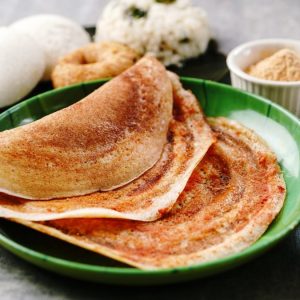
If you’re searching for the best dosa in Chelsea NYC, you’re looking at one of the most delicious ways to explore South Indian cuisine in Manhattan. Dosa is more than just a crispy crepe. Made from a fermented rice-and-lentil batter, it can be thin and crisp, soft and fluffy, buttery, spicy, stuffed with potatoes, or filled with a variety of creative ingredients.
Chelsea is also a convenient starting point because the neighborhood sits close to several parts of Manhattan with strong Indian dining scenes. One of the most notable dosa-focused options is Madras Dosa Co., whose official location page currently lists its Chelsea/Flatiron location at 668 6th Avenue, open daily from 10 AM until 3 AM.
Another Chelsea option is AMMI at Market 57 on 11th Avenue. The Infatuation specifically highlights its made-to-order masala dosa, describing it as crispy, generously sized, and served with spicy tomato and coconut chutneys plus sambar.
But the search for great dosa shouldn’t stop at the neighborhood boundary.
Nearby Midtown, Flatiron, Greenwich Village, and other Manhattan areas provide additional opportunities to compare South Indian cooking styles. Current NYC food coverage continues to highlight dosa as one of the city’s important Indian specialties, alongside biryani, tandoori dishes, South Indian stews, and regional street foods.
That variety matters because not every dosa is the same.
A classic masala dosa should have a delicate, crisp exterior and a flavorful potato filling. A paper dosa may be dramatically larger and thinner. A ghee roast dosa can have a richer, more buttery character. Mysore masala dosa may have a spicy chutney layer inside. Rava dosa offers a different texture altogether.
The accompaniments matter too.
A good dosa is typically served with sambar and chutneys, and those sides shouldn’t be treated as an afterthought. Coconut chutney adds creaminess and freshness, tomato chutney provides acidity and heat, while sambar contributes a warm, lentil-based complexity that complements the dosa.
This guide will help you explore the best dosa in Chelsea and nearby Manhattan, including the top restaurants to consider, the best neighborhoods for South Indian food, popular dosa varieties, vegetarian and vegan options, affordable choices, upscale South Indian dining, takeout tips, and how to identify an authentic dosa.
Whether you’re a South Indian-food enthusiast who already knows your masala dosa from your Mysore dosa, or you’re simply a first-time diner wondering why this giant crispy crepe is so popular, Chelsea provides an excellent place to begin.
And once you find a dosa you love, don’t stop there.
Try idli.
Try vada.
Try uttapam.
Try sambar with different chutneys.
Try South Indian filter coffee.
Because the real joy of finding the best dosa in Chelsea NYC isn’t just eating one perfect dosa—it’s discovering an entirely different side of Indian cuisine.
Why Chelsea Is Great for South Indian Dosa
Chelsea is an excellent starting point for discovering South Indian dosa in New York City, even though the neighborhood is better known internationally for attractions such as the High Line, Chelsea Market, galleries, and nightlife.
What makes the area particularly interesting for dosa lovers is its location. Chelsea sits close to Flatiron, Midtown, Greenwich Village, Hudson Yards, and other Manhattan neighborhoods where Indian restaurants offer different regional styles. That means you can start with a classic masala dosa and then explore several interpretations of South Indian cuisine without traveling far across the city.
Dosa Brings a Different Side of Indian Cuisine
For many American diners, their first experience with Indian food is usually something like:
Chicken tikka masala + naan + rice.
Dosa introduces an entirely different culinary tradition.
A traditional dosa is made from a fermented batter of rice and lentils. The batter is spread thinly across a hot cooking surface and cooked until the exterior develops a characteristic crisp texture.
Depending on the style, dosa can be:
- Thin and crispy
- Soft in the center
- Extra-large and paper-thin
- Filled with spiced potatoes
- Cooked with ghee
- Coated with spicy chutney
- Prepared with semolina
- Served with vegetables or other fillings
This diversity is one reason searching for the best dosa in Chelsea NYC can be much more interesting than simply finding one Indian restaurant.
Fermentation Is Part of What Makes Dosa Special
One of the characteristics that separates dosa from many other Indian breads is fermentation.
The rice-and-lentil batter is traditionally fermented before cooking. This contributes to its distinctive flavor, aroma, texture, and slight tang.
When the batter is spread across a hot griddle, the surface becomes thin and crisp while the interior can remain lighter and softer.
A properly cooked dosa should have a noticeable contrast between those textures.
If it arrives soft and heavy when you ordered a crispy variety, something important has been lost.
Chelsea Gives You Access to Casual South Indian Food
One of the most interesting places to start is AMMI at Market 57 on 11th Avenue.
Current food coverage from The Infatuation specifically highlights its made-to-order masala dosa, describing it as large and crispy and served with spicy tomato and coconut chutneys and sambar.
Its location makes it especially convenient for visitors exploring Hudson River Park, the High Line, or the western side of Chelsea.
AMMI also operates in a casual food-market environment, making it very different from a formal Indian restaurant.
That means you can enjoy dosa without committing to a long dinner.
Chelsea Is Close to Major South Indian Food Destinations
The neighborhood’s proximity to Flatiron is another advantage.
Madras Dosa Co. currently lists its location at 668 6th Avenue, making it a convenient option for diners coming from Chelsea, Flatiron, or nearby Midtown. Its current listing places it in the $10–$20 price range.
The restaurant focuses on South Indian cuisine, making it particularly relevant if dosa is your priority.
For budget-conscious diners, this type of restaurant can be especially attractive because dosa provides a substantial meal without necessarily requiring the price of a full-service dinner.
Dosa Is Naturally Vegetarian-Friendly
Another reason South Indian cuisine works so well in Chelsea is its enormous selection of vegetarian dishes.
Classic dosa itself is generally vegetarian, while many traditional accompaniments are also plant-based.
A typical meal might include:
Masala dosa + sambar + coconut chutney
You can then add:
- Idli
- Vada
- Uttapam
- Vegetable curry
- Lemon rice
- Tamarind rice
This makes dosa particularly useful for groups containing both vegetarian and non-vegetarian diners.
Dosa Is More Than Masala Dosa
Masala dosa is probably the variety most first-time diners recognize.
But it is only the beginning.
Depending on the restaurant, you may find:
- Plain dosa
- Masala dosa
- Mysore masala dosa
- Ghee roast dosa
- Rava dosa
- Paper dosa
- Onion dosa
- Cheese dosa
- Paneer dosa
- Special restaurant-style dosas
Each can have a different texture and flavor.
If you’re serious about finding the best dosa in Chelsea, comparing several styles is much more useful than ordering the same masala dosa everywhere.
The Accompaniments Matter
Never judge dosa alone.
Sambar and chutneys are essential parts of the experience.
A good coconut chutney should provide a creamy, fresh contrast to the crispy dosa.
Tomato chutney can add acidity and heat.
Sambar provides a warm, spiced lentil-and-vegetable component.
At AMMI, current coverage specifically mentions spicy tomato and coconut chutneys along with sambar accompanying its masala dosa.
This combination demonstrates why the sides matter so much.
A dosa with excellent texture but bland accompaniments may still feel incomplete.
Chelsea Is Convenient for Tourists
Dosa also fits naturally into a Chelsea sightseeing itinerary.
A visitor might spend the morning walking the High Line, explore Chelsea Market, visit galleries, and then have a South Indian meal nearby.
Because dosa is relatively quick compared with a formal multi-course restaurant meal, it works particularly well for travelers with busy schedules.
You don’t necessarily need to dedicate an entire evening to experiencing South Indian cuisine.
Dosa Works for Breakfast, Lunch, or Dinner
Unlike many rich Indian curries, dosa can fit comfortably into different parts of the day.
A morning meal could be:
Masala dosa + filter coffee
Lunch could be:
Masala dosa + vada + sambar
Dinner could be:
Mysore dosa + idli + chutneys
That flexibility makes dosa particularly useful for travelers and locals alike.
Dosa Can Be a Budget-Friendly Meal
Indian food isn’t automatically expensive in Manhattan.
South Indian restaurants can offer particularly good value.
Madras Dosa Co. currently falls within the $10–$20 price category, making it an accessible option for diners looking for a substantial South Indian meal.
For students, office workers, tourists, and families, dosa can therefore be a practical alternative to a $25–$40 restaurant entrée.
Dosa Is Excellent for Vegetarian Groups
Imagine four people ordering:
Masala dosa + Mysore dosa + idli + vada
Everyone gets something different, and the table can share sambar and chutneys.
This is one of the easiest ways to make a vegetarian Indian meal feel varied rather than repetitive.
Vegan Diners Have Options
Many traditional South Indian dishes are naturally vegan or can be prepared without dairy.
However, diners should still ask about:
- Ghee
- Butter
- Yogurt
- Cream
- Paneer
A dosa cooked with ghee isn’t vegan, even though the batter itself may contain no dairy.
Similarly, some chutneys or fillings may include dairy depending on the restaurant.
Explore South Indian Food Beyond Dosa
Once you’ve found a dosa you enjoy, use it as a gateway to other dishes.
Try:
Idli — soft steamed fermented rice-and-lentil cakes.
Vada — crispy savory lentil fritters.
Uttapam — thicker fermented pancakes topped with vegetables.
Sambar — lentil-based vegetable stew.
Rasam — lighter, tangy, spiced South Indian soup.
Filter coffee — strong South Indian coffee traditionally served with milk and sugar.
Together, these dishes provide a much broader understanding of South Indian cuisine.
Chelsea’s Location Lets You Compare Different Indian Traditions
One of the biggest benefits of eating Indian food around Chelsea is that you aren’t limited to one culinary tradition.
You can have:
Dosa in the afternoon → contemporary Indian dinner in Chelsea → regional Indian cuisine in Midtown
That makes the neighborhood a useful base for a broader Indian-food itinerary.
Current New York Indian-food coverage similarly highlights the city’s regional diversity, including South Indian, Kerala, Hyderabadi, and other Indian culinary traditions.
What Makes a Great Dosa?
When comparing restaurants, pay attention to:
- Crispness
- Fermentation flavor
- Thickness
- Even browning
- Filling quality
- Sambar
- Chutneys
- Freshness
- Portion size
- Whether the dosa is made to order
The best dosa should arrive hot.
A crispy dosa shouldn’t sit around for several minutes before being served.
The longer it waits, the more moisture can soften the exterior.
The Importance of Made-to-Order Cooking
Freshness is particularly important with dosa.
Unlike a curry that can hold reasonably well, dosa is at its best immediately after cooking.
That’s why made-to-order preparation is such a valuable quality indicator.
AMMI’s current coverage specifically describes its masala dosa as made to order, which is exactly what you want when evaluating crispy South Indian dosa.
Why Chelsea Is a Good Starting Point, Not the Final Destination
If your goal is to find the best dosa in Chelsea, don’t be discouraged if your favorite ends up technically being just outside Chelsea.
Neighborhood boundaries aren’t culinary boundaries.
Chelsea’s proximity to Flatiron and Midtown means you can easily expand your search.
If one restaurant’s dosa doesn’t meet your expectations, try another South Indian restaurant nearby.
Compare.
Experiment.
Try a different style.
That’s how you’ll eventually discover what kind of dosa you personally prefer.
Chelsea and Nearby Areas for Dosa
| Area | Why Explore It |
|---|---|
| Chelsea | Convenient for visitors and High Line travelers |
| 11th Avenue | Casual South Indian food at Market 57 |
| Chelsea Market | Convenient food-hall experience |
| Flatiron | Strong access to South Indian restaurants |
| 6th Avenue | Madras Dosa Co. and nearby Indian dining |
| Midtown | Wider selection of Indian regional cuisines |
| Greenwich Village | South Indian and contemporary Indian options |
The Best Way to Start Your Dosa Search
If you’re completely new to dosa, order a classic masala dosa first.
Pay attention to:
Crisp exterior → flavorful potato filling → coconut chutney → tomato chutney → sambar
Then come back and try something different.
A Mysore masala dosa will introduce more spice.
A ghee roast will introduce richness.
A rava dosa will give you a different texture.
A plain dosa will let you focus almost entirely on the fermented batter and cooking technique.
That’s when you’ll begin to understand what makes a truly excellent dosa.
Why Dosa Belongs on Your Chelsea Food List
Chelsea is famous for many things, but its proximity to South Indian restaurants gives food lovers another reason to visit.
Dosa is affordable, vegetarian-friendly, shareable, customizable, and completely different from the North Indian dishes many American diners already know.
So if you’ve already tried chicken tikka masala and butter chicken, make your next Indian-food adventure a dosa.
You may discover that the crispest, most aromatic, most satisfying Indian dish you’ve had in New York isn’t a curry at all—it’s a freshly made South Indian dosa.
Top Indian Restaurants for Dosa in Chelsea and Nearby Areas
When searching for the best dosa in Chelsea NYC, it is worth looking slightly beyond the neighborhood’s official boundaries. Chelsea has several convenient Indian-food options, while nearby Flatiron, Midtown, and other Manhattan neighborhoods add more South Indian choices.
The restaurants below are especially useful for comparing dosa styles, prices, atmosphere, and the overall South Indian dining experience.
AMMI at Market 57
AMMI is one of the most convenient choices for dosa in Chelsea itself.
Located at Market 57 on 11th Avenue, AMMI is a casual Indian food concept that makes its dosa to order. The Infatuation specifically highlights its masala dosa, describing it as crispy and generously sized and served with spicy tomato and coconut chutneys alongside sambar.
That combination makes it particularly appealing for someone who wants a straightforward introduction to South Indian food.
The setting is also convenient if you’re visiting the High Line or Hudson River area. Instead of planning an elaborate dinner, you can grab a dosa as part of a casual sightseeing day.
Best for: Masala dosa and casual dining
Location: Market 57, 25 11th Avenue
Style: Casual South Indian-inspired dining
Try: Masala dosa, chutneys, sambar
Madras Dosa Co.
Madras Dosa Co. is one of the most relevant restaurants to consider if dosa itself is the reason you’re searching.
Its current location information lists the restaurant at 668 6th Avenue, near the Chelsea/Flatiron area, making it a practical choice for diners coming from Chelsea.
The restaurant focuses on South Indian food and is currently listed in the $10–$20 price range.
That makes it particularly attractive for:
- Budget-conscious diners
- Students
- Office workers
- Casual lunches
- Vegetarian diners
- First-time dosa eaters
Madras Dosa Co.
A classic masala dosa is a good place to start, but if the menu offers several varieties, consider trying something more adventurous on a second visit.
Best for: Affordable South Indian food
Approximate price: $10–$20
Location: 668 6th Avenue
Try: Masala dosa, plain dosa, South Indian specialties
Chatti by Regi Mathew
For diners who want to explore regional South Indian cuisine rather than simply ordering a dosa, Chatti by Regi Mathew is an interesting option.
Located at 252 W. 37th Street in Midtown, Chatti specializes in South Indian food and is currently listed in the $50–$100 price category.
Chatti by Regi Mathew
This is a different type of experience from a casual dosa restaurant.
Rather than treating dosa as a quick inexpensive meal, Chatti provides an opportunity to explore South Indian flavors in a more polished restaurant environment.
Best for: Regional South Indian cuisine
Approximate price: $50–$100
Location: Midtown
Best for: Dinner and food enthusiasts
Semma
If you’re willing to travel downtown, Semma is another important name for diners interested in South Indian cuisine.
Located in Greenwich Village, Semma focuses on regional South Indian food rather than generic Indian restaurant fare.
Semma
It is particularly relevant for people who want to understand the diversity of South Indian cooking.
While your search may have started with dosa, restaurants such as Semma encourage you to explore other regional dishes as well.
Best for: Regional South Indian cuisine
Location: Greenwich Village
Best for: Experienced Indian-food diners and food enthusiasts
Utsav NYC
Utsav NYC is another option farther north in Midtown.
Located at 1185 6th Avenue, its current business listing categorizes it as an Indian, Bengali, modern Indian, vegetarian, and vegan restaurant, with a price range of approximately $30–$90.
Utsav NYC
It isn’t a dosa-focused restaurant in the same way as a dedicated South Indian restaurant, but it can be useful for groups where some diners want South Indian-inspired dishes while others prefer broader Indian cuisine.
Best for: Groups with different preferences
Approximate price: $30–$90
Location: Midtown
Chote Miya at Chelsea Market
Chote Miya is worth mentioning because of its location rather than because it is a dedicated dosa destination.
Located inside Chelsea Market, it provides casual Indian street-food-style options.
Chote Miya
This can be useful if your Chelsea itinerary already includes the High Line and Chelsea Market.
You can combine Indian food with other food-hall experiences without committing to a formal restaurant dinner.
However, if your number-one priority is dosa, a South Indian-focused restaurant is likely to be a better choice.
Best for: Casual Indian street food
Location: Chelsea Market
Best for: Tourists and quick meals
How These Restaurants Compare
| Restaurant | Area | Style | Price Level | Best For |
|---|---|---|---|---|
| AMMI | Chelsea | Casual Indian | $10–$20 | Masala dosa |
| Madras Dosa Co. | Chelsea/Flatiron | South Indian | $10–$20 | Dosa-focused meal |
| Chatti | Midtown | Regional South Indian | $50–$100 | Regional cuisine |
| Semma | West Village | South Indian | Upscale | Regional exploration |
| Utsav | Midtown | Modern Indian | $30–$90 | Groups |
| Chote Miya | Chelsea Market | Indian street food | Casual | Quick meal |
Best Restaurant for First-Time Dosa Diners
If you’ve never tried dosa before, start with AMMI or Madras Dosa Co.
The reason is simple.
You don’t need a complicated tasting menu to understand dosa.
Order a classic masala dosa and pay attention to the contrast between:
- Crispy dosa
- Soft potato filling
- Coconut chutney
- Tomato chutney
- Sambar
That’s enough to understand why the dish is so popular.
Best Restaurant for Budget Dosa
For price-conscious diners, Madras Dosa Co. is particularly attractive because its current listing places it in the $10–$20 range.
A dosa can be much more affordable than a full-service Indian dinner, while still being filling.
Best for a Chelsea Sightseeing Day
If your day includes the High Line, Hudson River Park, or Market 57, AMMI is particularly convenient.
You can combine:
High Line → Market 57 → Masala Dosa
without making a separate trip across Manhattan.
Best for Regional South Indian Food
If you’re more interested in understanding South Indian cuisine than simply eating dosa, look toward Chatti and Semma.
These restaurants allow you to explore a broader range of regional flavors.
Try dishes beyond dosa and compare how ingredients such as coconut, curry leaves, tamarind, lentils, rice, and spices are used in different preparations.
Best Dosa Strategy
Don’t judge a restaurant based on only one variety.
If you’re serious about finding your favorite dosa, try this progression:
Visit 1: Masala dosa
Visit 2: Mysore masala dosa
Visit 3: Ghee roast dosa
Visit 4: Rava dosa
Visit 5: Plain dosa
You’ll quickly discover whether you prefer:
Crispy + spicy
or
Crispy + buttery
or
Light + simple
or
Thin + delicate
What to Ask When Ordering
If you’re unsure what to order, ask:
“Which dosa do you recommend for a first-time visitor?”
Or, if you already know masala dosa:
“What’s your specialty dosa?”
This can reveal dishes that aren’t necessarily the most popular items online.
Check the Sambar and Chutneys
A dosa restaurant should be judged by its accompaniments as well.
Ask yourself:
Is the sambar flavorful?
Is the coconut chutney fresh?
Does the tomato chutney have enough acidity?
Are the accompaniments generous enough?
A restaurant can make a decent dosa but still fall short if the sides are bland.
Don’t Ignore Freshness
Dosa is one of those dishes where timing matters.
The longer it sits, the softer it becomes.
That’s why a freshly cooked dosa eaten immediately at the restaurant is generally a better experience than a dosa that has spent 30–40 minutes inside a delivery container.
If possible, dine in or pick it up nearby.
Final Shortlist
If you’re looking for a simple shortlist of places to investigate:
For dosa inside Chelsea: AMMI
For affordable South Indian food: Madras Dosa Co.
For regional South Indian dining: Chatti by Regi Mathew
For a broader South Indian destination: Semma
For casual Indian food while sightseeing: Chote Miya
For groups wanting different Indian styles: Utsav
The most important thing is to choose based on what kind of experience you want, rather than simply selecting the restaurant with the highest rating.
For a first dosa experience, keep it simple.
Order masala dosa.
Eat it hot.
Try all the chutneys.
Mix some sambar with the potato filling.
And then start planning your second visit.
Best Neighborhoods or Areas for Dosa Around Chelsea
If you’re searching for the best dosa in Chelsea NYC, don’t limit your search to restaurants whose addresses technically fall inside Chelsea. The neighborhood’s location gives you easy access to several nearby areas with Indian restaurants, particularly places specializing in South Indian cuisine.
For dosa lovers, this is a major advantage. You can enjoy a casual masala dosa in the Chelsea area one day and explore a more regional South Indian restaurant in Midtown or Greenwich Village the next.
Chelsea and 11th Avenue
The first area to explore is western Chelsea, particularly around 11th Avenue.
This area is convenient for visitors exploring:
- The High Line
- Hudson River Park
- Chelsea Market
- Market 57
- Hudson Yards
AMMI at Market 57 is one of the most relevant options here. Current coverage specifically highlights its made-to-order masala dosa, served with sambar and spicy tomato and coconut chutneys.
This makes 11th Avenue a particularly convenient starting point for first-time dosa diners.
You can combine sightseeing with a casual South Indian meal without traveling far from the attractions that bring most visitors to Chelsea.
Chelsea Market Area
Chelsea Market is one of Manhattan’s most recognizable food destinations.
Although it isn’t a dedicated South Indian neighborhood, it is useful for visitors who want to combine Indian food with other culinary experiences.
Chote Miya operates inside Chelsea Market and focuses on casual Indian street food.
If your primary objective is dosa, however, you should look at dedicated South Indian restaurants as well.
Chelsea Market is better for a broader casual Indian-food experience.
6th Avenue and Flatiron
For serious dosa hunting, move east toward 6th Avenue and Flatiron.
Madras Dosa Co. is located at 668 6th Avenue and is currently categorized as a South Indian restaurant in the $10–$20 range.
This makes the area particularly attractive for:
- Affordable dosa
- Vegetarian meals
- Casual lunches
- South Indian specialties
- First-time dosa diners
The short trip from Chelsea is worthwhile if dosa is the main reason you’re exploring Indian food.
Flatiron
Flatiron is one of the best nearby areas to consider if you want to expand beyond Chelsea.
The neighborhood sits close enough to Chelsea that you can easily incorporate it into the same food itinerary.
Flatiron is particularly useful because it provides access to a mixture of:
- South Indian restaurants
- Contemporary Indian restaurants
- Upscale Indian dining
- Casual Indian restaurants
You can therefore compare completely different styles of Indian cooking during the same trip.
For example:
Afternoon: South Indian dosa
Evening: Contemporary Indian dinner
That makes Flatiron a useful extension of a Chelsea Indian-food itinerary.
NoMad
NoMad is another nearby area worth exploring.
While it isn’t specifically known as a dosa district, its location between Chelsea, Flatiron, and Midtown makes it convenient for diners looking for Indian restaurants.
NoMad is especially interesting for visitors who prefer a more polished dining environment.
If you’re traveling as a couple or planning a special evening, you can combine a casual dosa lunch with upscale Indian dining later in the day.
Midtown South
Moving north toward Midtown South gives you access to more Indian restaurants while keeping you relatively close to Chelsea.
This area works particularly well for:
- Office lunches
- Business travelers
- Hotel guests
- Casual dinners
- Groups
It’s also a practical area for travelers staying around Penn Station or Madison Square Garden.
Midtown
Midtown is particularly valuable for diners who want to move from dosa into broader South Indian cuisine.
Chatti by Regi Mathew at 252 W. 37th Street is currently categorized as a South Indian restaurant and sits in the $50–$100 price range.
The experience is quite different from a quick dosa meal.
Instead of focusing solely on a crispy crepe, you can explore the wider traditions of South Indian cooking.
That makes Midtown an excellent next step for someone who has already tried dosa and wants to understand the cuisine behind it.
West 34th and 37th Streets
The corridor around West 34th–37th Streets is particularly convenient for visitors arriving through Penn Station.
You can easily combine:
Penn Station → Midtown sightseeing → South Indian dinner
This area is also useful for business travelers because of its proximity to offices, hotels, and transportation.
If you’re searching for dosa but also want a more extensive South Indian meal, this corridor is worth investigating.
Greenwich Village
For serious Indian-food enthusiasts, Greenwich Village is another important destination.
Semma at 60 Greenwich Avenue focuses on South Indian cuisine and provides a more destination-oriented dining experience than a casual dosa restaurant.
This is particularly valuable if you’ve already tried standard masala dosa and want to explore regional Indian cooking more deeply.
Instead of simply asking:
“Where can I get dosa?”
you can ask:
“What does South Indian cuisine look like beyond dosa?”
That change in mindset can lead to a much more interesting meal.
West Village
The West Village is especially useful for diners who appreciate regional Indian cuisine.
Restaurants in this area can provide dishes influenced by South Indian traditions that aren’t always represented on generic Indian restaurant menus.
Semma is a notable example.
For an Indian-food enthusiast, this can become part of a broader Manhattan culinary trip:
Chelsea → Flatiron → West Village
Each neighborhood provides a different restaurant environment and potentially different interpretations of Indian cuisine.
Hudson Yards
Hudson Yards sits directly north of Chelsea and is another convenient area for food exploration.
It is particularly useful if your itinerary includes:
- The Vessel
- The High Line
- Hudson Yards shopping
- Nearby offices
- Hotels
For dosa specifically, the area isn’t as concentrated as some South Indian dining districts farther east or downtown.
But because of its proximity, it’s worth considering when planning your overall Indian-food itinerary.
Which Area Is Best for First-Time Dosa Diners?
For a first dosa experience, start with:
Chelsea / 11th Avenue
or:
6th Avenue / Flatiron
These areas offer convenient access to casual South Indian options.
The goal should be to try a classic masala dosa rather than immediately seeking the most elaborate version.
Which Area Is Best for Affordable Dosa?
6th Avenue and Flatiron is a particularly practical choice.
Madras Dosa Co. is currently listed in the $10–$20 range, making it a strong option for budget-conscious diners.
For students, office workers, and tourists, this can provide a satisfying meal without the cost of upscale dining.
Which Area Is Best for Regional South Indian Food?
For a broader regional experience, consider:
Midtown — Chatti
West Village — Semma
These restaurants are more appropriate when you’re interested in exploring the cuisine rather than simply checking “dosa” off your food list.
Which Area Is Best for Tourists?
For tourists, Chelsea and 11th Avenue are particularly convenient because dosa can easily be combined with sightseeing.
A simple itinerary could be:
Morning: Walk the High Line
Lunch: Masala dosa at Market 57
Afternoon: Chelsea Market
Evening: Explore Flatiron or Midtown
This minimizes unnecessary travel while still giving you a varied New York experience.
Which Area Is Best for a Food-Focused Trip?
If food is the main purpose of your trip, expand the radius.
Consider:
Chelsea → Flatiron → Midtown → West Village
This gives you the opportunity to compare:
- Casual dosa
- South Indian specialties
- Contemporary Indian cuisine
- Regional Indian cooking
- Fine dining
You may discover that your favorite Indian restaurant isn’t actually inside Chelsea—and that’s perfectly fine.
Dosa Areas Around Chelsea at a Glance
| Area | Best For | Dining Style |
|---|---|---|
| Chelsea / 11th Ave | Casual dosa | Casual |
| Chelsea Market | Indian street food | Food hall |
| 6th Ave / Flatiron | Affordable dosa | Casual |
| Flatiron | Indian variety | Casual to upscale |
| NoMad | Contemporary dining | Upscale |
| Midtown South | Lunch and convenience | Casual to upscale |
| Midtown | Regional Indian food | Mid-range to upscale |
| West 34th–37th St | Travelers and business diners | Casual to upscale |
| Greenwich Village | Regional South Indian | Destination dining |
| West Village | South Indian cuisine | Upscale |
Don’t Let the Neighborhood Name Decide for You
When searching Google or restaurant apps for “best dosa near Chelsea NYC,” you may see restaurants categorized under Chelsea, Flatiron, Midtown, or another nearby neighborhood.
That’s normal.
Manhattan’s neighborhood boundaries overlap from a dining perspective.
A restaurant that is technically outside Chelsea may be only a short walk or subway ride away.
For food lovers, what’s more important is:
Distance + cuisine + freshness + restaurant specialty
rather than the exact neighborhood label.
The Best Dosa Strategy
If you have several days in Manhattan, try dosa in different environments.
Day 1: Casual masala dosa in Chelsea.
Day 2: South Indian specialties near Flatiron.
Day 3: Regional South Indian dining in Midtown or Greenwich Village.
Then compare:
- Batter flavor
- Crispness
- Potato filling
- Sambar
- Chutneys
- Portion size
- Spice level
- Overall freshness
That’s a much better way to find your personal favorite than relying solely on online rankings.
Final Recommendation
For the easiest starting point, explore Chelsea and 11th Avenue.
For affordable dosa, move toward 6th Avenue and Flatiron, where Madras Dosa Co. provides a convenient South Indian option.
For a more serious regional South Indian experience, expand toward Midtown and Greenwich Village, where restaurants such as Chatti and Semma provide a broader culinary perspective.
The important thing is not to treat Chelsea as a closed boundary.
Think of it as your starting point for exploring South Indian food across Manhattan.
Start with masala dosa.
Then try Mysore dosa.
Then ghee roast.
Then rava dosa.
And eventually move beyond dosa altogether.
Once you start exploring South Indian food around Chelsea, you’ll quickly discover that the crispy dosa on your plate is only the beginning.
Popular Indian Dosa Dishes People Should Try
If you’re searching for the best dosa in Chelsea NYC, starting with a classic masala dosa is a smart choice—but stopping there means missing most of what makes South Indian dosa culture so interesting.
Dosa comes in many forms, and each variation can change the texture, richness, spice level, filling, and overall experience. Some are extremely thin and crisp, while others are thicker and softer. Some emphasize fermented batter, while others add ghee, spicy chutney, onions, vegetables, or semolina.
For first-time diners, the best approach is to start with a familiar dosa and gradually explore different varieties.
Masala Dosa
Masala dosa is the essential starting point.
A thin, crisp dosa is filled with a savory potato mixture usually seasoned with ingredients such as onions, mustard seeds, curry leaves, turmeric, and other spices.
A classic serving typically comes with:
- Sambar
- Coconut chutney
- Tomato chutney
- Potato masala
The contrast is what makes it special.
Crispy dosa + soft potato filling + creamy coconut chutney + spicy sambar
If you’ve never eaten dosa before, this is the variety I’d recommend ordering first.
Plain Dosa
Plain dosa is the best way to understand the batter itself.
Unlike masala dosa, it doesn’t contain a substantial potato filling. That means you can focus on:
- Fermentation
- Aroma
- Crispness
- Browning
- Texture
A well-made plain dosa should be thin and crisp around the edges while retaining some tenderness toward the center.
It’s also useful when you’re sharing food with others because you can combine it with different chutneys and sambar.
Mysore Masala Dosa
If you like spicy food, Mysore masala dosa should be next on your list.
This variation generally incorporates a spicy chutney or paste into the dosa before the potato filling is added.
The result is more intense than a standard masala dosa.
Expect:
Crispy + spicy + savory + aromatic
It’s particularly good with coconut chutney because the creamy chutney helps balance the heat.
For someone who thinks regular masala dosa is too mild, Mysore dosa can be an excellent upgrade.
Ghee Roast Dosa
Ghee roast dosa takes the classic crispy dosa experience and adds richness.
Ghee is used during cooking, creating a distinctive aroma and deeper flavor.
A good ghee roast dosa should be:
- Extremely crisp
- Aromatic
- Golden
- Rich without being greasy
This is a great choice for diners who enjoy buttery flavors.
If you’re vegan, be careful: ghee is dairy, so ghee roast dosa isn’t vegan.
Paper Dosa
Paper dosa is famous for its dramatic appearance.
It is generally made extremely thin and crisp, often resulting in a very large dosa that can extend across much of the plate.
For first-time visitors, the presentation alone can be part of the experience.
The flavor is relatively simple, so the chutneys and sambar become especially important.
If you want something visually impressive for a food-focused visit to Chelsea, paper dosa is worth trying when available.
Rava Dosa
Rava dosa offers a completely different texture.
Instead of relying on the same batter used for traditional dosa, rava dosa incorporates semolina, creating a characteristic lacy and crisp structure.
You’ll often notice:
- Irregular holes
- Crispy edges
- Thin texture
- Toasted semolina flavor
It is particularly good for diners who prioritize crunch.
Onion Rava Dosa
Take rava dosa and add onions and spices, and you have another popular variation.
The onions become lightly caramelized during cooking and add sweetness and texture to the crisp dosa.
Pair it with coconut chutney and sambar for a satisfying meal.
Onion Dosa
Onion dosa is another straightforward variation.
Finely sliced onions are added during cooking, allowing them to soften and develop a lightly sweet flavor.
It’s less dramatic than a paper dosa or ghee roast, but it can be extremely satisfying when cooked properly.
Cheese Dosa
Cheese dosa is a more contemporary and fusion-oriented variation.
It isn’t necessarily the first choice for someone trying to understand traditional South Indian cuisine, but it can be fun if you’re interested in modern restaurant interpretations.
The melted cheese adds richness to the crispy dosa and can make it particularly appealing to children or diners who aren’t yet comfortable with stronger Indian flavors.
Paneer Dosa
Paneer dosa combines the South Indian dosa format with paneer, India’s popular fresh cheese.
Depending on the restaurant, the paneer may be combined with vegetables and spices before being placed inside the dosa.
It’s a good option for vegetarian diners who want something more substantial.
Remember that paneer is dairy, so this isn’t vegan.
Vegetable Dosa
Vegetable dosa is another flexible option.
The filling can include combinations of:
- Onions
- Peppers
- Carrots
- Cabbage
- Peas
- Potatoes
- Other seasonal vegetables
The exact preparation varies considerably between restaurants.
If you’re traveling with children or picky eaters, vegetable dosa can be an approachable way to introduce them to South Indian food.
Spring Dosa
Some Indian restaurants offer modern versions such as spring dosa, where the filling incorporates Indo-Chinese-inspired vegetables or sauces.
This isn’t the variety to choose if your goal is traditional South Indian cooking.
But it can be enjoyable if you’re interested in how Indian restaurants adapt classic dishes for contemporary diners.
Set Dosa
Set dosa is quite different from the extremely thin crispy dosa most American diners imagine.
Set dosa is generally smaller, thicker, and softer.
Instead of one enormous crispy crepe, you may receive several smaller dosas.
This style is particularly interesting because it demonstrates how dramatically the texture of dosa can vary.
Neer Dosa
Neer dosa comes from the coastal Karnataka tradition and is known for its extremely thin, delicate texture.
It is generally softer and more tender than the crisp masala dosa commonly served in Indian restaurants.
If you see it on a menu, consider ordering it because it offers an opportunity to explore a different regional dosa tradition.
Adai
Adai isn’t technically the same thing as the classic dosa, but it’s worth trying if you see it on a South Indian menu.
It’s a thicker savory pancake made primarily from a mixture of lentils and rice.
Because it uses a higher proportion of lentils, the flavor and texture are substantially different.
It’s a good choice for diners who want something hearty and protein-rich.
Pesarattu
Pesarattu is another South Indian specialty worth seeking out.
Made primarily from green gram, it has a distinctive greenish appearance and a different flavor profile from traditional rice-and-urad-dal dosa.
It is especially interesting for diners who want to explore beyond the standard restaurant menu.
Dosa With Sambar
Don’t treat sambar as merely a sauce.
Sambar is an important part of the South Indian dining experience.
It’s a lentil-based preparation with vegetables, tamarind, spices, and other aromatics.
Dip pieces of dosa into it, spoon it over the potato filling, or combine it with rice-based dishes.
The interaction between the crispy dosa and warm sambar is one of the reasons the meal works so well.
Dosa With Coconut Chutney
Coconut chutney provides a completely different flavor.
It is creamy, fresh, and often lightly seasoned.
When paired with a crispy dosa, it provides a cooling contrast.
If your dosa is spicy, coconut chutney can also help balance the heat.
Dosa With Tomato Chutney
Tomato chutney generally provides more acidity and sharper flavor.
Some versions can also be quite spicy.
If your restaurant serves multiple chutneys, try them separately before mixing them together.
That allows you to understand how each one changes the dosa.
Masala Dosa + Filter Coffee
For a classic South Indian-style meal, consider:
Masala dosa + sambar + coconut chutney + South Indian filter coffee
The coffee provides a rich, aromatic finish after the savory meal.
If you’re exploring South Indian food for the first time, this combination is an excellent introduction.
Best Dosa for First-Time Diners
Start with:
Masala dosa
It’s familiar enough to be approachable while still showcasing the core dosa experience.
Best Dosa for Crispy-Texture Lovers
Try:
Paper dosa
or:
Rava dosa
Both emphasize crispness.
Best Dosa for Spicy-Food Lovers
Try:
Mysore masala dosa
The spicy chutney layer provides considerably more intensity than a standard masala dosa.
Best Dosa for Rich Flavors
Try:
Ghee roast dosa
The ghee adds aroma and richness.
Best Dosa for Vegan Diners
Start with:
Plain dosa or masala dosa
but confirm that the restaurant cooks the dosa with vegetable oil rather than ghee or butter.
Also check the fillings and chutneys for dairy.
Best Dosa for Vegetarian Diners
Vegetarian diners have almost unlimited choices.
Try:
- Masala dosa
- Mysore masala dosa
- Onion dosa
- Rava dosa
- Paneer dosa
- Vegetable dosa
- Set dosa
Most traditional dosa varieties are vegetarian, although individual restaurant preparations can vary.
Best Dosa for Children
For children who aren’t used to spicy Indian food, consider:
Plain dosa + mild potato filling + coconut chutney
You can request a mild preparation and introduce sambar separately.
Cheese dosa can also be an approachable modern option for children.
Best Dosa for Adventurous Diners
If you’ve already eaten masala dosa several times, look for:
- Pesarattu
- Neer dosa
- Set dosa
- Adai
- Mysore dosa
- Rava dosa
These provide a better understanding of South Indian regional diversity.
A Dosa Tasting Strategy
If you’re dining with friends, don’t order four identical masala dosas.
Instead, try:
Person 1: Masala dosa
Person 2: Mysore masala dosa
Person 3: Rava dosa
Person 4: Ghee roast dosa
Cut each into pieces and share.
This gives everyone the opportunity to compare textures and flavors.
Don’t Forget the Freshness Factor
Whatever variety you choose, eat dosa as soon as possible.
Dosa is at its best when:
- It’s hot
- The edges are crisp
- The center is still tender
- The filling is warm
- The chutneys are fresh
- The sambar is hot
This is why dining in or picking up from a nearby restaurant is generally better than ordering dosa from far away.
Popular Dosa Varieties at a Glance
| Dosa | Texture | Flavor | Best For |
|---|---|---|---|
| Plain Dosa | Thin & crisp | Mild, fermented | First-time tasting |
| Masala Dosa | Crisp + soft filling | Savory | First-time diners |
| Mysore Masala | Crisp | Spicy | Heat lovers |
| Ghee Roast | Very crisp | Rich | Ghee lovers |
| Paper Dosa | Extremely thin | Light | Crispness |
| Rava Dosa | Lacy & crisp | Toasted | Texture lovers |
| Onion Dosa | Crisp | Savory/sweet | Casual meals |
| Paneer Dosa | Crisp + creamy filling | Rich | Vegetarians |
| Set Dosa | Thick & soft | Mild | Texture exploration |
| Neer Dosa | Thin & soft | Delicate | Regional exploration |
| Pesarattu | Soft/crisp | Lentil-forward | Adventurous diners |
Explore Beyond the Dosa
Once you’ve tried several varieties, don’t stop at dosa.
Order:
Idli for something soft and steamed.
Vada for something crispy.
Uttapam for a thicker vegetable-topped pancake.
Sambar for a hearty lentil preparation.
Rasam for something tangy and aromatic.
Filter coffee for a classic South Indian beverage.
This turns a dosa visit into a full South Indian food experience.
Final Recommendation
If you’re visiting Chelsea specifically to find the best dosa in NYC, start with a classic masala dosa at a restaurant known for South Indian cooking.
Then expand your exploration.
Try Mysore masala for spice.
Try rava dosa for crunch.
Try ghee roast for richness.
Try paper dosa for the dramatic presentation.
Try regional varieties when you find them.
And always pay attention to the sambar and chutneys.
The perfect dosa isn’t just about a crispy crepe. It’s about fermented batter, fresh cooking, flavorful fillings, balanced chutneys, aromatic sambar, and the experience of eating it while it’s still hot and crisp.
Vegetarian and Vegan Indian Food Options for Dosa Lovers
Dosa is already one of the most naturally vegetarian-friendly dishes in Indian cuisine, which makes Chelsea and nearby South Indian restaurants particularly appealing for plant-based diners. But if you’re searching for the best dosa in Chelsea NYC, you don’t have to stop with a plain or masala dosa.
South Indian cuisine offers an extensive selection of vegetarian dishes, many of which can also be vegan depending on how the restaurant prepares them.
Why Dosa Is Great for Vegetarian Diners
Traditional dosa batter is generally made from rice and lentils, making the basic dosa vegetarian.
A classic vegetarian meal can include:
Masala dosa + sambar + coconut chutney
You can then add:
- Idli
- Vada
- Uttapam
- Vegetable curries
- Sambar
- Rasam
- Lemon rice
- Tamarind rice
This makes South Indian restaurants particularly easy places for vegetarian groups to find substantial meals.
Masala Dosa
Masala dosa is one of the easiest vegetarian dishes for first-time diners.
The crisp dosa is filled with seasoned potatoes and onions and accompanied by sambar and chutneys.
The potato filling provides enough substance that you don’t need to order a separate meat-based entrée.
For a vegetarian lunch, try:
Masala dosa + sambar + coconut chutney
Plain Dosa
Plain dosa is another excellent vegetarian option.
Because there is no heavy filling, you can concentrate on the fermented batter and crispy texture.
It also works well as a shared dish when ordering several South Indian specialties.
If you’re vegan, ask whether the dosa is cooked with vegetable oil rather than ghee or butter.
Mysore Masala Dosa
Mysore masala dosa is a good option for vegetarians who enjoy spicy food.
The spicy chutney spread inside the dosa adds another layer of flavor to the potato filling.
The dish is vegetarian, but vegan diners should confirm that no butter, ghee, or other dairy ingredients are used during preparation.
Ghee Roast Dosa
Ghee roast dosa is vegetarian but not vegan.
Ghee is clarified butter, so diners following a strict vegan diet should avoid it.
For vegetarians, however, the rich aroma and extremely crisp texture make this one of the most enjoyable dosa varieties.
Rava Dosa
Rava dosa is another excellent vegetarian choice.
Its semolina-based preparation produces a thin, lacy, crispy texture.
It’s particularly good with coconut chutney and sambar.
If you’re ordering for a group, rava dosa provides useful textural contrast to a softer dish such as idli.
Onion Dosa
Onion dosa is a simple vegetarian choice featuring onions cooked directly into the dosa.
The onions add sweetness and texture while the dosa provides crispness.
It’s a good option for diners who want something flavorful without a heavy filling.
Vegetable Dosa
Vegetable dosa can contain a mixture of vegetables such as:
- Onions
- Carrots
- Peppers
- Cabbage
- Potatoes
- Peas
The exact recipe depends on the restaurant.
If you’re vegan, confirm that the vegetable filling doesn’t contain butter, paneer, cream, or other dairy.
Paneer Dosa
Paneer dosa combines a South Indian dosa with paneer-based filling.
It’s a substantial vegetarian option, particularly for diners who want additional richness and protein.
However, paneer is dairy, so it is not vegan.
Idli
Idli is one of the lightest vegetarian South Indian dishes.
These steamed cakes are traditionally made from fermented rice-and-lentil batter and served with sambar and chutneys.
They’re particularly useful if you want something less oily than a crispy dosa.
For a light vegetarian meal:
Idli + sambar + coconut chutney
Vada
Vada provides a crispy alternative to dosa.
Made primarily from lentils, it has a crunchy exterior and soft interior.
It’s typically served with sambar and chutneys.
For a shared vegetarian meal, try:
Masala dosa + vada + sambar
Uttapam
Uttapam is thicker and softer than dosa and is often topped with vegetables.
Popular toppings include:
- Onion
- Tomato
- Green chili
- Cilantro
- Other vegetables
It provides a completely different texture while remaining vegetarian.
Sambar
Sambar is one of the most important accompaniments to dosa.
It’s a lentil-and-vegetable preparation flavored with spices and tamarind.
For vegan diners, sambar is often a useful choice, but it’s still worth confirming the restaurant’s ingredients.
Coconut Chutney
Coconut chutney is naturally well suited to plant-based meals.
The creamy texture comes primarily from coconut rather than dairy.
It provides a cooling contrast to spicy dosa varieties.
However, recipes differ, so vegan diners should confirm the preparation if strict dietary compliance is important.
Tomato Chutney
Tomato chutney adds acidity, sweetness, and spice.
It’s an excellent accompaniment to dosa and can make a simple plain dosa much more interesting.
Some restaurants may use different ingredients, so strict vegans should confirm the recipe.
Chana Masala
If you want something outside South Indian cuisine, chana masala is a strong vegetarian and potentially vegan choice.
The chickpea-based curry is hearty enough to work as a main dish.
Pair it with:
Chana masala + rice or roti
for a satisfying plant-based meal.
Vegetable Biryani
Vegetable biryani can also be an excellent vegetarian option.
The rice is flavored with spices, herbs, and vegetables, creating a more substantial dish than plain rice.
However, vegan diners should check whether the restaurant prepares the biryani with ghee.
Dal
Dal is another essential vegetarian Indian dish.
Different restaurants may use different lentils and preparations.
Some versions are naturally vegan, while others may include ghee or butter.
Ask:
“Is the dal cooked with ghee or butter?”
If the answer is no, it may be a good vegan choice.
Dal Makhani
Dal makhani is vegetarian but frequently contains butter and cream.
That makes it an excellent option for vegetarian diners but one that vegan diners should approach carefully.
If you’re vegan, ask whether the kitchen can prepare a dairy-free version.
Vegan Dosa: What to Ask
If you’re strictly vegan, don’t simply say:
“Is the dosa vegetarian?”
Instead, ask:
“Is the dosa batter dairy-free, and is the dosa cooked with oil rather than ghee or butter?”
Then check the fillings and chutneys.
This is a much more reliable way to ensure your meal meets your dietary requirements.
Watch Out for Ghee
Ghee is one of the most important ingredients for vegan diners to know.
It is clarified butter and is commonly used in Indian cooking.
It can appear in:
- Dosa
- Rice
- Curries
- Dal
- Biryani
- Naan
- Desserts
A dish can therefore appear completely plant-based while still containing ghee.
Naan Isn’t Automatically Vegan
If you’re ordering Indian food alongside your dosa, be careful with naan.
Many naan recipes may contain:
- Butter
- Ghee
- Yogurt
- Milk
Roti may sometimes be a simpler alternative, but always confirm the ingredients.
Vegan-Friendly South Indian Meal
A simple vegan meal could be:
Plain dosa + sambar + coconut chutney + tomato chutney
assuming the dosa and accompaniments are prepared without dairy.
Another option is:
Idli + sambar + chutneys
Again, verify ingredients with the restaurant.
Vegetarian South Indian Meal
For vegetarians who don’t need to avoid dairy:
Masala dosa + vada + sambar + coconut chutney
is an excellent combination.
For something more substantial:
Paneer dosa + vegetable dish + rice
can provide plenty of variety.
Vegetarian Food for Families
Dosa is especially family-friendly because it is easy to share.
A family could order:
- Masala dosa
- Plain dosa
- Idli
- Vada
- Uttapam
- Sambar
- Several chutneys
Children can start with plain dosa or mild potato filling while adults experiment with spicier varieties.
Vegan Food for Groups
When dining with a mixed group, order several dishes and clearly identify which ones are vegan.
For example:
Masala dosa — vegan if prepared with oil
Idli — typically dairy-free, but confirm
Sambar — confirm ingredients
Coconut chutney — confirm preparation
Ghee roast dosa — vegetarian, not vegan
Paneer dosa — vegetarian, not vegan
This makes it much easier for everyone to enjoy the meal without confusion.
Best Plant-Based Dishes for First-Time Diners
If you’re new to Indian vegetarian food, start with:
- Masala dosa
- Idli
- Vada
- Chana masala
- Vegetable biryani
These provide different textures and flavors without overwhelming a first-time diner.
Best Plant-Based Dishes for Adventurous Diners
Once you’re comfortable with standard dosa, explore:
- Mysore dosa
- Rava dosa
- Pesarattu
- Neer dosa
- Adai
- Regional vegetable preparations
- South Indian rice dishes
These provide a much broader perspective on vegetarian Indian cooking.
The Best Vegetarian Dosa Experience
If you’re looking for a complete vegetarian South Indian meal in Chelsea, consider:
Masala dosa + vada + sambar + coconut chutney + filter coffee
It’s filling without being excessively heavy and gives you several different textures in one meal.
The Best Vegan Dosa Experience
For a vegan version:
Plain or masala dosa + sambar + coconut chutney + tomato chutney
Ask the restaurant to prepare the dosa with vegetable oil instead of ghee or butter.
Why South Indian Food Is So Good for Plant-Based Diners
The real advantage is variety.
You aren’t simply replacing chicken with vegetables.
South Indian cuisine gives you:
Fermented foods + lentils + rice + vegetables + coconut + spices + chutneys
That combination creates meals that are flavorful, filling, and naturally compatible with vegetarian diets.
And because dosa is only one part of the cuisine, you can return repeatedly without eating the same meal twice.
Final Recommendation
If you’re searching for vegetarian and vegan dosa in Chelsea NYC, start with a classic masala dosa and ask how it is prepared.
For vegetarians, you can explore almost the entire dosa menu.
For vegans, pay special attention to ghee, butter, yogurt, paneer, and dairy-containing chutneys or fillings.
Most importantly, don’t let the word “vegetarian” automatically convince you that something is vegan.
Ask questions.
Try different dosa varieties.
Explore idli, vada, uttapam, sambar, and South Indian rice dishes.
Chelsea’s dosa scene is particularly rewarding for plant-based diners because a simple rice-and-lentil crepe can open the door to an entire world of vegetarian and vegan Indian cuisine.
Budget-Friendly Indian Restaurants for Dosa in Chelsea
If you’re searching for the best dosa in Chelsea NYC on a budget, South Indian food can be one of the smartest choices. A dosa is filling, flavorful, and often considerably less expensive than a full-service Indian dinner with multiple curries, rice, and breads.
The biggest advantage is that you can enjoy a complete meal—dosa, sambar, chutneys, and sometimes additional South Indian dishes—without necessarily spending $30 or more.
Madras Dosa Co.
For budget-conscious dosa lovers, Madras Dosa Co. is one of the strongest places to start.
Its current business listing places it in the $10–$20 price range and identifies it specifically as a South Indian restaurant. Madras Dosa Co.
That makes it particularly attractive for:
- Students
- Office workers
- Solo diners
- Tourists
- Vegetarian diners
- Casual lunches
A classic masala dosa can provide a substantial meal without requiring several additional dishes.
Best for: Affordable South Indian food
Price range: $10–$20
Location: 668 6th Avenue
Try: Masala dosa, rava dosa, South Indian specialties
AMMI at Market 57
AMMI is another convenient budget-friendly option for dosa in the broader Chelsea area.
Located at Market 57 on 11th Avenue, it offers a casual food-market setting rather than a traditional full-service restaurant.
The Infatuation specifically highlights its made-to-order masala dosa, describing it as crispy and generously sized and served with sambar, spicy tomato chutney, and coconut chutney.
That makes it particularly useful for visitors who want a quick but satisfying meal while exploring Chelsea.
Best for: Casual masala dosa
Location: Market 57 / 11th Avenue
Best for: Tourists and quick lunches
Why Dosa Is a Good Budget Meal
A major advantage of dosa is that it combines several components into one dish.
A masala dosa gives you:
- Crispy fermented crepe
- Potato filling
- Sambar
- Chutneys
You don’t necessarily need to add another entrée.
Compare that with a traditional North Indian dinner where you might order:
Chicken tikka masala + rice + naan + appetizer
The total can become significantly higher.
For budget-conscious diners, dosa is therefore one of the easiest ways to enjoy a substantial Indian meal in Manhattan.
Choose Masala Dosa for Maximum Value
If you’re hungry, masala dosa is usually a better value than plain dosa because the potato filling makes the meal more substantial.
A typical budget-friendly order could be:
Masala dosa + sambar + coconut chutney
That’s often enough for one person.
If you’re particularly hungry, add vada rather than ordering another expensive entrée.
Plain Dosa Can Be Even Simpler
If you’re not very hungry, plain dosa can be a smart choice.
You get the crisp fermented crepe along with the standard accompaniments without paying for a substantial filling.
It can also be useful if you’re planning to order other South Indian dishes for the table.
Rava Dosa for a Different Texture
Rava dosa is another option to consider when available.
Because of its semolina-based batter, it has a thin, lacy, crispy texture.
It provides a different experience from masala dosa without requiring a major increase in spending.
For someone trying several dosa varieties, this is an inexpensive way to compare textures.
Share Vada Instead of Ordering Multiple Entrées
If you’re dining with a friend, consider:
1 Masala dosa + 1 vada + drinks
rather than ordering two large meals each.
The dosa provides the main meal, while the vada gives you something different to share.
This is particularly useful if you’re exploring South Indian food for the first time.
Try Idli for a Light Meal
Idli can also be a budget-friendly choice.
These steamed rice-and-lentil cakes are lighter than many fried or rich dishes.
Pair them with sambar and chutneys.
For a smaller appetite:
Idli + sambar + chutney
can be enough.
Don’t Automatically Order a Drink
One of the easiest ways to increase a restaurant bill is to add several beverages.
If you’re trying to keep your budget under control, water is obviously the simplest option.
If you’re specifically interested in South Indian cuisine, however, filter coffee can be worth adding after the meal.
The key is to choose intentionally rather than adding drinks automatically.
Lunch Can Be the Best Time for Dosa
If you’re visiting Chelsea as a tourist, consider having your main Indian meal at lunch.
Lunch can sometimes provide better value than dinner, particularly at restaurants that offer weekday specials or smaller meal combinations.
Dosa is especially well suited to lunch because it is filling without necessarily leaving you feeling as heavy as a large curry-based dinner.
Pickup Can Save Money
If you’re ordering dosa to take away, pickup can often be more economical than delivery.
You avoid:
- Delivery fees
- Service charges
- Small-order fees
- Long delivery times
And because dosa is best eaten fresh, pickup can also improve the food quality.
Don’t Order Dosa From Too Far Away
This is particularly important.
Dosa loses its crispness as it sits inside a closed container.
Steam softens the exterior.
So even if a restaurant has an excellent rating, a long-distance delivery may not produce the same experience.
For the best combination of price + freshness, choose a restaurant relatively close to you.
Vegetarian Diners Can Save More
Vegetarian dosa is already relatively affordable compared with meat-based Indian dishes.
Good options include:
- Masala dosa
- Plain dosa
- Rava dosa
- Onion dosa
- Vegetable dosa
- Idli
- Vada
- Uttapam
A vegetarian South Indian meal can therefore be extremely satisfying without requiring expensive meat or seafood.
Vegan Diners Can Also Eat Affordably
Many dosa varieties can work for vegan diners, provided the restaurant doesn’t use ghee or butter.
Ask:
“Can you make the dosa with vegetable oil instead of ghee?”
Also check:
- Chutneys
- Potato filling
- Sambar
- Side dishes
A dairy-free dosa with sambar and chutneys can make a very affordable vegan meal.
Avoid the Ghee Roast if You’re Budgeting
Ghee roast dosa can be delicious, but if you’re focused on keeping your meal inexpensive, start with a classic dosa.
You can always try the richer version on another visit.
Similarly, specialty dosas with cheese, paneer, or elaborate fillings can cost more than a traditional masala dosa.
Budget-Friendly Dosa for Two
For two diners, a good strategy is:
1 masala dosa
1 rava or plain dosa
1 vada
Shared sambar and chutneys
This gives you several different textures without ordering too much food.
Budget-Friendly Dosa for a Family
For a family, consider sharing:
- 2 masala dosas
- 1 plain dosa
- 1 vada
- 1 idli order
Children can eat the plain dosa or potato filling, while adults can experiment with the spicier chutneys.
A $10–$20 Dosa Meal Can Be Enough
One of the strongest reasons South Indian food works for budget travelers is that you don’t need a complicated order.
A single dosa can provide:
Carbohydrates + lentils + vegetables + spices + chutneys
and create a filling meal.
That’s excellent value compared with many Manhattan dining options.
Compare the Complete Cost
Don’t judge affordability solely by the menu price.
A restaurant advertising a $15 dosa may end up costing $25 after:
- Delivery
- Service fees
- Tax
- Tip
- Additional sides
A $19 dosa that includes more accompaniments and is within walking distance may ultimately be better value.
Budget Dosa vs. Fine Dining
Chelsea and nearby Manhattan provide both ends of the spectrum.
You can spend roughly:
$10–$20: Casual South Indian meal
or significantly more at an upscale Indian restaurant.
Neither is necessarily “better.”
They serve different purposes.
If your goal is simply to enjoy a delicious, authentic dosa, a casual South Indian restaurant may actually be the more appropriate choice.
Best Budget Options at a Glance
| Restaurant/Area | Approx. Price | Best For |
|---|---|---|
| Madras Dosa Co. | $10–$20 | Affordable dosa |
| AMMI | Casual | Made-to-order masala dosa |
| Chelsea Market | Casual | Quick Indian food |
| Flatiron/6th Ave | $10–$20 options | Budget South Indian food |
Best Budget Order
If I were building a simple budget-friendly dosa meal, I’d choose:
Masala dosa + sambar + coconut chutney
If two people are eating:
Masala dosa + rava dosa + vada
If you’re vegan:
Plain/masala dosa + sambar + dairy-free chutneys
Always confirm the restaurant’s current preparation and pricing.
Final Recommendation
For someone searching specifically for affordable dosa near Chelsea NYC, start with Madras Dosa Co., whose current listing places it in the $10–$20 range and identifies it as a South Indian restaurant.
If you’re already exploring western Chelsea and Market 57, AMMI is another convenient option for made-to-order masala dosa.
The smartest budget strategy is simple:
Order one substantial dosa.
Share additional dishes.
Choose pickup when possible.
Avoid unnecessary delivery fees.
Eat the dosa immediately while it’s still crisp.
And remember: affordable doesn’t have to mean boring. A freshly made masala dosa with hot sambar and vibrant chutneys can be one of the most satisfying—and wallet-friendly—Indian meals you can have in Chelsea.
Fine Dining Indian Restaurants for Dosa Lovers Around Chelsea
If you’re looking for fine dining Indian restaurants near Chelsea NYC, dosa can take you in a surprisingly sophisticated direction. While dosa is often associated with affordable South Indian restaurants and casual lunches, contemporary Indian chefs increasingly use regional Indian ingredients, fermentation, modern presentation, and refined techniques to create more elevated dining experiences.
One important distinction, however, is worth making: Chelsea itself has fewer dedicated fine-dining South Indian restaurants than it has upscale Indian restaurants. If your priority is specifically dosa, you may need to expand your search slightly into Flatiron, Midtown, or Greenwich Village.
If your priority is an upscale Indian dining experience rather than dosa alone, Chelsea and nearby Manhattan have several strong choices.
aRoqa
aRoqa
For fine Indian dining inside Chelsea, aRoqa is the natural starting point.
Located at 206 9th Avenue, near Chelsea Market and the High Line, aRoqa presents Indian food through a contemporary lens. Current OpenTable information describes its approach as elevated Indian cuisine with global influences, regional flavors, creative presentation, and small plates designed for sharing.
The restaurant is particularly suitable for:
- Date nights
- Celebrations
- Business dinners
- Couples
- Food-focused travelers
- Groups wanting to share several dishes
The current listed price range is approximately $31–$50 per person before tax, tip, and drinks.
If you’re specifically looking for dosa, check the current menu before visiting because aRoqa is not primarily a dosa-focused restaurant. Its strength is contemporary Indian cuisine.
Best for: Upscale Indian dining in Chelsea
Location: 206 9th Avenue
Style: Contemporary/progressive Indian
Best occasion: Date night or special dinner
Junoon
Junoon
Just east of Chelsea in Flatiron, Junoon is one of the strongest choices for diners who want a more formal Indian experience.
Located at 19 W. 24th Street, Junoon is currently listed by Michelin as a contemporary Indian restaurant. The Michelin Guide highlights its sophisticated interpretations of Indian cuisine, while the restaurant promotes multi-course and tasting experiences.
This is the kind of restaurant to choose when your priority is:
Indian fine dining > specifically dosa.
The experience is considerably more formal than a casual South Indian dosa restaurant.
For a special occasion, you could explore the restaurant’s broader menu rather than expecting a traditional dosa-house experience.
Best for: Contemporary Indian fine dining
Location: Flatiron
Price: $100+
Best occasion: Celebrations, tasting menus, special dinners
Indian Accent
Indian Accent
If you’re willing to travel north into Midtown West, Indian Accent is another major destination for upscale contemporary Indian food.
Located at 123 W. 56th Street, the restaurant is currently categorized as Indian and contemporary, with a $100+ price range.
Fine Dining Lovers specifically highlights Indian Accent for its modern Indian cooking and tasting-menu experience.
This is an especially good option for visitors who want to combine Indian fine dining with attractions around:
- Central Park
- Carnegie Hall
- Radio City Music Hall
- MoMA
- Times Square
Again, Indian Accent is not a dedicated dosa restaurant. Think of it as an opportunity to experience how Indian cuisine can be interpreted in a luxury setting.
Best for: Modern Indian fine dining
Location: Midtown West
Price: $100+
Best occasion: Luxury dining and celebrations
Chatti by Regi Mathew
Chatti by Regi Mathew
For dosa lovers who want to explore regional South Indian cuisine at a more upscale level, Chatti by Regi Mathew is particularly interesting.
Located at 252 W. 37th Street, Chatti is currently categorized as a South Indian restaurant and falls in the $50–$100 price range.
This makes it one of the more relevant options when your interest is specifically South Indian food rather than generic Indian fine dining.
The restaurant is a better choice for someone asking:
“How can I experience sophisticated South Indian cuisine?”
rather than:
“Where can I get the cheapest masala dosa?”
Best for: Regional South Indian cuisine
Location: Midtown
Price: $50–$100
Best for: Food enthusiasts and regional exploration
Semma
Semma
For a more serious exploration of South Indian cooking, consider Semma in Greenwich Village.
Fine Dining Lovers includes Semma among its notable New York restaurants for regional Indian cuisine.
The restaurant is particularly relevant for diners who have already tried masala dosa and want to understand the broader culinary traditions of South India.
Instead of focusing exclusively on the familiar restaurant staples, a regional restaurant such as Semma can introduce diners to ingredients, preparations, and dishes that aren’t commonly found on generic Indian menus.
Best for: Regional South Indian cuisine
Location: Greenwich Village
Best for: Experienced Indian-food diners
Passerine
Cloves Indian Cuisine
For an upscale Indian meal closer to the Flatiron/NoMad area, contemporary Indian restaurants around Madison Avenue provide another option.
Cloves Indian Cuisine at 66 Madison Avenue is currently listed in the $20–$70 range, making it more accessible than some of Manhattan’s $100+ tasting-menu restaurants.
It’s a useful choice if you’re looking for something more polished than a casual dosa restaurant without necessarily committing to a luxury tasting-menu budget.
Best for: Upscale Indian dining
Location: NoMad/Flatiron
Price: Approximately $20–$70
Musaafer
For a true destination-style Indian fine-dining experience, Musaafer in TriBeCa is worth considering.
OpenTable currently describes Musaafer as an opulent Indian dining experience inspired by India’s art, architecture, and regional culinary traditions.
The restaurant’s concept is built around culinary exploration across India, making it particularly interesting for diners who want regional variety in an upscale environment.
It is considerably farther from Chelsea, so this isn’t the restaurant to choose if you simply want a quick dosa.
Instead, think:
Chelsea sightseeing → downtown dinner destination
Best for: Luxury Indian dining
Location: TriBeCa
Best occasion: Celebrations and destination dining
Bungalow
Bungalow
Bungalow on 1st Avenue is another high-end Indian restaurant for diners willing to travel downtown.
Its current business listing places it in the $100+ category.
Like Musaafer, it isn’t a practical dosa stop from Chelsea, but it can be part of a broader Indian-food itinerary if you’re interested in contemporary Indian dining.
Best for: Luxury Indian cuisine
Location: East Village
Price: $100+
Best for: Special occasions
Dosa vs. Fine Dining: Know What You’re Looking For
This is particularly important for this article.
If your priority is:
“I want the best crispy masala dosa.”
Choose a South Indian restaurant such as AMMI or Madras Dosa Co.
If your priority is:
“I want an upscale Indian dining experience.”
Consider aRoqa, Junoon, or Indian Accent.
If your priority is:
“I want sophisticated regional South Indian cuisine.”
Explore Chatti or Semma.
These are three different dining goals.
Best Upscale Restaurant in Chelsea
For an upscale Indian experience without leaving Chelsea, aRoqa is the clearest choice.
Current listings describe it as a contemporary Indian restaurant near Chelsea Market and the High Line, with small plates, global influences, and a sophisticated setting.
Best Fine Dining Near Chelsea
For a more formal experience, Junoon is a strong choice.
Its contemporary Indian positioning and tasting-menu format make it better suited to a special occasion than a quick dosa lunch.
Best for South Indian Fine Dining
For diners specifically interested in regional South Indian cooking, Chatti by Regi Mathew is one of the more relevant options in the broader Chelsea–Midtown area.
Best for a Modern Indian Tasting Experience
Indian Accent is the strongest destination if you’re willing to travel to Midtown West.
Its modern interpretation of Indian food and tasting-menu format make it a different experience from traditional South Indian restaurants.
What About Dosa at Fine Dining Restaurants?
This is where expectations matter.
Dosa is traditionally associated with casual restaurants, breakfast spots, and South Indian dining rooms.
At fine-dining restaurants, you may encounter Indian ingredients and techniques presented differently, but you shouldn’t assume every upscale Indian restaurant will have a traditional masala dosa.
If dosa itself is your priority, prioritize:
- South Indian specialization
- Made-to-order cooking
- Fermented batter
- Fresh sambar
- Multiple chutneys
- Appropriate dosa texture
If fine dining is your priority, focus more on:
- Regional storytelling
- Contemporary techniques
- Service
- Presentation
- Tasting menus
- Beverage pairings
- Overall dining experience
Fine Dining for Vegetarian Dosa Lovers
Upscale Indian restaurants can be particularly rewarding for vegetarian diners.
Indian cuisine has an extensive vegetarian tradition, so fine dining menus often include sophisticated preparations featuring:
- Paneer
- Lentils
- Seasonal vegetables
- Mushrooms
- Rice
- Chaat
- Regional vegetarian specialties
If you’re specifically seeking dosa, however, a dedicated South Indian restaurant will generally give you more variety.
Fine Dining for Vegan Diners
Vegan diners should communicate their requirements clearly.
Ask about:
- Ghee
- Butter
- Cream
- Yogurt
- Paneer
Even when a dish looks plant-based, dairy can be part of the preparation.
At a higher-end restaurant, staff may be able to guide you through suitable dishes, but it’s still important to confirm ingredients.
How Much Should You Budget?
For planning purposes:
| Experience | Approximate Price |
|---|---|
| Casual dosa restaurant | $10–$20 |
| Upscale Indian | $30–$70 |
| Contemporary Indian | $50–$100 |
| Luxury fine dining | $100+ |
| Tasting menu | Often $100+ |
Prices can change, and beverages, tax, gratuity, and tasting-menu additions can significantly increase the final bill.
Best Fine Dining Options Around Chelsea
| Restaurant | Area | Best For | Price Level |
|---|---|---|---|
| aRoqa | Chelsea | Contemporary Indian | $31–$50 |
| Junoon | Flatiron | Fine dining/tasting | $100+ |
| Chatti | Midtown | South Indian | $50–$100 |
| Indian Accent | Midtown West | Modern Indian | $100+ |
| Semma | West Village | Regional South Indian | Upscale |
| Cloves Indian Cuisine | NoMad | Upscale Indian | $20–$70 |
| Musaafer | TriBeCa | Luxury Indian | $$$$ |
| Bungalow | East Village | Luxury Indian | $100+ |
The Best Strategy for Dosa Enthusiasts
If your trip is specifically about finding the best dosa in Chelsea, don’t spend your entire budget at a fine-dining restaurant.
Instead, consider doing both.
Lunch: Masala dosa at a South Indian restaurant.
Dinner: Contemporary Indian fine dining.
This gives you two completely different experiences.
For example:
Afternoon: Madras Dosa Co. or AMMI
Evening: aRoqa or Junoon
You can experience both the humble, crispy dosa and the sophisticated side of modern Indian cuisine.
Final Recommendation
For dosa itself, start with a dedicated South Indian restaurant. AMMI is convenient within Chelsea, while Madras Dosa Co. provides a more dosa-focused and budget-friendly option nearby.
For fine Indian dining in Chelsea, choose aRoqa.
For formal contemporary Indian dining, choose Junoon.
For regional South Indian cuisine, explore Chatti or Semma.
For luxury destination dining, consider Indian Accent or Musaafer.
The important thing is to understand that a great dosa restaurant and a great fine-dining Indian restaurant don’t necessarily serve the same purpose.
One celebrates the simplicity of fermented rice-and-lentil batter cooked fresh on a hot griddle.
The other may reinterpret Indian ingredients through modern techniques and elaborate presentation.
Both experiences are valuable.
And if you’re exploring Chelsea specifically, experiencing both is one of the best ways to understand just how broad Indian cuisine can be in New York City.
Takeout and Delivery Tips for Dosa in Chelsea
Dosa is one of those Indian dishes where freshness matters enormously. A perfectly crisp dosa can become soft within minutes when trapped inside a takeaway container. So if you’re searching for the best dosa in Chelsea NYC, your ordering strategy can make almost as much difference as your restaurant choice.
For the best experience, dine in or choose a restaurant close enough for a quick pickup. If you need delivery, choose carefully and prioritize restaurants that prepare dosa to order.
Eat Dosa Fresh Whenever Possible
The ideal dosa arrives:
- Hot
- Crisp
- Light
- Aromatic
- Freshly cooked
Steam is the enemy of crispness.
Once a hot dosa is placed inside a closed delivery container, condensation can build up and soften the exterior.
That’s why a dosa eaten immediately at the restaurant will usually have a better texture than one delivered across Manhattan.
Pickup Is Usually Better Than Long-Distance Delivery
If you’re staying in Chelsea and the restaurant is nearby, pickup is often the best compromise.
You get:
- Fresher food
- Less waiting
- Lower delivery costs
- Better dosa texture
- More control over when you eat
For dosa specifically, walking a few blocks to pick up your order can make a noticeable difference.
Choose Restaurants Close to Your Location
Don’t automatically choose the restaurant with the highest online rating.
If Restaurant A is 8 minutes away and Restaurant B is 35 minutes away, Restaurant A may provide a better dosa experience even if Restaurant B has slightly stronger reviews.
The reason is simple:
Dosa is highly sensitive to time.
This is especially true for:
- Paper dosa
- Rava dosa
- Ghee roast dosa
- Plain dosa
These varieties depend heavily on crispness.
Masala Dosa Usually Travels Better
If you’re ordering dosa for delivery, masala dosa can be a safer choice than extremely delicate varieties.
The potato filling gives the dish some substance, and the dosa remains enjoyable even if it loses a little crispness.
However, it should still be eaten quickly.
Paper Dosa Is More Difficult to Deliver
Paper dosa is extremely thin and crisp.
That makes it spectacular when eaten fresh—but less forgiving during delivery.
By the time it reaches you, the steam inside the packaging may have softened much of its texture.
If you specifically want paper dosa, dine in whenever possible.
Rava Dosa Also Needs Freshness
Rava dosa has its characteristic lacy, crispy texture.
That texture is one of its biggest attractions.
Unfortunately, it is also one of the first things to disappear during delivery.
For the best rava dosa experience:
Order it → pick it up → eat it immediately.
Ghee Roast Dosa
Ghee roast dosa can travel reasonably well in terms of flavor, but its crispness still declines over time.
If you’re ordering it for takeaway, ask the restaurant how they package it.
And remember that ghee contains dairy, so it isn’t suitable for vegan diners.
Keep Chutneys Separate
If possible, keep:
- Coconut chutney
- Tomato chutney
- Mint chutney
- Other sauces
separate from the dosa.
This prevents moisture from making the dosa soggy.
It also allows you to decide how much chutney to use with each bite.
Sambar Should Stay Separate
Sambar should never be poured over the dosa during transport.
It is much better packaged separately.
Then, when you are ready to eat, you can:
- Break off a piece of dosa.
- Dip it into sambar.
- Add chutney.
- Enjoy.
This preserves much more of the original texture.
Don’t Mix the Potato Filling With the Chutneys
If you’re ordering masala dosa, keeping the filling relatively contained can help maintain its texture.
The potato masala is supposed to provide a soft, savory contrast to the crisp dosa.
Too much liquid around it can turn the entire dish soft.
Order Idli and Vada for Delivery
If you’re ordering South Indian food for a group, consider adding idli or vada.
Idli travels relatively well because it is soft and steamed.
Vada can also be good, although its crisp exterior may soften.
A group order could include:
- Masala dosa
- Idli
- Vada
- Sambar
- Coconut chutney
- Tomato chutney
This provides different textures and makes the meal more interesting.
Dosa Delivery for Office Lunch
Dosa can be a good office lunch, but timing is important.
If you’re ordering for an office:
Place the order close to the intended eating time.
Avoid ordering an hour in advance and leaving the food sealed.
The longer the dosa sits, the softer it becomes.
For a group, consider ordering a combination of:
- Masala dosa
- Idli
- Vada
- Uttapam
rather than ordering only crispy dosa varieties.
Hotel Delivery in Chelsea
Visitors staying at Chelsea hotels can easily enjoy Indian food without leaving the hotel.
However, tell the restaurant that you’re ordering for a hotel if appropriate and provide:
- Hotel name
- Room or lobby instructions where permitted
- Your phone number
- Exact delivery instructions
For dosa, be ready to eat it as soon as it arrives.
Don’t leave it sitting on the hotel desk for 20–30 minutes.
Check Restaurant Packaging
Good packaging can make a significant difference.
Look for:
- Vented dosa packaging
- Separate chutney containers
- Separate sambar containers
- Properly sealed curry containers
- Packaging that doesn’t trap excessive steam
If the restaurant has designed its packaging specifically for South Indian food, that’s a positive sign.
Don’t Seal Crispy Dosa in Plastic
Crispy foods and trapped steam don’t work well together.
If you’ve picked up your dosa and aren’t eating it immediately, open the container slightly when appropriate so steam can escape.
Don’t leave a hot dosa completely sealed for an extended period.
Reheating Dosa
If your dosa has softened during delivery, reheating can help.
A skillet or flat pan is generally preferable to microwaving when your goal is to restore crispness.
Warm the dosa gently on a dry or lightly greased pan.
Avoid overheating it, especially if the dosa contains potato filling.
The microwave can make dosa softer and chewier, so it isn’t the best option if crispness matters.
Reheating Sambar
Sambar can be reheated separately.
Warm it gently and stir before serving.
Don’t pour it over the dosa until you’re ready to eat.
Delivery Fees Matter
A $14 dosa may not actually be a $14 meal.
Your final bill can include:
- Delivery fee
- Service fee
- Tax
- Tip
- Small-order fee
If you’re ordering only one dosa, pickup can be substantially better value.
If you’re ordering for four or five people, delivery fees may become less significant per person.
Compare Direct Ordering With Delivery Apps
Before ordering, check whether the restaurant offers direct online ordering.
You may find:
- Pickup discounts
- Restaurant-specific specials
- Lower fees
- Loyalty programs
- More customization options
Third-party apps can be convenient, but they aren’t always the cheapest option.
Read Recent Delivery Reviews
Don’t only read reviews about the food.
Look specifically for comments about:
- Food arriving hot
- Dosa staying crisp
- Sambar packaging
- Chutney quantity
- Missing items
- Delivery time
- Packaging quality
A restaurant can have fantastic dine-in dosa but poor delivery execution.
Check the Restaurant’s Current Menu
Menus change.
Dosa varieties may come and go depending on the restaurant, time of day, or availability.
Before making a special trip, verify that the dosa you want is currently available.
This is especially important if you’re searching for:
- Mysore dosa
- Paper dosa
- Rava dosa
- Pesarattu
- Neer dosa
- Special dosa varieties
Breakfast and Lunch Delivery
Dosa is traditionally associated with breakfast and casual meals, so morning and lunchtime can be excellent times to order it.
If you’re staying in Chelsea, consider:
Late breakfast → masala dosa + filter coffee
or:
Lunch → dosa + vada + sambar
This can be much lighter than a heavy curry-based lunch.
Dinner Delivery
Dosa also works for dinner, especially when ordered with additional South Indian dishes.
For two people:
Masala dosa + rava dosa + vada + sambar + chutneys
For a larger group:
2–3 dosa varieties + idli + vada + uttapam
This gives everyone something different to try.
Vegetarian and Vegan Delivery
Dosa is particularly convenient for vegetarian delivery.
Popular choices include:
- Masala dosa
- Plain dosa
- Onion dosa
- Rava dosa
- Vegetable dosa
- Idli
- Vada
- Uttapam
For vegan diners, confirm whether:
- Dosa is cooked in oil
- Ghee is used
- Butter is added
- Chutneys contain dairy
- Potato filling contains butter
- Sambar contains any dairy ingredients
What to Avoid Ordering for Long-Distance Delivery
If freshness is your priority, be cautious with:
Paper dosa
Very thin rava dosa
Extremely crisp ghee roast
These dishes are designed to be eaten fresh.
If you live or stay far away, a curry or biryani may provide a more reliable delivery experience.
Best Takeout Strategy
For pickup:
Masala dosa + vada + chutneys + sambar
Pick it up shortly before eating.
If you have a longer journey, consider asking the restaurant for packaging that allows steam to escape.
Best Dosa Order for Two
A great two-person order is:
Masala dosa
Rava dosa
Vada
Sambar
Coconut chutney
Tomato chutney
This allows both diners to compare different textures.
Best Dosa Order for a Family
For four people:
2 masala dosas
1 plain or rava dosa
1 uttapam
Vada
Idli
Sambar and chutneys
This creates a much more varied South Indian meal than ordering four identical dosas.
The Most Important Rule
When ordering dosa, remember one simple principle:
Freshness beats distance.
A moderately priced dosa eaten five minutes after cooking can be far more enjoyable than a highly rated dosa that has spent 40 minutes in a delivery container.
That is why location matters so much when searching for the best dosa in Chelsea NYC.
How to Find Authentic South Indian Dosa in Chelsea
Finding the best dosa in Chelsea NYC isn’t simply about choosing the restaurant with the highest rating. Dosa is a dish where preparation, fermentation, cooking temperature, freshness, and accompaniments all matter.
If you want an authentic South Indian dosa experience, look beyond the size of the dosa or the number of fillings. Pay attention to the batter, texture, cooking technique, sambar, chutneys, and the restaurant’s understanding of South Indian cuisine.
Understand What Makes Dosa Authentic
Traditional dosa is made primarily from fermented rice-and-lentil batter.
The fermentation process contributes to the dosa’s:
- Aroma
- Slight tanginess
- Texture
- Crispness
- Flavor
When cooked properly on a hot griddle, the dosa develops a golden, crisp exterior while remaining more tender toward the center.
That’s very different from a generic crispy pancake.
Look for Freshly Made Batter
One of the first things to consider is whether the restaurant prepares dosa from properly fermented batter.
Fresh batter should produce a dosa with:
- A pleasant fermented aroma
- Light crispness
- Delicate texture
- Proper browning
- A subtle tang
If the dosa tastes flat, heavy, or excessively oily, the batter or cooking process may not be ideal.
Freshness Matters More Than Almost Anything
Dosa should ideally be eaten immediately after it comes off the griddle.
This is especially important for:
- Paper dosa
- Rava dosa
- Ghee roast dosa
- Plain dosa
Steam quickly softens crispy dosa.
That’s why a restaurant making dosa to order is generally preferable to one preparing it in advance.
AMMI’s masala dosa, for example, is currently described as made to order, with a crispy texture and traditional accompaniments such as sambar and chutneys.
Look for a Hot Griddle
The cooking surface makes a major difference.
The dosa batter needs to spread evenly across a properly heated griddle.
Too little heat can produce:
- Soft dosa
- Uneven browning
- Heavy texture
Too much heat can cause:
- Burnt edges
- Uneven cooking
- Excessive dryness
A skilled dosa cook knows how to control the temperature and spread the batter quickly.
Examine the Crispness
A good classic masala dosa should generally have a noticeable crisp exterior.
When you break into it, you should hear or feel that light crunch.
However, authenticity doesn’t mean every dosa must be extremely crispy.
Different regional and restaurant styles intentionally produce different textures.
Set dosa, for example, is much thicker and softer than a traditional paper-thin dosa.
So judge the texture according to the style you’ve ordered.
Don’t Confuse Crispy With Overcooked
A dosa can be crisp without being burnt.
Look for:
Golden brown + crisp + aromatic
rather than:
Dark brown + dry + bitter
Some char is desirable, particularly with tandoor-style or ghee-based preparations, but excessive burning can overpower the delicate fermented batter.
Pay Attention to the Potato Filling
If you’re ordering masala dosa, the potato filling is another important quality indicator.
A good potato masala should have flavor and texture rather than being plain mashed potatoes.
You may notice ingredients such as:
- Potato
- Onion
- Mustard seeds
- Curry leaves
- Turmeric
- Green chili
- Ginger
- Other South Indian spices
The filling should complement the dosa rather than overwhelm it.
Taste the Sambar
Sambar is one of the best ways to judge a South Indian meal.
It should have a balance of:
- Lentils
- Vegetables
- Spices
- Tamarind acidity
- Aromatics
It shouldn’t taste like generic vegetable soup.
A well-made sambar adds depth to dosa and helps balance the crispness of the crepe.
Check the Chutneys
Authentic South Indian meals often come with several chutneys.
Common choices include:
Coconut chutney
Creamy, fresh, and cooling.
Tomato chutney
Tangy, savory, and sometimes spicy.
Mint or herb chutney
Fresh and aromatic.
When multiple chutneys are provided, try each one separately.
They should taste distinct rather than like variations of the same sauce.
Don’t Judge Authenticity by Spice Level
This is one of the most common mistakes.
Authentic South Indian food doesn’t have to be extremely spicy.
Spices contribute:
- Aroma
- Warmth
- Complexity
- Color
- Sweetness
- Earthiness
Chili heat is only one component.
A mildly spiced dosa with excellent fermentation and fresh chutneys can be more authentic and better prepared than an extremely hot dish.
Look for South Indian Specialties
If a restaurant serves dosa alongside dishes such as:
- Idli
- Vada
- Uttapam
- Sambar
- Rasam
- Pongal
- South Indian rice dishes
- Filter coffee
that’s a useful indication that the restaurant understands the broader cuisine.
A restaurant doesn’t need to serve every South Indian dish to be authentic, but a menu with meaningful South Indian specialization gives you more opportunities to explore.
Ask About Regional Style
India has enormous regional diversity.
Ask:
“What style of dosa do you serve?”
You may discover that the restaurant specializes in a particular South Indian tradition.
You can also ask:
“What dosa would you recommend if I want something traditional?”
This is often more useful than simply asking which dish is most popular.
Try Different Dosa Styles
If you want to understand authenticity, don’t compare only masala dosas.
Try:
Plain dosa — focuses on the fermented batter.
Masala dosa — adds seasoned potato filling.
Mysore dosa — adds a spicy chutney layer.
Rava dosa — provides a lacy, crispy texture.
Ghee roast — introduces richness and aroma.
Set dosa — offers a thicker, softer texture.
The more styles you try, the easier it becomes to recognize good dosa.
Explore Regional Varieties
If you find specialties such as neer dosa, pesarattu, or adai, consider trying them.
These varieties can introduce you to regional traditions beyond the standard masala dosa commonly found on American Indian menus.
They may taste completely different.
That’s not a problem.
That’s the point.
Authentic Indian cuisine is incredibly diverse.
Don’t Assume Every Indian Restaurant Is a South Indian Restaurant
A restaurant can serve excellent Indian food without specializing in dosa.
For example, a restaurant focused on Punjabi or North Indian cuisine may be excellent for:
- Tandoori chicken
- Butter chicken
- Dal makhani
- Naan
- Paneer dishes
But if your goal is dosa, look specifically for South Indian specialization.
This is one of the most important search strategies when looking for the best dosa in Chelsea.
Look at the Restaurant’s Menu
Before visiting, examine the menu.
A strong South Indian menu may include several dosa styles alongside other regional dishes.
If the menu contains only one dosa among dozens of unrelated North Indian curries, it may not be the best place to evaluate dosa.
That’s not automatically a negative.
It simply tells you what the restaurant specializes in.
Look at Restaurant Reviews Differently
Don’t just look at:
“4.5 stars.”
Search reviews for specific terms:
- Dosa
- Masala dosa
- Sambar
- Chutney
- Crispy
- Fresh
- South Indian
- Idli
- Vada
Repeated comments about the same characteristics are more useful than one enthusiastic review.
Look for Comments About Freshness
For dosa, phrases such as:
“made fresh”
“crispy”
“served hot”
“made to order”
are especially useful.
Comments about delivery should be treated separately because dosa can lose its crispness during transportation.
Don’t Judge a Restaurant by Décor
A beautiful restaurant doesn’t automatically make better dosa.
Likewise, a small casual restaurant can serve an outstanding dosa.
When evaluating the dish, prioritize:
- Batter
- Fermentation
- Cooking
- Texture
- Filling
- Sambar
- Chutneys
- Freshness
The dining room comes after those factors.
Observe How Dosa Is Served
Traditional dosa is usually presented as a large crepe accompanied by sambar and chutneys.
The exact presentation can vary.
Some restaurants may use plates, banana leaves, bowls, or modern serving dishes.
Presentation alone doesn’t determine authenticity.
What matters is what’s on the plate and how it tastes.
Check Whether the Restaurant Uses Ghee
If you like rich flavors, ghee roast dosa can be excellent.
But if you’re vegan, ask whether the restaurant uses:
- Ghee
- Butter
- Milk
- Yogurt
A dosa can appear completely plant-based while still being cooked with ghee.
Ask for the Right Spice Level
If you’re unfamiliar with South Indian food, don’t be afraid to request mild spice.
Authentic food doesn’t require you to suffer through excessive heat.
Start mild and increase the spice level on your next visit if you enjoy it.
Try South Indian Filter Coffee
Filter coffee can be a useful part of your South Indian dining experience.
A traditional South Indian filter coffee has a strong, aromatic coffee flavor and is commonly served with milk and sugar.
Pairing it with dosa creates a classic South Indian-style meal.
Explore Beyond Dosa
Once you’ve found a good dosa, try:
Idli
Vada
Uttapam
Rasam
Sambar
Pongal
South Indian rice dishes
This helps you determine whether the restaurant has genuine depth beyond one popular menu item.
Authenticity Doesn’t Mean “Old-Fashioned”
A modern restaurant can still serve authentic Indian food.
Contemporary presentation, updated interiors, and modern techniques don’t automatically make a restaurant inauthentic.
What matters is whether the restaurant respects:
- Ingredients
- Cooking techniques
- Regional traditions
- Flavor balance
Indian cuisine has always evolved.
Don’t Ignore Contemporary South Indian Restaurants
Restaurants such as AMMI demonstrate how South Indian flavors can be presented in a modern, casual New York setting.
The important question isn’t whether the restaurant looks exactly like a traditional South Indian dining room.
It’s whether the food preserves the characteristics that make the cuisine distinctive.
Best Dosa for Authenticity Testing
If you want to evaluate a restaurant fairly, order a plain dosa or masala dosa.
Why?
Because elaborate fillings can hide weaknesses in the batter.
A plain dosa forces you to pay attention to:
- Fermentation
- Texture
- Crispness
- Browning
- Aroma
A masala dosa then allows you to evaluate the filling and accompaniments as well.
The Three-Dish Test
If you really want to assess a South Indian restaurant, try:
Masala dosa
Idli or vada
Sambar
This gives you three different preparations.
If all three are fresh, balanced, and well prepared, that’s a strong indication that the restaurant takes South Indian cooking seriously.
Final Guide to the Best Dosa in Chelsea
If you’re searching for the best dosa in Chelsea NYC, the most important thing to remember is that dosa isn’t just one dish. It is an entire category of South Indian cooking with different textures, fillings, cooking techniques, and regional traditions.
Chelsea is a convenient place to begin because you can find casual Indian food within the neighborhood while also being close to Flatiron, Midtown, NoMad, Greenwich Village, and other Manhattan areas with South Indian restaurants.
That gives you the opportunity to compare different interpretations of dosa rather than judging the cuisine from one restaurant.
Start With Masala Dosa
If you’ve never had dosa before, start with the classic:
Masala dosa + sambar + coconut chutney
The combination gives you everything you need to understand the dish:
- Crisp fermented dosa
- Savory potato filling
- Warm sambar
- Coconut chutney
- Additional chutneys when available
Once you’ve tried this version, you’ll have a reference point for comparing other styles.
Best Places to Start Your Search
For a casual dosa experience around Chelsea, AMMI at Market 57 is a convenient option. Current coverage specifically highlights its made-to-order masala dosa, served with sambar and spicy tomato and coconut chutneys.
For a more dosa-focused and budget-friendly option nearby, Madras Dosa Co. at 668 6th Avenue is currently listed in the $10–$20 range.
If you’re interested in exploring South Indian cuisine beyond dosa, expand your search toward Midtown and Greenwich Village.
Don’t Restrict Yourself to Chelsea’s Exact Boundaries
One of the biggest advantages of searching for Indian food in Manhattan is the ability to walk or travel a short distance to another neighborhood.
Consider:
Chelsea for convenience and casual dining.
6th Avenue / Flatiron for affordable South Indian options.
Midtown for broader Indian and South Indian dining.
Greenwich Village for regional South Indian cuisine.
This wider search gives you more choices and makes it easier to find the style of dosa you personally prefer.
Try Different Dosa Varieties
Once you’ve tried masala dosa, expand your search.
Try:
Plain dosa — best for evaluating the fermented batter.
Mysore masala dosa — ideal for spice lovers.
Rava dosa — thin, lacy, and crunchy.
Ghee roast dosa — richer and more aromatic.
Paper dosa — extremely thin and crisp.
Set dosa — thicker and softer.
Onion dosa — savory with caramelized onion flavor.
Every variety provides a different experience.
Vegetarian Diners Have Plenty of Choices
Dosa is naturally one of the easiest Indian dishes for vegetarians to enjoy.
A vegetarian meal can include:
- Masala dosa
- Rava dosa
- Onion dosa
- Idli
- Vada
- Uttapam
- Sambar
- Vegetable biryani
- Chana masala
You don’t need meat or seafood to have a complete and satisfying Indian meal.
Vegan Diners Should Ask Questions
Many South Indian dishes can be vegan, but preparation matters.
Ask whether the restaurant uses:
- Ghee
- Butter
- Yogurt
- Milk
- Paneer
A plain or masala dosa may be vegan if cooked with vegetable oil, but the same dish could contain ghee at another restaurant.
The safest approach is to ask before ordering.
Best Budget Strategy
Dosa is particularly attractive for budget-conscious diners.
A single masala dosa can often function as a complete meal because it comes with potato filling, sambar, and chutneys.
Madras Dosa Co. is currently listed in the $10–$20 price range, making it a practical starting point for affordable South Indian food near Chelsea.
If you’re trying to keep costs down:
Order one dosa first.
Share additional dishes.
Choose pickup when possible.
Avoid unnecessary delivery fees.
Fine Dining Is a Different Experience
If you want fine Indian dining rather than specifically the best dosa, consider expanding your search.
aRoqa provides a contemporary Indian experience directly in Chelsea.
Junoon in nearby Flatiron is more appropriate for formal contemporary Indian dining.
Chatti and Semma are useful destinations for diners interested in regional South Indian cuisine.
These restaurants serve a different purpose from a casual dosa restaurant.
Don’t choose a luxury Indian restaurant simply because it is expensive if your only goal is a perfectly crisp masala dosa.
Freshness Is Essential
Dosa should be eaten hot and fresh.
For the best experience:
Dine in → best texture
Pickup → very good
Short-distance delivery → acceptable
Long-distance delivery → least desirable
Steam can quickly soften a crispy dosa.
If you’re ordering takeout, keep the chutneys and sambar separate and eat the dosa as soon as possible.
How to Recognize a Good Dosa
Look for:
- Properly fermented batter
- Even browning
- Crisp exterior
- Tender center
- Flavorful filling
- Fresh chutneys
- Balanced sambar
- Made-to-order preparation
Don’t confuse crispness with burning.
A great dosa should be golden and crisp without tasting bitter or excessively oily.
Authenticity Isn’t About Extreme Spice
A common misconception is that authentic Indian food must be very spicy.
That’s not true.
South Indian cooking uses spices for complexity, aroma, acidity, warmth, and balance.
A mild dosa can be completely authentic.
Instead of asking:
“How spicy is it?”
ask:
“Is it flavorful and balanced?”
That’s a much better measure of quality.
Don’t Ignore the Sambar and Chutneys
The dosa itself is only part of the experience.
Sambar should have depth from lentils, vegetables, spices, and acidity.
Coconut chutney should provide a fresh, creamy contrast.
Tomato chutney can add tanginess and heat.
Try each separately before combining them with your dosa.
A restaurant with excellent dosa but weak accompaniments may not provide the complete South Indian experience.
Explore Beyond Dosa
Once you’ve found a dosa you love, try:
Idli
Vada
Uttapam
Rasam
Pongal
South Indian rice dishes
Filter coffee
This is where your Chelsea dosa search can become a much broader exploration of Indian cuisine.
Best Dosa Experience for Tourists
If you’re visiting Chelsea for sightseeing, consider:
Morning: High Line
Lunch: Masala dosa
Afternoon: Chelsea Market
Evening: Explore Flatiron or Midtown
Dosa is particularly convenient for travelers because you can enjoy a substantial meal without spending several hours at a formal restaurant.
Best Dosa Experience for Families
For a family, order several varieties rather than four identical masala dosas.
Try:
- Masala dosa
- Plain dosa
- Rava dosa
- Idli
- Vada
- Uttapam
This allows everyone to find a favorite.
Best Dosa Experience for Couples
For two people, consider:
Masala dosa + Mysore dosa + shared vada
Add filter coffee afterward.
This gives you different levels of spice and several textures without ordering too much.
Best Dosa Experience for Food Enthusiasts
If you’re a serious Indian-food enthusiast, create a mini dosa tour.
Visit 1: Masala dosa
Visit 2: Rava dosa
Visit 3: Mysore masala dosa
Visit 4: Ghee roast
Visit 5: Regional dosa variety
Compare:
- Batter
- Fermentation
- Crispness
- Potato filling
- Sambar
- Chutneys
- Spice
- Overall balance
You’ll quickly discover which style you prefer.
Chelsea Dosa Guide at a Glance
| What You’re Looking For | Best Starting Point |
|---|---|
| First dosa experience | Masala dosa |
| Casual Chelsea meal | AMMI |
| Budget South Indian food | Madras Dosa Co. |
| Crispy dosa | Rava or paper dosa |
| Spicy dosa | Mysore masala dosa |
| Rich dosa | Ghee roast |
| Vegetarian meal | Masala dosa + vada |
| Vegan meal | Plain/masala dosa after confirming preparation |
| Regional South Indian cuisine | Midtown / Greenwich Village |
| Takeout | Nearby South Indian restaurant |
| Best texture | Dine in |
| Family meal | Multiple dosa varieties + idli/vada |
The Best Way to Find Your Favorite
There is no single dosa that everyone will call the best.
Some diners prefer:
Thin and extremely crispy.
Others prefer:
Soft and substantial.
Some want:
Spicy Mysore masala.
Others prefer:
Simple plain dosa.
Some love:
Rich ghee roast.
The best dosa for you is ultimately the one that matches your preferred texture and flavor.
Final Recommendation
If you’re searching for the best dosa in Chelsea NYC, begin with a classic masala dosa at a South Indian-focused restaurant.
For a convenient Chelsea experience, explore AMMI at Market 57.
For a budget-friendly South Indian option nearby, consider Madras Dosa Co.
Then expand your search beyond Chelsea into Flatiron, Midtown, and Greenwich Village to discover more regional interpretations of South Indian cuisine.
Most importantly, eat your dosa fresh.
Taste the batter.
Try the chutneys separately.
Pay attention to the sambar.
Then come back and order a different variety.
The best dosa in Chelsea isn’t necessarily the biggest, cheapest, or most Instagram-worthy dosa. It’s the one with properly fermented batter, excellent texture, balanced flavors, fresh accompaniments, and the kind of taste that makes you want to order another one.
And once you’ve found that dosa, don’t stop.
Try another South Indian dish. Explore another neighborhood. Discover another regional specialty. That’s how a search for the best dosa in Chelsea becomes a genuine journey through Indian cuisine.