
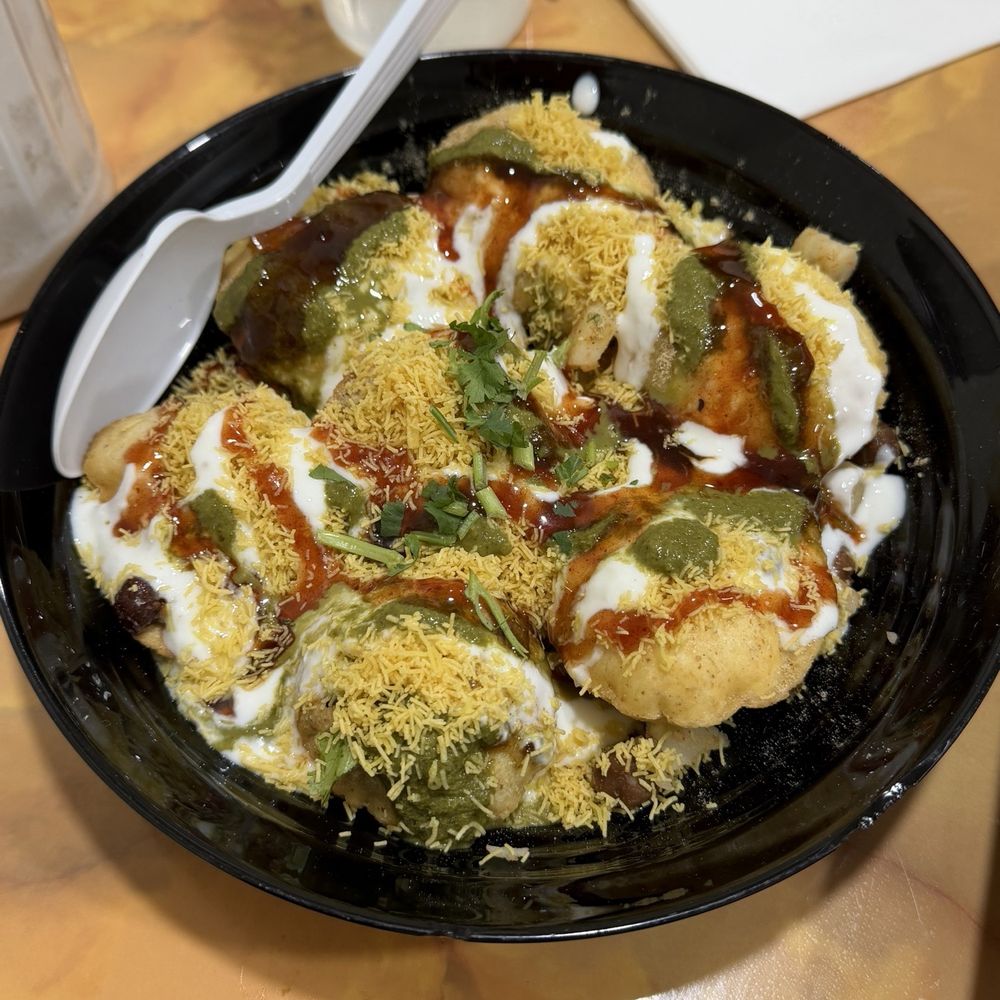
Few Indian foods capture the excitement of street eating quite like chaat. Colorful, crunchy, tangy, spicy, sweet, creamy, and full of contrasting textures, chaat is much more than a simple snack. It is a broad family of Indian street foods that brings together ingredients such as crispy papdi, puffed rice, potatoes, chickpeas, yogurt, sev, onions, herbs, tamarind chutney, mint chutney, and aromatic spices.
For food lovers searching for the best chaat in West Village, the experience is especially interesting because the neighborhood sits next to Greenwich Village, one of downtown Manhattan’s most walkable and food-focused areas. Some of the most relevant Indian street-food destinations are located around Bleecker Street, MacDougal Street, Greenwich Avenue, and nearby downtown blocks. In practical terms, exploring the broader West Village and Greenwich Village area gives you a much better selection than restricting your search to an exact neighborhood boundary.
Chaat is also one of the easiest ways for someone new to Indian cuisine to discover different regional flavors. A plate of samosa chaat offers crispy pastry, spiced potatoes, chickpeas, chutneys, and sometimes yogurt. Bhel puri combines puffed rice, vegetables, peanuts, sev, and chutneys for a lighter and crunchier experience. Papdi chaat brings together crispy wafers, potatoes, chickpeas, yogurt, and sweet-tangy chutneys. Pani puri delivers an entirely different experience, with crisp hollow shells filled with flavored water and other ingredients.
The beauty of chaat is the contrast.
You might get:
Crunchy + soft
Sweet + sour
Spicy + cooling
Tangy + savory
Fresh + crispy
all in the same bite.
That balance is what makes Indian street snacks so addictive and why chaat has become increasingly popular with New York diners.
West Village and nearby Greenwich Village also offer an interesting range of Indian dining experiences. Casual restaurants and street-food specialists provide traditional snacks, while more sophisticated Indian restaurants showcase regional cuisine in a completely different setting. For example, Masala Times on Bleecker Street is associated with Mumbai-style street food, while Semma on Greenwich Avenue focuses on regional South Indian cuisine rather than traditional chaat. These different approaches demonstrate how broad Indian food can be.
This guide will help you explore the best chaat in West Village, including the restaurants worth considering, the best nearby areas for Indian street food, the most popular chaat dishes to order, vegetarian and vegan options, affordable choices, upscale Indian dining, takeout and delivery advice, and practical tips for identifying authentic Indian flavors.
Whether you’re a longtime fan of Indian street food or ordering chaat for the first time, the goal is simple:
Find the crunch. Find the chutney. Find the spice. And enjoy the chaos of flavors that makes chaat so special.
Why West Village Has Great Indian Restaurants
West Village has earned a reputation as one of Manhattan’s most appealing neighborhoods for dining. Its historic streets, intimate restaurants, independent businesses, and connection to Greenwich Village create a food scene where diners can explore everything from casual snacks to destination restaurants.
Indian cuisine fits naturally into this environment.
While West Village isn’t traditionally considered one of New York’s largest Indian food districts, its location provides easy access to several Indian restaurants and street-food destinations in the surrounding downtown area.
For someone searching specifically for chaat, this is important.
The best options aren’t necessarily concentrated inside a single block. Instead, Indian street food can be found across the broader area around Bleecker Street, MacDougal Street, Greenwich Avenue, and Washington Square.
Why Chaat Works So Well in New York
Chaat is particularly well suited to a city like New York because it is:
- Quick to serve
- Easy to share
- Relatively affordable
- Full of bold flavors
- Naturally social
- Available in vegetarian varieties
- Suitable as a snack or light meal
A group can order several different plates and share them rather than committing to one large entrée.
That makes chaat ideal for a casual lunch, afternoon snack, pre-dinner meal, or late-night food adventure.
West Village’s Walkable Food Culture
One of the biggest advantages of searching for Indian food in West Village is walkability.
You can explore the neighborhood on foot, stop for an Indian snack, continue toward Greenwich Village, and discover another restaurant without needing to plan an elaborate trip.
For visitors, this creates an opportunity to turn Indian food into a mini food tour.
You could start with:
Bhel Puri
then try:
Samosa Chaat
follow it with:
Kathi Roll
and finish with:
Masala Dosa
Each dish represents a different part of India’s enormous street-food culture.
The Importance of Greenwich Village
When discussing Indian food in West Village, Greenwich Village should not be ignored.
The neighborhoods overlap naturally from a dining and walking perspective, and some of the area’s most relevant Indian restaurants are technically outside a strict West Village boundary.
This is particularly true around:
Bleecker Street
MacDougal Street
Washington Square
These streets provide some of the most useful options for anyone looking for Indian street snacks.
Mumbai-Style Street Food
One of the most interesting parts of the local Indian food scene is the presence of Mumbai-inspired street food.
Mumbai is famous for snacks such as:
- Vada pav
- Bhel puri
- Sev puri
- Ragda pattice
- Pav bhaji
- Batata vada
Masala Times on Bleecker Street specifically focuses on Mumbai-style street food, making it particularly relevant to a chaat-focused search.
Its current menu includes several street-food favorites, including Bhel Puri, Samosa Chaat, Papadi Chaat, Batata Vada, and Vada Paav.
This kind of specialization is valuable because chaat isn’t simply “Indian food with chutney.”
Different cities and regions have their own versions, ingredients, textures, and flavor combinations.
Why Chaat Is Different From Regular Indian Appetizers
Someone unfamiliar with Indian cuisine might look at samosas, pakoras, and chaat and assume they’re all basically the same category.
They’re not.
A samosa can be eaten by itself.
Chaat takes ingredients and transforms them through combinations.
For example, a samosa becomes samosa chaat when it is combined with elements such as:
- Chickpeas
- Yogurt
- Tamarind chutney
- Green chutney
- Onions
- Chaat masala
- Sev
Suddenly, the experience changes completely.
The crispy samosa is still there, but now you’re getting acidity, creaminess, freshness, sweetness, spice, and crunch.
That’s the defining idea behind chaat.
Texture Is Everything
The best chaat isn’t simply flavorful.
It is textural.
You might bite into:
Crispy papdi
followed by:
Soft potato
then:
Creamy yogurt
then:
Crunchy sev
and finally:
Tangy tamarind chutney
That sequence is what makes chaat exciting.
This is also why freshness matters so much.
A plate of chaat that sits for 30 minutes can become a completely different dish.
Chaat Is Naturally Social
Indian street food traditionally has a strong social element.
People gather around vendors, order small portions, share snacks, and move on to the next food stop.
That spirit works particularly well in West Village.
Instead of ordering one large meal, a group of friends can order several small plates:
1 Samosa Chaat
1 Bhel Puri
1 Papdi Chaat
2 Vada Pav
and share everything.
This gives everyone the chance to discover something different.
A Great Introduction to Indian Food
Chaat can also be a better introduction to Indian cuisine than a large curry meal for some first-time diners.
Why?
Because each dish gives you a different flavor experience.
If you don’t enjoy extremely spicy food, you can choose a milder chaat.
If you love sour flavors, ask for extra tamarind.
If you enjoy crunch, choose bhel puri or sev puri.
If you love creamy flavors, try dahi-based chaat.
There is a chaat for almost every preference.
The Growing Interest in Regional Indian Food
New York’s Indian restaurant scene has increasingly moved toward regional identity.
Instead of treating Indian cuisine as one category, restaurants are showcasing food from specific regions and communities.
This is important for understanding chaat because many street foods have strong regional associations.
For example:
Mumbai
Known for:
- Bhel puri
- Sev puri
- Vada pav
- Ragda pattice
Delhi and North India
Known for:
- Aloo tikki
- Papdi chaat
- Dahi bhalla
- Chole-based snacks
Bengal
Known for:
- Jhal muri
- Phuchka-style snacks
- Kathi rolls
South India
Known for:
- Dosa
- Idli
- Vada
- Sambar
- Chutneys
These categories overlap, evolve, and vary by family and region, but they help diners understand that “Indian street food” isn’t one single cuisine.
Why Authenticity Matters With Chaat
Authenticity is particularly important with chaat because the dishes depend on balance.
A good plate should not simply be:
Sweet + spicy
It should have layers.
The tamarind chutney should provide sweetness and acidity.
The green chutney should provide freshness and spice.
The chaat masala should add savory complexity.
The sev or papdi should provide crunch.
Yogurt, when used, should provide cooling contrast.
When those components are balanced correctly, the dish becomes much more than its individual ingredients.
West Village Gives You Variety
One of the best things about exploring Indian food around West Village is that you can move between very different styles.
You can experience:
Mumbai street food
then:
Kolkata-inspired rolls
then:
South Indian dosa
and finally:
upscale regional Indian cuisine.
That variety makes the neighborhood valuable for Indian food lovers even though it isn’t as concentrated an Indian dining district as some other parts of New York.
What Makes a Great Chaat Restaurant?
When choosing where to eat, look for several things.
Fresh Chutneys
The chutneys should taste fresh rather than overly sweet or artificial.
Crisp Ingredients
Papdi, sev, puffed rice, and fried components should retain their crunch.
Balanced Spice
Heat should complement the dish rather than overwhelm it.
Fresh Herbs
Cilantro, mint, onions, and other fresh ingredients should add brightness.
Proper Texture
Every component should still have its intended texture.
Regional Identity
A restaurant that understands where its food comes from is often better equipped to prepare it properly.
Why Chaat Is Worth Exploring in West Village
Ultimately, chaat offers something that many other Indian dishes don’t.
It is playful.
It is colorful.
It is interactive.
It is full of contrasts.
And it encourages you to try several dishes instead of settling for one.
For visitors exploring West Village, that makes chaat an ideal introduction to Indian street food.
You can start with a simple samosa and quickly discover an entire world of Indian flavors.
From the crunch of sev to the sweetness of tamarind, from the heat of green chili to the coolness of yogurt, every bite can be slightly different.
And that’s exactly what makes chaat so exciting.
Top Indian Restaurants in West Village for the Best Chaat
When you’re looking for the best chaat in West Village, the most useful strategy is to look beyond restaurants that simply have a few Indian appetizers on their menu. Chaat is a specialized category, and the quality of the experience depends heavily on fresh chutneys, crisp ingredients, balanced spices, and proper assembly.
The broader West Village–Greenwich Village area has several places worth considering, particularly around Bleecker Street and MacDougal Street. Among them, Masala Times, Thelewala, and Mint Masala stand out for different reasons.
Masala Times — A Strong Choice for Mumbai-Style Chaat
Masala Times is one of the most relevant destinations for this particular article because its concept is closely connected to Mumbai street food.
The restaurant’s Bleecker Street location is convenient for West Village and Greenwich Village diners, and its current menu includes several dishes that fall directly into the chaat and Indian street-food category, including:
- Bhel Puri
- Samosa Chaat
- Papadi Chaat
- Vada Paav
- Batata Vada
- Samosa Paav
Its menu also includes a Chana Masala Roll identified as vegan, giving plant-based diners another option.
What Makes Masala Times Interesting for Chaat?
The biggest advantage is variety.
Instead of ordering one generic Indian appetizer, you can explore several different styles of street food in one visit.
For a first visit, consider starting with Bhel Puri.
Bhel puri is built around puffed rice, vegetables, peanuts, sev, and chutneys. The result is lighter than many other chaat dishes and has an especially strong emphasis on crunch.
If you want something richer, try Samosa Chaat.
Here, the samosa becomes part of a much more complex combination of textures and flavors.
The crispy pastry is complemented by softer ingredients and chutneys, creating a completely different experience from eating a plain samosa.
Best Order at Masala Times
For two people, a good starting combination would be:
Bhel Puri + Samosa Chaat + Vada Paav
This gives you three very different experiences:
Bhel Puri: light and crunchy
Samosa Chaat: rich and tangy
Vada Paav: soft, spicy, filling, and handheld
That makes the meal feel much more like an Indian street-food crawl than a conventional restaurant dinner.
Thelewala — A Standout for Bhel Puri and Bengali-Inspired Street Food
Thelewala at 112 MacDougal Street is another important destination for anyone searching for Indian street snacks around West Village.
The restaurant describes itself as serving Nizami rolls, chaats, and other popular street foods, and its location puts it directly in one of the most useful Indian-food corridors around Greenwich Village.
The Infatuation specifically highlights Thelewala for bhel puri and jaal muri, describing the two as different takes on puffed-rice street snacks. Bhel puri is tossed with chutneys and additional namkeens, while jaal muri is drier, spicier, and dressed with mustard oil.
That distinction is particularly useful for diners who want to explore Indian street food beyond the most familiar dishes.
Bhel Puri at Thelewala
Bhel puri is one of the best dishes for understanding why chaat is so popular.
The puffed rice gives it a light crunch.
Potatoes add softness.
Onions add freshness.
Chutneys provide sweetness, acidity, and spice.
Sev adds another layer of crunch.
The result is a dish that can feel almost completely different from one bite to the next.
Jaal Muri
If you want something less familiar, try jaal muri.
Jaal muri is associated with Bengali street-food culture and is based around puffed rice mixed with ingredients such as potatoes, onions, peanuts, spices, and mustard oil.
The mustard oil gives it a distinctive flavor that separates it from bhel puri.
This is an excellent choice for adventurous diners who want to explore the regional diversity of Indian street snacks.
Why Thelewala Is Different
Thelewala isn’t simply another generic Indian restaurant.
Its identity is much more focused on street food and portable dishes.
The restaurant’s own website describes its food as fresh, healthy, and home-style while highlighting its Nizami rolls and chaats.
The Infatuation also identifies it as a strong late-night and takeout option.
That makes it particularly useful if you’re exploring Greenwich Village after dinner or looking for an Indian snack after a show.
Mint Masala — Chaat Alongside a Full Indian Menu
Mint Masala, located at 95 MacDougal Street, provides a somewhat different experience.
Rather than operating primarily as a street-food counter, Mint Masala offers a broader Indian menu that includes curries, biryanis, tandoori dishes, naan, vegetarian food, and street-food favorites. Its current website specifically lists Chaat, Samosa Chaat, Aloo Tikki, Bhel Puri, and Samosa among its offerings.
This makes Mint Masala particularly useful for groups with different preferences.
One person can order:
Samosa Chaat
while another chooses:
Chicken Tikka
and a vegetarian diner can choose:
Paneer Tikka or Chana Masala
That flexibility can be valuable when everyone doesn’t want a street-food-only meal.
Best Chaat Choices at Mint Masala
If you’re specifically visiting for chaat, look for:
Samosa Chaat
Bhel Puri
Aloo Tikki
These dishes provide different textures and flavor profiles.
The restaurant also offers takeout and delivery, according to its current website, making it convenient if you’re staying nearby.
Gandhi Cafe — A Classic Indian Restaurant Option
Gandhi Cafe on Bleecker Street is another established Indian restaurant in the West Village area.
It is more of a traditional sit-down Indian restaurant than a dedicated chaat counter.
That distinction matters.
If your goal is to spend an evening eating several different chaat dishes, a street-food specialist may provide a more focused experience.
But if you’re dining with a group where some people want chaat and others want:
- Tandoori chicken
- Chicken tikka masala
- Biryani
- Naan
- Curries
a broader Indian restaurant can be more convenient.
This makes Gandhi Cafe a useful option for mixed groups rather than necessarily the first destination for a dedicated chaat crawl.
NY Dosas — A Different Kind of Indian Street-Food Experience
For diners interested in Indian street food but willing to move beyond chaat, NY Dosas offers an entirely different experience.
Dosa belongs to the South Indian street-food tradition rather than the chaat category.
A crisp dosa with chutney and sambar provides an excellent contrast to:
Bhel Puri
Samosa Chaat
or
Papdi Chaat.
This can be particularly useful if you’re building a full-day Indian food itinerary.
Semma — Best for Elevated Regional Indian Cuisine
Semma is one of West Village’s most notable Indian restaurants, but it should be considered separately from the casual chaat destinations.
Located at 60 Greenwich Avenue, Semma focuses on regional South Indian cuisine.
Its well-known dishes include its gunpowder dosa, and the restaurant has become an important part of New York’s modern regional Indian dining scene.
It isn’t primarily a chaat restaurant.
Instead, think of it as the upscale end of your Indian food journey.
You could start your day with inexpensive chaat and later have a sophisticated South Indian dinner at Semma.
That contrast is actually one of the best ways to understand how broad Indian cuisine can be.
Best Chaat Restaurants by Category
If you don’t want to read through every restaurant description, use this quick guide.
| Category | Best Choice |
|---|---|
| Best overall chaat experience | Masala Times |
| Best Bhel Puri | Thelewala / Masala Times |
| Best Samosa Chaat | Masala Times / Mint Masala |
| Best Bengali-style snack | Thelewala |
| Best Jaal Muri | Thelewala |
| Best variety | Masala Times |
| Best mixed Indian menu | Mint Masala |
| Best casual sit-down option | Gandhi Cafe |
| Best South Indian street-food alternative | NY Dosas |
| Best upscale Indian experience | Semma |
| Best late-night street-food option | Thelewala |
These aren’t meant to suggest that one restaurant is objectively superior in every category. Chaat is highly dependent on the style you’re looking for.
Someone who loves Mumbai street food may prefer Masala Times.
Someone interested in Bengali flavors may prefer Thelewala.
Someone wanting chaat alongside a complete Indian dinner may prefer Mint Masala.
Masala Times vs. Thelewala
This is probably the most useful comparison for dedicated chaat hunters.
| Feature | Masala Times | Thelewala |
|---|---|---|
| Street-food focus | Strong | Strong |
| Bhel Puri | Yes | Yes |
| Samosa Chaat | Yes | Chaat-focused |
| Bengali influence | Limited | Stronger |
| Mumbai influence | Strong | Less central |
| Jaal Muri | Not the main focus | Yes |
| Kathi/Nizami rolls | Yes | Strong focus |
| Best for | Variety | Regional exploration |
| Takeout | Excellent | Excellent |
| Late night | Useful | Particularly strong |
Thelewala’s current identity centers on street food, rolls, and chaat, while Masala Times offers a broader Mumbai-inspired street-food selection.
What Should First-Time Chaat Diners Order?
If you’ve never tried chaat before, don’t start with the most unusual dish.
Start with something familiar.
First Choice: Samosa Chaat
Why?
Because the samosa itself is already familiar to many diners.
Adding chickpeas, chutneys, yogurt, and spices introduces the basic concept of chaat without being too unfamiliar.
Second Choice: Bhel Puri
Once you’re comfortable with chaat, try bhel puri.
It is lighter, crunchier, and more refreshing.
Third Choice: Jaal Muri
Then move into regional territory.
The mustard-oil character and dry texture make it noticeably different.
Fourth Choice: Pani Puri
If you’re comfortable with bold flavors and interactive eating, try pani puri.
It’s one of the most distinctive Indian street snacks.
Best Restaurant for a Chaat Crawl
If you’re planning a dedicated chaat crawl rather than a single meal, the broader Greenwich Village–West Village area is ideal.
You can begin around Bleecker Street with Mumbai-style street food, walk toward MacDougal Street, explore Thelewala, and finish with another Indian dish nearby.
The important thing is to order small portions.
Don’t start with a huge meal.
Chaat is best experienced as a series of small discoveries.
Try:
Bhel Puri
then:
Samosa Chaat
then:
Jaal Muri
then:
Kathi Roll
If you’re still hungry, finish with dosa or another Indian entrée.
A Note About Restaurant Boundaries
Because this article targets West Village, it is tempting to exclude restaurants located just outside the formal neighborhood.
That would make the guide less useful.
Thelewala, for example, is located at 112 MacDougal Street in Greenwich Village, but it is highly relevant to someone searching for Indian street food around West Village. Major food guides also treat the area as part of the practical West Village/Greenwich Village dining landscape.
The same logic applies to Mint Masala.
For a visitor, walking a few minutes into Greenwich Village is hardly a major detour when you’re specifically searching for authentic Indian street snacks.
What Makes These Restaurants Worth Trying?
The strongest common factor is specialization or clear culinary identity.
Masala Times has a strong Mumbai street-food identity.
Thelewala focuses on street foods, rolls, and chaat.
Mint Masala provides chaat within a broader Indian menu.
Semma focuses on regional South Indian cuisine.
This is much more useful than choosing restaurants solely because they have large menus.
A huge menu isn’t necessarily a sign of better Indian food.
Sometimes a restaurant that specializes in a smaller group of dishes can provide a more focused experience.
Best Choices for Different Types of Diners
If You’re a Chaat Beginner
Masala Times
Start with Samosa Chaat.
If You Love Crunch
Thelewala
Try Bhel Puri.
If You Want Something Regional
Thelewala
Try Jaal Muri.
If You’re With a Mixed Group
Mint Masala
Its broad menu allows everyone to choose something different.
If You Want a Traditional Sit-Down Meal
Gandhi Cafe
Pair a chaat-style appetizer with a traditional Indian entrée.
If You Want Upscale Indian Cuisine
Semma
Move beyond street food and explore regional South Indian cooking.
Final Recommendation for Section 2
For a dedicated chaat experience in and around West Village, three names should be at the top of your list:
Masala Times for its broad Mumbai-inspired street-food selection.
Thelewala for its focused street-food identity, bhel puri, jaal muri, and Bengali-influenced flavors.
Mint Masala for diners who want chaat alongside a broader Indian menu.
The most important thing is to decide what kind of chaat experience you want.
If you’re looking for variety, choose Masala Times.
If you’re looking for regional street-food character, choose Thelewala.
If you’re looking for chaat plus a full Indian dinner, choose Mint Masala.
And if you want to turn your meal into a larger Indian food adventure, use West Village as your starting point and walk through Greenwich Village’s Bleecker Street and MacDougal Street food scene.
That approach gives you much more than one plate of chaat.
It gives you a chance to experience the remarkable diversity of Indian street food in downtown New York.
Best Neighborhoods or Areas for Indian Food in and Around West Village
If you’re searching for the best chaat in West Village, looking only at restaurants inside the neighborhood’s strict boundaries can actually limit your choices. West Village connects naturally with Greenwich Village, and some of the most relevant Indian street-food restaurants are clustered just a few blocks away.
For chaat lovers, this is good news.
You can explore Mumbai-style street food on Bleecker Street, Bengali-influenced snacks around MacDougal Street, South Indian food near Washington Square, and broader Indian restaurants throughout the surrounding downtown area—all within a practical walking route.
The following neighborhoods and streets are especially useful for exploring Indian food.
West Village
West Village is the natural starting point for this food search.
The neighborhood is known for its walkable streets and diverse restaurant scene, and several Indian restaurants are located within or immediately around its boundaries.
For this particular guide, Bleecker Street and Greenwich Avenue are especially important.
The West Village area is also useful because you can combine Indian food with a broader neighborhood experience. Instead of traveling to a single restaurant district, you can walk through historic streets, visit nearby attractions, and stop at restaurants along the way.
For chaat specifically, however, you should be prepared to continue into neighboring Greenwich Village.
Bleecker Street
Bleecker Street is one of the most useful areas for Indian street food around West Village.
Masala Times is located at 194 Bleecker Street, and its current concept is explicitly centered on Mumbai street food. Its website describes the restaurant as bringing the energy of Mumbai’s street-food scene to Greenwich Village.
Its current menu includes several of the dishes most relevant to this article:
- Samosa Chaat
- Papadi Chaat
- Bhel Puri
- Batata Vada
- Vada Paav
- Samosa Paav
The restaurant says its food is made fresh to order and uses spices rather than artificial colors or food dyes.
Why Bleecker Street Is Great for Chaat
Bleecker Street is particularly convenient if you want to try several Indian street snacks without making a long journey.
You could start with:
Bhel Puri
then try:
Samosa Chaat
and finish with:
Vada Paav
This creates a miniature Mumbai street-food experience.
The current Masala Times menu describes its Bhel Puri as puffed rice combined with onions, potatoes, peanuts, green chilies, and house-made sweet-and-sour and cilantro chutneys. Its Samosa Chaat combines crispy samosa with chickpeas, yogurt, chutneys, sev, and onions.
That contrast is exactly what makes the area useful for a chaat-focused food crawl.
Greenwich Village
Greenwich Village is arguably the most important nearby area when you’re researching Indian street food.
The boundary between West Village and Greenwich Village isn’t particularly important from a diner’s perspective.
What matters is that several Indian restaurants and street-food counters are located within walking distance.
The area provides access to:
- Chaat
- Kathi rolls
- Bhel puri
- Jaal muri
- Samosas
- Dosa
- Vada
- Indian curries
- Vegetarian food
The Infatuation’s Greenwich Village dining guide specifically includes Thelewala as a street-food destination for kathi rolls, chaat, bhel puri, and jaal muri.
For someone searching for Indian street snacks, Greenwich Village should therefore be considered an extension of West Village rather than a completely separate destination.
MacDougal Street
MacDougal Street is one of the strongest areas for Indian street food in the broader West Village–Greenwich Village search.
Two particularly relevant restaurants are:
Mint Masala at 95 MacDougal Street
and
The Kati Roll Company at 99 MacDougal Street.
Just a short distance away, Thelewala is located at 112 MacDougal Street. The Infatuation describes Thelewala as a kathi roll and chaat counter and specifically recommends its bhel puri and jaal muri.
Why MacDougal Street Matters
MacDougal Street is particularly useful if you want to combine different types of Indian street food.
You can explore:
Chaat
Kathi rolls
Bengali-inspired snacks
Vegetarian Indian food
Casual Indian meals
This makes the street an excellent destination for a food crawl.
Thelewala and MacDougal Street’s Street-Food Character
Thelewala deserves special attention because it offers a different style of Indian street food from Masala Times.
The Infatuation highlights its bhel puri and jaal muri as two distinctive puffed-rice snacks. Both include potatoes, onions, and puffed rice, but their preparation differs significantly. Bhel puri is tossed with chutneys and additional namkeens, while jaal muri is drier, spicier, and tossed with mustard oil.
That means MacDougal Street is especially good for diners who want to explore beyond the most familiar chaat.
Instead of ordering another samosa, you can try something regional and less familiar.
Washington Square
The area around Washington Square is another important part of the downtown Indian food map.
NY Dosas is located at 50 Washington Square South and offers a South Indian street-food experience.
Dosa isn’t technically chaat, but it makes an excellent companion to a chaat-focused food tour.
After eating something crunchy and tangy like bhel puri, a crisp masala dosa with sambar and chutney provides a completely different experience.
Why Add South Indian Food to a Chaat Crawl?
Indian street food is not limited to chaat.
A broader food tour might include:
Bhel Puri → Samosa Chaat → Kathi Roll → Dosa
Now you’re experiencing several different Indian food traditions rather than focusing on one category.
Washington Square is particularly useful for this because it provides a natural transition between Greenwich Village’s street-food scene and South Indian cuisine.
Greenwich Avenue
Greenwich Avenue is particularly important because it is home to Semma, one of West Village’s best-known Indian restaurants.
Semma is not primarily a chaat restaurant.
Instead, it focuses on regional South Indian cuisine and offers a much more elevated dining experience.
That makes Greenwich Avenue useful for the fine-dining section of this guide.
You could spend the afternoon exploring inexpensive chaat and street food and then have an upscale South Indian dinner at Semma.
This contrast demonstrates how broad Indian cuisine can be.
7th Avenue South
Another useful street for Indian food is 7th Avenue South.
Taco Mahal is located at 73 7th Avenue South and offers Indian food in a casual setting.
While it isn’t primarily a traditional chaat destination, it can be useful for groups looking for a broader Indian menu.
This is particularly helpful if you’re traveling with people who aren’t interested in eating only street snacks.
One person might want:
Chaat
while another wants:
Curry and naan
and another wants:
Chicken tikka
A broader Indian restaurant can accommodate those different preferences.
Bleecker Street vs. MacDougal Street
If you’re deciding between the two main areas, here’s a simple comparison:
| Area | Best For |
|---|---|
| Bleecker Street | Mumbai-style street food |
| MacDougal Street | Chaat, kathi rolls, Bengali-inspired snacks |
| Washington Square | South Indian food and dosa |
| Greenwich Avenue | Upscale regional Indian dining |
| 7th Avenue South | Casual Indian dining |
| West Village overall | Mixed Indian dining experiences |
| Greenwich Village overall | Indian street-food exploration |
Best Area for Mumbai-Style Chaat
Bleecker Street
The strongest reason is Masala Times’ explicit Mumbai street-food identity and its current menu of bhel puri, samosa chaat, papadi chaat, and other Mumbai-inspired snacks.
If Mumbai street food is your primary interest, start here.
Best Area for Bengali-Inspired Street Snacks
MacDougal Street
Thelewala’s bhel puri and jaal muri make this area particularly interesting for diners who want to explore Bengali-influenced street food.
Jaal muri is especially worth trying if you enjoy:
- Mustard oil
- Puffed rice
- Fresh onions
- Peanuts
- Chili
- Lime
Its flavor is considerably different from a typical sweet-and-tangy bhel puri.
Best Area for South Indian Food
Washington Square and Greenwich Avenue
The area gives you access to both casual South Indian food and elevated regional Indian dining.
You can experience:
Dosa
at a casual street-food-style destination and later explore more sophisticated South Indian cuisine at Semma.
That creates an interesting regional comparison.
Best Area for a Full Indian Food Crawl
If you have several hours, don’t choose just one street.
A better route is:
Bleecker Street → MacDougal Street → Washington Square → Greenwich Avenue
Start with Mumbai-style street food.
Continue toward MacDougal Street for chaat and Bengali-inspired snacks.
Then explore Washington Square and South Indian food.
Finally, finish around Greenwich Avenue for dinner or an upscale Indian experience.
This route allows you to experience different Indian culinary traditions without spending the entire day traveling across Manhattan.
A Sample West Village Indian Food Crawl
Stop 1 — Bleecker Street
Start at Masala Times.
Order:
Bhel Puri
The puffed rice and chutneys provide a light beginning.
Stop 2 — MacDougal Street
Continue to Thelewala.
Try:
Jaal Muri
This introduces you to a drier, mustard-oil-driven style of puffed-rice snack.
Stop 3 — MacDougal Street
If you’re still hungry, try:
Kathi Roll
The Kati Roll Company provides a portable option.
Stop 4 — Washington Square
Explore South Indian food.
Try:
Masala Dosa
Stop 5 — Greenwich Avenue
For a more sophisticated dinner, consider:
Semma
This turns a casual street-food crawl into a broader Indian culinary experience.
Best Area for Vegetarian Indian Food
Vegetarian diners have excellent options throughout this area.
Bleecker Street and MacDougal Street are particularly useful because many Indian street foods are naturally vegetarian.
You can look for:
- Bhel Puri
- Samosa
- Samosa Chaat
- Papadi Chaat
- Vada Pav
- Aloo Tikki
- Dosa
- Paneer dishes
- Chana Masala
The key is to distinguish vegetarian from vegan.
A vegetarian chaat may contain yogurt.
A paneer dish contains dairy.
Naan may contain butter.
So vegan diners should ask specifically about ingredients.
Best Area for Budget Indian Food
For budget-conscious diners, Bleecker Street and MacDougal Street are particularly useful.
Street-food dishes allow you to try several flavors without paying the price of a full-service dinner.
For example, Masala Times currently lists:
Vada Paav — $8.69
Bhel Puri — $12.99
Samosa Chaat — $13.55
Papadi Chaat — $13.55
Prices can change, so check the current menu before ordering.
This makes it possible to build a satisfying Indian street-food meal without ordering multiple expensive entrées.
Best Area for Late-Night Indian Food
MacDougal Street is particularly useful for late-night food.
The Infatuation describes Thelewala as a late-night chaat and kathi-roll destination and notes that it is useful after nearby nightlife and comedy shows.
The Kati Roll Company also operates late, with its current business listing showing hours extending into the early morning on Friday and Saturday. The Kati Roll Company
This makes MacDougal Street a strong choice when you’re looking for something after dinner rather than during a traditional lunch or dinner period.
Best Area for Takeout
Both Bleecker Street and MacDougal Street work well for takeout.
Masala Times currently offers both pickup and delivery from its Bleecker Street location.
Thelewala is also described by The Infatuation as having a serious takeout operation.
For chaat, however, pickup is generally better than long-distance delivery because crisp ingredients can lose their texture.
Best Area for a Date Night
For a date, you may want something more relaxed than a busy street-food counter.
Greenwich Avenue and the broader West Village provide more upscale options.
Semma is particularly notable for diners who want a destination-style Indian dinner rather than a quick snack.
But there is also something charming about sharing several small plates of chaat on a casual date.
A simple:
Bhel Puri + Samosa Chaat + Chai
can be more memorable than a formal dinner for some couples.
Best Area for Families
Families may prefer an area where multiple restaurant styles are available.
Bleecker Street and MacDougal Street are particularly useful because you can find:
- Mild food
- Vegetarian dishes
- Handheld snacks
- Larger meals
- Desserts
- Takeout
Parents can order something familiar for children while adults explore more adventurous Indian street foods.
Why You Should Explore Beyond West Village
The biggest takeaway from this section is simple:
Don’t search too narrowly.
If you type “best chaat in West Village” into a map and only look at restaurants whose address is officially classified as West Village, you may miss some of the most relevant options.
The practical food area extends naturally into Greenwich Village.
Masala Times is at 194 Bleecker Street and describes itself as a Greenwich Village Indian street-food destination.
Thelewala is at 112 MacDougal Street and is specifically recognized as a Greenwich Village chaat and kathi-roll destination.
That is why this guide treats West Village and nearby Greenwich Village as one connected Indian-food destination.
Popular Indian Dishes People Should Try
If you’re exploring the best chaat in West Village, don’t stop at one plate. Chaat is a broad category of Indian street food, and each dish can offer a completely different combination of textures, spices, chutneys, and ingredients.
The best way to experience it is to order several smaller dishes and compare them.
In the West Village–Greenwich Village area, restaurants such as Masala Times and Mint Masala offer several chaat and Indian street-food options, while The Kati Roll Company provides another style of Indian street food centered around Kolkata-style rolls. Current restaurant information confirms Masala Times’ Bleecker Street location and its Mumbai street-food focus, while Thelewala on MacDougal Street is particularly known for bhel puri and jaal muri.
Samosa Chaat
For someone trying chaat for the first time, samosa chaat is one of the best places to start.
A traditional samosa is already familiar to many diners: a crisp pastry shell filled with seasoned potatoes, peas, and spices.
Chaat transforms that simple snack into something much more elaborate.
The samosa is typically topped or combined with ingredients such as:
- Chickpeas
- Yogurt
- Tamarind chutney
- Mint-cilantro chutney
- Sev
- Onions
- Cilantro
- Chaat masala
The result is a combination of:
Crispy + creamy + tangy + spicy + savory.
Mint Masala’s current menu, for example, describes its Samosa Chaat as a vegetable samosa topped with chana masala, sev, yogurt, tamarind and mint-cilantro chutneys, and cilantro.
This is an excellent first chaat because you can still recognize the familiar samosa while discovering the more complex flavor combinations that define chaat.
Best for: First-time chaat diners, sharing, lunch, afternoon snacks.
Bhel Puri
Bhel puri is one of the most recognizable Indian street snacks and one of the best dishes to order if you love crunch.
The foundation is usually puffed rice, which is combined with ingredients such as:
- Potatoes
- Onions
- Peanuts
- Sev
- Green chilies
- Cilantro
- Chutneys
The result is much lighter than samosa chaat.
The texture is the star.
Every bite can contain a slightly different combination of crispy puffed rice, crunchy sev, soft potato, peanuts, chutney, and fresh vegetables.
Masala Times currently lists Bhel Puri among its Mumbai street-food offerings, while Thelewala is also specifically recommended for bhel puri by The Infatuation.
Why Bhel Puri Is Special
Bhel puri is a perfect example of Indian street food balancing several flavors at once.
You can experience:
Sweetness from tamarind chutney
Heat from chilies
Freshness from cilantro and onions
Crunch from puffed rice and sev
Richness from peanuts
The key is freshness.
Bhel puri should ideally be eaten soon after it is mixed because the chutneys gradually soften the puffed rice.
Best for: Crunch lovers, lighter meals, vegetarians, first-time Indian street-food explorers.
Papdi Chaat
If you want something richer and creamier than bhel puri, try papdi chaat.
Papdi are crisp, fried pieces of dough that become the base for layers of ingredients.
A typical plate may include:
- Crispy papdi
- Potatoes
- Chickpeas
- Yogurt
- Tamarind chutney
- Green chutney
- Sev
- Chaat masala
- Cilantro
The yogurt provides a cooling contrast to the spices and chutneys.
This makes papdi chaat particularly appealing if you enjoy a combination of crispy and creamy textures.
Masala Times currently lists Papadi Chaat among its street-food offerings.
What Makes Good Papdi Chaat?
The papdi should remain at least partially crisp.
That’s important.
If the entire plate becomes soft before you eat it, much of the dish’s appeal disappears.
For this reason, papdi chaat is generally better when eaten immediately rather than after a long delivery.
Best for: Creamy chaat lovers, sharing, diners who enjoy yogurt-based dishes.
Pani Puri
For a more interactive street-food experience, try pani puri.
Pani puri consists of small, hollow, crispy shells that are filled with ingredients and flavored water.
The experience is completely different from eating samosa chaat or bhel puri.
You typically bite into the crisp shell and immediately encounter a combination of:
- Spiced water
- Potato
- Chickpeas or other fillings
- Chutneys
- Spices
The shell breaks almost instantly, creating an explosion of flavor and texture.
Why Pani Puri Is Different
Pani puri isn’t really designed to be eaten slowly.
It is:
Quick
Crispy
Tangy
Spicy
Refreshing
It is also one of the dishes where freshness matters most.
Pani puri is best eaten at the restaurant or immediately after preparation.
Best for: Adventurous diners, interactive eating, spicy-food lovers.
Sev Puri
Sev puri is another Mumbai-style street snack that deserves attention.
It combines crisp puris with ingredients such as:
- Potato
- Onion
- Chutneys
- Sev
- Spices
- Cilantro
The sev provides a distinctive crunchy texture.
Compared with bhel puri, sev puri feels more structured because each puri acts almost like an individual bite.
That makes it particularly enjoyable when you want to control how much of each ingredient you get in every mouthful.
Best for: Mumbai street-food fans, crunchy-snack lovers.
Aloo Tikki Chaat
Aloo tikki chaat centers around a crisp potato patty.
The tikki is typically made from seasoned potatoes and then cooked until it develops a crisp exterior.
It may be served with:
- Chickpeas
- Yogurt
- Tamarind chutney
- Mint chutney
- Sev
- Onion
- Cilantro
The result is more substantial than bhel puri but still lighter than a full Indian entrée.
If you love potatoes, this is one of the chaat dishes you shouldn’t skip.
Best for: Potato lovers, hearty vegetarian snacks, lunch.
Dahi Puri
Dahi puri takes the crisp puri format and adds yogurt for a creamy component.
The result combines:
Crispy shell
Soft filling
Creamy yogurt
Sweet-tangy chutney
Spices
Crunchy sev
It’s a particularly good option if you find pani puri too spicy or too watery.
Instead of the focus being on flavored water, dahi puri emphasizes creamy and tangy flavors.
Best for: Yogurt lovers, mild-to-medium spice preferences, creamy chaat fans.
Dahi Bhalla
Dahi bhalla is another yogurt-based Indian snack.
It typically features soft lentil dumplings served with yogurt and chutneys.
The texture is very different from crispy papdi or puffed rice.
Instead of:
Crunchy
you get:
Soft + creamy + tangy.
This makes it a good contrast when ordering several different chaat dishes.
If your table already has bhel puri and samosa chaat, dahi bhalla can introduce an entirely different texture.
Chana Chaat
Chana chaat is centered around chickpeas and is particularly useful for diners who want something filling but still snack-oriented.
Chickpeas provide:
- Protein
- Fiber
- Earthy flavor
- A satisfying texture
They can be combined with:
- Onion
- Tomato
- Cilantro
- Lemon
- Green chili
- Chaat masala
- Tamarind chutney
For vegetarian diners, chana chaat can be a particularly practical option.
For vegan diners, it can also be a good choice, provided yogurt or other dairy ingredients aren’t added.
Ragda Pattice
If you want to explore Mumbai street food further, look for ragda pattice.
The dish generally combines:
Potato patties + white pea curry + chutneys + sev + onions
The potato provides a crisp or soft base depending on preparation, while the ragda provides a warm, savory component.
This makes ragda pattice different from cold or room-temperature chaat.
It’s more substantial and can work as a light meal rather than just a snack.
Best for: Mumbai food enthusiasts, hearty vegetarian meals.
Jaal Muri
If you want to move beyond familiar chaat, try jaal muri.
Thelewala on MacDougal Street is particularly associated with this Bengali-style puffed-rice snack. The Infatuation describes it as being made with potatoes, onions, and puffed rice, with a drier and spicier character than bhel puri and a distinctive mustard-oil component.
This is one of the best dishes to order if you want to explore the regional diversity of Indian street food.
Jaal Muri vs. Bhel Puri
| Feature | Bhel Puri | Jaal Muri |
|---|---|---|
| Regional association | Mumbai | Bengal |
| Base | Puffed rice | Puffed rice |
| Chutneys | Prominent | Less prominent |
| Texture | Crunchy | Crunchy/drier |
| Mustard oil | Not central | Important |
| Flavor | Sweet, sour, spicy | Savory, spicy, aromatic |
The two dishes may look similar, but they offer noticeably different experiences.
Vada Pav
Vada pav isn’t technically chaat, but it belongs to the same broad Indian street-food culture and is worth including in any West Village Indian snack crawl.
It consists of:
Spiced potato fritter + pav bread + chutneys
The combination is often described as India’s answer to a burger, although the flavor profile is completely its own.
Masala Times currently lists Vada Paav among its Mumbai street-food offerings.
It’s:
- Affordable
- Filling
- Portable
- Vegetarian
- Easy to share
If you have already eaten a plate of light chaat and want something more substantial, vada pav is a natural next choice.
Batata Vada
Batata vada is the potato fritter inside or associated with vada pav, but it can also be enjoyed as a snack by itself.
The potato filling is seasoned and coated in chickpea batter before being fried.
The result is:
Crispy outside + soft spiced potato inside.
Masala Times currently includes Batata Vada among its Mumbai street-food dishes.
For someone who loves fried snacks, this is an easy recommendation.
Samosa
Sometimes the simplest option is the best.
A classic samosa is a triangular pastry filled with seasoned potatoes, peas, and spices.
Unlike samosa chaat, the traditional samosa allows you to focus entirely on:
Crisp pastry + spiced filling + chutney.
It is also an excellent starting point for children or diners who are completely new to Indian food.
You can then move from the plain samosa to samosa chaat once you’re comfortable with the flavors.
Kachori
Kachori is another fried Indian snack worth seeking out when available.
Depending on the regional style, the filling can include:
- Lentils
- Spices
- Peas
- Onion
- Other seasoned ingredients
The outer shell is generally crisp and flaky.
It can be eaten with chutney or incorporated into more elaborate snack preparations.
For diners who enjoy samosas, kachori is a natural next step.
Kathi Roll
A kathi roll is not chaat, but it is one of the most important Indian street foods to know when exploring West Village and Greenwich Village.
The Kati Roll Company on MacDougal Street specializes in this style of portable Indian food.
A typical roll combines:
Flatbread + grilled filling + onions + chutney + spices.
You can find vegetarian and meat-based versions.
The advantage is portability.
After eating a plate of chaat, a kathi roll can serve as a more substantial main course.
Dosa
Dosa takes you from North and Western Indian street snacks into South Indian cuisine.
NY Dosas at Washington Square is a relevant destination for this style of food.
A dosa is a thin, fermented crepe made primarily from rice and lentils.
A masala dosa typically includes:
- Crispy dosa
- Spiced potato filling
- Sambar
- Coconut or other chutney
The texture is completely different from chaat.
Where chaat emphasizes many ingredients in one bite, dosa emphasizes crisp fermented batter, savory filling, and accompanying sauces.
Paneer Tikka
If you’re looking for a grilled vegetarian dish rather than street chaat, paneer tikka is a great choice.
Chunks of paneer are marinated with spices and often grilled alongside:
- Onions
- Bell peppers
- Tomatoes
The result is smoky, creamy, and substantial.
It’s particularly useful for groups where some people want street snacks and others want a more traditional Indian entrée.
Tandoori Chicken
Tandoori chicken is another excellent complement to a chaat meal.
It provides:
Smoky + charred + savory
flavors that contrast beautifully with:
Sweet + sour + crunchy
chaat.
A table could therefore order:
Samosa Chaat
Bhel Puri
Tandoori Chicken
Garlic Naan
and experience four completely different styles of Indian food.
Best Dishes for First-Time Chaat Diners
If you’ve never had Indian chaat before, here’s a simple progression:
Start With
Samosa
Then Try
Samosa Chaat
Next
Bhel Puri
Then
Dahi Puri
Finally
Pani Puri
This lets you gradually move from familiar fried food to more adventurous combinations.
Best Dishes for Spice Lovers
If you enjoy heat, consider:
Jaal Muri
Pani Puri
Aloo Tikki Chaat
Vada Pav with spicy chutney
Kathi Roll with a hotter sauce
But remember that authentic Indian food isn’t necessarily defined by extreme heat.
Good chaat should have balance.
The chili should enhance the sweetness, acidity, and spices rather than overwhelm everything else.
Best Dishes for Mild Spice Lovers
If you prefer less heat, try:
Bhel Puri
Dahi Puri
Dahi Bhalla
Samosa
Papdi Chaat
Ask the restaurant to reduce the green chili or spicy chutney if necessary.
The sweet tamarind chutney and yogurt can provide plenty of flavor even without significant heat.
Best Dishes for Crunch Lovers
If texture is your priority, choose:
Bhel Puri
Sev Puri
Papdi Chaat
Samosa
Batata Vada
Kachori
These dishes showcase the crispy side of Indian street food.
Eat them quickly after preparation whenever possible.
Best Dishes for Vegetarian Diners
Many of the most famous chaat dishes are vegetarian.
Excellent choices include:
- Bhel Puri
- Samosa Chaat
- Papdi Chaat
- Aloo Tikki
- Dahi Puri
- Vada Pav
- Ragda Pattice
- Dosa
- Paneer Tikka
For vegan diners, ask whether yogurt, ghee, butter, or other dairy ingredients are included.
Best Dishes for Sharing
The best sharing dishes are:
Bhel Puri
Samosa Chaat
Papdi Chaat
Aloo Tikki Chaat
Dahi Puri
These can be divided among several people and allow everyone to experience different flavor combinations.
Pani puri is somewhat different because it is usually better consumed immediately and individually.
The Best Way to Explore Chaat in West Village
Don’t think of this as a search for one “perfect” dish.
Think of it as a progression.
Start with samosa chaat.
Move to bhel puri.
Try papdi chaat.
Then explore something regional like jaal muri.
If you’re still hungry, move into vada pav, kathi rolls, or dosa.
That gives you a much broader understanding of Indian street food than ordering one appetizer and one curry.
And that’s ultimately the appeal of chaat.
It isn’t just one recipe.
It is an entire way of combining crunch, spice, sweetness, acidity, freshness, and texture into small dishes that are designed to be enjoyed together.
For anyone exploring Indian food in West Village and nearby Greenwich Village, these snacks provide an excellent introduction to the enormous diversity of India’s street-food culture.
Vegetarian and Vegan Indian Food Options in West Village
One of the biggest advantages of exploring Indian food in West Village is the enormous variety available to vegetarian diners. Indian cuisine has developed a particularly rich tradition of meat-free cooking, and many of the country’s most recognizable street snacks are naturally vegetarian.
For anyone searching for the best chaat in West Village, this is especially good news. Many classic chaat dishes—including bhel puri, samosa chaat, papdi chaat, aloo tikki, and several potato- and chickpea-based snacks—can be enjoyed without meat.
The important distinction is between vegetarian and vegan.
Vegetarian Indian food can include:
- Yogurt
- Paneer
- Ghee
- Butter
- Cream
- Milk
Vegan food excludes all of these dairy ingredients.
That distinction becomes particularly important with chaat because yogurt is often one of the ingredients that gives a dish its creamy, cooling character.
For diners exploring West Village and nearby Greenwich Village, there are also restaurants that make vegetarian and vegan dining especially accessible. Ananda, at 210 Thompson Street, describes itself as a vegetarian Indian restaurant with vegan, gluten-free, and Jain options.
Bhel Puri: One of the Best Vegan-Friendly Chaat Choices
Bhel puri is one of the easiest dishes to consider when looking for vegan-friendly Indian street food.
The classic preparation revolves around:
- Puffed rice
- Potatoes
- Onions
- Peanuts
- Sev
- Cilantro
- Green chutney
- Tamarind chutney
- Spices
The dish is naturally centered around plant-based ingredients.
However, diners should still confirm the ingredients in the chutneys and sev, particularly when strict vegan requirements are involved.
Why Bhel Puri Works for Vegans
Bhel puri doesn’t need yogurt to be satisfying.
Its flavor comes primarily from:
Crunch + chutney + spices + vegetables + herbs.
The tamarind chutney provides sweetness and acidity, while green chutney contributes freshness and heat.
For a vegan diner, this makes bhel puri one of the more exciting alternatives to a conventional salad or vegetable entrée.
Samosa Chaat
Samosa chaat is another popular vegetarian choice.
The samosa itself is commonly filled with:
- Potato
- Peas
- Spices
- Herbs
When transformed into chaat, it may be combined with:
- Chickpeas
- Tamarind chutney
- Green chutney
- Sev
- Onions
- Yogurt
- Cilantro
The first five ingredients can generally fit into a vegan meal, but yogurt is the ingredient that needs attention.
How to Order Vegan Samosa Chaat
If you’re vegan, ask:
“Can you make the samosa chaat without yogurt?”
Also ask whether:
- The samosa contains ghee
- The chutneys contain dairy
- The sev is dairy-free
- The cooking oil is shared with any ingredients that create a dietary concern
A simple request can often transform a vegetarian chaat into a vegan-friendly version.
Papdi Chaat
Papdi chaat is delicious but slightly more complicated for vegan diners.
The classic dish often includes:
Papdi + potatoes + chickpeas + yogurt + chutneys + sev + spices.
The yogurt is central to the traditional creamy texture.
Vegetarians can enjoy the dish as traditionally prepared.
Vegans can ask for:
No yogurt
and, where possible, additional chutney or fresh herbs instead.
The result won’t be exactly the traditional preparation, but the crispy papdi, chickpeas, potatoes, chutneys, and spices can still make a satisfying snack.
Aloo Tikki Chaat
Aloo tikki chaat is another excellent vegetarian option.
The centerpiece is a seasoned potato patty that is cooked until crisp outside and soft inside.
It may be topped with:
- Chickpeas
- Tamarind chutney
- Green chutney
- Onion
- Cilantro
- Sev
- Yogurt
Again, yogurt is the main ingredient vegan diners need to watch.
Without yogurt, the dish becomes more strongly focused on:
Potato + chickpeas + chutneys + spices.
That combination remains flavorful and satisfying.
Pani Puri
Pani puri can be an excellent vegetarian or vegan-friendly street snack, depending on the preparation.
The crispy shells are typically filled with ingredients such as:
- Potato
- Chickpeas
- Spiced water
- Chutney
- Herbs
- Seasonings
Unlike dahi-based chaat, pani puri does not inherently need yogurt.
This makes it one of the more exciting choices for vegan diners.
Why Pani Puri Is Great for Plant-Based Diners
It offers a completely different experience from a typical vegetarian entrée.
You get:
Crispy shell
then:
Spicy water
then:
Soft potato
then:
Tangy seasoning
It is light, refreshing, and highly flavorful.
Dahi Puri and Dahi Bhalla
These two dishes are delicious vegetarian choices but require more attention for vegans.
The word dahi refers to yogurt.
That means traditional versions are not vegan.
Vegetarians can enjoy them without concern about meat, assuming they have no other dietary restrictions.
Vegans can ask whether the restaurant offers:
- Plant-based yogurt
- A dairy-free version
- Another topping instead of yogurt
If not, it is better to choose bhel puri, pani puri, or another naturally dairy-free snack.
Chana Chaat
Chana chaat is one of the best choices for diners looking for something both vegetarian and filling.
Chickpeas provide:
- Protein
- Fiber
- Texture
- Earthy flavor
They can be combined with:
- Onion
- Tomato
- Cilantro
- Lemon
- Green chili
- Chaat masala
- Tamarind chutney
Because chickpeas are naturally plant-based, the main concern is whether dairy toppings are added.
Why Chana Chaat Is a Good Meal
Unlike lighter snacks such as bhel puri, chickpea-based chaat can be surprisingly filling.
For a vegetarian diner looking for a quick lunch, it can provide more substance without needing meat.
Ragda Pattice
Ragda pattice is another excellent vegetarian street-food option.
It combines:
Potato patties
with:
White pea curry
and often:
- Chutneys
- Onion
- Cilantro
- Sev
- Spices
The dish is particularly satisfying because it combines a crispy or soft potato base with warm, savory curry.
It is more substantial than bhel puri and can function as a light meal.
For vegan diners, ask whether butter, ghee, yogurt, or other dairy ingredients are used.
Vada Pav
Vada pav is one of the best vegetarian Indian street snacks for diners who want something filling and portable.
It combines:
Spiced potato fritter + pav bread + chutneys.
The potato fritter is usually vegetarian.
The main vegan considerations are:
- Whether butter is used on the bread
- Whether dairy is included in the chutneys
- How the bread is prepared
Masala Times currently lists Vada Paav among its Mumbai-style street-food offerings.
For a vegetarian diner, it is an easy recommendation.
For a vegan diner, simply confirm the bread and preparation.
Paneer Tikka
Vegetarians who enjoy grilled food should consider paneer tikka.
Paneer is an Indian fresh cheese, so it is vegetarian but not vegan.
The paneer is commonly marinated and grilled with ingredients such as:
- Bell peppers
- Onions
- Tomatoes
- Yogurt
- Spices
The result is smoky and satisfying.
If your dining group includes both vegetarians and meat eaters, paneer tikka works especially well alongside:
Tandoori Chicken
or
Chicken Tikka.
The two dishes can share the same smoky flavor profile while offering different proteins.
Dosa
Dosa is another excellent vegetarian option around West Village and Greenwich Village.
A traditional dosa is made primarily from fermented rice and lentil batter.
A masala dosa usually includes:
- Crispy dosa
- Potato filling
- Sambar
- Chutney
Many dosa preparations are naturally vegetarian.
However, vegan diners should still ask whether:
- Ghee is used
- Butter is used
- The dosa is cooked on a shared surface
Why Dosa Works So Well for Vegetarians
Dosa is not a compromise meal.
It is a complete Indian dish with:
Crisp texture + savory potato + fermented flavors + chutney + sambar.
That makes it one of the strongest vegetarian meals available in Indian cuisine.
Vegetable Biryani
Vegetable biryani is another filling option.
Depending on the restaurant, it can include:
- Basmati rice
- Vegetables
- Saffron
- Herbs
- Fried onions
- Whole spices
Vegetarian diners can pair it with:
- Raita
- Salad
- Pickles
- Chutney
For vegans, raita needs to be avoided unless a plant-based alternative is available.
Chana Masala
Chana masala is a classic chickpea curry.
It typically features chickpeas cooked with:
- Tomatoes
- Onions
- Ginger
- Garlic
- Chilies
- Spices
It is naturally vegetarian and can often be made vegan depending on the cooking fat.
It pairs particularly well with:
Roti
Rice
Puri
or
Bhatura
For strict vegan diners, ask whether ghee or butter is used.
Aloo Gobi
Aloo gobi combines:
Potatoes + cauliflower + Indian spices.
It is one of the most recognizable vegetarian Indian dishes and can be an excellent side dish alongside chaat.
Surya in the West Village area, for example, has been described as offering vegan aloo gobi mutter with peas, cauliflower, and potatoes.
This demonstrates why checking a restaurant’s complete menu can be useful: you may find vegan dishes that aren’t technically classified as street food but can complement your chaat order.
Baingan Bharta
Baingan bharta is made from roasted eggplant that is mashed and cooked with aromatic ingredients.
The roasting process gives the dish a smoky flavor.
That makes it an especially interesting accompaniment to chaat.
The combination of:
Smoky eggplant + tangy chaat
creates an interesting contrast.
Vegan Indian Food in West Village
One particularly useful destination for vegetarian and vegan diners is Ananda, located at 210 Thompson Street.
Ananda describes itself as an Indian vegetarian kosher restaurant with:
- Vegan options
- Gluten-free options
- Jain options
and says its food is inspired by flavors from across India.
This makes it especially useful for diners with multiple dietary requirements.
It also offers pickup and delivery, according to its current website.
Why Dedicated Vegetarian Restaurants Can Help
At a restaurant where the entire menu is vegetarian, you don’t need to worry about ordering meat-free food.
The challenge shifts from:
“Does this contain meat?”
to:
“Does this contain dairy?”
For vegans, that can be much easier to navigate.
Mint Masala for Vegetarian and Vegan Diners
Mint Masala is another practical option because its current website explicitly identifies vegan dishes and offers a broad Indian menu.
The menu includes vegetarian and vegan-friendly categories alongside:
- Chaat
- Biryani
- Curries
- Tandoori dishes
- Naan
- Paneer
- Dal
- Vegetable dishes
This makes it particularly convenient for mixed groups.
Imagine a table where one person is vegan, another is vegetarian, and another eats meat.
You could order:
Bhel Puri
Chana Masala
Paneer Tikka
Tandoori Chicken
and
Garlic Naan
Everyone gets something different.
How to Tell Vegetarian From Vegan Indian Food
A simple rule can help.
Vegetarian
No meat, poultry, or seafood.
But may contain:
- Milk
- Yogurt
- Cheese
- Butter
- Ghee
- Cream
Vegan
No:
- Meat
- Poultry
- Seafood
- Milk
- Yogurt
- Cheese
- Butter
- Ghee
- Cream
This difference is particularly important in Indian cuisine.
Common Hidden Dairy Ingredients
Ghee
Ghee is clarified butter.
A dish may appear completely vegetable-based while still containing ghee.
Yogurt
Common in:
- Raita
- Dahi chaat
- Marinades
- Some sauces
Paneer
Indian cheese.
Vegetarian, not vegan.
Butter
Common in:
- Naan
- Curries
- Some vegetable dishes
Cream
Common in richer curries and sauces.
How to Order Vegan Chaat
Instead of simply saying:
“I’m vegan.”
be specific.
Try asking:
“Is there any yogurt in this?”
“Is ghee used?”
“Does the chutney contain dairy?”
“Can I have it without yogurt?”
“Is the bread cooked with butter?”
This reduces the chance of accidentally ordering something containing dairy.
Best Vegetarian Chaat Choices
If you are vegetarian, consider:
1. Samosa Chaat
2. Bhel Puri
3. Papdi Chaat
4. Aloo Tikki
5. Dahi Puri
6. Ragda Pattice
7. Vada Pav
8. Dosa
9. Chana Chaat
10. Paneer Tikka
This is a surprisingly large selection.
Best Vegan Chaat Choices
For vegan diners, start with:
1. Bhel Puri
2. Pani Puri
3. Chana Chaat
4. Aloo Tikki without yogurt
5. Samosa Chaat without yogurt
6. Vada Pav after confirming bread and chutneys
7. Dosa after confirming no ghee
8. Vegetable dishes prepared without dairy
The exact preparation varies from restaurant to restaurant, so ingredient confirmation remains important.
Best Chaat for Dairy-Free Diners
If you’re avoiding dairy rather than following a strict vegan diet, some of the easiest options can include:
Bhel Puri
Pani Puri
Chana Chaat
Vada Pav
Aloo-based snacks
But always verify the ingredients.
Jain-Friendly Considerations
Some Indian diners follow Jain dietary practices that avoid ingredients such as onion and garlic.
Ananda specifically advertises Jain options, making it particularly useful for diners with those requirements.
This is another example of why dedicated vegetarian Indian restaurants can be useful when dietary requirements are more specific than simply vegetarian or vegan.
Best Options for Mixed Groups
If your group contains:
- Vegans
- Vegetarians
- Meat eaters
choose a restaurant with a broad menu.
A good shared order could include:
Bhel Puri
Samosa Chaat
Paneer Tikka
Chana Masala
Tandoori Chicken
Garlic Naan
This provides several different flavor profiles without forcing everyone to eat the same type of food.
A Vegetarian Indian Street-Food Meal
For a completely vegetarian meal, try:
Starter
Samosa Chaat
Second Dish
Bhel Puri
Main
Dosa or Vada Pav
Side
Chana Masala
Drink
Mango Lassi
This gives you a broad range of textures.
For a vegan version, replace the yogurt-based dishes and dairy drinks with dairy-free alternatives where available.
A Vegan Indian Street-Food Meal
A vegan-friendly progression could be:
First
Bhel Puri
Second
Pani Puri
Third
Chana Chaat
Main
Vada Pav or Dosa
provided the restaurant confirms that no dairy or ghee is used.
This creates a surprisingly complete plant-based Indian food experience.
Why Indian Cuisine Is So Good for Vegetarian Diners
The strength of Indian vegetarian cuisine comes from its depth.
Vegetables aren’t simply substitutes for meat.
They are ingredients with their own cooking traditions.
Potatoes can become:
Aloo Tikki
Aloo Gobi
Samosa Filling
Masala Dosa Filling
Ragda Pattice
Cauliflower can become:
Gobi dishes
Eggplant can become:
Baingan Bharta
Chickpeas can become:
Chana Masala
Chana Chaat
Samosa Chaat
Lentils can become:
Dal
This variety means vegetarian diners can explore completely different dishes without feeling that they are ordering the same ingredients repeatedly.
Vegetarian and Vegan Food: Final Recommendations
For the best vegetarian chaat experience, start with:
Bhel Puri
Samosa Chaat
Aloo Tikki
For a more filling vegetarian meal:
Dosa
Chana Masala
Paneer Tikka
For vegan diners:
Bhel Puri
Pani Puri
Chana Chaat
and dairy-free versions of other dishes after confirming ingredients.
For diners with multiple dietary restrictions, Ananda is particularly worth considering because it explicitly offers vegetarian, vegan, gluten-free, and Jain choices.
For a mixed group that wants chaat alongside a broader Indian menu, Mint Masala is another practical option, with vegan dishes and both chaat and traditional Indian specialties on its current menu.
The key lesson is simple:
Vegetarian Indian food is not a side category.
It is an enormous culinary tradition of its own.
And when it comes to chaat, some of the most famous and exciting dishes are already vegetarian.
Budget-Friendly Indian Restaurants and Affordable Chaat in West Village
One of the best things about exploring Indian street food in West Village and nearby Greenwich Village is that you don’t necessarily need to spend the price of a full dinner to enjoy a satisfying meal. Chaat was born from the idea of flavorful, accessible street food, and that spirit still makes many Indian snacks an excellent choice for diners watching their budget.
Instead of spending $30 or $40 on one entrée, you can often build a memorable Indian meal around several smaller dishes. A plate of bhel puri, samosa chaat, vada pav, or a samosa can introduce you to completely different flavors without requiring a large dinner budget.
The broader West Village–Greenwich Village area has several options for this kind of dining. Masala Times at 194 Bleecker Street currently lists street-food favorites such as vada pav, samosa chaat, papadi chaat, and bhel puri, while Mint Masala at 95 MacDougal Street offers chaat alongside a broader Indian menu. Thelewala at 112 MacDougal Street is another particularly useful destination for affordable Indian street food and late-night dining.
The key is knowing what to order, how much to order, and when to visit.
Why Chaat Is One of the Best Budget Indian Foods
Chaat is naturally suited to budget dining because many dishes were traditionally created as snacks rather than elaborate restaurant entrées.
A typical chaat plate can contain:
- Potatoes
- Chickpeas
- Puffed rice
- Papdi
- Sev
- Chutneys
- Onions
- Cilantro
- Spices
These ingredients can create an enormous amount of flavor without requiring an expensive protein.
That means you can often experience several different dishes for approximately the cost of one larger entrée.
Compare the Experience
A traditional restaurant dinner might involve:
One entrée + rice + naan
A street-food meal can instead be:
Bhel Puri + Samosa Chaat + Vada Pav
The second option gives you three completely different dishes and textures.
That’s one of the biggest reasons Indian street food is so enjoyable for budget-conscious diners.
Masala Times: One of the Best Budget Street-Food Choices
Masala Times is one of the strongest options to consider when affordability and variety are both important.
Located at 194 Bleecker Street, the restaurant focuses heavily on Mumbai-style street food and currently offers both pickup and delivery.
Its current online menu lists several affordable street-food dishes.
Vada Paav
The restaurant currently lists a single Vada Paav at $8.69.
This is one of the easiest ways to enjoy a filling Indian snack without spending much.
The dish combines a spiced potato dumpling with a soft bun, garlic and cilantro chutney, and a whole green chili.
For a quick lunch or afternoon snack, it offers excellent value.
Bhel Puri
Masala Times currently lists Bhel Puri at $12.99.
The dish combines puffed rice with onions, potatoes, peanuts, green chilies, and house-made sweet-and-sour and cilantro chutneys.
For a light meal, this can be enough.
For two people, it works particularly well as a shared starter.
Samosa Chaat
Samosa Chaat is currently listed at $13.55.
It combines crispy samosa, chickpeas, yogurt, house-made chutneys, sev, and onions.
This is one of the better choices if you’re looking for something more substantial than bhel puri.
Papadi Chaat
Papadi Chaat is also currently listed at $13.55.
It combines chickpeas and potatoes with crunchy papdi, yogurt, tamarind and cilantro chutneys, and sev.
For a chaat-focused meal, this is another excellent option.
Batata Vada
Masala Times currently lists three Batata Vada pieces for $12.99.
These are spiced potato dumplings coated in chickpea batter and fried until crisp.
This is particularly useful when you want something hot and fried rather than a cold or room-temperature chaat.
How to Eat at Masala Times on a Budget
A common mistake is ordering too much.
You don’t need:
- Two curries
- Biryani
- Naan
- Tandoori chicken
- Chaat
for a simple lunch.
Instead, try a combination such as:
Budget Meal for One
Vada Paav + Bhel Puri
This gives you:
One filling item + one lighter crunchy snack.
Budget Meal for Two
Samosa Chaat + Bhel Puri + Vada Paav
This allows two people to share three different dishes.
Vegetarian Budget Meal
Bhel Puri + Vada Paav + Batata Vada
This gives you three different Mumbai-style vegetarian snacks.
Thelewala: Affordable Street Food on MacDougal Street
Thelewala at 112 MacDougal Street is another excellent option for budget-conscious Indian food lovers.
The restaurant is particularly known for street-food-style dishes, including bhel puri and jaal muri. The Infatuation describes it as a chaat and kati-roll counter and highlights it as a particularly useful destination for late-night food and takeout.
Its location also makes it convenient for visitors exploring Greenwich Village.
Why Thelewala Is Good for Budget Dining
The restaurant’s street-food format means you can order something portable and relatively inexpensive instead of committing to a full sit-down dinner.
It’s particularly useful when:
- You’re sightseeing
- You’re going to a show
- You’re exploring MacDougal Street
- You want a late-night snack
- You don’t want a formal dinner
Bhel Puri
The Infatuation specifically recommends Thelewala’s bhel puri.
It describes the dish as puffed rice combined with potatoes and onions, with chutneys and additional namkeens providing flavor and texture.
This is a strong choice for anyone looking for a light, crunchy snack.
Jaal Muri
Jaal muri is another standout.
It is drier and spicier than bhel puri and uses mustard oil for its distinctive flavor.
If you’ve already tried bhel puri, ordering jaal muri is an excellent way to experience something different without spending much more.
Best Budget Indian Dishes Under a Typical Casual-Dining Budget
If your goal is to keep the meal affordable, prioritize dishes such as:
Samosa
One of the simplest Indian snacks.
Bhel Puri
Light, crunchy, and flavorful.
Vada Pav
More filling while remaining street-food oriented.
Batata Vada
Crispy potato snack.
Samosa Chaat
More substantial and packed with flavor.
Papdi Chaat
Excellent if you want something creamy and crunchy.
Chana Chaat
Filling vegetarian option.
Dosa
A complete meal that can be relatively affordable.
Kathi Roll
Portable and filling.
Best Budget Strategy: Order Small and Share
If you’re dining with friends, don’t order one entrée per person automatically.
Instead, create a sharing table.
For three people, try:
1 Bhel Puri
1 Samosa Chaat
2 Vada Pav
1 Kathi Roll
This gives everyone multiple things to taste.
Chaat is particularly well suited to this approach because each dish has a different texture.
Budget Dining for Two
Two people have more flexibility.
A good combination is:
Bhel Puri
Samosa Chaat
Vada Pav
You get:
- Crunch
- Spice
- Sweetness
- Tanginess
- Fried texture
- Soft bread
- Potatoes
- Chickpeas
without ordering multiple expensive entrées.
Budget Dining for Families
Families can also make Indian street food affordable.
Children often enjoy:
- Samosas
- Naan
- Mild curries
- Dosa
- Vada Pav
Adults can add:
- Chaat
- Spicy chutneys
- Kathi rolls
- Biryani
The ability to mix mild and spicy foods makes Indian restaurants particularly flexible for groups.
Budget-Friendly Vegetarian Indian Food
Vegetarian diners have some of the best budget choices.
Consider:
Bhel Puri
Samosa
Samosa Chaat
Vada Pav
Batata Vada
Chana Chaat
Dosa
Aloo dishes
These dishes often provide substantial portions without the additional cost associated with meat or seafood.
Budget-Friendly Vegan Indian Food
Vegan diners can also eat affordably.
Some of the best possibilities include:
- Bhel puri
- Pani puri
- Chana chaat
- Vada pav
- Vegetable dishes
- Dosa
However, always confirm ingredients.
Watch for:
Yogurt
Butter
Ghee
Cream
A dish can appear completely vegetable-based while still containing dairy.
Street Food vs. Full-Service Indian Restaurant
For budget-conscious diners, street food generally provides better flexibility.
Street Food
Advantages:
- Smaller portions
- Lower commitment
- Easy sharing
- Portable
- Quick service
- Multiple dishes
Full-Service Restaurant
Advantages:
- Larger menu
- Comfortable seating
- Better for groups
- More complete meals
- More elaborate dishes
If you’re looking for the best chaat, street food is usually the more natural choice.
If you’re looking for a complete Indian dinner, a full-service restaurant may make more sense.
Best Affordable Indian Food for Different Situations
| Situation | Recommended Dish |
|---|---|
| Quick snack | Samosa |
| Light lunch | Bhel Puri |
| Filling snack | Vada Pav |
| Sharing | Samosa Chaat |
| Vegetarian | Chana Chaat |
| Vegan | Bhel Puri, after confirming ingredients |
| Late night | Kathi Roll or Chaat |
| Full meal | Dosa or curry + rice |
| Group dining | Several chaat dishes |
| First-time visitor | Samosa Chaat |
Best Budget Restaurant by Experience
Best for Mumbai Street Food
Its current menu has a particularly strong selection of Mumbai-inspired snacks, and the restaurant describes its food as fresh-made and centered on the energy of Mumbai street food.
Best for Late-Night Street Food
Its current business listing shows late hours, and The Infatuation specifically highlights it for late-night chaat and takeout.
Best for a Full Indian Menu
It combines chaat with curries, biryanis, tandoori dishes, naan, and vegetarian options.
Best for a More Traditional Casual Restaurant
Gandhi Cafe
Its location on Bleecker Street makes it another convenient choice when you want a sit-down Indian meal rather than only street snacks.
A $25-Style Indian Street-Food Strategy
If you’re trying to keep the food portion of your meal around a modest budget, the strategy is more important than ordering the cheapest individual item.
For one person:
Vada Pav
Bhel Puri
can create a combination of something filling and something light.
For two people:
Samosa Chaat
Bhel Puri
Vada Pav
creates a varied shared meal.
Actual totals will depend on current menu prices, tax, tip, and drinks, so always check the restaurant’s current menu before ordering.
Why Street Food Can Offer Better Value Than a Traditional Dinner
The value isn’t just financial.
It’s also about variety.
Imagine spending the same amount on:
One curry
versus:
Bhel Puri + Samosa Chaat + Vada Pav.
The second option gives you three different flavor profiles.
You experience:
Puffed rice
Potato
Chickpeas
Chutneys
Crispy pastry
Soft bread
Spices
Fresh herbs
That’s a much broader introduction to Indian food.
Best Time to Find Affordable Indian Food
Weekday Lunch
Usually one of the best times to look for specials and smaller meals.
Afternoon
Excellent for chaat because street snacks work naturally as afternoon food.
Early Dinner
Useful for avoiding the busiest periods.
Late Night
MacDougal Street becomes particularly interesting for Indian street food.
Thelewala is specifically recognized for late-night chaat and portable food.
Don’t Confuse Cheap With Low Quality
One important point when discussing affordable Indian food is that inexpensive doesn’t automatically mean low quality.
Chaat is fundamentally designed around relatively simple ingredients.
The skill comes from:
- Fresh preparation
- Spice balance
- Chutneys
- Texture
- Timing
- Assembly
A $10–$15 plate can be more interesting than a $30 entrée if the ingredients are fresh and the flavors are properly balanced.
Masala Times, for example, says its dishes are made fresh to order and without artificial colors or food dyes.
Fine Dining Indian Restaurants and Elevated Chaat Experiences
Indian cuisine in New York has changed dramatically in recent years. What was once commonly associated with casual curry houses and inexpensive takeout is now also represented by sophisticated restaurants where regional Indian cooking, traditional techniques, premium ingredients, and modern presentation take center stage.
For someone researching the best chaat in West Village, this creates an interesting contrast.
Chaat originated as street food. It is casual, colorful, affordable, and designed to be eaten quickly. Fine-dining Indian restaurants approach the cuisine differently, sometimes transforming traditional ingredients and techniques into elaborate dishes designed for a longer dining experience.
The important thing to remember is that fine dining does not automatically mean better chaat.
In fact, some of the most satisfying chaat experiences can still come from casual street-food restaurants. Fine dining is valuable for a different reason: it allows diners to explore India’s regional cuisines, ingredients, and culinary techniques in a more elaborate setting.
West Village is particularly interesting because it is home to Semma, a nationally recognized South Indian restaurant at 60 Greenwich Avenue. Current restaurant guides describe Semma as an exceptional regional South Indian destination, and recent coverage continues to identify it as one of New York’s most sought-after Indian dining experiences.
Semma — The Standout Fine-Dining Indian Experience in West Village
Semma
Semma is the restaurant that most clearly represents the upscale side of Indian dining in West Village.
Located at 60 Greenwich Avenue, it specializes in South Indian regional cuisine, particularly food inspired by Tamil Nadu and the broader southern Indian culinary tradition.
The restaurant is led by chef Vijay Kumar, whose cooking draws heavily on childhood food memories and regional traditions. The MICHELIN Guide notes that the menu is rooted in Kumar’s childhood experiences growing up in South India and cooking with his mother and grandmother.
This is important because Semma isn’t simply taking generic Indian dishes and making them expensive.
Its identity is based on regional Indian cooking.
Why Semma Matters to a Chaat Guide
At first, Semma may seem unrelated to a guide about the best chaat in West Village.
It isn’t primarily a chaat restaurant.
That’s exactly why it belongs in this section.
A good Indian food guide should help readers understand the difference between:
Street Food
and
Regional Fine Dining.
Chaat represents the first category.
Semma represents the second.
Together, they demonstrate how broad Indian cuisine really is.
You could have an afternoon snack of:
Bhel Puri
followed by:
Samosa Chaat
and later enjoy an upscale South Indian dinner at Semma.
The contrast is part of the experience.
What Makes Semma Different?
Semma focuses on dishes that represent the food traditions of southern India.
Rather than concentrating primarily on the familiar North Indian restaurant staples of:
- Butter chicken
- Chicken tikka masala
- Naan
- Dal makhani
the restaurant explores ingredients and dishes associated with regions such as:
- Tamil Nadu
- Kerala
- Karnataka
- Andhra Pradesh
- Goa
This creates a very different experience.
For diners who already know Indian food, that regional specificity can be particularly rewarding.
For first-time Indian diners, it can also be an opportunity to understand that India doesn’t have one single culinary style.
Gunpowder Dosa
One of Semma’s best-known dishes is its gunpowder dosa.
Condé Nast Traveler highlights the dish as a standout, describing it as a crispy potato-stuffed crepe. (Condé Nast Traveler)
Dosa is not chaat, but it belongs to the broader Indian street-food tradition.
That makes it an excellent bridge between the two sections of this guide.
A diner might experience:
Bhel Puri
for its crunchy Mumbai-style street-food character,
and later:
Gunpowder Dosa
for its South Indian regional identity.
The textures are completely different, but both demonstrate how Indian cuisine uses simple ingredients to create complex experiences.
South Indian Food vs. Chaat
Understanding the difference between these cuisines can make your West Village Indian food experience much more interesting.
Chaat
Typically emphasizes:
- Crunch
- Chutneys
- Sweetness
- Sourness
- Spice
- Quick assembly
- Street-food presentation
South Indian Regional Cuisine
Often emphasizes:
- Fermented foods
- Rice
- Lentils
- Coconut
- Curry leaves
- Tamarind
- Chilies
- Seafood
- Regional spices
Neither is more authentic than the other.
They represent different culinary traditions.
Is Semma Good for a Special Occasion?
Yes.
Semma has become particularly associated with special-occasion dining, date nights, and destination dining.
The Infatuation currently lists Semma among its top Indian restaurants in New York and identifies it as particularly suitable for birthdays, date nights, and drinks.
Condé Nast Traveler’s 2026 West Village restaurant guide also describes Semma as one of the neighborhood’s difficult reservations and a destination worth planning around.
This makes it very different from a casual chaat restaurant.
You might visit a chaat counter spontaneously.
You may need to plan a fine-dining dinner.
Reservation Planning
Semma has developed a reputation for being difficult to book.
Recent 2026 coverage has specifically identified Semma among New York’s increasingly competitive Indian restaurant reservations.
Condé Nast Traveler’s January 2026 West Village guide similarly described it as one of the neighborhood’s hardest reservations and noted that walk-ins can sometimes be possible at its bar.
For a special occasion, planning ahead is therefore sensible.
For a more spontaneous experience, arriving early and asking about bar seating can be another approach, although availability can change.
Other Indian Restaurants Worth Considering for Elevated Dining
Semma is the strongest fine-dining reference directly in West Village, but readers searching for upscale Indian cuisine may also want to understand the broader Manhattan landscape.
Restaurants such as Tamarind Tribeca, Adda, and Bungalow demonstrate how diverse New York’s upscale Indian scene has become.
They aren’t all located in West Village, so they should be treated as nearby or citywide alternatives, not as West Village restaurants.
This distinction matters for SEO accuracy and for readers actually planning a visit.
Tamarind Tribeca
Tamarind Tribeca is an established upscale Indian restaurant in Lower Manhattan.
It is useful as a comparison because it represents a more traditional fine-dining interpretation of Indian cuisine.
If Semma emphasizes:
Regional South Indian cooking
Tamarind provides a broader upscale Indian restaurant experience.
For a reader staying in West Village, it is a destination rather than a neighborhood walk-in.
Adda
Adda in the East Village is another relevant comparison.
It is not a West Village restaurant, but it is close enough to be useful for readers willing to explore downtown Manhattan.
The Infatuation’s current NYC Indian restaurant guide includes Adda among its recommended Indian destinations and highlights its food presentation and Indian flavors.
Recent reporting also identifies Adda as part of the current surge in demand for upscale Indian dining in New York.
Bungalow
Bungalow is another example of New York’s modern upscale Indian dining movement.
Located in the East Village rather than West Village, it is not a direct recommendation for someone who wants to stay within the neighborhood.
But for serious Indian food enthusiasts, it demonstrates how Indian cuisine is increasingly being presented as a premium dining experience.
Recent coverage identifies Bungalow alongside Semma and other Indian restaurants as part of New York’s current high-demand Indian restaurant scene.
Can You Find Chaat in Fine Dining Restaurants?
Yes, but the experience can be very different.
Fine-dining restaurants may reinterpret familiar Indian snacks rather than serving them exactly as you would receive them from a street vendor.
For example, a chef might take:
Papdi
Yogurt
Chutney
Sev
and transform the presentation.
The ingredients may remain recognizable while the portion size, plating, technique, and accompanying components change.
That can be exciting.
But it can also mean that diners searching specifically for traditional street-style chaat may prefer a casual restaurant.
Street Chaat vs. Elevated Chaat
Here’s the simplest way to understand the difference.
| Feature | Street Chaat | Elevated Indian Dining |
|---|---|---|
| Setting | Casual | Upscale |
| Price | Lower | Higher |
| Portion | Snack-sized | Curated |
| Presentation | Informal | Elaborate |
| Chutneys | Traditional | May be reinterpreted |
| Experience | Fast/social | Slow/structured |
| Authenticity | Regional street style | Chef-driven interpretation |
| Best For | Casual food crawl | Special occasion |
Neither style is automatically better.
They serve different purposes.
Why Street Food Can Still Be More Authentic
A common mistake is assuming that expensive Indian food is automatically more authentic.
That’s not true.
A plate of bhel puri from a restaurant specializing in Mumbai street food may provide a more direct connection to Indian street-food culture than an expensive tasting menu.
Why?
Because the dish is being prepared in the context where it naturally belongs.
The ingredients are:
- Casual
- Familiar
- Fast
- Bold
- Designed for immediate eating
Fine dining may preserve the flavors while changing the context.
Why Fine Dining Is Still Valuable
The opposite mistake is assuming that fine dining is somehow less authentic.
That isn’t necessarily true either.
A talented chef can use sophisticated techniques to highlight regional ingredients and traditions.
Semma is a good example.
The MICHELIN Guide describes chef Vijay Kumar’s cooking as deeply connected to his childhood and family food traditions.
That makes the restaurant valuable even though it presents the cuisine in an upscale environment.
Fine Dining for Indian Food Beginners
If you’re new to Indian cuisine, fine dining can actually be a useful introduction.
A knowledgeable server can explain:
- Regional differences
- Spice levels
- Ingredients
- Cooking techniques
- Traditional dishes
- Recommended combinations
This can make unfamiliar food easier to understand.
However, a casual chaat restaurant can also be a better introduction if you want something informal and approachable.
Fine Dining for Indian Food Experts
For diners already familiar with Indian food, upscale regional restaurants offer something different.
You may recognize:
Tamarind
Curry leaves
Coconut
Tamarind
Chili
Fermented rice
Lentils
but encounter them in combinations or presentations that aren’t typical of everyday restaurant cooking.
This can make the meal feel more exploratory.
Best Choice for a Date Night
For a romantic evening, the choice depends on the type of experience you want.
Casual Date
Try:
Bhel Puri + Samosa Chaat + Chai
This can be relaxed, inexpensive, and fun.
Upscale Date
Choose:
Semma
and explore several regional South Indian dishes.
The West Village atmosphere adds to the experience.
Best Choice for a Birthday
For a birthday or celebration, fine dining generally makes more sense.
Semma’s reputation, dining room, regional menu, and destination status make it a natural choice for a special meal. Condé Nast Traveler specifically includes it among West Village restaurants worth planning a reservation around.
For a larger group, however, reservation availability and restaurant policies should be checked before making plans.
Best Choice for a Family Meal
Families may prefer casual restaurants because children can choose familiar dishes.
A group could order:
Samosa
Bhel Puri
Naan
Chicken Tikka
Dal
Rice
This gives everyone something familiar.
Fine dining can work for families too, but the longer meal format and more specialized dishes may not suit every child.
Best Choice for Business Dining
Upscale Indian restaurants can work extremely well for business dinners.
Indian food naturally encourages sharing, which creates opportunities for conversation.
Instead of everyone ordering one individual entrée, the table can share:
- Appetizers
- Grilled dishes
- Regional specialties
- Rice
- Bread
- Vegetables
Semma’s upscale setting makes it particularly relevant for a business dinner where the restaurant itself is part of the experience.
How Much Should You Order at Fine-Dining Indian Restaurants?
The biggest mistake is ordering too much.
Indian food is naturally designed for sharing.
A group of four might start with:
2–3 appetizers
then order:
3–4 main dishes
plus:
Rice
and:
Bread
This provides variety without overwhelming the table.
If you’re ordering a highly specialized dish that serves multiple people, ask the restaurant about portion size before ordering.
Fine Dining Doesn’t Mean Every Dish Should Be Expensive
You can create a sophisticated Indian meal without ordering every premium item.
A balanced meal could include:
One regional specialty
One vegetable dish
One rice dish
One bread
One dessert
This provides variety while keeping the meal manageable.
Chaat as an Appetizer Before Fine Dining
Another interesting strategy is to separate your Indian food experiences.
Afternoon
Have:
Bhel Puri
or
Samosa Chaat
Evening
Have:
Regional Indian dinner
This prevents the chaat from competing with your main meal.
It also allows you to experience two very different sides of Indian cuisine in the same day.
Best Fine-Dining Indian Experience in West Village
If you want to stay specifically within West Village, the clear standout is:
Semma
Its South Indian regional identity, sophisticated dining room, and reputation as a destination restaurant make it different from the casual chaat restaurants elsewhere in the neighborhood.
Current guides continue to identify Semma as one of the city’s strongest Indian restaurants.
Best Fine-Dining Alternative Outside West Village
If you’re willing to travel farther downtown, consider:
Adda
or
Tamarind Tribeca
For an even broader New York Indian food exploration, restaurants such as Bungalow and other regional Indian destinations can be added to the itinerary.
The important thing is to make the distinction clear:
These are not West Village chaat restaurants.
They are alternatives for readers interested in the broader upscale Indian dining scene.
Fine Dining vs. Chaat: Which Should You Choose?
Ask yourself what you want.
Choose Chaat If You Want:
- Affordable food
- Quick meal
- Street-food experience
- Strong flavors
- Crunch
- Casual atmosphere
- Sharing
- Variety
Choose Fine Dining If You Want:
- Special occasion
- Regional cuisine
- Sophisticated atmosphere
- Longer meal
- Premium ingredients
- Detailed presentation
- Curated experience
Choose Both If You Want the Full Indian Experience
This is arguably the best approach.
Start with street food.
Finish with fine dining.
That lets you understand Indian cuisine from two completely different perspectives.
A Perfect West Village Indian Food Day
Here’s one way to structure an entire Indian food day.
Afternoon — Bleecker Street
Start with:
Bhel Puri
at a Mumbai-style street-food destination.
Late Afternoon — MacDougal Street
Try:
Jaal Muri
or
Samosa Chaat
Early Evening
Take a walk around Washington Square and Greenwich Village.
Dinner — Greenwich Avenue
Enjoy:
Semma
and explore regional South Indian cuisine.
This creates a full progression:
Street food → chaat → regional cuisine → fine dining.
Why West Village Is So Interesting for Indian Food Lovers
The neighborhood’s greatest strength isn’t the sheer number of Indian restaurants.
It’s the range of experiences nearby.
You can find:
Affordable street food
Mumbai chaat
Bengali-inspired snacks
South Indian dosa
Traditional Indian restaurants
Regional fine dining
within a relatively compact downtown area.
That makes West Village and Greenwich Village especially useful for visitors who want to explore rather than simply eat one meal.
What to Order at a Fine-Dining Indian Restaurant
If you’re visiting an upscale Indian restaurant for the first time, avoid ordering only the dishes you already know.
Instead, ask:
“What is the dish that best represents this restaurant?”
That question can lead you toward something regional or distinctive.
At a restaurant such as Semma, that approach makes more sense than simply ordering butter chicken and naan.
The restaurant’s appeal comes from its regional identity.
Authenticity at Fine-Dining Indian Restaurants
Authenticity should be judged differently at fine-dining restaurants.
Don’t ask:
“Does this look exactly like street food?”
Instead ask:
“Does this dish preserve the essential flavors, ingredients, techniques, and regional identity of the cuisine?”
A fine-dining restaurant may change:
- Presentation
- Portion size
- Technique
- Garnishes
while maintaining:
- Core ingredients
- Regional flavors
- Traditional cooking methods
- Cultural context
That can still be a legitimate expression of Indian cuisine.
The Role of Spice in Fine Dining
Good Indian fine dining doesn’t necessarily mean extremely spicy food.
Instead, the chef may use spice for complexity.
You may notice:
- Cardamom
- Cumin
- Mustard seed
- Curry leaves
- Black pepper
- Chili
- Coriander
- Turmeric
- Tamarind
Each contributes something different.
The goal isn’t simply to make your mouth burn.
The goal is to create layers of flavor.
Why Indian Fine Dining Is Growing in NYC
Indian cuisine is increasingly being recognized as a major part of New York’s fine-dining scene.
Recent reporting in 2026 has described upscale Indian restaurants as among the city’s most competitive reservations, with restaurants including Semma, Adda, Bungalow, and others drawing significant attention.
This reflects a larger shift.
Indian food is increasingly being appreciated for:
Regional diversity
Complex techniques
Long culinary traditions
Vegetarian sophistication
Spice complexity
Premium ingredients
That makes West Village’s Semma particularly significant.
Takeout and Delivery Tips for Chaat in West Village
Chaat is one of the most exciting categories of Indian food to order, but it is also one of the most difficult to transport perfectly. The very qualities that make chaat delicious—crisp papdi, crunchy sev, puffed rice, fresh herbs, chutneys, yogurt, and flavored water—can change quickly once the food is packed into a container.
If you’re searching for the best chaat in West Village, eating the dish immediately at the restaurant is usually the best way to experience it. However, takeout can still be excellent when you choose the right dishes and handle them properly.
The West Village and nearby Greenwich Village area has several useful options for takeout. Thelewala is specifically recognized for its serious takeout operation and street-food menu, while Masala Times and Mint Masala also provide convenient options for pickup and delivery.
Why Chaat Is Different for Delivery
Consider a plate of bhel puri.
When it is freshly mixed, the puffed rice and sev provide a satisfying crunch.
After sitting in chutney for 30 minutes, that same dish can become soft.
The same issue affects:
- Papdi chaat
- Sev puri
- Samosa chaat
- Dahi puri
This doesn’t mean you should never order them for delivery.
It simply means you need to understand which dishes travel well and which are better eaten immediately.
Best Chaat for Takeout
Samosa Chaat
Samosa chaat can travel reasonably well, especially if the restaurant packages the components separately.
If the samosa remains crisp and the chutneys are packed separately, you can assemble it when you are ready to eat.
Bhel Puri
Bhel puri is delicious for takeout but is best when the components are kept separate.
If the puffed rice sits in chutney too long, it loses its texture.
Vada Pav
Vada pav is one of the easiest Indian street foods to transport.
The bread and potato fritter generally handle takeout better than delicate chaat.
Kathi Roll
Kathi rolls are also excellent for takeout.
They are designed to be portable and can remain satisfying even after a short journey.
The Kati Roll Company on MacDougal Street is particularly convenient for this type of Indian street food. The Kati Roll Company
Chaat That Is Better Eaten Immediately
Some dishes are much more sensitive to time.
Pani Puri
Pani puri is best consumed immediately.
The crisp shell is supposed to contrast with the flavorful liquid inside.
After sitting around, that shell loses its structure.
Papdi Chaat
Papdi chaat is also highly dependent on texture.
Once yogurt and chutney soak into the papdi, the crunch gradually disappears.
Sev Puri
Sev puri is another dish where freshness makes a major difference.
Bhel Puri
Bhel puri should ideally be mixed just before eating.
Pickup vs. Delivery
If you have the option, pickup is often better than delivery for chaat.
Why?
Because you control the final few minutes before eating.
You can:
- Pick up the food.
- Travel directly home.
- Mix the chutneys.
- Eat immediately.
That can make a significant difference.
For a longer delivery journey, choose dishes that are naturally more resistant to texture changes.
How to Keep Chaat Crunchy
If you’re ordering takeout, ask whether the restaurant can pack:
- Chutneys separately
- Yogurt separately
- Sev separately
- Crispy toppings separately
When you get home, assemble the dish yourself.
This is particularly useful for:
Bhel Puri
Papdi Chaat
Samosa Chaat
Sev Puri
The less time the crispy ingredients spend touching liquid, the better.
Best Takeout Order for Two
A good takeout combination could be:
Samosa Chaat
Bhel Puri
Vada Pav
Kathi Roll
Eat the vada pav and roll whenever you’re ready, while assembling the chaat shortly before eating.
Best Delivery Order for a Group
For a group of four, consider:
2 Samosas
2 Vada Pav
2 Kathi Rolls
1 Bhel Puri
1 Chana Chaat
This gives everyone different textures without relying entirely on fragile crispy chaat.
Takeout for Vegetarians and Vegans
Indian takeout is particularly convenient for plant-based diners.
Good options can include:
- Bhel puri
- Chana chaat
- Vada pav
- Samosa
- Vegetable rolls
- Dosa
- Vegetable curries
For vegans, confirm:
- Yogurt
- Ghee
- Butter
- Cream
- Paneer
before ordering.
Late-Night Takeout
MacDougal Street is especially useful for late-night Indian street food.
Thelewala is recognized by The Infatuation as a late-night chaat and kati-roll destination, making it particularly relevant if you’re looking for something after a show, comedy performance, or night out.
For a late-night order, consider:
Jaal Muri
Bhel Puri
Kathi Roll
rather than a delicate yogurt-heavy chaat that may deteriorate during transportation.
How to Find Authentic Indian Food and Chaat in West Village
Finding “authentic” Indian food in New York can be more complicated than simply looking for a restaurant with an Indian name or a large Indian menu.
India has enormous regional diversity.
A restaurant specializing in Mumbai street food may prepare chaat completely differently from a restaurant focused on Bengali food.
Likewise, South Indian cuisine is fundamentally different from Punjabi, Gujarati, Rajasthani, Goan, or Bengali cooking.
So instead of asking:
“Is this the one authentic Indian restaurant?”
ask:
“What regional or culinary tradition does this restaurant represent?”
That is a much more useful question.
Look for Regional Identity
Restaurants with a clear regional identity can be especially interesting.
For example, Masala Times focuses on Mumbai-inspired street food.
Thelewala highlights street foods and kati rolls, including Bengali-influenced flavors.
Semma focuses specifically on South Indian regional cuisine.
Eater describes Semma as focusing on southern Indian states including Kerala, Karnataka, Goa, Andhra Pradesh, and Tamil Nadu.
This regional approach gives diners a better understanding of Indian food than treating everything as one category.
Fresh Chutneys Matter
Chutney is one of the most important components of chaat.
Look for:
Tamarind Chutney
Sweet, sour, and slightly fruity.
Mint-Cilantro Chutney
Fresh, herbal, and spicy.
Garlic Chutney
Stronger and more savory.
Chili Chutney
For additional heat.
The quality of these sauces can dramatically change a chaat dish.
Look for Texture
A good chaat should not feel like one soft mixture.
There should be contrast.
You might experience:
Crispy papdi
then:
Soft potato
then:
Creamy yogurt
then:
Crunchy sev
then:
Tangy chutney
If every component has become soft, the dish has lost an important part of its character.
Spice Should Be Balanced
Authentic Indian food isn’t necessarily extremely spicy.
This is an important misconception.
Indian cuisine uses spices for:
- Aroma
- Warmth
- Complexity
- Acidity
- Sweetness
- Bitterness
- Heat
A great chaat can be flavorful without being overwhelmingly hot.
If you’re sensitive to spice, ask for:
Less green chutney
or
Less chili
rather than avoiding Indian food entirely.
Don’t Judge Authenticity by Familiarity
A dish you have never seen before isn’t automatically inauthentic.
In fact, the opposite can be true.
If you’re used to:
Chicken Tikka Masala
and encounter:
Jaal Muri
Ragda Pattice
Dahi Bhalla
or
Paniyaram
you may initially think the food is unusual.
But unfamiliarity doesn’t mean inauthenticity.
It may simply mean you’re discovering another part of Indian cuisine.
Explore Regional Chaat
If you want a more authentic experience, explore different regional styles.
Mumbai
Try:
- Bhel Puri
- Sev Puri
- Vada Pav
- Ragda Pattice
Delhi / North India
Try:
- Aloo Tikki
- Papdi Chaat
- Dahi Bhalla
Bengal
Try:
- Jhal Muri
- Phuchka
- Kathi Rolls
South India
Try:
- Dosa
- Idli
- Vada
- Paniyaram
The boundaries aren’t absolute, but they provide a useful framework for exploring.
Final Guide: Best Chaat in West Village
After exploring the restaurants, neighborhoods, dishes, dietary options, pricing, fine dining, takeout, and authenticity, one thing becomes clear:
There isn’t one single “best” chaat for everyone.
The best choice depends on what you want from your experience.
If you’re searching for Mumbai-style street food, start with Masala Times.
Masala Times
Its Bleecker Street location and Mumbai-inspired menu make it one of the most directly relevant destinations for this guide.
If you’re interested in Bengali-influenced street food and chaat, explore Thelewala.
Thelewala
Its bhel puri and jaal muri are particularly useful for understanding how different regional street snacks can be. The Infatuation specifically recommends both dishes.
If you want chaat plus a broad Indian menu, consider Mint Masala.
Mint Masala
If you’re looking for a casual traditional Indian meal, Gandhi Cafe is another nearby option.
Gandhi Cafe
And if you want to move from street food into upscale regional Indian cuisine, Semma is the standout West Village destination.
Semma
Eater currently highlights Semma as a major West Village Indian restaurant focused on southern Indian cuisine, while Time Out describes its menu as a celebration of South Indian cooking.
Best Chaat Dishes to Try
If you only have time for five dishes, make them:
1. Samosa Chaat
The easiest introduction to chaat.
2. Bhel Puri
The best choice for crunch and freshness.
3. Papdi Chaat
Ideal if you enjoy yogurt and creamy textures.
4. Jaal Muri
A great regional discovery.
5. Pani Puri
The most interactive and memorable experience.
Best Chaat Crawl in West Village
If you have an afternoon to explore, here’s a simple route.
Stop One — Bleecker Street
Start with:
Bhel Puri
This introduces you to Mumbai-style chaat.
Stop Two — MacDougal Street
Try:
Samosa Chaat
Now you get a richer and creamier experience.
Stop Three — Thelewala
Try:
Jaal Muri
This introduces mustard-oil-driven Bengali street-food flavors.
Stop Four
Try:
Kathi Roll
This provides a more filling street-food option.
Stop Five — Greenwich Avenue
If you want to finish with an upscale meal, head toward Semma and explore South Indian regional cuisine.
Eater specifically highlights Semma’s gunpowder dosa and regional South Indian cooking.
Best Chaat Experience for First-Time Visitors
If this is your first time eating Indian street food, don’t order ten dishes.
Start with three:
Samosa Chaat
Bhel Puri
Vada Pav
These three provide a strong introduction to:
Tangy
Crunchy
Spicy
Savory
Sweet
Soft
and
Crispy
flavors.
Once you’ve tried those, move into:
Pani Puri
or
Jaal Muri.
Best Chaat Experience for Indian Food Lovers
If you already know Indian food, don’t stop with the familiar dishes.
Try:
Jaal Muri
Ragda Pattice
Dahi Bhalla
Sev Puri
Regional dosa
This allows you to explore beyond the standard Indian restaurant menu.
Best Chaat Experience on a Budget
Keep it simple.
Order:
Samosa
Bhel Puri
Vada Pav
Share when possible.
This gives you a broad range of Indian street-food flavors without turning the experience into a formal dinner.
Best Chaat Experience for a Date
For a casual date:
Bhel Puri + Samosa Chaat + Chai
For a special occasion:
Chaat earlier in the day + Semma for dinner
This combination gives you both the casual and sophisticated sides of Indian cuisine.
Best Chaat Experience for Takeout
Choose:
Vada Pav
Kathi Roll
Samosa
Samosa Chaat with components separated
These generally travel better than dishes that depend heavily on crisp texture.
Best Chaat Experience for Late Night
Head toward MacDougal Street.
Thelewala is specifically recognized as a late-night destination for chaat and kati rolls.
A late-night order could be:
Jaal Muri
or
Bhel Puri
followed by:
Kathi Roll
What Makes West Village Special for Indian Food?
The biggest advantage isn’t simply the number of Indian restaurants.
It is the range of experiences available within a relatively compact downtown area.
You can move from:
Mumbai street food
to
Bengali-inspired snacks
to
South Indian dosa
to
regional fine dining
without turning your food adventure into a cross-city expedition.
That’s what makes West Village and nearby Greenwich Village particularly interesting for Indian food lovers.
The Real Meaning of “Authentic”
The word authentic should be used carefully.
Indian cuisine has no single universal flavor.
A dish can be authentic to:
- Mumbai
- Delhi
- Bengal
- Tamil Nadu
- Kerala
- Gujarat
- Rajasthan
- Punjab
- Maharashtra
- Andhra Pradesh
- Karnataka
and still taste completely different from another authentic Indian dish.
So when searching for authentic chaat in West Village, don’t ask whether every restaurant tastes the same.
Look for restaurants that have a clear culinary point of view.
A Mumbai-style restaurant should taste different from a Bengali-influenced restaurant.
A South Indian restaurant should taste different from a Punjabi restaurant.
That diversity is not a problem.
That is the beauty of Indian cuisine.
Final Conclusion
The search for the best chaat in West Village is really a search for something bigger than one restaurant.
It is a search for texture.
It is a search for regional identity.
It is a search for the perfect balance of sweet, sour, spicy, savory, creamy, and crunchy flavors.
And most importantly, it is a chance to discover Indian cuisine beyond the familiar dishes.
Start with samosa chaat if you’re new to Indian street food.
Try bhel puri if you love crunch.
Explore papdi chaat if you enjoy yogurt and creamy textures.
Order pani puri if you want something interactive.
Try jaal muri if you’re ready for a regional Bengali-inspired experience.
Choose vada pav when you want something filling and portable.
And when you’re ready to move beyond street food, explore the South Indian regional cuisine at Semma.
The current West Village Indian dining scene makes this progression particularly interesting. Eater describes Semma as a West Village destination focused on southern Indian cuisine, while The Infatuation identifies Thelewala as a strong destination for bhel puri and jaal muri.
The most important lesson is that authentic Indian food isn’t defined by one dish, one spice level, or one restaurant style.
It is defined by diversity.
A Mumbai street snack can be authentic.
A Bengali puffed-rice snack can be authentic.
A South Indian dosa can be authentic.
A sophisticated regional tasting menu can also be authentic.
They simply tell different stories.
For the best practical experience, explore Bleecker Street, MacDougal Street, Washington Square, and Greenwich Avenue, rather than limiting your search to a strict neighborhood boundary.
Start casually.
Share several dishes.
Eat chaat as fresh as possible.
Ask questions.
Try something unfamiliar.
And don’t be afraid to order something you’ve never heard of.
Because the most memorable Indian food experience may not be the dish you searched for.
It may be the dish you discovered by accident.
That is the magic of chaat—and that is what makes exploring Indian street food in West Village worth doing.