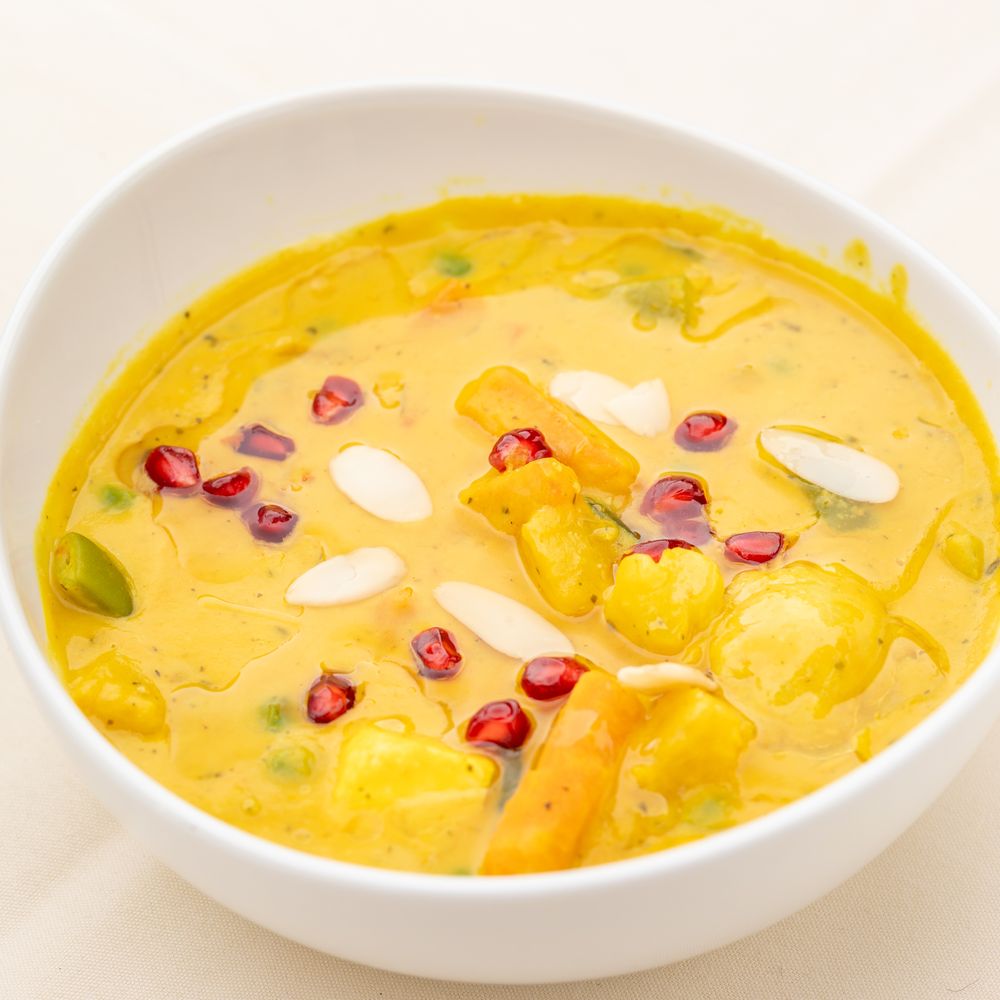
Finding vegan Indian food in Downtown Brooklyn can be an exciting culinary experience because Indian cuisine has one of the world’s deepest traditions of plant-based cooking. Lentils, chickpeas, vegetables, rice, grains, spices, coconut, and fermented foods have long been central to many Indian regional cuisines.
For vegan diners, that means Indian restaurants can offer much more than a simple vegetable curry.
You can explore crispy dosa, idli, vada, chana masala, dal, vegetable biryani, aloo gobi, bhindi masala, samosas, chaat, rice dishes, and regional vegetable preparations. The challenge is understanding which dishes are actually vegan because traditional Indian cooking also makes extensive use of ghee, butter, yogurt, cream, milk, and paneer.
Downtown Brooklyn and the surrounding neighborhoods provide several opportunities to explore this variety. Govinda’s Kitchen at 305 Schermerhorn Street is particularly notable because its current website describes its food as pure vegetarian and highlights dishes such as dosa, thalis, dal, samosa chaat, pani puri, and other Indian specialties.
However, vegetarian does not automatically mean vegan. That distinction will be important throughout this guide.
Why Downtown Brooklyn Is Great for Vegan Indian Food
Downtown Brooklyn is a diverse urban dining area surrounded by neighborhoods with restaurants representing cuisines from around the world. Indian food fits particularly well into this environment because its vegetarian traditions provide a large foundation for plant-based dining.
The surrounding Brooklyn neighborhoods also make it possible to explore different regional approaches rather than treating Indian food as one single cuisine.
You can find North Indian-style dishes, South Indian specialties, vegetarian-focused kitchens, Indian street food, thalis, and broader Indian menus where vegan diners can identify suitable dishes.
Indian Cuisine Naturally Offers Many Plant-Based Ingredients
One of the biggest advantages of Indian cuisine for vegans is that many traditional dishes are built around ingredients that are naturally plant-based.
These include:
- Lentils
- Chickpeas
- Potatoes
- Cauliflower
- Okra
- Eggplant
- Spinach
- Peas
- Tomatoes
- Rice
- Coconut
- Tamarind
- Fresh herbs
- Indian spices
These ingredients can be transformed into completely different dishes through different cooking techniques.
For example, chickpeas can become chana masala, potatoes can become aloo gobi or an aloo-based filling, rice can become vegetable biryani, and fermented rice-and-lentil batter can become dosa or idli.
This variety means vegan diners don’t have to rely on imitation meat.
South Indian Food Is Especially Interesting for Vegans
South Indian cuisine is one of the most useful areas to explore when you’re looking for plant-based Indian food.
Many popular South Indian dishes are built around:
- Rice
- Lentils
- Vegetables
- Coconut
- Tamarind
- Curry leaves
- Mustard seeds
- Fermented batters
Dosa is a particularly good example.
A traditional dosa is made from fermented rice and lentils and can be served with sambar and chutneys. The basic ingredients are plant-based, although the preparation method can vary from restaurant to restaurant.
Vegan diners should ask:
“Is the dosa cooked with oil or ghee?”
This simple question can determine whether the dish fits a vegan diet.
Nearby South Indian restaurants such as DOSA ROYALE and Brooklyn Curry Project give diners opportunities to explore this style of cooking. DOSA ROYALE is currently listed as offering vegan options, including the possibility of dosa prepared without ghee according to recent dining information.
Dosa, Idli, and Vada Create a Completely Different Experience
If your experience with Indian food has mostly involved curry, naan, and paneer, South Indian food can completely change your perspective.
A vegan-friendly South Indian meal might include:
- Dosa
- Idli
- Vada
- Sambar
- Coconut chutney
- Tomato chutney
- Vegetable preparations
Dosa provides crispness, idli provides a soft texture, vada adds crunch, while sambar and chutneys bring acidity and spice.
That variety makes South Indian food particularly appealing for plant-based diners.
Dal Is One of the Foundations of Vegan Indian Cooking
Dal is another reason Indian cuisine works so well for vegan diners.
Lentils and other pulses provide substance and protein while absorbing the flavors of spices and aromatics.
You may encounter:
- Dal tadka
- Dal fry
- Masoor dal
- Moong dal
- Chana dal
- Yellow dal
- Other regional lentil preparations
The important thing for vegans is the tempering.
A restaurant may finish dal with ghee, butter, or vegetable oil.
Therefore, ask:
“Is the dal tempered with ghee or oil?”
If it is made with vegetable oil and contains no other animal products, it may be suitable for a vegan diet.
Chana Masala Is a Great Vegan Starting Point
Chana masala is another excellent dish for plant-based diners.
The dish centers around chickpeas cooked with spices, tomatoes, onions, ginger, garlic, and other aromatics depending on the recipe.
It is filling enough to serve as a main dish and works well with:
- Rice
- Roti
- Vegan-friendly bread
- Vegetable dishes
It is also easy to share.
As always, preparation varies, so ask whether ghee or butter is used.
Vegetable Biryani Makes a Complete Meal
Vegetable biryani is another useful choice for vegan diners.
Fragrant rice is cooked with vegetables, herbs, spices, and aromatics, creating a filling meal without meat.
Depending on the restaurant, you may find ingredients such as:
- Potatoes
- Peas
- Carrots
- Beans
- Cauliflower
- Bell peppers
- Herbs
- Fried onions
- Nuts
Biryani is also convenient for takeout and delivery.
But vegan diners should verify that the rice hasn’t been prepared or finished with ghee or butter.
Indian Street Food Adds More Variety
Indian street food is another area where vegan diners can find interesting choices.
Popular vegetarian street foods include:
- Samosas
- Pani puri
- Bhel puri
- Aloo tikki
- Samosa chaat
- Pakoras
- Vada pav
- Bhel
Many of these dishes are based on potatoes, chickpeas, vegetables, flour, and spices.
However, some preparations include yogurt.
For example, dahi puri and some versions of chaat are vegetarian but not vegan because yogurt is an essential component.
The solution is simple: ask whether the dish can be prepared without yogurt.
Dedicated Vegetarian Restaurants Can Be Useful for Vegans
A vegetarian restaurant isn’t automatically vegan, but it can still make plant-based dining easier.
Govinda’s Kitchen is a particularly relevant example around Downtown Brooklyn. Its current website describes the kitchen as pure vegetarian, with no meat, fish, eggs, onion, or garlic. It also lists dishes including dosa, thalis, samosas, chaat, dal, and vegetable preparations.
The restaurant’s current site also specifically features customer feedback from diners describing vegan experiences, although those testimonials are customer statements rather than independent verification of every menu item.
For vegan diners, the advantage is that you are starting with a restaurant whose entire culinary philosophy is already centered around meat-free cooking.
You still need to check for dairy.
Vegetarian and Vegan Are Not the Same
This distinction deserves special attention.
A vegetarian restaurant may use:
- Milk
- Butter
- Ghee
- Cream
- Yogurt
- Paneer
- Eggs, depending on its definition
A vegan restaurant eliminates animal-derived ingredients entirely.
For example:
Paneer tikka: Vegetarian, not vegan.
Palak paneer: Vegetarian, not vegan.
Dal makhani: Often vegetarian, but commonly contains butter or cream.
Naan: Often vegetarian, but may contain dairy.
Raita: Vegetarian, not vegan.
Chana masala: Often vegan-friendly, but preparation should be confirmed.
Dosa: Often vegan-friendly, but cooking fat should be confirmed.
Understanding this distinction will make ordering much easier.
Ghee Is the Ingredient Vegans Need to Watch Most Carefully
Ghee is clarified butter and is widely used in Indian cooking.
It can appear in dishes where dairy isn’t immediately obvious.
A restaurant might use ghee to:
- Temper dal
- Cook vegetables
- Fry or finish rice
- Prepare dosa
- Cook paratha
- Brush naan
- Finish a curry
Therefore, asking whether a dish is “vegetarian” isn’t enough.
A better question is:
“Is this cooked with ghee, butter, or oil?”
If the restaurant can prepare it with vegetable oil, the dish may be suitable for a vegan diet.
Naan Can Be Surprisingly Difficult for Vegans
Indian bread is another area where vegan diners should pay attention.
Traditional naan recipes can contain:
- Milk
- Yogurt
- Butter
- Ghee
Garlic naan is also frequently brushed with butter after cooking.
If you’re vegan, ask:
“Do you have a dairy-free bread?”
Roti may sometimes be easier to fit into a vegan meal, but preparation still varies.
Downtown Brooklyn Gives You Different Dining Styles
Another advantage of the area is that you aren’t limited to one type of restaurant.
You can choose between:
Casual Indian dining:
Simple curries, rice, dosa, and vegetarian dishes.
Dedicated vegetarian dining:
A kitchen focused entirely on meat-free food.
South Indian dining:
Dosa, idli, vada, and sambar.
Modern Indian dining:
Contemporary interpretations of traditional dishes.
Indian street food:
Chaat, samosas, pani puri, and other snacks.
Takeout and delivery:
Biryani, dal, vegetable curries, and rice-based meals.
This makes Downtown Brooklyn useful for both first-time vegan diners and people who already know Indian cuisine well.
Vegan Dining Works Well for Mixed Groups
Indian restaurants can also make group dining easier.
Imagine a table where:
- One person is vegan.
- One person is vegetarian.
- Two people eat meat.
- Another person wants something mild.
The group can share several dishes.
For example:
- Vegetable biryani
- Chana masala
- Dal
- Vegetable curry
- Paneer
- Chicken tikka
- Naan
- Roti
The vegan diner can focus on the confirmed plant-based dishes while the rest of the table enjoys other options.
For strict allergies or concerns about cross-contact, however, ask the restaurant how foods are prepared.
You Don’t Need Imitation Meat
One of the most enjoyable aspects of vegan Indian food is that you don’t need meat substitutes to have a satisfying meal.
Traditional Indian plant-based cooking already provides substantial dishes.
Lentils, chickpeas, beans, potatoes, vegetables, rice, and grains can create meals with plenty of flavor and texture.
A meal of dal, chana masala, vegetable biryani, roti, and chutney can be filling without attempting to imitate chicken or lamb.
Vegan Indian Food Can Be Rich in Flavor
Plant-based doesn’t mean bland.
Indian cooking uses spices and aromatics to create complexity.
A vegan dish can be:
- Spicy
- Smoky
- Tangy
- Earthy
- Aromatic
- Crispy
- Fresh
- Rich
- Savory
For example, roasted eggplant can provide smokiness, tamarind adds acidity, cumin creates warmth, mustard seeds provide a distinctive aroma, and coconut adds richness.
This is one reason Indian cuisine translates so naturally into vegan dining.
Why This Guide Focuses on More Than Restaurant Names
Finding a vegan Indian restaurant isn’t simply about finding the word “vegan” on a menu.
A useful guide should help you understand:
- Which restaurants are vegetarian-focused
- Which restaurants offer vegan dishes
- Which regional cuisines are naturally plant-forward
- Which dishes are commonly vegan-friendly
- Which ingredients you need to avoid
- How to order safely
- How to identify authentic Indian plant-based food
Menus and restaurant policies can change, so checking current information before visiting is still important.
A Simple Way to Start Exploring
If you’re new to vegan Indian food, don’t try to order everything at once.
Start with a simple combination.
First meal:
Dosa + sambar + chutney.
Second meal:
Chana masala + rice + vegetable dish.
Third meal:
Dal + vegetable biryani + roti.
Fourth meal:
Indian street food and chaat without yogurt.
Fifth meal:
Try a regional vegetarian or vegan thali if available.
This gradually introduces you to different ingredients, cooking techniques, and regional traditions.
Final Thoughts
Downtown Brooklyn is a useful starting point for vegan Indian dining because Indian cuisine already has such a deep foundation of plant-based cooking.
The key is to understand the difference between vegetarian and vegan, ask about hidden dairy ingredients, and explore beyond familiar dishes.
Look for lentils, chickpeas, vegetables, rice, dosa, idli, sambar, chaat, and regional specialties. Ask about ghee and butter. Check whether breads contain dairy. And don’t hesitate to tell restaurant staff exactly what you avoid.
Most importantly, vegan Indian food isn’t simply a collection of dishes with meat removed.
It is part of a much broader culinary tradition where vegetables, grains, legumes, spices, fermentation, and plant-based ingredients can create complete and deeply flavorful meals on their own.
That diversity is what makes exploring vegan Indian restaurants in Downtown Brooklyn such an interesting food journey.
Top Vegan-Friendly Indian Restaurants in Downtown Brooklyn
Downtown Brooklyn and the neighborhoods immediately surrounding it offer several Indian restaurants worth exploring if you’re looking for plant-based food. Not every restaurant is exclusively vegan, and a vegetarian menu does not automatically mean every dish is vegan. However, the area’s combination of South Indian, North Indian, vegetarian-focused, and modern Indian restaurants gives vegan diners plenty of ways to build a satisfying meal.
Below are some of the most relevant Indian restaurants to consider when exploring vegan-friendly Indian food in and around Downtown Brooklyn.
Govinda’s Kitchen
Best for: Vegetarian-focused Indian food, thalis, dosa, chaat, and plant-forward meals
Location: 305 Schermerhorn Street, Brooklyn
Approximate cost: Budget to moderate
Govinda’s Kitchen is one of the most interesting options for plant-based diners in the Downtown Brooklyn area because the restaurant is specifically built around vegetarian Indian cooking. Its current website describes the food as pure vegetarian and says its kitchen does not use meat, fish, eggs, onion, or garlic. The menu changes regularly and includes dishes such as dosa, roti, dal, samosa chaat, pani puri, masala dosa, idli, thalis, and vegetable preparations.
For vegan diners, however, it is still important to ask about dairy ingredients. Some traditional Indian dishes may contain paneer, milk, ghee, butter, or other dairy products even when the overall restaurant is vegetarian.
The restaurant’s thalis can be especially interesting for people who want to experience several Indian flavors in one meal. Govinda’s Kitchen currently highlights options such as the Veggie Thali and Express Thali, making it a useful place to explore traditional Indian meal combinations.
Its current website also notes that the kitchen prepares fresh food daily and operates a tiffin service, adding another option for diners interested in Indian home-style meals.
Brooklyn Curry Project
Best for: Bangalore-inspired South Indian food and dosa
Location: 383 Bridge Street, Downtown Brooklyn
Approximate cost: Casual
Brooklyn Curry Project is particularly interesting for vegan diners because of its focus on South Indian cuisine.
The project was started by Swetha and Venkat, who wanted to bring the flavors of Bangalore to Brooklyn. According to the project’s own story, it began as a small food operation and grew around dosa and South Indian cooking.
Today, the project operates at Nimbus Downtown Brooklyn at 383 Bridge Street, with its current website listing Saturday service from 10:30 AM to 2:00 PM. Its limited schedule makes it different from a conventional full-service restaurant, so checking the latest schedule before visiting is important.
The restaurant has also been specifically identified as a good choice for vegans and vegetarians by local restaurant coverage.
Dosa is an especially useful choice for vegan diners because its basic fermented rice-and-lentil batter is naturally plant-based. The important question is whether the dosa is cooked with oil or ghee.
Filter Kaapi
Best for: South Indian breakfast, dosa, idli, and filter coffee
Location: 383 Bridge Street, Downtown Brooklyn
Approximate cost: $10–20
Filter Kaapi is another South Indian option at 383 Bridge Street.
The restaurant is particularly suitable for diners who want to explore the breakfast and snack side of Indian cuisine rather than focusing exclusively on North Indian curries.
South Indian menus can be particularly useful for vegan diners because many dishes are based on rice, lentils, vegetables, coconut, and spices.
Potential dishes to investigate include dosa, idli, vada, sambar, and vegetable preparations. However, preparation methods vary, so ask whether ghee, butter, yogurt, or other dairy ingredients are used.
The current local listing places Filter Kaapi in the $10–20 range and shows daytime operating hours, making it particularly relevant for breakfast and lunch rather than late-night dining.
For someone who wants a lighter vegan Indian meal, a combination of dosa, sambar, and chutney can be a good starting point.
DOSA ROYALE
Best for: South Indian dosa and casual vegetarian dining
Location: 65 Lafayette Avenue, Brooklyn
Approximate cost: Moderate
DOSA ROYALE is located in nearby Fort Greene and is worth including for diners who are willing to travel a short distance beyond the immediate Downtown Brooklyn core.
As its name suggests, dosa is central to the restaurant’s identity. The restaurant specializes in South Indian food and offers multiple dosa preparations alongside other traditional dishes.
This is particularly useful for vegan diners because South Indian cuisine provides many naturally plant-based possibilities. Dosa, sambar, vegetable dishes, and certain chutneys can often be adapted or prepared without dairy.
Current restaurant information identifies DOSA ROYALE as a South Indian restaurant, while recent dining information also identifies vegetarian and vegan options.
The most important question is whether the dosa is prepared with ghee. If you’re strictly vegan, request an oil-based preparation and confirm the chutneys and accompanying dishes contain no dairy.
DOSA ROYALE is also useful for groups because diners who are not vegan can explore a broader range of South Indian dishes while plant-based diners have several possibilities to choose from.
Kashi Indian Cuisine & Bar
Best for: Modern North Indian dining and upscale meals
Location: 286 Livingston Street, Brooklyn
Approximate cost: Moderate to upscale
Kashi offers a different experience from the casual South Indian restaurants in the area.
The restaurant describes its cuisine as modern North Indian cooking, with a menu inspired by the culinary traditions of North India. Its current menu highlights dishes including biryani and char-grilled specialties.
For vegan diners, Kashi is best approached by asking the restaurant which current vegetable, lentil, and rice dishes can be prepared without dairy.
North Indian cooking frequently uses ghee, butter, cream, yogurt, and paneer, so simply ordering a “vegetarian” dish is not sufficient for a strict vegan diet.
Kashi also currently offers a weekday lunch special from Monday through Friday, with the vegetarian lunch option listed at $19.99.
This makes it an option for a more polished lunch experience, particularly if you’re dining with people who have different dietary preferences.
Mint Heights
Best for: Modern Indian dining and a broad menu
Location: Downtown Brooklyn/Brooklyn Heights area
Approximate cost: $20–30
Mint Heights is another Indian restaurant worth considering when exploring the broader Downtown Brooklyn dining area.
Current listings show Mint Heights locations in the surrounding Brooklyn area, so diners should verify the exact location before visiting.
The restaurant offers a broad Indian menu rather than focusing exclusively on one regional cuisine. That can be useful for groups because diners can explore different styles of Indian food in one place.
For vegan diners, focus on vegetable and legume dishes and ask specifically about dairy, especially ghee, cream, butter, yogurt, and paneer.
A useful strategy is to tell the server that you are strictly vegan rather than simply saying you prefer vegetarian food. That makes it easier for the restaurant team to identify hidden dairy ingredients.
Curry Heights
Best for: Casual Indian meals and affordable dining
Location: 151 Remsen Street, Brooklyn
Approximate cost: $10–20
Curry Heights is another nearby option for casual Indian food.
Its location on Remsen Street makes it convenient for people exploring Downtown Brooklyn and Brooklyn Heights. Current local listings place it in the $10–20 price range, making it one of the more accessible options for an everyday Indian meal.
For vegan diners, vegetable and chickpea-based dishes are worth investigating.
Potential choices may include dishes such as chana masala, vegetable curries, and eggplant preparations, but ingredients should be confirmed with the restaurant.
The key advantage of a casual Indian restaurant is flexibility. Instead of ordering an elaborate meal, you can build a simple combination of rice, dal, vegetable curry, and roti if each component is confirmed dairy-free.
Dastaan Indian Kitchen
Best for: Contemporary Indian food, curries, and group dining
Location: Smith Street, Brooklyn
Approximate cost: Moderate
Dastaan Indian Kitchen is another nearby restaurant to consider when you’re willing to move beyond the immediate Downtown Brooklyn streets.
The restaurant offers a broader Indian menu that includes curries, biryanis, and tandoori-style dishes.
For vegan diners, the best approach is to ask which vegetable and lentil dishes can be prepared without dairy. This is especially important because many Indian restaurant curries can contain cream, butter, yogurt, or ghee even when they contain no meat.
Dastaan can be particularly useful for groups because the menu gives non-vegan diners plenty of choices while vegan guests can ask for suitable plant-based preparations.
Rather than assuming a dish is vegan from its name, explain your dietary requirement clearly and ask the kitchen to confirm the ingredients.
Indian Table
Best for: Regional Indian food and a more traditional dining experience
Location: Court Street, Brooklyn
Approximate cost: Moderate to upscale
Indian Table is another restaurant in the surrounding Downtown Brooklyn area that can be considered by diners looking for Indian food beyond the standard curry-and-naan combination.
The restaurant’s menu has a regional Indian character, giving diners an opportunity to explore dishes that may differ from the familiar North Indian restaurant format.
For vegan diners, regional Indian cuisine can be particularly rewarding because different parts of India have developed their own plant-based cooking traditions.
When ordering, look for vegetable, lentil, rice, and coconut-based preparations, while checking carefully for ghee, butter, yogurt, and cream.
This is also a good setting for diners who want to make the meal more exploratory rather than simply ordering a familiar dish such as tikka masala.
Atithi Indian Cuisine
Best for: Broad Indian menu and casual-to-moderate dining
Location: Grand Street, Brooklyn
Approximate cost: Moderate
Atithi Indian Cuisine is another option in the wider Brooklyn dining area.
The restaurant offers a broad Indian menu, making it useful for groups with different preferences.
For vegan diners, the best strategy is to identify dishes based on vegetables, chickpeas, lentils, and rice, then confirm that they are prepared without dairy.
If you’re ordering bread, ask whether roti or another bread option is made without butter, milk, or yogurt. Naan can frequently contain dairy, so it should not automatically be considered vegan.
The same principle applies to curries. A vegetable curry can be vegan in one restaurant and contain cream or butter in another.
How to Choose Between These Restaurants
The best restaurant for you will depend on what kind of Indian food you want.
For vegetarian-focused Indian food: Govinda’s Kitchen is particularly relevant.
For Bangalore-style South Indian food: Brooklyn Curry Project is worth investigating, especially for its current Saturday Downtown Brooklyn operation.
For dosa and South Indian specialties: Filter Kaapi and DOSA ROYALE are useful choices.
For modern North Indian dining: Kashi provides a more contemporary experience.
For casual Indian food: Curry Heights can be convenient.
For a broader group meal: Dastaan, Kashi, or other full-menu Indian restaurants may provide more choices.
The most important rule for vegan diners is simple: don’t assume that vegetarian means vegan.
Ask about ghee, butter, cream, milk, yogurt, paneer, and other dairy ingredients before ordering. With that small extra step, Downtown Brooklyn’s Indian food scene can offer a surprisingly wide range of plant-based meals.
Best Neighborhoods or Areas for Vegan Indian Food in Downtown Brooklyn
When searching for the best vegan Indian food in Downtown Brooklyn, it helps not to think of Downtown Brooklyn as an isolated restaurant district. Several nearby neighborhoods are close enough to explore on foot, by subway, or with a short rideshare, and each area offers a slightly different Indian dining experience.
For vegan diners, this broader approach is particularly useful. One neighborhood may be better for South Indian dosa, another for traditional North Indian curries, while another may offer more regional or upscale Indian dining.
Here are the neighborhoods and food corridors worth exploring.
1. Downtown Brooklyn
Best for: South Indian food, dosa, vegetarian-focused restaurants, and convenient Indian dining
Downtown Brooklyn should be the first stop for anyone specifically searching for vegan-friendly Indian food in the area.
The neighborhood has several Indian restaurants within a relatively compact area, including South Indian options around Bridge Street. Brooklyn Curry Project and Filter Kaapi are both located at 383 Bridge Street, giving diners access to a South Indian-focused food destination. Current listings identify Brooklyn Curry Project as a South Indian restaurant, while Filter Kaapi is an Indian restaurant with daytime service.
This makes Downtown Brooklyn particularly interesting for people who want to move beyond the familiar North Indian restaurant format.
Look for dishes such as:
- Dosa
- Idli
- Vada
- Sambar
- Vegetable uttapam
- Coconut chutney
- Vegetable rice dishes
- Lentil-based preparations
The area is also convenient for people who want a quick lunch or casual meal rather than a long dinner.
For vegan diners, the main question is whether ghee or butter is used. Dosa and other South Indian dishes can be naturally plant-based, but preparation methods vary from restaurant to restaurant.
Why visit: Downtown Brooklyn is one of the most convenient areas for discovering South Indian and naturally plant-forward Indian food.
2. Brooklyn Heights
Best for: Convenient neighborhood Indian dining and classic Indian dishes
Brooklyn Heights is an excellent nearby starting point if you want to stay close to the Downtown Brooklyn area while exploring Indian food.
Current listings include Curry Heights on Remsen Street and Mint Heights on Henry Street. These restaurants provide broader Indian menus rather than focusing exclusively on one regional specialty.
For vegan diners, the advantage is flexibility.
You can look for:
- Chana masala
- Vegetable curries
- Dal
- Vegetable biryani
- Baingan-based dishes
- Rice dishes
- Roti
However, vegan diners should ask about ghee, butter, cream, yogurt, and other dairy ingredients.
Brooklyn Heights is also a practical neighborhood for people staying in the area who don’t want to travel far for an Indian meal.
Why visit: Convenient for everyday Indian food and a good starting point before expanding into nearby neighborhoods.
3. Court Street and Cobble Hill
Best for: Regional Indian cuisine and relaxed sit-down dining
The Court Street and Cobble Hill corridor is another useful area to explore.
Current restaurant listings include Indian Table at 234 Court Street and Tera Mera at 272 Court Street. There is also Malvan farther along Court Street, offering another Indian dining option.
This area is particularly useful when you want to explore Indian cuisine beyond the standard restaurant staples.
Rather than focusing only on dishes such as chicken tikka masala and naan, look for regional preparations involving:
- Vegetables
- Lentils
- Rice
- Coconut
- Chickpeas
- Tamarind
- Regional spices
For vegan diners, regional Indian cuisine can be especially rewarding because different parts of India have developed extensive plant-based traditions.
Why visit: A good area for exploring regional Indian flavors while enjoying a more relaxed sit-down meal.
4. Boerum Hill and Livingston Street
Best for: Modern Indian dining and more polished meals
The area around Livingston Street and Boerum Hill provides another useful extension of the Downtown Brooklyn Indian-food search.
One of the key restaurants here is Kashi Indian Cuisine & Bar at 286 Livingston Street.
Kashi describes its cuisine as modern North Indian, giving diners an experience that differs from casual South Indian restaurants around Bridge Street.
For vegan diners, this area can be useful when you’re looking for a more refined dinner rather than a quick dosa or lunch.
North Indian cuisine does require extra attention to dairy. Ghee, butter, cream, yogurt, and paneer are common ingredients, so diners should ask the restaurant to identify dishes that can be prepared without them.
Kashi also currently offers a weekday lunch special, making the Livingston Street area worth considering for an Indian lunch outing.
Why visit: A good choice when you want a more contemporary or polished Indian dining experience.
5. Fort Greene
Best for: South Indian food, dosa, and plant-forward specialties
Fort Greene is one of the most useful nearby neighborhoods for diners interested in South Indian cuisine.
The area is home to DOSA ROYALE at 65 Lafayette Avenue.
The restaurant’s South Indian focus makes Fort Greene particularly interesting for vegan diners who want dosa, idli, vada, sambar, chutneys, and other dishes built around rice and lentils.
South Indian food can be one of the easiest Indian cuisines to explore as a vegan, although you still need to confirm cooking fats and accompaniments.
For example, a dosa may be vegan when prepared with vegetable oil but not vegan if the restaurant cooks it with ghee.
Similarly, coconut chutney can be naturally plant-based, while some other chutneys or accompaniments may contain dairy.
Why visit: Fort Greene is worth the short trip when dosa and South Indian food are your priority.
6. Prospect Heights
Best for: A broader Indian-food tour and multiple restaurant choices
Prospect Heights becomes useful when you’ve already explored Downtown Brooklyn and nearby neighborhoods and want to expand your search.
The Vanderbilt Avenue corridor is particularly relevant.
Current listings include OMAR’S INDIAN FINE CUISINE at 568 Vanderbilt Avenue and Mumbai Place at 655 Vanderbilt Avenue.
Having multiple Indian restaurants within the broader area makes Prospect Heights useful for comparison.
One restaurant might be better suited to a casual lunch, while another may offer a more extensive dinner menu.
For vegan diners, this wider selection can increase the chances of finding suitable:
- Vegetable curries
- Dal
- Chickpea dishes
- Rice
- Biryani
- Roti
- Vegetable appetizers
As always, verify the ingredients rather than assuming that a vegetarian dish is automatically vegan.
Why visit: A strong choice when you want to turn your Indian-food search into a broader Brooklyn food tour.
7. Crown Heights
Best for: Expanding your Indian-food search beyond Downtown Brooklyn
Crown Heights is farther from Downtown Brooklyn, but it becomes relevant if your goal is to explore a wider selection of Indian restaurants rather than staying within walking distance.
The neighborhood and surrounding areas provide additional Indian dining choices, including casual restaurants and broader menus.
One advantage of traveling farther is that you can compare different restaurant styles rather than repeatedly visiting restaurants with similar menus.
For vegan diners, the strategy remains the same: prioritize lentils, chickpeas, vegetables, rice, and dairy-free breads while asking about ghee and butter.
Crown Heights works particularly well as part of a larger food outing that also includes Prospect Heights.
Why visit: Useful for expanding your Brooklyn Indian-food exploration once you’ve covered the restaurants closer to Downtown Brooklyn.
8. Atlantic Avenue and Boerum Hill
Best for: Casual Indian food and convenient dining between neighborhoods
Atlantic Avenue provides another useful connection between Downtown Brooklyn, Boerum Hill, and nearby residential neighborhoods.
Restaurants such as Masala Grill at 501B Atlantic Avenue give diners another option for Indian food in this broader corridor.
The location is useful because it sits along a busy route connecting several Brooklyn neighborhoods.
For vegan diners, casual restaurants along this corridor can be practical for everyday meals. A combination such as rice, dal, vegetable curry, and roti can create a satisfying plant-based meal without requiring an elaborate order.
Again, tell the restaurant that you’re vegan rather than simply vegetarian.
Why visit: Convenient for casual Indian food while exploring the neighborhoods surrounding Downtown Brooklyn.
9. Schermerhorn Street and the Boerum Hill Edge
Best for: Vegetarian-focused Indian food and thali-style meals
The area around Schermerhorn Street is particularly interesting because of Govinda’s Kitchen at 305 Schermerhorn Street.
Govinda’s Kitchen is especially relevant to plant-based diners because its current website describes its food as pure vegetarian and highlights dishes including dosa, thalis, dal, samosa chaat, pani puri, idli, and other Indian specialties.
For someone exploring vegan Indian food, this area can therefore be an important stop.
The key distinction remains that pure vegetarian does not necessarily mean vegan. Ask which current dishes contain dairy and whether ghee, butter, milk, yogurt, or paneer are used.
Why visit: Particularly useful for diners interested in vegetarian Indian traditions and thali-style meals.
10. The Wider Brooklyn Indian-Food Loop
Best for: A complete Indian food exploration
If you’re serious about discovering Indian food in Brooklyn, don’t limit yourself to a single neighborhood.
A useful food itinerary could look something like this:
Start in Downtown Brooklyn for dosa, idli, and South Indian food.
Move toward Brooklyn Heights for convenient neighborhood Indian dining.
Continue to Court Street and Cobble Hill for regional Indian cuisine.
Explore Boerum Hill and Livingston Street for more contemporary Indian dining.
Head toward Fort Greene for additional South Indian specialties.
Continue to Prospect Heights for more Indian restaurants along Vanderbilt Avenue.
This approach allows you to experience different styles of Indian cuisine rather than judging the entire local scene by one restaurant.
Which Area Should Vegan Diners Explore First?
The answer depends on what you want to eat.
For South Indian vegan food: Start with Downtown Brooklyn and Fort Greene.
For convenient neighborhood dining: Brooklyn Heights is a practical starting point.
For regional Indian cuisine: Explore Court Street and Cobble Hill.
For a more polished dinner: Look around Livingston Street and Boerum Hill.
For vegetarian-focused Indian food: Explore the Schermerhorn Street area around Govinda’s Kitchen.
For a broader Indian-food tour: Continue toward Prospect Heights and Crown Heights.
The important point is that Downtown Brooklyn should be treated as the center of your search, not the boundary. The surrounding neighborhoods are close enough that you can explore several Indian culinary traditions in one food trip.
For vegan diners, this wider approach is especially valuable. South Indian restaurants can provide naturally plant-forward dishes such as dosa and idli, while North Indian restaurants may offer vegetable curries, dal, and rice dishes that can sometimes be prepared without dairy.
Just remember to ask about ghee, butter, cream, yogurt, and paneer before ordering.
With a little planning, a search for vegan Indian food in Downtown Brooklyn can quickly turn into a much larger exploration of Brooklyn’s diverse Indian food scene.
Popular Indian Dishes People Should Try
One of the best ways to explore vegan Indian food in Downtown Brooklyn is to focus on dishes rather than simply looking for restaurants labeled “vegan.” Indian cuisine offers an enormous range of naturally plant-based recipes built around lentils, chickpeas, vegetables, rice, grains, coconut, herbs, and spices.
For vegan diners, the key is understanding how each dish is traditionally prepared. A dish may be vegetarian but contain ghee, butter, cream, milk, yogurt, or paneer. On the other hand, many classic Indian dishes can be completely vegan when prepared with vegetable oil instead of dairy-based ingredients.
Here are some of the most popular Indian dishes to try when exploring Downtown Brooklyn and nearby neighborhoods.
1. Chana Masala
Chana masala should be near the top of any vegan Indian food list.
This hearty dish features chickpeas cooked with tomatoes, onions, ginger, garlic, and a blend of spices. Depending on the restaurant and regional style, the flavor can range from mildly aromatic to intensely spicy and tangy.
Chickpeas provide plenty of substance, making chana masala more than just a side dish.
For a complete meal, pair it with:
- Basmati rice
- Roti
- Vegetable biryani
- Aloo gobi
- Dairy-free chutney
Chana masala is often naturally vegan, but always ask whether ghee or butter has been added during preparation.
Best for: First-time vegan Indian diners, hearty lunches, and affordable meals.
2. Aloo Gobi
Aloo gobi is a classic combination of potatoes and cauliflower cooked with Indian spices.
The name itself tells you the main ingredients: aloo means potato and gobi means cauliflower.
The vegetables are commonly seasoned with turmeric, cumin, coriander, ginger, garlic, and other spices. Some versions are relatively dry and roasted, while others have a more substantial sauce.
Aloo gobi works particularly well as part of a shared Indian meal.
Try it with chana masala, dal, and roti for a simple plant-based combination.
The traditional ingredients don’t require dairy, but restaurant preparation varies. Ask whether the kitchen uses ghee or butter.
Best for: Vegetable lovers and diners who prefer less creamy Indian dishes.
3. Bhindi Masala
Bhindi masala is an excellent dish for anyone who wants to try something beyond potatoes and cauliflower.
The star ingredient is okra, known as bhindi in Hindi.
Okra is cooked with onions, tomatoes, and spices, creating a dish with a distinctive texture and savory flavor. Depending on the cooking technique, the okra may be relatively dry, roasted, or prepared with more sauce.
Bhindi masala is particularly good with roti because the flatbread works well with the flavorful vegetable mixture.
It also makes a useful addition to a shared vegan Indian meal alongside dal and chickpea curry.
Best for: Diners who enjoy vegetables with distinctive textures and aromatic spices.
4. Baingan Bharta
If you enjoy smoky flavors, baingan bharta is a dish worth ordering.
Baingan bharta is made from roasted or charred eggplant that is mashed and cooked with onions, tomatoes, garlic, ginger, and spices.
The roasting process gives the eggplant a smoky character that makes the dish very different from a typical vegetable curry.
It is particularly good with roti or rice.
Baingan bharta is often naturally plant-based, but confirm that the restaurant does not finish the dish with butter or ghee.
Best for: Smoky, savory flavors and diners looking for a traditional North Indian vegetable dish.
5. Dal
No Indian food guide would be complete without dal.
Dal refers broadly to dishes made from lentils and other pulses. There are many varieties, and recipes differ considerably from one Indian region to another.
You might encounter:
- Yellow dal
- Masoor dal
- Moong dal
- Chana dal
- Dal tadka
- Dal fry
- Other regional lentil preparations
Dal is especially useful for vegan diners because lentils provide substance and protein without requiring meat.
The main issue is the tadka, or tempering.
A restaurant may finish the dal with oil, ghee, or butter. If you are vegan, specifically ask for the dal to be prepared without ghee or butter.
A simple combination of dal, rice, and vegetable curry can make a satisfying Indian meal.
Best for: A comforting, filling, everyday Indian meal.
6. Sambar
For anyone exploring South Indian food, sambar is essential.
Sambar is a lentil-and-vegetable stew flavored with spices and tamarind. It is commonly served alongside dosa, idli, vada, and other South Indian dishes.
Because it combines lentils and vegetables with tangy tamarind and aromatic spices, sambar has a distinctive flavor profile that differs from North Indian dal.
Downtown Brooklyn is particularly useful for exploring South Indian dishes, with restaurants such as Brooklyn Curry Project and nearby DOSA ROYALE offering South Indian-focused menus.
Sambar is often vegan-friendly, but it is still worth confirming the preparation.
Best for: South Indian meals, dosa, idli, and diners who enjoy tangy flavors.
7. Masala Dosa
Masala dosa is one of the most popular South Indian dishes to try in Brooklyn.
It is a thin, crisp crepe made from fermented rice-and-lentil batter and filled with a spiced potato mixture.
A traditional serving usually comes with sambar and chutneys.
The combination creates several textures in one dish:
- Crisp dosa
- Soft spiced potatoes
- Warm sambar
- Fresh chutney
Dosa can be an excellent vegan choice because the basic batter is plant-based.
However, the cooking fat is important.
Ask:
“Is the dosa cooked with oil or ghee?”
If it is cooked with vegetable oil and the accompanying chutneys contain no dairy, it can fit a vegan diet.
Brooklyn Curry Project, currently listed at 383 Bridge Street, is specifically focused on South Indian cuisine, while DOSA ROYALE in nearby Fort Greene is another South Indian option.
Best for: Breakfast, lunch, casual dining, and first-time South Indian food experiences.
8. Idli
Idli is another classic South Indian dish that vegan diners should try.
These soft, steamed cakes are traditionally made from fermented rice and lentil batter.
Unlike dosa, idli isn’t crispy. Its soft, airy texture makes it particularly good with sambar and chutney.
A typical plate may include:
- Idli
- Sambar
- Coconut chutney
- Tomato or other chutney
Idli is generally made without dairy, but restaurant preparation should still be confirmed.
The coconut chutney is often naturally plant-based, but not every restaurant uses identical recipes.
Best for: Light breakfasts, brunches, and diners who prefer mild flavors.
9. Vada
Vada gives you a completely different texture from dosa and idli.
South Indian vada is typically made from a lentil-based batter and fried until crisp on the outside while remaining soft inside.
It is commonly served with sambar and chutney.
For vegan diners, the ingredients are often straightforward, but ask about the frying oil and preparation if you have strict dietary requirements.
Vada makes an excellent starter or breakfast item.
Best for: Crispy appetizers and South Indian breakfast combinations.
10. Vegetable Biryani
Vegetable biryani is one of the best choices when you want rice to be the centerpiece of your meal.
Fragrant basmati rice is layered or cooked with vegetables, herbs, aromatics, and spices.
Depending on the restaurant, you may find:
- Potatoes
- Peas
- Carrots
- Green beans
- Cauliflower
- Bell peppers
- Fried onions
- Fresh herbs
- Nuts
Vegetable biryani can be filling enough to serve as a main course.
However, vegan diners need to ask whether the rice is cooked with ghee.
Also remember that biryani may traditionally be served with raita, which is yogurt-based. Ask for a dairy-free accompaniment instead.
Best for: Hearty lunches, dinners, takeout, and sharing.
11. Vegetable Curry
Sometimes the simplest dish is the best way to understand a restaurant’s cooking.
A vegetable curry can feature whatever vegetables are central to the restaurant’s particular recipe.
You might find combinations involving:
- Potatoes
- Cauliflower
- Peas
- Spinach
- Carrots
- Beans
- Eggplant
- Bell peppers
The flavor can range from light and aromatic to spicy and deeply seasoned.
For vegan diners, ask the server to recommend a vegetable curry that contains no dairy.
This is particularly useful when dining at a restaurant with a broad menu such as Kashi, Curry Heights, or another full-service Indian restaurant in the Downtown Brooklyn area.
Best for: Sharing and discovering a restaurant’s individual cooking style.
12. Chana Saag
Chana saag combines chickpeas with leafy greens.
It brings together the hearty texture of chickpeas and the earthy flavor of greens, creating a substantial plant-based dish.
The exact greens can vary, and the preparation may resemble other Indian spinach-based curries.
For vegans, ask whether the dish contains cream, butter, or ghee.
If prepared with oil and plant-based ingredients, chana saag can be an excellent high-protein addition to a vegan Indian meal.
Best for: Diners who want legumes and greens in the same dish.
13. Vegetable Pakora
Pakoras are crispy Indian fritters made by coating vegetables in seasoned chickpea-flour batter before frying them.
Popular versions can include:
- Onion pakora
- Potato pakora
- Spinach pakora
- Cauliflower pakora
- Mixed vegetable pakora
Because chickpea flour is naturally plant-based, vegetable pakoras can often work well for vegans.
The important thing is to check the batter and frying method.
Pakoras are particularly good as a starter when sharing a meal with friends.
Pair them with tamarind or mint chutney, after confirming the chutney is dairy-free.
Best for: Crispy appetizers and sharing.
14. Vegetable Samosas
Vegetable samosas are among the most recognizable Indian appetizers.
The classic filling combines potatoes, peas, and spices inside a crisp pastry shell.
They are easy to share and work particularly well as the first course of an Indian meal.
Vegetable samosas are often vegan-friendly, but strict vegans should still ask whether the pastry contains dairy and whether the filling is cooked with butter or ghee.
If cross-contact is a concern, ask the restaurant about its frying practices.
Best for: Starters, snacks, and casual Indian dining.
15. Pani Puri
For a completely different Indian food experience, try pani puri.
These small, crispy shells are filled with combinations of potato, chickpeas, chutneys, and spiced flavored water.
The result is simultaneously:
- Crispy
- Tangy
- Spicy
- Fresh
- Savory
Pani puri is especially fun when you’re dining with friends because it is very different from a traditional curry-based meal.
Govinda’s Kitchen currently highlights pani puri among its Indian specialties, along with other chaat dishes.
Ask about the chutneys and fillings if you’re following a strict vegan diet.
Best for: Indian street-food experiences and adventurous diners.
16. Samosa Chaat
Samosa chaat takes the classic samosa and turns it into a more elaborate street-food dish.
The samosa is usually broken into pieces and topped with ingredients such as chickpeas, chutneys, onions, and spices.
Some versions also include yogurt.
For vegan diners, ask for no yogurt and confirm that the chutneys are dairy-free.
The combination of crispy samosa, creamy chickpeas, tangy chutney, and spices creates an exciting mix of textures.
Best for: Street-food lovers and diners who want something more elaborate than a plain samosa.
17. Roti
Roti may not sound as exciting as biryani or dosa, but it can be one of the most useful foods for vegan diners.
Traditional roti is a simple whole-wheat flatbread.
It works well with:
- Chana masala
- Dal
- Bhindi masala
- Baingan bharta
- Vegetable curry
Roti can sometimes be easier to make vegan than naan because naan recipes frequently include milk, yogurt, butter, or ghee.
Still, ask before ordering.
Best for: Building a simple dairy-free Indian meal.
Popular Indian Dishes That Are Usually Vegetarian but Not Vegan
Understanding what not to order is just as important.
Saag Paneer
Saag paneer combines leafy greens with paneer, a fresh Indian cheese.
It is vegetarian but not vegan because paneer is made from milk.
Paneer Tikka
Paneer tikka features marinated Indian cheese grilled with vegetables.
It is a popular vegetarian appetizer but is not suitable for strict vegans unless a restaurant offers a plant-based substitute.
Dal Makhani
Dal makhani is made with black lentils and traditionally cooked with butter or cream.
Some restaurants may offer dairy-free versions, but never assume it is vegan.
Naan
Naan is one of the biggest sources of confusion for vegan diners.
Depending on the recipe, naan can contain:
- Milk
- Yogurt
- Butter
- Ghee
Garlic naan and butter naan are especially likely to contain dairy.
Ask whether the restaurant offers dairy-free roti or vegan naan.
Raita
Raita is yogurt-based and therefore not vegan.
If your meal comes with raita, ask whether you can replace it with chutney or another dairy-free side.
A Great Vegan Indian Meal for First-Time Diners
If you’re trying vegan Indian food for the first time, you don’t need to order ten different dishes.
A balanced meal could be:
Starter: Vegetable samosa or pakora
Main dish: Chana masala
Vegetable: Aloo gobi or bhindi masala
Lentil dish: Dal prepared without ghee
Rice: Vegetable biryani
Bread: Dairy-free roti
South Indian alternative: Masala dosa with sambar and dairy-free chutney
This gives you a mixture of textures and flavors while allowing you to experience several important parts of Indian cuisine.
The Most Important Vegan Ordering Question
When ordering Indian food in Downtown Brooklyn, don’t simply ask:
“Is this vegetarian?”
Instead ask:
“Is this completely dairy-free and vegan? Does it contain ghee, butter, cream, milk, or yogurt?”
That question is much more useful for a strict vegan diet.
Indian cuisine gives vegan diners an enormous range of choices, from chickpea curries and roasted vegetables to dosa, idli, sambar, biryani, and street food.
The more dishes you try, the more you’ll discover that vegan Indian food isn’t about removing something from the plate. It is about experiencing the incredible variety of lentils, vegetables, rice, grains, spices, herbs, fermentation, and traditional plant-based cooking that Indian cuisine has developed over generations.
Vegetarian and Vegan Indian Food Options
Indian cuisine is particularly rewarding for vegetarian and vegan diners because plant-based cooking has been part of many Indian culinary traditions for centuries. In Downtown Brooklyn, that translates into a wide range of possibilities—from lentil curries and vegetable dishes to dosa, idli, rice dishes, samosas, and Indian street food.
However, there is an important distinction to understand before ordering:
Vegetarian does not always mean vegan.
A vegetarian Indian dish can contain milk, butter, ghee, cream, yogurt, or paneer. Vegan Indian food excludes these animal-derived ingredients.
For diners who follow a strict vegan diet, understanding this difference can make ordering much easier.
Vegetarian Indian Food: What You Can Expect
Vegetarian Indian cuisine includes a huge variety of foods made without meat or seafood.
Common vegetarian ingredients include:
- Potatoes
- Cauliflower
- Spinach
- Eggplant
- Okra
- Chickpeas
- Lentils
- Peas
- Rice
- Tomatoes
- Onions
- Coconut
- Indian spices
- Paneer
- Yogurt
- Ghee
The last three ingredients are particularly important.
Paneer is an Indian cheese, yogurt is commonly used in marinades and sauces, and ghee is clarified butter. All three are vegetarian but not vegan.
For example, paneer tikka, saag paneer, and many creamy North Indian curries are vegetarian dishes but would not normally qualify as vegan.
Vegan Indian Food: What to Look For
Vegan Indian food avoids meat and all animal-derived ingredients.
Some of the easiest categories to explore include:
Lentil dishes:
Dal, certain versions of dal tadka, and other pulse-based preparations.
Chickpea dishes:
Chana masala and other chickpea curries.
Vegetable dishes:
Aloo gobi, bhindi masala, baingan bharta, and vegetable curries.
South Indian dishes:
Dosa, idli, vada, and sambar can often be prepared without dairy.
Rice dishes:
Vegetable rice and some versions of vegetable biryani.
Street food:
Samosas, pani puri, bhel puri, and certain types of chaat.
The important phrase here is “can often be.”
Restaurant recipes differ, so vegan diners should always confirm ingredients.
Dosa Is One of the Best Vegan-Friendly Options
Dosa is one of the easiest Indian dishes to investigate when you’re looking for vegan food.
Traditional dosa batter is made from fermented rice and lentils. The batter itself does not require dairy.
The problem is usually the cooking surface.
Some restaurants cook dosa with:
- Vegetable oil
- Coconut oil
- Ghee
- Butter
Therefore, ask whether the dosa can be cooked with oil.
DOSA ROYALE’s current delivery menu, for example, identifies its plain dosa as vegetarian, vegan, and gluten-free. Its menu also separately lists a ghee roast, illustrating why diners should distinguish between different dosa preparations.
A vegan-friendly dosa meal can include:
- Plain dosa
- Masala dosa
- Sambar
- Coconut chutney
- Tomato chutney
Just confirm that the accompaniments are dairy-free as well.
Idli Is Another Naturally Plant-Based Choice
Idli is a soft steamed South Indian dish made primarily from fermented rice and lentils.
Because it is steamed rather than fried in butter or ghee, idli can be a particularly simple vegan option.
It is traditionally served with sambar and chutney.
For a light meal, try:
Idli + sambar + coconut chutney
For a more substantial meal, add dosa or vada.
As with any restaurant meal, confirm the ingredients if you have a strict allergy or dietary requirement.
Sambar and Dal Offer Plant-Based Comfort
Lentils are at the heart of many Indian dishes.
Two particularly important preparations are dal and sambar.
Dal is commonly associated with North Indian and broader Indian cuisine, while sambar is a staple of South Indian cooking.
Both can contain:
- Lentils
- Vegetables
- Tomatoes
- Spices
- Herbs
- Tamarind or other souring ingredients
The potential problem is the finishing fat.
A restaurant may use ghee or butter for tempering.
When ordering, say:
“Can you prepare this without ghee or butter?”
If the restaurant confirms that it uses vegetable oil instead, the dish may fit a vegan diet.
Chana Masala Is a Vegan Favorite
Chana masala is one of the simplest dishes to recommend to someone exploring vegan Indian food.
Chickpeas are simmered with tomatoes, onions, ginger, garlic, and spices.
The result is hearty, flavorful, and filling without requiring dairy.
Chana masala works especially well with:
- Rice
- Roti
- Vegetable dishes
- Biryani
- Salad
It is also an excellent dish to share because it pairs easily with other Indian foods.
Vegetable Curries Provide Endless Variety
Vegetable curry isn’t one specific dish. It represents an entire category of Indian cooking.
Depending on the restaurant, you may find combinations involving:
- Cauliflower
- Potatoes
- Spinach
- Peas
- Carrots
- Green beans
- Eggplant
- Okra
- Bell peppers
Some curries are tomato-based, some coconut-based, and others use a thicker spice mixture.
For vegan diners, ask the server:
“Which vegetable curries are made without cream, butter, ghee, or yogurt?”
That question is more reliable than assuming that a dish is vegan simply because it contains vegetables.
Aloo Gobi and Bhindi Masala
Two vegetable dishes worth looking for are aloo gobi and bhindi masala.
Aloo gobi combines potatoes and cauliflower with spices.
Bhindi masala uses okra, usually cooked with onions, tomatoes, and spices.
Both can be completely plant-based depending on the recipe.
These dishes also work well for diners who want something less creamy than many North Indian restaurant curries.
Baingan Bharta for Smoky Flavor
Baingan bharta is another excellent plant-based option.
Roasted eggplant is mashed and cooked with aromatics and spices, creating a smoky and savory dish.
It is especially good with roti or rice.
Ask whether the kitchen uses ghee or butter, but the basic concept of the dish is naturally well suited to vegan cooking.
Vegetable Biryani Can Be a Complete Meal
Vegetable biryani is another popular option for vegan diners.
It combines fragrant rice, vegetables, herbs, and spices into a substantial meal.
However, biryani deserves a specific dairy check because some restaurants cook or finish rice dishes with ghee.
Also watch the side dishes.
Raita is yogurt-based and therefore vegetarian but not vegan.
If raita comes with your meal, ask for a dairy-free alternative.
Indian Street Food Offers More Vegan Possibilities
Indian street food is another exciting category for plant-based diners.
Potential options include:
- Vegetable samosa
- Pani puri
- Bhel puri
- Vegetable pakora
- Samosa chaat
- Aloo tikki
- Kachori
- Certain regional snacks
Govinda’s Kitchen currently lists samosas, pani puri, samosa chaat, kachori chaat, bhel puri, and other Indian specialties among the foods it is known for.
But street food also requires ingredient checks.
Chaat dishes can include yogurt, while some breads or fried preparations may involve dairy.
Vegetarian Thalis Can Be Great for Exploring Indian Food
A thali is one of the most enjoyable ways to experience several Indian dishes at once.
A typical thali may contain:
- Rice
- Roti
- Dal
- Vegetable curry
- Beans
- Salad
- Pickles
- Chutney
- Dessert
However, many thalis contain paneer, yogurt, ghee, butter, or dairy-based desserts.
Govinda’s Kitchen currently offers several vegetarian thalis, including an Express Thali, Veggie Thali, Paneer Thali, and Govinda Thali. Its current menu lists the Express Thali at $8.99 and the Veggie Thali at $13.99.
For a vegan diner, the restaurant should be asked which components can be served without dairy.
Govinda’s Kitchen Is Particularly Relevant for Vegetarian Diners
Govinda’s Kitchen is especially relevant when discussing vegetarian Indian food around Downtown Brooklyn.
Its current website describes the restaurant as serving pure vegetarian food and states that it does not use meat, fish, eggs, onion, or garlic. It also highlights dishes such as dosa, dal, thalis, samosa chaat, pani puri, and other Indian foods.
That makes it an interesting destination for diners who want to explore traditional vegetarian Indian cooking.
But again, vegetarian does not equal vegan.
The current menu includes paneer-based thalis, raita, and gulab jamun made with milk solids, demonstrating that some menu items contain dairy.
For strict vegans, the safest approach is to ask staff which current dishes are completely dairy-free.
South Indian Cuisine Is Particularly Useful for Vegans
South Indian food deserves special attention because many traditional dishes are already built around rice, lentils, vegetables, coconut, and fermented ingredients.
Some of the most useful dishes include:
- Dosa
- Idli
- Vada
- Sambar
- Vegetable uttapam
- Coconut chutney
- Tomato chutney
This doesn’t mean every preparation is automatically vegan.
Dosa may be cooked with ghee, chutney recipes can vary, and some restaurant preparations may contain butter.
But the cuisine provides a strong foundation for a vegan meal.
Brooklyn Curry Project, for example, is currently listed as a South Indian restaurant at 383 Bridge Street in Downtown Brooklyn. Its current operating schedule is limited, so checking the latest hours before visiting is advisable.
North Indian Food Requires More Ingredient Checking
North Indian cuisine offers plenty of vegetarian food, but vegan diners generally need to ask more questions.
Popular vegetarian dishes can include:
- Saag paneer
- Paneer tikka
- Dal makhani
- Malai kofta
- Navratan korma
- Vegetable curry
- Aloo gobi
- Chana masala
Several of these contain dairy.
For example:
Saag paneer: paneer contains dairy.
Dal makhani: commonly prepared with butter or cream.
Malai kofta: often contains dairy-based ingredients.
Korma: can contain cream, yogurt, or other dairy.
Instead, ask about dishes such as chana masala, vegetable curries, aloo gobi, bhindi, and baingan preparations that can be made without dairy.
Kashi Shows Why “Vegetarian” Needs Clarification
Kashi Indian Cuisine & Bar is a good example of why vegan diners should read menus carefully.
Kashi’s current menu clearly identifies dairy-containing items. Its vegetarian lunch special includes paneer butter masala or saag paneer, dal options, butter naan, basmati rice, and boondi raita.
The current menu also identifies raita and several desserts as dairy-containing.
This doesn’t mean vegan diners cannot eat there. It simply means you should communicate your dietary requirements clearly and ask the restaurant which current dishes can be prepared without dairy.
Vegan-Friendly Indian Bread Options
Bread is another area where diners should be careful.
Roti: Often easier to make vegan.
Naan: May contain milk, yogurt, butter, or ghee.
Garlic naan: Frequently finished with butter.
Paratha: Often prepared with ghee or butter.
Always ask before ordering.
A useful question is:
“Do you have a bread made without dairy or ghee?”
If the answer is yes, roti is often a practical accompaniment to a vegan curry.
Vegan Indian Desserts Are Harder to Find
Traditional Indian desserts frequently use dairy.
Common examples include:
- Gulab jamun
- Rasmalai
- Kheer
- Kulfi
- Barfi
- Shrikhand
These commonly contain milk, cream, paneer, khoya, or other dairy ingredients.
Therefore, don’t assume that a vegetarian dessert is vegan.
If you want dessert, ask whether the restaurant has a specifically vegan sweet or a fruit-based option.
A Simple Vegan Ordering Formula
If you’re unsure what to order, use this simple formula:
One protein-rich dish:
Chana masala or dal
One vegetable:
Aloo gobi, bhindi, or baingan
One carbohydrate:
Rice or dairy-free roti
One South Indian option:
Dosa or idli
One side:
Dairy-free chutney or salad
This gives you variety without making the ordering process complicated.
Questions Vegan Diners Should Ask
Before ordering, these questions can prevent surprises:
“Is this completely vegan?”
“Does it contain ghee?”
“Does it contain butter?”
“Is there milk or cream in the sauce?”
“Does the bread contain yogurt or milk?”
“Is the dal tempered with ghee or oil?”
“Can you cook this with vegetable oil instead?”
“Does the chutney contain yogurt?”
If you have a severe food allergy rather than a dietary preference, also ask about cross-contact and inform the restaurant before ordering.
Vegetarian and Vegan Indian Food Can Be Enjoyed Together
One of the biggest advantages of Indian dining is that a mixed group doesn’t have to eat completely different meals.
A table might share:
- Chana masala
- Dal
- Aloo gobi
- Vegetable biryani
- Dosa
- Paneer tikka
- Chicken curry
- Naan
The vegan diner can choose the confirmed plant-based dishes while other guests explore vegetarian or meat-based specialties.
This makes Indian restaurants particularly convenient for families, couples, and groups with different dietary preferences.
Final Tips for Finding the Right Options
When exploring Indian food in Downtown Brooklyn, don’t judge a restaurant only by whether it advertises itself as vegan.
Instead, look at the actual ingredients and cooking methods.
A traditional Indian restaurant may have several excellent vegan dishes even if its menu is not labeled vegan.
At the same time, a vegetarian restaurant may contain a large amount of dairy.
The best approach is to combine menu research with a quick conversation with restaurant staff.
Start with naturally plant-based ingredients such as lentils, chickpeas, vegetables, rice, and fermented rice-and-lentil dishes. Then check for hidden dairy in ghee, butter, cream, yogurt, paneer, and desserts.
With that approach, Downtown Brooklyn offers plenty of opportunities to enjoy Indian food as a vegan—from crisp dosa and soft idli to hearty chana masala, dal, vegetable curries, biryani, and Indian street food.
Budget-Friendly Indian Restaurants
Finding affordable Indian food in and around Downtown Brooklyn is relatively easy because many Indian dishes are built around inexpensive, filling ingredients such as lentils, chickpeas, potatoes, rice, vegetables, and wheat. For vegan diners, these ingredients can form complete meals without requiring expensive specialty products.
The main challenge is making sure that an inexpensive vegetarian meal is also fully vegan. Ghee, butter, cream, yogurt, and paneer can quickly turn a seemingly plant-based dish into a vegetarian-only option.
Here are some budget-friendly Indian restaurants and strategies worth considering.
Curry Heights
Best for: Affordable Indian lunches and everyday meals
Location: 151 Remsen Street, Brooklyn
Price range: Around $10–20
Curry Heights is one of the most practical options near Downtown Brooklyn for diners looking for an affordable Indian meal. Current local listings place the restaurant in the $10–20 price range. Curry Heights
Third-party menu information currently lists vegetarian lunch combinations around the $10–$12 range, including rice and naan. For vegan diners, however, the exact preparation needs to be confirmed because naan and some vegetable dishes may contain dairy.
The best strategy is to build a simple meal around:
- Chana masala
- Dal
- Vegetable curry
- Rice
- Dairy-free roti
Rather than ordering several expensive entrées, one chickpea or lentil dish plus rice and a vegetable can be enough for a filling lunch.
Budget tip: Ask whether a vegetable entrée can be prepared without ghee or butter and whether roti can replace naan.
Govinda’s Kitchen
Best for: Vegetarian Indian food, thalis, dosa, and affordable traditional meals
Location: 305 Schermerhorn Street, Brooklyn
Govinda’s Kitchen
Govinda’s Kitchen is particularly interesting for budget-conscious diners because it focuses on vegetarian Indian food and offers several traditional meal formats.
Its current menu includes an Express Thali listed at $8.99 and a Veggie Thali listed at $13.99, although menu prices can change.
A thali can be an excellent value because instead of paying separately for several dishes, you receive multiple components in one meal.
The restaurant’s current website describes its food as pure vegetarian and highlights dishes including dosa, dal, samosa chaat, pani puri, idli, and several thali options.
For vegan diners, there is one important qualification: vegetarian does not mean vegan.
Some thali components contain dairy, so ask which items can be served without ghee, butter, yogurt, milk, or paneer.
Budget tip: If you’re vegan, ask whether the restaurant can substitute dairy-containing thali components with dairy-free vegetables, dal, rice, or other suitable items.
Brooklyn Curry Project
Best for: Affordable South Indian food and dosa
Location: 383 Bridge Street, Downtown Brooklyn
Brooklyn Curry Project
Brooklyn Curry Project is another interesting option for budget-conscious vegan diners, particularly if you enjoy South Indian food.
The restaurant focuses on South Indian cuisine, with dosa playing an important role in its menu. Current local listings place it at 383 Bridge Street and show a limited Saturday service schedule, so checking the current schedule before making a trip is important.
South Indian food can provide excellent value because dishes such as dosa, idli, vada, and sambar are traditionally based on rice, lentils, and vegetables.
For vegan diners, ask whether the dosa is cooked with vegetable oil rather than ghee.
Budget tip: A dosa with sambar and chutney can provide a substantial meal without requiring multiple expensive entrées.
Joy Indian Restaurant
Best for: Casual Indian food at a lower price point
Location: 301 Flatbush Avenue, Brooklyn
Price range: Around $10–20
Joy Indian Restaurant
Joy Indian Restaurant is another nearby option for diners looking for a relatively inexpensive Indian meal. Current local listings place it in the $10–20 price range.
Its location on Flatbush Avenue also makes it useful when you’re exploring the broader area around Downtown Brooklyn and Boerum Hill.
For vegan diners, focus on dishes built around vegetables, chickpeas, lentils, and rice, while asking whether dairy ingredients are used.
A simple combination such as:
Dal + rice + vegetable curry
can often be more economical than ordering several specialty dishes.
Budget tip: Ask about lunch combinations or daily specials before ordering à la carte.
Filter Kaapi
Best for: Affordable South Indian breakfast and lunch
Location: 383 Bridge Street, Downtown Brooklyn
Filter Kaapi is another useful option when you want a lighter and potentially less expensive South Indian meal.
South Indian breakfast and lunch dishes can be particularly budget-friendly because rice and lentil-based foods such as dosa and idli are filling without requiring meat.
For vegan diners, ask about:
- Dosa
- Idli
- Sambar
- Vada
- Coconut chutney
The biggest question is whether ghee or butter is used during preparation.
A simple dosa-and-sambar meal can be a better budget strategy than ordering a large North Indian dinner with multiple entrées.
DOSA ROYALE
Best for: South Indian food and dosa-focused meals
Location: 65 Lafayette Avenue, Brooklyn
DOSA ROYALE
DOSA ROYALE is in nearby Fort Greene rather than directly in Downtown Brooklyn, but it is worth considering if you’re willing to travel a short distance for South Indian food.
The restaurant specializes in South Indian cuisine, making dosa a natural choice for diners looking for a plant-forward meal.
For budget-conscious vegan diners, focusing on one substantial dosa with sambar and suitable chutneys can keep the meal simpler than ordering multiple dishes.
Recent menu information also identifies vegan-friendly dosa options, although preparation should still be confirmed directly with the restaurant.
Budget tip: Choose a dosa-based meal instead of ordering several appetizers and entrées.
Masala Grill
Best for: Casual Indian meals and takeout
Location: 501B Atlantic Avenue, Brooklyn
Masala Grill
Masala Grill is another option around the Downtown Brooklyn and Boerum Hill area.
Current local listings place the restaurant in the $20–30 category, so it is not the cheapest restaurant on this list, but diners can still control the cost by ordering strategically.
For a vegan meal, look for:
- Chana masala
- Dal
- Vegetable curry
- Rice
- Roti
Sharing two vegetable dishes and rice between two people can also be more economical than ordering individual full meals.
Budget tip: Takeout can make portion control easier because you can order one or two substantial dishes and add rice or bread rather than ordering a complete multi-course dinner.
Kitchen Grill
Best for: Lower-cost Indian food farther into the Brooklyn dining area
Location: 914A Fulton Street, Brooklyn
Price range: Around $10–20
Kitchen Grill
Kitchen Grill is farther from the Downtown Brooklyn core, but it can be worth considering if you’re exploring the broader Brooklyn Indian food scene.
Current local listings place it in the $10–20 price category.
For budget-conscious vegan diners, look for straightforward dishes based on:
- Chickpeas
- Lentils
- Vegetables
- Rice
- Roti
The restaurant’s lower general price category makes it worth investigating when your primary goal is an affordable Indian meal rather than an upscale dining experience.
As always, confirm dairy-free preparation.
A Budget-Friendly Strategy: Order One Curry and One Rice
One of the easiest ways to save money at an Indian restaurant is to avoid ordering too many individual dishes.
Instead, consider:
1 curry + rice + roti
For example:
Chana masala + basmati rice + roti
or:
Dal + vegetable curry + rice
These combinations can provide plenty of food without the cost of ordering separate appetizers, entrées, and sides.
For two people, you can often share:
1 lentil dish + 1 vegetable dish + rice + bread
This gives both diners several flavors while keeping the overall bill under control.
South Indian Food Can Be Excellent for a Budget Meal
South Indian cuisine deserves special attention when you’re trying to keep costs down.
Dosa, idli, and vada are based largely on rice and lentils, which makes them naturally filling.
A simple order such as:
Masala dosa + sambar + chutney
can provide a complete meal without requiring meat or multiple side dishes.
For vegan diners, simply confirm that the dosa is cooked with oil and that the chutneys do not contain dairy.
This is one reason Downtown Brooklyn’s South Indian options can be particularly useful for plant-based diners on a budget.
Lunch Specials Can Stretch Your Budget
Lunch is often one of the best times to explore Indian restaurants.
Kashi Indian Cuisine & Bar, for example, currently offers a weekday lunch special from Monday through Friday, 11 AM to 3 PM, with the vegetarian option listed at $19.99.
However, its current standard vegetarian lunch special includes items such as paneer, butter naan, boondi raita, and dairy-containing desserts, so the advertised vegetarian special should not automatically be treated as vegan.
For vegan diners, ask whether the kitchen can modify the meal or recommend a separate vegan combination.
The larger lesson is useful: a restaurant’s vegetarian lunch deal isn’t necessarily a vegan deal.
Don’t Forget Takeout
Takeout can also be a budget-friendly way to enjoy Indian food.
Instead of ordering a complete dinner for each person, consider purchasing:
- One large vegetable curry
- One dal
- Rice
- Roti
Then divide the meal between two people.
Indian curries and rice often travel well, and leftovers can make a second meal.
For vegan diners, write the dietary requirement clearly when ordering:
“Strictly vegan — no ghee, butter, cream, milk, yogurt, or paneer.”
That is much clearer than simply selecting a vegetarian option.
Watch the Hidden Cost of “Vegan” Substitutions
A restaurant may charge extra for specialty substitutions.
For example:
- Vegan cheese
- Plant-based cream
- Specialty vegan naan
- Extra vegetables
- Specialty sauces
Traditional Indian food often gives you a better budget option because many dishes are already plant-based.
Instead of looking for expensive vegan substitutions, focus on traditional foods such as:
- Dal
- Chana masala
- Aloo gobi
- Bhindi
- Baingan bharta
- Dosa
- Idli
- Sambar
- Vegetable rice
These dishes don’t need imitation meat to be satisfying.
Best Budget Categories for Vegan Diners
If your priority is keeping the bill low, think about the type of meal rather than only the restaurant.
Lowest-cost strategy:
Dosa, idli, vada, or a simple rice-and-dal meal.
Good lunch strategy:
A vegetarian or vegan lunch combination, after confirming the ingredients.
Good sharing strategy:
One curry + one vegetable + rice + roti for two people.
Good takeout strategy:
Large curry + rice + bread, with leftovers.
Best ingredient strategy:
Choose lentils, chickpeas, potatoes, vegetables, and rice instead of expensive specialty dishes.
What Vegan Diners Should Avoid Assuming
A low-priced menu item isn’t necessarily vegan.
For example:
Vegetable korma: May contain cream or yogurt.
Dal makhani: Often contains butter or cream.
Naan: May contain milk, yogurt, butter, or ghee.
Paneer dishes: Contain dairy.
Raita: Contains yogurt.
Vegetarian thali: May contain several dairy-based components.
The safest budget meal is one where you know exactly what you’re ordering.
A Simple Budget Meal Plan
If you’re visiting Downtown Brooklyn and want to keep your vegan Indian meal affordable, consider these combinations:
Around a casual lunch:
Dosa + sambar + chutney
Simple North Indian meal:
Chana masala + rice
More filling meal:
Dal + vegetable curry + roti
Shared meal for two:
Chana masala + vegetable curry + rice + roti
Street-food option:
Samosa or pani puri + a simple main dish
The exact price will vary by restaurant and current menu, but these combinations focus on naturally economical Indian ingredients.
Final Budget Tip
You don’t need to spend a lot to experience good Indian food in Downtown Brooklyn.
The best value often comes from choosing traditional plant-based dishes rather than expensive specialty items. Lentils, chickpeas, rice, potatoes, vegetables, dosa, idli, and roti can form complete meals without relying on meat or costly substitutes.
For strict vegans, the most important step is still the same: ask about ghee, butter, cream, milk, yogurt, and paneer before ordering.
With a little planning, you can enjoy flavorful Indian food in and around Downtown Brooklyn while keeping the meal affordable—and you may discover that some of the simplest Indian dishes are also some of the most satisfying.
Fine Dining Indian Restaurants
If you are looking for a more polished Indian dining experience in Downtown Brooklyn, the area and its nearby neighborhoods offer several restaurants where Indian cuisine is presented in a more contemporary setting.
For vegan diners, fine dining requires a little more planning. Many upscale Indian menus feature ingredients such as ghee, butter, cream, yogurt, and paneer. The good news is that some restaurants clearly identify vegan dishes, while others can potentially accommodate a dairy-free meal when you speak with the restaurant.
Here are some of the most relevant options for a special Indian meal.
Kashi Indian Cuisine & Bar
Best for: Modern North Indian cuisine, date nights, celebrations, and business dinners
Location: 286 Livingston Street, Brooklyn
Price: Approximately $31–$50 per person before tax, tip, and drinks
Kashi Indian Cuisine & Bar is the clearest fine-dining-style Indian option in Downtown Brooklyn.
OpenTable currently categorizes Kashi as Fine Dining, with a typical price range of $31–$50. It also lists the restaurant as suitable for special occasions and business meals.
Kashi focuses on modern North Indian cuisine inspired by Awadhi, Mughlai, and Punjabi traditions. Its official website highlights slow-cooked biryanis, char-grilled dishes, Indian street-food influences, and a dedicated cocktail program.
For vegan diners, Kashi is particularly interesting because the current menu explicitly identifies some dishes as vegan.
Examples include:
- Village Chickpea — $20
- Moille Curry Veggie — $20
- Gucchi Khumbh Thoran — $28
- Achari Gobhi — $25
- Steamed Basmati Rice — $7
The menu specifically labels Village Chickpea, Gucchi Khumbh Thoran, and Achari Gobhi as vegan.
This makes Kashi one of the easier upscale options for a vegan diner because you don’t necessarily have to modify every dish.
At the same time, the menu contains many dairy-heavy dishes, including Paneer Butter Masala, Saag Paneer, Dal Kashi, naan, paratha, raita, and several desserts.
So if you’re dining here as a strict vegan, stick to dishes specifically identified as vegan or confirm any modifications with the restaurant.
The atmosphere and presentation make Kashi particularly suitable for a date night, anniversary, birthday dinner, business meal, or special evening out.
Indian Table
Best for: Regional Indian cuisine and a more distinctive dining experience
Location: Court Street, Brooklyn
Price: Moderate to upscale
Indian Table is another option to consider when you’re willing to move slightly beyond the immediate Downtown Brooklyn core.
Rather than focusing exclusively on the familiar North Indian restaurant format, Indian Table is associated with regional Indian and Goan-influenced cuisine, making it an interesting choice for diners who want to explore something different.
For vegan diners, regional Indian cuisine can offer dishes based around vegetables, legumes, rice, coconut, and spices.
The important consideration is that the restaurant is not exclusively vegan. Ask specifically about:
- Vegetable preparations
- Dal
- Rice dishes
- Coconut-based dishes
- Dairy-free breads
- Vegan appetizers
A restaurant with a broader regional menu can be especially enjoyable for a group because vegan and non-vegan diners can order different dishes and share them.
Vegan tip: Tell your server that you are strictly vegan and ask which current dishes contain no ghee, butter, cream, yogurt, milk, or paneer.
Dastaan Indian Kitchen
Best for: Contemporary Indian dining and special dinners
Location: 115 Smith Street, Brooklyn
Price: Around $20–30
Dastaan Indian Kitchen is located on Smith Street and offers a more polished setting than a basic casual Indian restaurant.
Current local business information places Dastaan in the $20–30 price category, making it more accessible than some formal fine-dining restaurants while still being suitable for a relaxed special dinner.
The menu provides a broad selection of Indian dishes, which can work well for groups with different dietary preferences.
For vegan diners, the best approach is to concentrate on:
- Vegetable curries
- Chickpea dishes
- Lentils
- Rice
- Vegetable appetizers
- Dairy-free breads
Don’t automatically assume that a vegetable curry is vegan. Ask whether cream, yogurt, butter, or ghee is included.
Dastaan can be a good option when one person wants vegan food while other guests want traditional Indian meat or dairy-based dishes.
LORE
Best for: Contemporary Indian cuisine and upscale special occasions
Location: 441 7th Avenue, Park Slope, Brooklyn
Price: Higher-end
LORE is considerably farther from Downtown Brooklyn than Kashi, but it is worth considering if your definition of fine dining extends to the broader Brooklyn area.
The restaurant is currently categorized as a Modern Indian restaurant, giving diners an opportunity to experience Indian flavors through a contemporary dining format.
LORE can be especially interesting for diners who have already explored traditional Indian restaurants and want something more modern.
For vegan diners, the menu should be checked in advance because vegan availability can change. Ask about vegetable-focused dishes and whether the kitchen can prepare them without dairy.
Because LORE is farther from Downtown Brooklyn, it makes more sense as a destination for a planned dinner rather than a spontaneous Indian meal.
Best for: Contemporary presentation, special occasions, and diners who want a modern interpretation of Indian cuisine.
Mint Heights
Best for: Modern Indian dining in the broader Downtown Brooklyn/Brooklyn Heights area
Location: Brooklyn Heights area
Price: Moderate to upscale
Mint Heights is another restaurant to consider when looking for a more contemporary Indian dining experience in the broader Downtown Brooklyn area.
It is particularly relevant for diners who want something more polished than a quick curry-and-rice restaurant but don’t necessarily need a formal fine-dining setting.
For vegan diners, the important factor is the restaurant’s current menu rather than the overall restaurant category.
Look for dishes centered around:
- Chickpeas
- Lentils
- Vegetables
- Rice
- Coconut
- Dairy-free breads
Ask about ghee and butter before ordering.
Because restaurant menus and locations can change, verify the current address and vegan offerings before making a special trip.
Why Kashi Stands Out for Vegan Fine Dining
For someone specifically searching for fine dining Indian food in Downtown Brooklyn with vegan options, Kashi deserves particular attention because its current menu makes the vegan status of several dishes explicit.
Its menu currently identifies:
Village Chickpea — Vegan
Curried chickpeas with onion, tomato, ginger, and garlic.
Gucchi Khumbh Thoran — Vegan
Wild morel mushrooms with coconut, garlic, and mustard seeds.
Achari Gobhi — Vegan
Cauliflower with a pickled-spice sauce.
Steamed Basmati Rice — Vegan
A simple side that can accompany the restaurant’s plant-based dishes.
This is useful because vegan diners don’t have to rely entirely on guesswork.
The restaurant’s current menu also provides allergen information and asks guests to inform their server about dietary restrictions when ordering.
What a Vegan Fine-Dining Meal Could Look Like
At an upscale Indian restaurant, you don’t necessarily need to order a traditional multi-course meal.
A vegan dinner could be structured like this:
Starter:
Vegan vegetable or chickpea appetizer
Main:
Gucchi Khumbh Thoran or Achari Gobhi
Second dish:
Village Chickpea
Side:
Steamed basmati rice
Accompaniment:
Dairy-free chutney
This gives you several textures and flavors without relying on dairy.
At Kashi, for example, the current menu provides several explicitly vegan dishes that can be combined into a complete meal.
Fine Dining Does Not Always Mean Vegan
One common mistake is assuming that an expensive Indian restaurant will automatically have extensive vegan choices.
Upscale Indian menus often make heavy use of:
- Ghee
- Butter
- Cream
- Yogurt
- Paneer
- Milk-based desserts
In fact, some of the most luxurious Indian dishes are built around dairy.
For example, Kashi’s current menu includes Paneer Butter Masala, Saag Paneer, Dal Kashi made with homemade butter, butter naan, lachha paratha made with ghee, raita, and several milk-based desserts.
This is why the vegan label on the individual dish is more useful than simply looking at the restaurant’s price or dining style.
Fine Dining Vegan Ordering Tips
When making a reservation, mention that you are vegan.
When you arrive, repeat the requirement to your server.
A useful explanation is:
“I’m strictly vegan. I don’t eat dairy, ghee, butter, milk, cream, yogurt, or paneer.”
This is much clearer than simply saying:
“I’m vegetarian.”
Then ask the restaurant to identify dishes that are already vegan.
This can also reduce unnecessary modifications to dishes that were not designed to be dairy-free.
Ask About Bread
Bread can be a problem even at upscale restaurants.
Naan often contains dairy, while paratha can contain ghee.
Kashi’s current menu, for example, lists its homemade naan as dairy-containing and its lachha paratha as containing ghee.
Rice can therefore be the safer accompaniment when you are unsure about the bread.
If the restaurant offers a dairy-free roti or bread, confirm the ingredients before ordering.
Ask About Desserts Before Dinner
Indian desserts are another area where vegan options can be limited.
Traditional favorites such as:
- Gulab jamun
- Rasmalai
- Kheer
- Kulfi
- Barfi
are generally dairy-based.
Kashi’s current dessert menu includes milk solids, cottage cheese, milk, and other dairy ingredients in several desserts.
If dessert is important to your dinner, ask the restaurant ahead of time whether it has a vegan dessert option.
Fine Dining Is About the Overall Experience
A special Indian dinner isn’t only about the food.
For a celebration or date night, diners may also care about:
- Restaurant atmosphere
- Table service
- Presentation
- Cocktails and beverages
- Portion style
- Music
- Lighting
- Reservations
- Private dining
- Overall comfort
Kashi, for example, combines modern North Indian cuisine with a cocktail-focused bar program and a contemporary dining environment.
This makes the experience different from a quick dosa lunch or casual curry restaurant.
Best Occasions for Fine Dining Indian Food
Fine-dining-style Indian restaurants can work particularly well for:
Date nights:
Choose a restaurant with a comfortable atmosphere and a menu offering both vegan and non-vegan choices.
Anniversaries:
Look for restaurants where you can spend more time dining rather than rushing through a casual meal.
Business dinners:
A polished dining room can provide a more formal setting.
Birthdays:
A shared Indian meal allows everyone to order different dishes.
Visitors to Brooklyn:
Modern Indian restaurants can provide an introduction to Indian cuisine beyond familiar dishes.
Final Thoughts
Fine dining Indian food in Downtown Brooklyn gives vegan diners an opportunity to experience Indian cuisine in a more contemporary setting.
Among the options, Kashi is particularly notable because its current menu explicitly identifies several dishes as vegan, including Village Chickpea, Gucchi Khumbh Thoran, Achari Gobhi, and steamed basmati rice.
Other nearby restaurants such as Indian Table, Dastaan, Mint Heights, and LORE can also be considered depending on how far you want to travel and what style of Indian dining you prefer.
The most important rule remains simple:
Never assume that vegetarian means vegan.
Check the current menu, tell your server that you are strictly vegan, and ask about ghee, butter, cream, yogurt, milk, and paneer.
With a little preparation, a fine-dining Indian meal can be much more than a compromise for vegan diners—it can be an opportunity to experience Indian vegetables, legumes, spices, rice, mushrooms, and regional flavors in a more refined setting.
Takeout and Delivery Tips
Ordering vegan Indian food for takeout or delivery in Downtown Brooklyn can be one of the easiest ways to enjoy a flavorful plant-based meal at home, work, or a hotel. Indian food travels particularly well because many curries, rice dishes, lentils, and vegetable preparations maintain their flavor and texture after a short delivery journey.
However, ordering vegan Indian food online requires a little more attention than simply selecting dishes marked “vegetarian.” A dish can be vegetarian but still contain ghee, butter, cream, yogurt, milk, or paneer.
The following tips can help you order a satisfying vegan Indian meal while avoiding unexpected dairy ingredients.
Choose Dishes That Travel Well
Some Indian dishes are naturally better suited to takeout and delivery than others.
Good choices include:
- Chana masala
- Dal
- Aloo gobi
- Bhindi masala
- Baingan bharta
- Vegetable curry
- Vegetable biryani
- Rice
- Sambar
- Chole
- Vegetable pulao
- Dosa for short-distance delivery
Curries and rice dishes are particularly convenient because they remain flavorful even after sitting in a sealed container for a short time.
For longer delivery distances, rice-based dishes and thicker curries generally hold up better than very crispy foods.
Dosa Is Best When the Delivery Is Nearby
Dosa can be an excellent vegan meal, but it is one dish where delivery distance matters.
A freshly cooked dosa is crisp and delicate. Once it is sealed inside a delivery container, steam can soften the surface.
If you are ordering dosa for delivery, choose a restaurant that is relatively close to your location.
When ordering, ask:
“Can the dosa be prepared with oil instead of ghee?”
Also check the accompanying sambar and chutneys.
DOSA ROYALE is a nearby South Indian option, and current restaurant information identifies vegan-friendly choices.
For the best texture, eat the dosa soon after it arrives rather than leaving it in the container for a long period.
Rice Dishes Are Excellent Delivery Choices
Rice-based Indian dishes are among the safest choices for delivery.
Vegetable biryani, vegetable pulao, and steamed basmati rice can all work well as the foundation of a vegan meal.
A simple delivery order might be:
Vegetable biryani + chana masala + vegetable curry
or:
Basmati rice + dal + aloo gobi
The important question is whether the rice contains ghee.
Don’t assume that vegetable biryani is automatically vegan. Ask whether the rice is cooked with ghee, butter, or any other dairy ingredient.
Curries Usually Travel Better Than Fried Foods
Thick curries tend to maintain their flavor during delivery.
Good choices include:
Chana masala: Chickpeas hold their texture well.
Dal: Usually travels very well and can be reheated easily.
Baingan bharta: Its soft texture makes it suitable for takeout.
Aloo gobi: Works well when packed separately from bread.
Vegetable curry: Generally convenient for delivery.
By comparison, crispy pakoras and samosas can lose some of their crispness in a sealed container.
If you’re ordering fried appetizers, eat them shortly after delivery and consider reheating them in an oven or air fryer rather than a microwave.
Ask for Dairy-Free Preparation Clearly
When placing an online order, don’t simply write:
“Vegetarian.”
Instead, write something like:
“Strictly vegan. Please prepare without ghee, butter, cream, milk, yogurt, or paneer.”
This makes your requirement much clearer.
If the restaurant has a notes field, use it.
If the order is particularly important or you have an allergy rather than a dietary preference, call the restaurant directly and confirm the preparation.
Check Every Component of a Meal
A dish may be vegan while the side dish isn’t.
For example:
Chana masala: Potentially vegan.
Raita: Contains yogurt.
Naan: May contain milk, yogurt, butter, or ghee.
Butter naan: Not vegan.
Paneer: Dairy.
Dal: May be vegan or may be tempered with ghee.
Chutney: Usually plant-based, but recipes vary.
This is why you should check the complete order rather than looking at only the main entrée.
Be Careful With Indian Breads
Bread is one of the easiest places for dairy to hide.
Naan frequently contains yogurt or milk and may be brushed with butter or ghee.
Garlic naan may also be finished with butter.
Paratha is often cooked with ghee.
Roti is often a simpler option, but preparation still needs to be confirmed.
If you’re ordering delivery, ask:
“Do you have a completely dairy-free roti or bread?”
If there isn’t a confirmed vegan bread, rice may be the safer choice.
Separate Chutneys Can Be Helpful
When possible, request chutneys and sauces separately.
This can help preserve the texture of the main dish and makes it easier to identify ingredients.
For example, you may receive:
- Tamarind chutney
- Mint chutney
- Coconut chutney
- Tomato chutney
Most chutneys are plant-based, but some restaurant recipes can contain yogurt or other dairy ingredients.
If you’re ordering online, check the menu descriptions carefully and use the order notes when necessary.
Samosas and Pakoras Are Better for Short Deliveries
Indian fried snacks can be excellent takeout choices, but they are sensitive to steam.
Samosas, pakoras, and other fried foods can become softer during delivery.
If you’re ordering them:
- Choose a nearby restaurant.
- Ask for chutneys separately.
- Eat them soon after arrival.
- Reheat them in an oven or air fryer if necessary.
Also confirm that the batter and frying process do not involve dairy ingredients if you are strictly vegan.
Consider Indian Tiffin Delivery
For people who regularly order Indian food, a tiffin-style meal service can be particularly convenient.
Tiffin meals are designed around balanced home-style Indian food, often including a main dish, grain, vegetable side, and other accompaniments.
A current example is Tiffin, an Indian meal-delivery service that has recently expanded delivery to Downtown Brooklyn, Fort Greene, Clinton Hill, Bed-Stuy, and Bushwick. Recent local community posts describe rotating vegetarian, non-vegetarian, and vegan meals, including dishes such as jackfruit biryani and tofu coconut moilee.
This can be particularly useful for people who want a complete vegan Indian meal without choosing every individual dish themselves.
Because the menu rotates, always check the current day’s menu before ordering.
Compare Pickup With Delivery Fees
Delivery can become surprisingly expensive after adding:
- Delivery fees
- Service fees
- Small-order fees
- Platform charges
- Tip
If you live or work close to the restaurant, pickup can sometimes be better value.
This is especially relevant when ordering inexpensive Indian food. A $15 meal can become substantially more expensive after multiple fees.
A recent Brooklyn-focused delivery guide also notes that some Indian restaurants offer direct ordering through their own websites or ordering systems, which can provide an alternative to third-party platforms.
Before ordering through a delivery app, check whether the restaurant offers direct ordering.
Order Direct When Possible
If a restaurant has its own online ordering system, compare it with third-party delivery apps.
Direct ordering may provide:
- Restaurant-specific promotions
- Pickup options
- Different delivery fees
- Better control over special instructions
However, don’t assume direct ordering is always cheaper. Compare the final checkout price rather than only the advertised menu price.
Plan a Shared Vegan Meal
Indian food is particularly good for sharing.
For two people, consider ordering:
1 lentil dish
1 vegetable dish
1 rice dish
1 bread or additional vegetable
For example:
Dal + chana masala + vegetable biryani + dairy-free roti
This creates a much more interesting meal than ordering two identical entrées.
It also allows you to save some leftovers for the next meal.
Indian Food Makes Good Leftovers
Many Indian dishes can be refrigerated and reheated effectively.
Good leftover candidates include:
- Dal
- Chana masala
- Vegetable curry
- Aloo gobi
- Baingan bharta
- Vegetable biryani
- Rice
Store leftovers promptly and refrigerate them appropriately.
When reheating, add a small amount of water to thick curries if necessary and heat them thoroughly.
Crispy foods such as samosas and pakoras are better reheated in an oven or air fryer than in a microwave if you want to restore some crispness.
Choose Containers Carefully
When ordering delivery, sauces and curries are ideally packed separately from bread.
If possible, ask for:
Curry in a sealed container
Rice separately
Bread separately
Chutneys separately
This keeps the textures better and makes leftovers easier to manage.
Check the Order Before Eating
When your food arrives, take a moment to check what you received.
If you ordered:
Vegan chana masala
but the container appears to contain a cream-based sauce, contact the restaurant before eating it.
Likewise, if you requested dairy-free bread but received butter naan, don’t assume it is simply a different version of the same item.
The safest approach is to contact the restaurant and clarify.
Downtown Brooklyn Restaurants Worth Checking for Takeout
Several Indian restaurants in and around Downtown Brooklyn are currently listed as Indian dining options, including Govinda’s Kitchen, Curry Heights, Mint Heights, Indian Table, Masala Grill, and Dastaan Indian Kitchen.
The exact takeout and delivery availability can vary by restaurant, day, delivery radius, and ordering platform, so check the current ordering page before placing an order.
A Good Vegan Delivery Order
If you’re not sure what to choose, this is a simple formula:
Starter: Vegetable samosa or pakora
Main 1: Chana masala
Main 2: Dal prepared without ghee
Rice: Vegetable biryani or basmati rice
Vegetable: Aloo gobi or bhindi masala
Bread: Dairy-free roti
Side: Vegan chutney
This gives you several flavors and textures while keeping the meal completely plant-focused.
Best Dishes for Different Delivery Situations
Short-distance delivery:
Dosa, idli, vada, curries, rice.
Longer delivery:
Biryani, dal, chana masala, vegetable curries.
Office lunch:
Rice + dal + vegetable curry.
Family dinner:
Two curries + biryani + roti + chutneys.
Solo dinner:
Chana masala + rice or dosa + sambar.
Next-day leftovers:
Dal, chana masala, vegetable curry, biryani.
Final Takeout Tip
The easiest way to enjoy vegan Indian food through delivery is to keep your order simple and communicate clearly.
Choose naturally plant-based dishes, confirm the use of oil instead of ghee, check breads and chutneys, and make sure yogurt and cream haven’t been added.
Indian cuisine is particularly well suited to delivery because dishes such as dal, chana masala, vegetable curries, and biryani retain their flavor well after leaving the kitchen.
And if you’re ordering regularly, explore both traditional restaurant takeout and rotating Indian tiffin services. You may discover completely different styles of vegan Indian cooking without having to prepare the food yourself.
How to Find Authentic Indian Food
Finding authentic Indian food in Downtown Brooklyn is not simply about finding a restaurant with an Indian name or a menu filled with familiar dishes. Indian cuisine is incredibly diverse, with different regions, cooking techniques, spices, ingredients, and traditions.
For vegan diners, authenticity also has another dimension: understanding how traditional dishes are prepared and identifying which recipes can be enjoyed without dairy.
Downtown Brooklyn is a useful place to explore because the local Indian food scene includes different styles, from South Indian dosa and idli to North Indian curries, biryani, regional dishes, and vegetarian-focused cooking.
Here are some practical ways to identify and enjoy more authentic Indian food.
Look Beyond the Standard “Curry and Naan” Menu
One of the easiest ways to discover more authentic Indian cuisine is to look beyond the most familiar dishes.
Chicken tikka masala, butter chicken, naan, and paneer are popular, but they represent only a small portion of India’s culinary traditions.
A more diverse Indian menu may include:
- Dosa
- Idli
- Sambar
- Vada
- Chole
- Dal
- Baingan bharta
- Bhindi
- Regional biryanis
- Chaat
- Thalis
- Vegetable preparations
- Regional breads
- Coconut-based curries
If a restaurant offers dishes from a specific Indian region, that can also give you an opportunity to explore a more distinct culinary tradition.
Explore Regional Indian Cuisine
India does not have one single cuisine.
Food from Punjab can be very different from food from Kerala. Gujarati food can be completely different from Bengali food, while South Indian cuisine has its own extensive traditions.
When looking for authentic Indian food, pay attention to regional descriptions.
For example:
South Indian:
Dosa, idli, vada, sambar, rasam, uttapam.
North Indian:
Dal, roti, tandoori dishes, vegetable curries, chole.
Bengali:
Mustard-based preparations, rice dishes, regional vegetable and fish traditions.
Goan:
Coconut, rice, coastal spices, and Portuguese-influenced culinary traditions.
Gujarati:
Vegetarian dishes, dal, kadhi, breads, farsan, and sweet-savory flavor combinations.
You don’t need to know every regional cuisine before visiting a restaurant. Simply looking for regional descriptions can help you move beyond a generic Indian menu.
South Indian Food Is Worth Exploring
If you’ve mostly eaten North Indian food, try a South Indian restaurant.
South Indian cooking provides a completely different experience, particularly for vegan diners.
Look for:
- Masala dosa
- Plain dosa
- Idli
- Vada
- Sambar
- Rasam
- Uttapam
- Coconut chutney
- Tomato chutney
Downtown Brooklyn has South Indian options such as Brooklyn Curry Project and Filter Kaapi at 383 Bridge Street. Current listings identify Brooklyn Curry Project as a South Indian restaurant and Filter Kaapi as an Indian restaurant with daytime service.
The ingredients and cooking methods used in South Indian cuisine can also make it easier to discover naturally plant-based dishes.
Pay Attention to How a Restaurant Describes Its Cuisine
Restaurant descriptions can provide useful clues.
Kashi, for example, describes its food as modern North Indian cuisine and says its menu draws from North Indian culinary traditions. Its chef’s background includes cooking experiences in Delhi.
Curry Heights describes its menu as reflecting India’s diverse regional flavors and specifically discusses traditional recipes and Indian culinary heritage.
These descriptions don’t independently prove that every dish is authentic, but they can help you understand the restaurant’s culinary approach.
Look for Traditional Cooking Techniques
Authentic Indian food isn’t only about ingredients. Cooking techniques matter too.
Some techniques worth recognizing include:
Tadka: Tempering spices in hot oil or ghee before adding them to a dish.
Tandoor cooking: Cooking breads, vegetables, or other foods in a traditional clay oven.
Bhuna: Slowly cooking spices and ingredients together to develop deeper flavor.
Dum cooking: Slow cooking ingredients, often sealed to retain aroma and moisture.
Fermentation: Used for foods such as dosa and idli.
Roasting: Used extensively for spices, vegetables, and ingredients such as eggplant.
These techniques contribute to the flavor and texture of Indian food.
For vegan diners, however, ask what fat is being used. Traditional tadka can involve ghee, even when the underlying dish is otherwise completely plant-based.
Don’t Judge Authenticity by Spice Level
A common misconception is that authentic Indian food must be extremely spicy.
That’s not necessarily true.
Indian cuisine uses many different types of spices, and not all of them are intended simply to create heat.
Indian dishes can emphasize:
- Cumin
- Coriander
- Cardamom
- Cinnamon
- Cloves
- Mustard seeds
- Fenugreek
- Turmeric
- Curry leaves
- Black pepper
- Chilies
A dish can be highly aromatic without being extremely hot.
When ordering, tell your server what spice level you prefer instead of assuming that a hotter dish is more authentic.
Look for Balanced Flavors
Indian cooking often combines multiple flavor dimensions.
A dish may be:
- Spicy
- Tangy
- Sweet
- Savory
- Smoky
- Earthy
- Aromatic
For example, tamarind can provide acidity, cumin provides warmth, coconut adds richness, and roasted spices create depth.
Authentic Indian food isn’t necessarily about using more spices. It is often about using the right combination of spices and ingredients.
Ask About the Ingredients
This is especially important for vegan diners.
If you see a dish described as vegetarian, ask:
“Does it contain ghee?”
“Is there butter in it?”
“Does the sauce contain cream or yogurt?”
“Is the bread made with milk?”
“Is the dal tempered with oil or ghee?”
“Can this be prepared completely vegan?”
These questions are useful even at restaurants that advertise vegetarian or vegan choices.
For example, Kashi’s current menu specifically identifies several dishes as vegan, while other vegetarian dishes contain butter, paneer, yogurt, or other dairy ingredients.
A Vegan Label Is More Useful Than a Vegetarian Label
If you’re strictly vegan, don’t stop at the word vegetarian.
A vegetarian restaurant or dish can contain:
- Ghee
- Butter
- Milk
- Cream
- Yogurt
- Paneer
A vegan dish eliminates these ingredients.
This distinction is particularly important in Indian cuisine because dairy is deeply integrated into many traditional recipes.
A good example is a restaurant such as Govinda’s Kitchen, whose current website describes its food as pure vegetarian. That makes it relevant for vegetarian diners, but vegan guests still need to determine which individual dishes are dairy-free.
Pay Attention to the Bread
Indian bread can tell you a lot about the cooking style, but it can also create problems for vegan diners.
Naan frequently contains:
- Yogurt
- Milk
- Butter
- Ghee
Paratha may also be cooked with ghee.
Roti is often simpler and may be easier to order as vegan, but preparation still varies.
If you’re unsure, ask the restaurant whether the bread is made without dairy.
Try a Thali
A thali can be one of the best ways to understand Indian food.
Instead of ordering one large entrée, you receive multiple components representing different flavors and textures.
A thali may include:
- Dal
- Vegetable curry
- Rice
- Roti
- Pickles
- Chutney
- Salad
- Dessert
For vegan diners, ask whether the thali can be served without dairy.
Govinda’s Kitchen currently offers several vegetarian thali options, including its Express Thali and Veggie Thali.
A thali allows you to taste several preparations at once and can be especially useful if you’re still learning which Indian dishes you enjoy.
Try the Restaurant’s Less Familiar Dishes
If every customer orders the same five dishes, you may miss the most interesting parts of a restaurant’s menu.
Instead of immediately choosing:
- Butter chicken
- Chicken tikka masala
- Paneer tikka
- Garlic naan
look for dishes you haven’t tried before.
For vegan diners, consider:
- Chana masala
- Baingan bharta
- Bhindi masala
- Dal
- Sambar
- Dosa
- Idli
- Vegetable biryani
- Regional vegetable curries
This can introduce you to more traditional plant-based Indian cooking.
Talk to the Restaurant Staff
One of the easiest ways to learn about a restaurant is to ask questions.
You can say:
“Which dishes are traditional to your region?”
Or:
“What would you recommend for someone trying your cuisine for the first time?”
For vegan diners:
“Which traditional dishes are completely vegan?”
A knowledgeable server can often guide you toward dishes that aren’t immediately obvious from the menu.
Look at Who the Restaurant Is Cooking For
This should not be treated as a strict test of authenticity, but the restaurant’s clientele can provide useful context.
A diverse Indian customer base may indicate that people familiar with Indian cuisine regularly eat there.
However, a restaurant serving primarily American customers is not automatically inauthentic.
Indian restaurants in New York naturally adapt some dishes, presentation, spice levels, and service styles for local diners.
Authenticity is better evaluated through the food, regional identity, ingredients, preparation, and culinary approach than through assumptions about the customers.
Don’t Confuse “Traditional” With “Better”
Authenticity and personal preference are not the same thing.
A modern Indian restaurant can use traditional ingredients and techniques while presenting dishes differently.
Kashi is a useful example: its official website describes its food as North Indian culinary traditions reimagined for the modern palate.
That doesn’t make the food inherently more or less authentic.
Instead, it tells you what kind of experience the restaurant is trying to provide.
When choosing a restaurant, decide whether you want:
- Traditional home-style cooking
- Regional cuisine
- Street food
- South Indian specialties
- Modern Indian cuisine
- Fine dining
- Vegetarian-focused food
Use the Menu as a Research Tool
Before visiting, spend a few minutes reading the restaurant’s menu.
Look for:
Regional names:
Kerala, Punjabi, Gujarati, Bengali, Goan, South Indian, etc.
Traditional dish names:
Dosa, sambar, chole, bhindi, baingan bharta, thali, etc.
Ingredient information:
Especially useful for vegan diners.
Cooking descriptions:
Tandoor, slow-cooked, fermented, roasted, coconut-based, etc.
Vegan indicators:
Useful, but still worth confirming for strict dietary requirements.
Kashi’s current online menu, for example, explicitly marks certain dishes as vegan, making it easier for plant-based diners to navigate the menu.
Don’t Rely Only on Online Reviews
Reviews can help you discover restaurants, but they shouldn’t be your only source for determining authenticity.
A reviewer’s idea of “authentic” may simply mean:
- Spicy food
- Large portions
- Familiar Indian flavors
- Food that reminds them of home
Those are personal experiences.
Instead, combine reviews with the restaurant’s menu, regional identity, current website, and your own dining experience.
Look for Seasonal and Fresh Ingredients
Freshness is another useful indicator of a restaurant’s cooking philosophy.
Restaurants that prepare food regularly from fresh vegetables, herbs, spices, and other ingredients can provide a more distinctive experience than restaurants relying heavily on pre-made sauces.
Curry Heights, for example, says it focuses on fresh ingredients and preparing dishes with attention to detail.
This doesn’t prove authenticity by itself, but it can be a useful sign when combined with a thoughtful menu and regional cooking approach.
Try Indian Food During Lunch
Lunch can be an excellent time to explore a new restaurant.
You may find:
- Lunch thalis
- Smaller portions
- Daily specials
- Regional combinations
- More affordable tasting opportunities
Kashi currently offers a weekday lunch special from Monday through Friday, 11 AM to 3 PM.
For vegan diners, however, remember that a menu labeled “vegetarian” may still contain dairy, so ask about modifications or order individually vegan dishes.
Build Your Own Authentic Vegan Meal
If you’re vegan and want to experience traditional Indian food, you don’t need to search exclusively for restaurants labeled vegan.
Instead, build a meal from naturally plant-based dishes.
For example:
Starter:
Samosa or vegetable pakora
Lentil dish:
Dal without ghee
Vegetable:
Aloo gobi or bhindi masala
Chickpea dish:
Chana masala
Rice:
Basmati rice or vegan vegetable biryani
Bread:
Dairy-free roti
South Indian alternative:
Dosa + sambar + dairy-free chutney
This gives you an opportunity to experience authentic Indian flavors without relying on dairy.
Learn the Difference Between Regional and Generic Menus
A restaurant doesn’t need to specialize in one region to serve good Indian food.
But if you want to explore regional authenticity, look for menus that identify where dishes come from.
A restaurant offering dosa, idli, and sambar is giving you a different culinary experience from one specializing in Punjabi tandoori cooking.
Similarly, a Goan restaurant may emphasize coconut, rice, and coastal flavors.
The more you understand these distinctions, the easier it becomes to identify what kind of Indian food you want to eat.
Take Your Time
Authentic Indian food is often best appreciated gradually.
Start with familiar dishes, then explore something new on each visit.
For example:
Visit 1: Chana masala and roti.
Visit 2: Masala dosa and sambar.
Visit 3: Vegetable biryani and baingan bharta.
Visit 4: A thali.
Visit 5: A regional specialty you’ve never tried.
This approach allows you to discover the diversity of Indian cuisine instead of expecting one restaurant to represent the entire country.
Final Tips for Finding Authentic Indian Food
When searching for authentic Indian food in Downtown Brooklyn, look for regional identity, traditional cooking techniques, diverse ingredients, and menus that go beyond a handful of familiar dishes.
For vegan diners, add another layer: check for ghee, butter, cream, yogurt, milk, and paneer.
Don’t judge authenticity simply by spice level, price, restaurant décor, or how familiar the menu looks.
Instead, ask questions, explore regional dishes, try South Indian specialties, experiment with traditional vegetarian foods, and pay attention to how the restaurant describes its culinary approach.
Downtown Brooklyn provides a useful starting point because the surrounding area includes South Indian restaurants, vegetarian-focused kitchens, modern North Indian dining, and regional Indian restaurants. Current listings include options such as Brooklyn Curry Project, Filter Kaapi, Kashi, Curry Heights, Govinda’s Kitchen, Indian Table, and Dastaan.
Ultimately, the best way to find authentic Indian food is to stay curious.
Try dishes you’ve never ordered. Ask where they come from. Learn how they’re traditionally prepared. And if you’re vegan, make sure those traditional preparations are also dairy-free.
That combination of curiosity and careful ordering can turn a simple meal in Downtown Brooklyn into a much deeper exploration of India’s extraordinary culinary diversity.
Final Guide to Vegan Indian Restaurants in Downtown Brooklyn
Finding vegan Indian food in Downtown Brooklyn is less about searching for a restaurant that is exclusively vegan and more about understanding how Indian cuisine works. With its extensive use of lentils, chickpeas, vegetables, rice, spices, coconut, and fermented foods, Indian cooking offers an enormous variety of naturally plant-based possibilities.
Downtown Brooklyn is also a useful starting point because the surrounding neighborhoods expand the choices considerably. You can explore South Indian dosa and idli, North Indian curries and rice dishes, vegetarian-focused kitchens, regional Indian food, casual restaurants, and more polished dining experiences.
The most important thing to remember is simple:
Vegetarian does not automatically mean vegan.
Ghee, butter, cream, milk, yogurt, and paneer are common in Indian cooking. Therefore, vegan diners should always confirm how individual dishes are prepared.
Where to Start
If you’re new to vegan Indian food in Downtown Brooklyn, start with the restaurants and areas that match the style of food you want.
For South Indian food, Downtown Brooklyn is particularly interesting. Brooklyn Curry Project is currently listed at 383 Bridge Street and focuses on South Indian cuisine, while nearby options such as DOSA ROYALE provide another opportunity to explore dosa, idli, sambar, and related dishes.
For vegetarian-focused Indian food, Govinda’s Kitchen at 305 Schermerhorn Street is worth exploring. Its current restaurant information identifies it as an Indian restaurant, while its own menu and website emphasize its vegetarian approach.
For a modern North Indian dining experience, Kashi Indian Cuisine & Bar at 286 Livingston Street is another notable option. Its current website describes its food as North Indian cuisine reimagined for the modern palate.
For casual Indian dining, Curry Heights on Remsen Street is another nearby choice.
Best Vegan-Friendly Indian Dishes to Try
You don’t need to limit yourself to dishes specifically labeled “vegan.”
Some of the best Indian dishes to investigate include:
- Chana masala
- Aloo gobi
- Bhindi masala
- Baingan bharta
- Dal
- Chana saag
- Vegetable curry
- Vegetable biryani
- Dosa
- Idli
- Vada
- Sambar
- Vegetable pakora
- Samosas
- Pani puri
- Bhel puri
- Dairy-free roti
These dishes demonstrate the incredible variety of Indian plant-based cooking.
For example, chana masala provides hearty chickpeas and spices, while baingan bharta delivers smoky roasted eggplant. South Indian dishes such as dosa and idli introduce fermented rice-and-lentil cooking, while sambar adds vegetables and lentils with a distinctive tangy flavor.
The Dairy Checklist
For strict vegans, this may be the most useful part of the entire guide.
Before ordering, check for:
Ghee — clarified butter.
Butter — commonly used in curries, breads, and rice.
Cream — frequently found in rich North Indian curries.
Milk — may appear in breads, desserts, and sauces.
Yogurt — often used in marinades, sauces, raita, and some breads.
Paneer — Indian cheese made from milk.
If you see words such as butter, makhani, malai, paneer, or raita, take a closer look at the ingredients.
Don’t Assume a Vegetarian Thali Is Vegan
A thali can be one of the best ways to experience Indian food because it provides multiple dishes in a single meal.
However, a vegetarian thali may contain:
- Paneer
- Yogurt
- Ghee
- Butter
- Dairy-based desserts
Govinda’s Kitchen, for example, offers several vegetarian thali options, but its current menu also contains dairy-based items.
If you’re vegan, ask whether the restaurant can create a dairy-free combination instead.
South Indian Food Deserves Special Attention
For vegan diners, South Indian cuisine is particularly worth exploring.
Traditional dishes often revolve around rice, lentils, vegetables, coconut, tamarind, and fermented ingredients.
A simple meal of:
Masala dosa + sambar + coconut chutney
can introduce you to several important South Indian flavors in one sitting.
Idli and vada provide additional textures, while uttapam can offer a thicker, vegetable-topped alternative to dosa.
The main question remains whether the restaurant uses oil or ghee during preparation.
Fine Dining Is Possible Too
Vegan Indian dining doesn’t have to mean casual food.
Kashi provides a useful example of an upscale Indian restaurant where several dishes are specifically identified as vegan on its current menu. Its current website describes the restaurant as modern North Indian and lists a weekday lunch special as well.
For a special occasion, vegan diners can look for restaurants where the menu clearly identifies plant-based dishes or where the kitchen is willing to accommodate dairy-free requests.
The goal should be to find a restaurant that offers an enjoyable overall dining experience while also providing food that meets your dietary requirements.
Budget-Friendly Vegan Indian Food
Indian cuisine can also be very affordable.
Some of the best budget-friendly ingredients are:
- Lentils
- Chickpeas
- Potatoes
- Rice
- Vegetables
- Roti
- Dosa
- Idli
A simple meal of chana masala and rice can be filling without requiring multiple expensive entrées.
Similarly, a dosa with sambar can make a satisfying lunch.
If you’re dining with another person, sharing one lentil dish, one vegetable dish, rice, and bread can also provide variety while controlling the total bill.
Takeout and Delivery
Indian food is particularly well suited to takeout.
Dal, chana masala, vegetable curry, biryani, and rice generally travel well.
Dosa is best when the restaurant is nearby because its crisp texture can soften during delivery.
When ordering online, don’t simply write:
“Vegetarian.”
Instead write:
“Strictly vegan — no ghee, butter, cream, milk, yogurt, or paneer.”
That makes the request much clearer.
Also check every component of your order. A vegan curry can arrive with non-vegan naan or yogurt-based raita.
How to Find More Authentic Indian Food
If you’re interested in authenticity, don’t limit yourself to familiar restaurant staples.
Try dishes that represent different Indian regions.
Explore:
South Indian: Dosa, idli, vada, sambar.
North Indian: Chole, dal, vegetable curries, roti.
Regional Indian: Coconut-based, rice-based, lentil-based, and vegetable preparations from different parts of the country.
The more regional dishes you try, the more you’ll understand that Indian cuisine is not one single culinary tradition.
You should also pay attention to traditional cooking techniques such as fermentation, tempering, roasting, slow cooking, and tandoor cooking.
Neighborhoods Worth Exploring
Downtown Brooklyn should be your starting point, but don’t stop there.
Downtown Brooklyn: South Indian food, vegetarian-focused restaurants, and convenient casual dining.
Brooklyn Heights: Neighborhood Indian restaurants and convenient dining.
Boerum Hill: Modern and contemporary Indian options.
Court Street and Cobble Hill: Regional Indian dining and broader neighborhood options.
Fort Greene: South Indian specialties, including dosa.
Prospect Heights: Additional Indian restaurants and a wider Brooklyn food tour.
Expanding your search beyond one neighborhood can give you a much broader experience of Indian cuisine.
What to Ask Your Server
If you’re uncertain about a dish, ask directly.
Useful questions include:
“Is this completely vegan?”
“Does it contain ghee?”
“Is there butter or cream in the sauce?”
“Does the bread contain milk or yogurt?”
“Is the dal tempered with oil or ghee?”
“Can you prepare this without dairy?”
“Does the chutney contain yogurt?”
If you’re dealing with a serious food allergy rather than a dietary preference, explain that clearly and ask about cross-contact as well.
A Complete Vegan Indian Meal to Try
If you want to experience several parts of Indian cuisine in one meal, consider building your order like this:
Starter:
Vegetable samosa or pakora
Chickpea dish:
Chana masala
Vegetable dish:
Aloo gobi, bhindi masala, or baingan bharta
Lentil dish:
Dal prepared without ghee
Rice:
Vegetable biryani or basmati rice
Bread:
Dairy-free roti
South Indian alternative:
Dosa with sambar and dairy-free chutney
This combination gives you different textures, cooking techniques, spices, and regional influences.
For First-Time Vegan Indian Diners
If this is your first time eating Indian food as a vegan, don’t overwhelm yourself with a huge order.
Start with three things:
Chana masala for a hearty chickpea dish.
Aloo gobi for a classic vegetable preparation.
Dosa with sambar for a South Indian experience.
Once you know what you like, expand into biryani, baingan bharta, bhindi, chaat, thalis, and regional specialties.
For Experienced Indian Food Lovers
If you’re already familiar with Indian cuisine, use Downtown Brooklyn as an opportunity to explore beyond the dishes you normally order.
Try different regions.
Compare dosa styles.
Explore different dal preparations.
Order vegetables you’ve never tried.
Ask about the chef’s regional influences.
Try Indian street food.
Look for seasonal vegetable dishes.
And don’t be afraid to ask how a dish is traditionally prepared.
This is where vegan Indian dining becomes especially interesting: you can explore the plant-based foundations of Indian cuisine rather than simply looking for meat substitutes.
Final Takeaway
Downtown Brooklyn offers vegan diners a useful gateway into the enormous world of Indian plant-based cooking.
The area itself provides access to restaurants such as Brooklyn Curry Project and DOSA ROYALE for South Indian flavors, Govinda’s Kitchen for vegetarian-focused Indian food, Kashi Indian Cuisine & Bar for modern North Indian dining, and Curry Heights for casual Indian meals.
The biggest lesson is that vegan Indian food isn’t simply vegetarian food with the dairy removed.
Indian cuisine already contains a remarkable collection of traditional plant-based dishes built around lentils, chickpeas, vegetables, rice, grains, spices, herbs, coconut, and fermentation.
Whether you’re looking for an inexpensive lunch, South Indian dosa, a family dinner, takeout, a special occasion, or a more refined Indian dining experience, there are many ways to explore vegan-friendly Indian food in and around Downtown Brooklyn.
Just remember to check the details.
Ask about ghee. Check the bread. Confirm the curry. Watch the yogurt. And don’t assume that vegetarian automatically means vegan.
Once you learn those few basics, ordering becomes much easier.
And that is ultimately what makes exploring vegan Indian restaurants in Downtown Brooklyn so rewarding: instead of feeling restricted by a vegan diet, you can discover an enormous culinary tradition where vegetables, legumes, grains, rice, spices, and traditional cooking techniques are already at the center of the plate.