
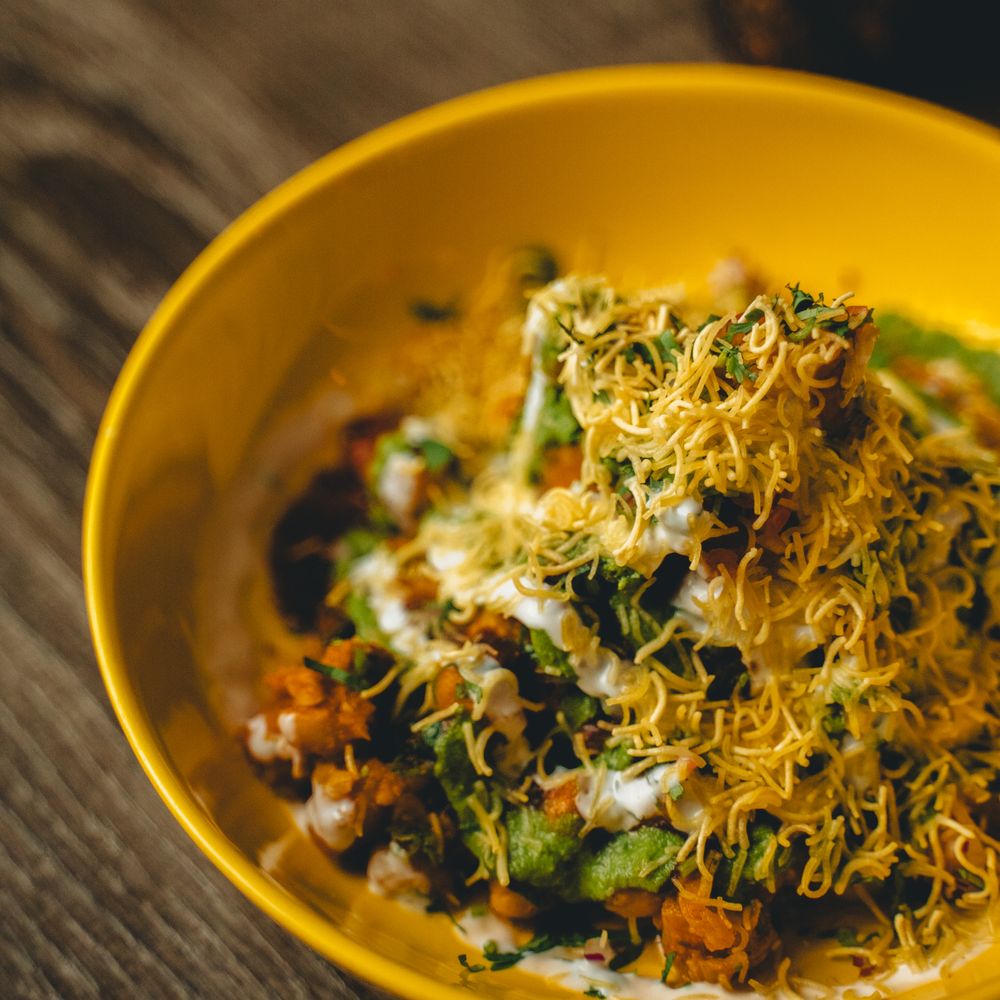
If you love bold flavors, crunchy textures, tangy chutneys, and the kind of food that makes every bite exciting, Indian chaat is worth exploring. Downtown Brooklyn may be better known for its busy streets, restaurants, shopping, and diverse food scene, but it is also a great place to discover Indian street snacks. From crispy samosa chaat and papdi chaat to pani puri, bhel puri, and dahi puri, chaat brings together sweet, spicy, sour, savory, and refreshing flavors in one dish.
For many Indian food lovers, chaat is more than a snack. It is part of India’s street-food culture. A single plate can combine crisp puris, potatoes, chickpeas, yogurt, chutneys, onions, herbs, spices, and crunchy toppings to create layers of flavor and texture. That’s what makes chaat so appealing to both longtime Indian-food fans and people trying Indian cuisine for the first time.
Downtown Brooklyn is particularly interesting for chaat because of its diverse population and access to Indian restaurants representing different regional cooking traditions. Whether you’re looking for a quick snack between errands, a vegetarian meal, something to share with friends, or a more elaborate Indian dinner that includes street-food favorites, the area offers plenty of ways to explore these flavors.
Why Downtown Brooklyn Has Great Indian Restaurants
Downtown Brooklyn has developed into one of Brooklyn’s most active dining areas, with restaurants reflecting the neighborhood’s multicultural character. Indian cuisine fits naturally into that environment because it offers an enormous range of flavors, cooking styles, and price points.
One of the biggest attractions is variety. Indian food isn’t limited to one style of cooking. Northern Indian restaurants may specialize in dishes such as samosas, chaat, kebabs, naan, biryani, and rich curries, while South Indian restaurants can offer dosas, idlis, vadas, and other specialties. Chaat itself can vary significantly depending on the region, restaurant, and preparation style.
A Strong Demand for Flavorful Street Food
Indian chaat has become popular in the United States because it delivers a completely different eating experience from many conventional snack foods. Instead of relying on one dominant flavor, chaat combines several elements at once.
A typical plate might include something crispy, something creamy, something spicy, something tangy, and something sweet. Tamarind chutney can provide sweetness and acidity, while green chutney adds freshness and heat. Yogurt can soften the spice, and ingredients such as sev, onions, cilantro, and spices provide additional texture and aroma.
That combination makes chaat particularly enjoyable for sharing. A group can order several varieties and compare the different flavors rather than ordering one large entrée.
Downtown Brooklyn’s Diverse Food Culture
Downtown Brooklyn attracts residents, office workers, students, visitors, and commuters throughout the day. That creates demand for restaurants that can work for everything from a quick lunch to a relaxed dinner.
Indian restaurants fit this pattern well. Chaat can be a quick snack or appetizer, but it can also become part of a larger Indian meal. Someone might stop for samosa chaat during the afternoon and return another day for biryani, tandoori dishes, or a vegetarian thali.
The area’s surrounding neighborhoods also make it easy for diners to explore different Indian restaurants and food styles. Downtown Brooklyn connects with areas such as Brooklyn Heights, Boerum Hill, Fort Greene, Prospect Heights, and other nearby neighborhoods where Indian and South Asian food can be found.
Vegetarian-Friendly Choices
Another reason Indian restaurants are attractive to Brooklyn diners is the enormous selection of vegetarian dishes. Chaat is particularly well suited to vegetarian eating because many of its most popular ingredients are naturally plant-based.
Samosa chaat, papdi chaat, bhel puri, pani puri, aloo tikki, and several other popular street snacks can be prepared without meat. Diners can also find dishes featuring chickpeas, potatoes, lentils, vegetables, chutneys, herbs, and spices.
Vegans can also find options, although they should ask about yogurt, ghee, butter, and other dairy ingredients. Preparation methods and recipes vary between restaurants.
Chaat Brings Indian Street-Food Culture to Brooklyn
Perhaps the biggest reason to explore chaat in Downtown Brooklyn is the experience itself. Chaat is designed to be exciting. It isn’t simply about filling up; it’s about combining contrasting flavors and textures.
The best plates often have a balance between crisp and soft, spicy and cooling, sweet and sour. Fresh chutneys, crunchy toppings, herbs, and spices can completely change the character of a dish.
For visitors who are new to Indian cuisine, chaat can also be an approachable starting point. You don’t necessarily need to order a large curry or understand an extensive menu. You can begin with a small plate of samosa chaat, pani puri, or papdi chaat and discover which flavors you enjoy.
For Indian-food enthusiasts, meanwhile, Downtown Brooklyn provides an opportunity to compare preparations and explore beyond familiar favorites.
As you explore the best chaat in Downtown Brooklyn, keep in mind that authenticity isn’t simply about how spicy a dish is. Fresh ingredients, properly prepared chutneys, good texture, balanced seasoning, and the style of preparation all matter. The following sections will explore where to find chaat, which neighborhoods are worth exploring, what dishes to order, and how to recognize a well-prepared Indian street snack.
Top Places for Chaat in Downtown Brooklyn
Downtown Brooklyn and the surrounding neighborhoods offer several Indian restaurants where chaat can be enjoyed as an appetizer, snack, or part of a larger meal. The selection ranges from traditional street-food preparations to more polished restaurant versions, giving diners different ways to experience India’s famous snack culture.
When looking for the best chaat in Downtown Brooklyn, it is worth considering more than just the number of dishes on a menu. Fresh chutneys, crisp textures, properly seasoned potatoes and chickpeas, balanced spices, and the contrast between sweet, tangy, spicy, and creamy ingredients can make a major difference.
Here are some places worth considering when exploring Indian chaat in and around Downtown Brooklyn.
Indian Table
Located on Court Street in Brooklyn, Indian Table offers a more contemporary interpretation of Indian cuisine while still featuring recognizable street-food flavors. Its menu includes several chaat-style dishes, including Ragda Chaat, Golden Bhel, and Aloo Tikki. The restaurant’s Ragda Chaat combines white peas with mustard seeds, curry leaves, tamarind, and mint chutney, while its Aloo Tikki incorporates spiced potato, mango, chutneys, yogurt, and chickpea noodles.
What to try: Ragda Chaat, Aloo Tikki, Golden Bhel
Approx. cost: Around $12 per chaat dish
Area: Court Street / near Downtown Brooklyn
Indian Table can be particularly interesting for diners who want chaat alongside a broader Indian meal rather than visiting specifically for street snacks.
Asya
Asya, located at 46 Henry Street, is in the Downtown Brooklyn area and offers several Indian vegetarian appetizers with strong street-food influences. Its menu includes Aloo Papri, Bhel Puri, Ragda Chaat, and Makka Saag Tikiyas. The Aloo Papri combines potatoes and chickpeas with crispy wafers and chutneys, while Bhel Puri brings together puffed rice, vegetables, and chutney.
What to try: Aloo Papri, Bhel Puri, Ragda Chaat
Approx. cost: About $7–$8 for several chaat-style appetizers based on the listed menu
Area: Downtown Brooklyn / Henry Street
This makes Asya a useful option for diners who want to sample several smaller Indian snacks before moving on to curries, naan, or tandoori dishes.
Kashi Indian Cuisine & Bar
Kashi Indian Cuisine & Bar on Livingston Street is another Downtown Brooklyn option for diners interested in a more complete Indian dining experience. Its weekday lunch special currently includes Ragda Chaat or a vegetable samosa as an appetizer, alongside an entrée, dal, naan, rice, raita, and dessert. The vegetarian lunch special is listed at $19.99.
What to try: Ragda Chaat, vegetable samosa
Approx. cost: $19.99 for the listed vegetarian lunch special
Area: Livingston Street / Downtown Brooklyn
Kashi can work especially well when chaat is only one part of the meal. Instead of ordering several street snacks, diners can start with Ragda Chaat and continue with traditional Indian curries, breads, rice, and other dishes.
Curry Heights
Curry Heights is another Brooklyn Indian restaurant worth considering when exploring Indian street-food flavors. For diners who enjoy chaat alongside traditional North Indian dishes, restaurants such as Curry Heights can provide a broader menu experience rather than focusing exclusively on snacks.
What to try: Ask about current chaat and vegetarian appetizer selections
Approx. cost: Varies by dish
Area: Brooklyn Heights / Downtown Brooklyn area
Because chaat menus can change, checking the current menu before visiting is a good idea, particularly if you have one specific dish in mind.
Mint Heights
Mint Heights is another Brooklyn Indian restaurant that can be included in a wider Downtown Brooklyn food exploration. While it is better known as a broader Indian dining destination, it can be useful for diners who want to combine Indian appetizers with curries, breads, rice dishes, and other specialties.
What to try: Check the current appetizer and street-food selections
Approx. cost: Varies by menu selection
Area: Brooklyn
For visitors building an Indian food itinerary, Mint Heights can be paired with a dedicated chaat stop elsewhere, allowing you to experience both street-food-style snacks and a more complete Indian meal.
Govinda’s Kitchen
Govinda’s Kitchen is particularly interesting for vegetarian diners. Its own site highlights Indian dishes including chaat, bhel puri, kachori chaat, pani puri, and samosa chaat among its specialties.
What to try: Bhel Puri, Kachori Chaat, Pani Puri, Samosa Chaat
Approx. cost: Varies by dish
Area: Brooklyn
For someone specifically searching for Indian vegetarian street snacks, this broad selection makes Govinda’s Kitchen worth considering. It also gives diners an opportunity to move beyond the most familiar samosa and explore different chaat preparations.
How to Choose Between These Chaat Spots
The right place depends on the type of chaat experience you’re looking for. If you want a restaurant meal where chaat is part of a larger Indian menu, Indian Table, Asya, or Kashi can be good places to investigate. If your priority is vegetarian Indian street food, Govinda’s Kitchen offers a particularly broad selection of chaat-style dishes.
It’s also worth ordering different styles rather than judging Indian chaat from a single dish. A plate of Ragda Chaat has a different texture and flavor profile from Bhel Puri, while Pani Puri creates an entirely different experience. Trying two or three varieties is one of the easiest ways to understand why chaat is such an important part of Indian street-food culture.
For the freshest experience, ask whether the puris, sev, and other crunchy toppings are assembled immediately before serving. Chaat is highly texture-dependent, and even a flavorful dish can lose some of its appeal when crispy components sit in chutney or yogurt for too long.
Best Neighborhoods and Areas for Indian Chaat
Finding great Indian chaat in Downtown Brooklyn becomes easier when you look beyond a single block or restaurant. The area connects several distinct Brooklyn neighborhoods, each offering a different dining atmosphere and a different selection of Indian restaurants.
Downtown Brooklyn itself is a convenient starting point, but Brooklyn Heights, Boerum Hill, Cobble Hill, and Fort Greene can also be worthwhile for diners searching for Indian street snacks. Downtown Brooklyn’s location between several established neighborhoods makes it possible to turn a chaat search into a broader Indian-food tour.
1. Downtown Brooklyn
Best for: Convenience, variety, and South Indian and Indian street-food options
Downtown Brooklyn should be the first stop for anyone specifically searching for Indian food and chaat in the area. The neighborhood is a major transportation and commercial hub, so it is convenient for residents, office workers, students, and visitors.
The area around Bridge Street and Livingston Street is particularly interesting for Indian food. Brooklyn Curry Project and Filter Kaapi are both located at 383 Bridge Street, giving diners access to South Indian food in the heart of Downtown Brooklyn.
For a more traditional Indian restaurant experience, Kashi Indian Cuisine & Bar is located on Livingston Street. The surrounding area is convenient for combining a chaat-style appetizer with a larger Indian meal.
Downtown Brooklyn is especially useful when you want to explore different styles of Indian cuisine rather than limiting yourself to one type of restaurant.
2. Brooklyn Heights
Best for: Neighborhood dining and easy access from Downtown Brooklyn
Brooklyn Heights is immediately west of Downtown Brooklyn and is a natural extension of an Indian-food search. The neighborhood has a smaller Indian restaurant scene than some other Brooklyn areas, but its proximity to Downtown Brooklyn makes it easy to combine the two.
Curry Heights on Remsen Street and Mint Heights on Henry Street are two established Indian restaurants in the area.
Brooklyn Heights works particularly well if you’re already exploring the Brooklyn Bridge, Brooklyn Heights Promenade, or nearby residential streets. You can make Indian food part of a larger afternoon or evening around the neighborhood.
For dedicated chaat hunters, however, it is worth checking menus before visiting because not every Indian restaurant specializes in street snacks. A restaurant may offer samosas or one chaat preparation without having a large dedicated chaat menu.
3. Boerum Hill and Livingston Street
Best for: Restaurants, dinner, and combining chaat with a full Indian meal
Boerum Hill sits directly south of Downtown Brooklyn and is known for its tree-lined streets, historic brownstones, independent businesses, and diverse dining scene.
The Livingston Street corridor makes this area particularly useful for Indian-food exploration because it connects naturally with Downtown Brooklyn. Diners can start with a street-food-style appetizer and then explore curries, biryani, breads, kebabs, or vegetarian specialties.
This is a good area for people who don’t want their chaat experience to be limited to a quick snack. You can order a small plate of chaat as an appetizer, share several dishes with friends, and turn the visit into a complete Indian dinner.
4. Court Street and Cobble Hill
Best for: Regional Indian food and exploring beyond familiar dishes
Court Street and nearby Cobble Hill offer another useful extension of the Downtown Brooklyn Indian-food scene.
Indian Table at 234 Court Street is particularly relevant for this guide because its menu includes Indian street-food-style dishes. This makes the Court Street area worth considering when you want to compare chaat preparations outside the immediate Downtown Brooklyn core.
The area is also useful for diners who want to explore regional Indian cooking rather than ordering the same familiar dishes at every restaurant. A chaat-focused food trip can therefore become an opportunity to discover different spice combinations, ingredients, and regional influences.
5. Fort Greene
Best for: South Indian food and expanding your Indian-food itinerary
Fort Greene is another nearby neighborhood worth adding to your Indian-food map. It is east of Downtown Brooklyn and can be reached relatively easily from the Downtown area.
While Fort Greene is not exclusively a chaat destination, it is valuable for people who want to explore South Indian cuisine alongside Indian street food. Restaurants in and around the broader area can introduce diners to dishes such as dosa, idli, vada, sambar, and other vegetarian specialties.
This is especially useful if you’re planning a full Indian-food day. You could begin with chaat in Downtown Brooklyn and then explore South Indian dishes in Fort Greene rather than trying to find every type of Indian food in one restaurant.
6. Atlantic Avenue and the Areas Around Boerum Hill
Best for: Casual dining and exploring multiple cuisines
Atlantic Avenue creates another useful connection between Downtown Brooklyn and surrounding neighborhoods. Its central location makes it practical for diners who want to explore several restaurants in one outing.
Indian restaurants in this broader area range from casual spots to more traditional sit-down restaurants. The advantage is flexibility: you can search for a quick vegetarian snack, a full Indian meal, or a restaurant offering dishes from a particular region.
For chaat lovers, this means you don’t necessarily need to stop at the first restaurant you see. Compare menus, look for fresh preparation, and check whether the restaurant specializes in Indian street food.
7. Prospect Heights and Crown Heights
Best for: A broader Brooklyn Indian-food exploration
If you’re willing to travel farther from Downtown Brooklyn, Prospect Heights and Crown Heights can expand your options considerably.
These neighborhoods are outside the immediate Downtown Brooklyn core, but they can be useful for diners who want to compare different Indian restaurants and regional styles. The broader Brooklyn Indian-food scene includes everything from North Indian curries and tandoori cooking to South Indian specialties and vegetarian street food.
For someone building a dedicated chaat itinerary, these neighborhoods can be considered an extension of the Downtown Brooklyn search rather than part of Downtown Brooklyn itself.
Planning Your Chaat Food Tour
The easiest way to explore Indian chaat around Downtown Brooklyn is to think in clusters rather than individual restaurants.
Start in Downtown Brooklyn, where transportation connections and Indian restaurants make it an easy base. Then consider Brooklyn Heights or Boerum Hill depending on the direction you want to walk. Court Street and Cobble Hill are useful for exploring regional Indian cuisine, while Fort Greene gives you an opportunity to add South Indian specialties to the trip.
Most importantly, don’t assume that every Indian restaurant serves the same version of chaat. Recipes can vary considerably. One restaurant may emphasize tamarind and yogurt, while another may focus on spicy green chutney, crunchy sev, potatoes, chickpeas, or puffed rice.
That variety is exactly what makes exploring Indian chaat around Downtown Brooklyn so enjoyable. Instead of looking for one “perfect” plate, try different preparations and discover which combination of textures, spices, chutneys, and toppings suits your taste.
Popular Indian Chaat Dishes People Should Try
One of the best things about exploring Indian food in Downtown Brooklyn is the sheer variety of chaat available. Indian chaat isn’t one specific dish. It is a broad category of street snacks that combines ingredients such as potatoes, chickpeas, crispy puris, yogurt, chutneys, onions, herbs, sev, and aromatic spices.
The balance is what makes chaat special. A good plate can be simultaneously crunchy, creamy, sweet, sour, spicy, salty, and refreshing. If you’re visiting an Indian restaurant for the first time, ordering several smaller dishes can be a great way to experience these different flavors.
Here are some of the most popular Indian chaat dishes to try.
Pani Puri
Pani puri is one of India’s most recognizable street snacks. It consists of small, crisp, hollow puris that are filled with ingredients such as spiced potatoes, chickpeas, chutneys, and flavored water.
The puris are usually assembled just before eating. The result is a combination of crisp shell, soft filling, spicy or tangy pani, and fresh chutneys.
The experience is part of the appeal. Pani puri is typically eaten immediately after it is filled because the puri can quickly become soft once the flavored water is added.
If you enjoy bold and refreshing flavors, pani puri is an excellent dish to start with.
Samosa Chaat
Samosa chaat takes the familiar Indian samosa and turns it into a much more elaborate snack.
A samosa is typically broken or cut into pieces and topped with chickpeas, yogurt, tamarind chutney, green chutney, onions, herbs, and spices. Some versions also include sev or additional crunchy toppings.
The contrast between the crispy samosa pastry, creamy yogurt, tangy tamarind, spicy chutney, and soft chickpeas makes this one of the most satisfying chaat dishes.
It is also a good choice for diners who already enjoy samosas but want to experience them in a different format.
Papdi Chaat
Papdi chaat is built around crisp papdi, small fried pieces of dough that provide the foundation for the dish.
They are usually topped with potatoes, chickpeas, yogurt, chutneys, spices, cilantro, and crunchy sev. The yogurt adds a cooling element, while tamarind chutney contributes sweetness and acidity.
One of the highlights of papdi chaat is its texture. You get crisp papdi alongside soft potatoes, creamy yogurt, and crunchy sev.
Because the ingredients are layered together, every bite can taste slightly different depending on how much chutney, yogurt, and topping you pick up.
Bhel Puri
Bhel puri is a lighter and crunchier style of Indian street food. Its main ingredient is puffed rice, which is combined with ingredients such as onions, tomatoes, potatoes, chutneys, sev, cilantro, and spices.
Tamarind and green chutneys give bhel puri its characteristic sweet-and-spicy flavor profile.
Compared with heavier chaat dishes containing yogurt or fried bases, bhel puri can feel relatively light. It is therefore a good option if you want something flavorful without ordering a large meal.
For the best texture, bhel puri should generally be mixed and served quickly because the chutneys can soften the puffed rice.
Dahi Puri
Dahi puri combines crisp puris with creamy yogurt and flavorful toppings.
The puris are filled with ingredients such as potatoes and chickpeas before being topped with yogurt, chutneys, sev, cilantro, and spices.
The yogurt is particularly important because it creates a cooling contrast to the spicy chutneys and seasonings. The result is a dish that can be sweet, tangy, spicy, crunchy, and creamy at the same time.
Dahi puri is a good choice for diners who want the excitement of pani puri but prefer a creamier preparation.
Aloo Tikki Chaat
Aloo tikki is a popular Indian potato patty made with seasoned potatoes. In chaat form, the crispy or pan-fried tikki is generally served with chickpeas, yogurt, chutneys, spices, and toppings.
The potato provides a hearty base, while the chutneys and yogurt add contrasting flavors.
Aloo tikki chaat is particularly appealing if you want something more substantial than a small puri-based snack. It can work as an appetizer or a light meal, depending on portion size.
Ragda Chaat
Ragda chaat is built around a creamy white-pea curry known as ragda. It is commonly paired with potatoes, chutneys, onions, cilantro, and crunchy toppings.
The white-pea base gives the dish a heartier texture than some other chaats. Tamarind chutney brings sweetness and acidity, while green chutney can add heat and freshness.
For anyone who wants a warm, filling chaat rather than a purely crunchy snack, ragda chaat is an excellent option.
Sev Puri
Sev puri uses small crisp puris as its base and adds potatoes, onions, chutneys, spices, and a generous topping of sev.
Sev consists of thin, crunchy noodles made from chickpea flour. It gives the dish an additional layer of texture.
The combination of crisp puri and crunchy sev makes sev puri particularly enjoyable for people who love texture. The chutneys then provide the sweet, spicy, and tangy flavors associated with chaat.
Chole Chaat
Chole chaat features chickpeas as the main ingredient. The chickpeas are combined with spices, onions, tomatoes, herbs, and chutneys, with different restaurants adding their own toppings and seasonings.
Because chickpeas provide protein and substance, chole chaat can be more filling than many lighter street snacks.
Vegetarian diners looking for something satisfying can consider chole chaat as either an appetizer or a light meal.
Kachori Chaat
Kachori is a crispy, stuffed Indian pastry that can be transformed into a chaat-style dish by adding yogurt, chutneys, chickpeas, spices, and crunchy toppings.
The fried pastry gives the dish a rich and satisfying base, while the chutneys and yogurt keep the overall flavor from becoming too heavy.
Kachori chaat is especially interesting for diners who want to move beyond the most familiar choices such as samosa chaat and pani puri.
Dahi Bhalla
Dahi bhalla is centered around soft lentil dumplings served with creamy yogurt, chutneys, spices, and toppings.
Unlike the crisp texture of papdi or puri-based chaat, dahi bhalla is soft and creamy. The yogurt and chutneys create a refreshing combination that can be particularly appealing when you want something less crunchy.
It is also a good example of how dramatically Indian street snacks can differ in texture while using many of the same flavor components.
Chaat Platter
If you’re visiting with friends, look for a restaurant offering a chaat platter or a selection of small street-food dishes.
A platter can allow you to sample several preparations at once, such as samosa chaat, papdi chaat, bhel puri, pani puri, or aloo tikki. This is particularly useful for first-time diners who aren’t sure which type of chaat they prefer.
Rather than ordering a large entrée, a group can share several snacks and compare the differences in texture and flavor.
What Should You Try First?
If you’re completely new to Indian chaat, start with three contrasting dishes rather than ordering several versions that taste similar.
Try samosa chaat for something hearty and savory, pani puri for a fresh and tangy experience, and papdi chaat for the combination of crunch, yogurt, and chutneys.
If you prefer something lighter, substitute bhel puri for samosa chaat. If you enjoy creamy dishes, dahi puri is another excellent choice.
The most important thing is to eat chaat soon after it is assembled. Crispy puris, papdi, sev, and puffed rice are at their best when they still have their texture. Fresh chutneys and toppings also make a noticeable difference.
Once you start exploring, you’ll quickly discover that Indian chaat is much more than a single street snack. Each dish offers its own combination of ingredients, textures, and regional influences, making a chaat-focused food tour around Downtown Brooklyn an easy way to explore the variety of Indian cuisine.
Vegetarian and Vegan Indian Food Options
One of the biggest advantages of exploring Indian food in Downtown Brooklyn is the wide range of vegetarian choices. Indian cuisine has a long tradition of cooking with vegetables, legumes, grains, potatoes, lentils, chickpeas, and fresh herbs, making it especially easy for vegetarian diners to find satisfying meals.
Chaat is an even more exciting category for vegetarian food lovers. Many of India’s most popular street snacks are traditionally vegetarian, and a single plate can combine potatoes, chickpeas, crispy puris, chutneys, onions, tomatoes, herbs, and spices.
For vegan diners, the options can also be substantial, but it is important to ask about yogurt, ghee, butter, cream, and other dairy ingredients. Recipes vary between restaurants, so a dish that appears vegan may contain dairy in its chutney, topping, or preparation.
Samosa Chaat
Samosa chaat is one of the easiest vegetarian Indian snacks to start with. A traditional vegetable samosa is filled with potatoes, peas, and spices before being topped with chickpeas, chutneys, onions, herbs, and other toppings.
The main ingredient is usually vegan-friendly, but the finished chaat often includes yogurt. Vegan diners can ask whether the restaurant can prepare the dish without yogurt.
The combination of crispy pastry, spicy filling, tangy chutney, and chickpeas makes samosa chaat filling enough to work as a light meal.
Bhel Puri
Bhel puri is another popular option for vegetarian and vegan diners. Puffed rice is combined with vegetables, chutneys, sev, herbs, and spices to create a light but highly flavorful snack.
Many versions can be made vegan, although diners should check the ingredients in the chutneys and sev. Some preparations may contain ingredients that aren’t immediately obvious from the menu description.
Bhel puri is particularly appealing when you want something crunchy and refreshing rather than a heavy meal.
Pani Puri
Pani puri can be a good choice for vegan diners because its core ingredients—crispy puris, potatoes, chickpeas, spiced water, chutneys, and herbs—are often plant-based.
However, preparation varies. Ask whether any yogurt, dairy-based ingredients, or ghee are included.
Pani puri is also one of the most interactive Indian street snacks. The puris are filled shortly before serving, so the crisp texture is best enjoyed immediately.
Papdi Chaat
Papdi chaat is traditionally vegetarian and combines crispy papdi with potatoes, chickpeas, chutneys, spices, sev, and yogurt.
For vegetarians, it is usually an easy choice. For vegans, the yogurt needs to be removed or replaced with a plant-based alternative if the restaurant offers one.
Without yogurt, the dish still has plenty of flavor from tamarind chutney, green chutney, spices, herbs, and crunchy toppings.
Aloo Tikki Chaat
Aloo tikki is essentially a seasoned potato patty that can be served as a street snack or transformed into chaat with chickpeas, chutneys, onions, herbs, and spices.
The potato base makes it naturally suitable for vegetarian diners. Vegan diners should confirm whether the tikki is cooked with butter or ghee and whether yogurt is added to the finished dish.
Aloo tikki chaat is a good option for anyone looking for a more substantial vegetarian snack because potatoes and chickpeas make it considerably more filling than some lighter chaats.
Ragda Chaat
Ragda chaat is another excellent vegetarian choice. The dish is based on cooked white peas and is often served with potatoes, chutneys, onions, herbs, and crunchy toppings.
Because peas and potatoes form the foundation, ragda chaat can provide more substance than puri-based snacks.
For vegan diners, ask whether the ragda or toppings contain butter or ghee and request the dish without yogurt if necessary.
Chole Chaat
Chole, or chickpeas, are an important ingredient throughout Indian cuisine and are frequently used in vegetarian street food.
Chole chaat combines chickpeas with spices, onions, tomatoes, herbs, chutneys, and other toppings. The chickpeas provide protein and fiber, making this a satisfying choice for diners who want something more substantial.
Many versions are naturally vegan, but it is still worth checking the restaurant’s preparation methods.
Kachori Chaat
Kachori chaat is another vegetarian street-food favorite. Kachori is a crispy pastry filled with a seasoned mixture, which can then be topped with yogurt, chutneys, chickpeas, spices, and crunchy toppings.
For vegetarian diners, this is usually an easy option. Vegan diners should ask whether the pastry contains ghee or butter and request that yogurt be omitted.
Because kachori is fried and substantial, this dish can feel more indulgent than bhel puri or pani puri.
Dahi-Based Chaat for Vegetarians
Vegetarians who enjoy dairy have an especially wide selection of chaat available.
Dahi puri, dahi bhalla, papdi chaat, and several versions of samosa chaat use yogurt to create a creamy contrast against spicy chutneys and crunchy ingredients.
The yogurt also helps balance heat, which can make these dishes approachable for diners who aren’t accustomed to spicy food.
For vegan diners, however, these dishes require more customization. Ask whether the restaurant offers dairy-free yogurt or whether the dish can be prepared without yogurt.
South Indian Options
Although this guide focuses on chaat, exploring Indian food around Downtown Brooklyn can also introduce vegetarian diners to South Indian specialties.
Dosas, idli, medu vada, sambar, coconut chutney, and vegetable curries are common examples of vegetarian dishes that can complement a chaat-focused food tour.
Some of these dishes are naturally vegan, while others may contain yogurt, butter, or ghee. Coconut-based dishes can be particularly useful for diners looking for dairy-free options, but the exact recipe should always be confirmed.
How Vegan Diners Can Order More Confidently
When ordering Indian food, simply saying “I’m vegan” may not always answer every ingredient question. It can be more helpful to specifically ask about common dairy ingredients.
Ask whether the dish contains:
- Yogurt or dahi
- Ghee
- Butter
- Cream
- Milk
- Paneer
- Dairy-based sauces or chutneys
Also ask whether the food is cooked in ghee or butter rather than vegetable oil.
For chaat, pay particular attention to yogurt and the ingredients used in chutneys and toppings. A dish may appear completely plant-based but receive a final yogurt topping before serving.
Building a Vegetarian Chaat Meal
Vegetarian diners don’t need to settle for one snack. A group can easily create a complete meal by sharing several dishes.
Start with pani puri for a light and tangy snack. Add samosa chaat or aloo tikki chaat for something more substantial. Then order bhel puri or sev puri for crunch and freshness.
If you enjoy yogurt, add dahi puri or papdi chaat to bring a creamy element into the meal.
For vegan diners, choose dairy-free versions of the same dishes and confirm preparation details with the restaurant.
The variety is what makes Indian vegetarian food so appealing. You don’t need meat to create a satisfying Indian meal. Potatoes, chickpeas, lentils, peas, vegetables, rice, spices, chutneys, and fresh herbs can produce layers of flavor that are just as interesting and filling.
For anyone exploring the best chaat in Downtown Brooklyn, vegetarian and vegan options aren’t simply alternatives—they are an important part of the Indian street-food experience itself.
Budget-Friendly Indian Restaurants
You don’t need a large budget to explore Indian chaat in Downtown Brooklyn. In fact, Indian street food is naturally suited to affordable dining because many dishes are designed as small portions, snacks, or shareable plates.
A few dollars can be enough to try a samosa, bhel puri, papdi chaat, or another vegetarian snack, while a slightly larger budget can turn several small plates into a satisfying meal. The key is to focus on appetizers and street-food selections rather than ordering multiple full entrées.
Asya
Asya
Asya, located at 46 Henry Street in Downtown Brooklyn, has several vegetarian appetizers at relatively accessible prices. Its menu currently lists samosas at $7, Aloo Papri at $7, Bhel Puri at $7, Ragda Chaat at $8, and Makka Saag Tikiyas at $8.
That makes it easy to create a small chaat-focused meal without spending the amount typically associated with a full Indian dinner. Two people could also order several appetizers to share and sample different textures and flavors.
Budget picks: Bhel Puri, Aloo Papri, Samosa, Ragda Chaat
Approx. snack budget: $7–$10 per person for one or two small dishes
Area: Downtown Brooklyn
Kashi Indian Cuisine & Bar
Kashi Indian Cuisine & Bar
For diners looking for a more complete meal, Kashi offers a weekday vegetarian lunch special for $19.99. The current lunch menu includes a choice of Ragda Chaat or vegetable samosa, an entrée such as Paneer Butter Masala or Saag Paneer, dal, butter naan, basmati rice, boondi raita, and a dessert. The special is available Monday through Friday from 11 AM to 3 PM.
This type of lunch combination can be a better value than ordering every component separately. It also gives diners a chance to experience chaat as part of a broader North Indian meal.
Budget pick: Vegetarian lunch special
Approx. cost: $19.99
Area: Livingston Street, Downtown Brooklyn
Indian Table
Indian Table on Court Street is another useful option for diners who want chaat without committing to an expensive entrée. Its current menu lists Golden Bhel at $12, Ragda Chaat at $12, and Batatyachi Chops (Aloo Tikki) at $12.
The portions and ingredients make these dishes useful for sharing. Two or three appetizers can create a casual meal for a small group, especially when combined with another vegetarian dish.
Budget picks: Golden Bhel, Ragda Chaat, Aloo Tikki
Approx. cost: Around $12 per listed chaat dish
Area: Court Street
Filter Kaapi
Filter Kaapi
For diners who want to keep costs low while exploring Indian cuisine around Downtown Brooklyn, Filter Kaapi is another option to consider. Located at 383 Bridge Street, it focuses on South Indian food rather than being a dedicated chaat restaurant.
Its menu is useful for building an inexpensive vegetarian meal around dishes such as idli and dosa. A South Indian stop can also complement a chaat-focused food tour because it introduces completely different textures and flavors.
Budget picks: Idli, dosa, South Indian snacks
Area: Bridge Street, Downtown Brooklyn
Brooklyn Curry Project
Brooklyn Curry Project
Also located at 383 Bridge Street, Brooklyn Curry Project specializes in South Indian food and is another option for diners who want a relatively casual Indian meal.
The restaurant focuses on dishes such as dosa and idli rather than a large chaat menu. That makes it useful when you’re exploring Indian food on a budget and want to combine street snacks with a filling South Indian dish.
A crisp dosa with chutney and sambar can be particularly satisfying without requiring a large number of additional dishes.
Share Chaat Instead of Ordering Full Entrées
One of the simplest ways to keep an Indian meal affordable is to share.
Instead of ordering an entrée for every person, a group of two or three diners can order several small plates such as samosa chaat, bhel puri, papdi chaat, or aloo tikki and taste everything together.
This approach is particularly effective with chaat because the dishes are designed around contrasting flavors and textures. Sharing also lets first-time diners experiment without spending heavily on a dish they may not have tried before.
Look for Lunch Specials
Lunch specials can offer some of the best value when eating Indian food in Downtown Brooklyn. Kashi, for example, currently offers a complete vegetarian lunch combination for $19.99, including an appetizer, entrée, dal, naan, rice, raita, and dessert.
When comparing restaurants, look beyond the headline price. Check what is included, whether rice or bread costs extra, and whether the special is available every day or only during specific hours.
Order One Chaat as an Appetizer
Another simple strategy is to order one chaat dish instead of several.
A single plate of Ragda Chaat, Aloo Papri, Bhel Puri, or Samosa Chaat can add Indian street-food flavors to a regular lunch or dinner without significantly increasing the total bill.
This works especially well if you’re eating with someone who hasn’t tried Indian food before. One shared chaat plate can become a low-cost introduction before moving on to a main course.
Takeout Can Also Help With the Budget
Takeout can be useful when you’re trying to control spending. You can order exactly what you want, avoid ordering extra drinks or side dishes at the table, and share several appetizers at home or in a nearby park or gathering space where permitted.
However, remember that delivery-app fees can change the final cost significantly. If a restaurant offers direct pickup or ordering, compare the final price before placing your order.
For chaat specifically, pickup can also have a quality advantage. Crispy ingredients such as puri, papdi, sev, and puffed rice can lose their texture when they sit in chutneys for too long. Asking for sauces or wet ingredients separately can help preserve the crunch.
A Sample Budget Chaat Meal
For two diners, a simple strategy might be:
- One samosa or small appetizer to share
- One Bhel Puri
- One Ragda Chaat
- Water or another inexpensive beverage
This allows both diners to experience several different flavor profiles without ordering two full entrées.
If you’re especially hungry, consider adding a dosa, rice dish, naan, or another filling vegetarian item rather than ordering several expensive entrées.
How Much Should You Expect to Spend?
A casual chaat stop can often be kept around $10–$20 per person, depending on the number of dishes ordered and whether drinks are included. Current Downtown Brooklyn menus illustrate the range: Asya lists several chaat-style appetizers between $7 and $8, Indian Table lists several at $12, and Kashi’s weekday vegetarian lunch special is $19.99 for a much more complete meal.
Prices can change, and taxes, tips, delivery charges, and optional extras can increase the final bill. Always check the current menu before visiting.
The good news is that Indian chaat remains one of the easier ways to explore a broad range of Indian flavors without spending heavily. Whether you choose a $7 snack, share several $12 plates, or take advantage of a complete lunch special, Downtown Brooklyn offers ways to experience Indian food at different budgets.
Fine Dining Indian Restaurants
Chaat is traditionally associated with Indian streets, markets, and casual snack stalls, but the flavors of chaat can also appear in more polished restaurant settings. In Downtown Brooklyn, diners can combine street-food-inspired dishes with elegant dining rooms, cocktails, regional Indian cuisine, and more elaborate main courses.
For a special occasion, date night, business dinner, or simply a more relaxed Indian dining experience, choosing an upscale restaurant can be a different way to explore the familiar flavors of Indian street food.
Kashi Indian Cuisine & Bar
Kashi Indian Cuisine & Bar is one of the most notable upscale Indian dining options in Downtown Brooklyn. Located at 286 Livingston Street, the restaurant focuses on North Indian cuisine with influences from Awadhi, Mughlai, and Punjabi traditions. Its chef, Hakikat Dhawan, has worked at established Indian restaurants in New York and trained in the culinary traditions of North India.
Chaat is part of Kashi’s broader North Indian concept rather than the entire focus of the restaurant. Its current weekday vegetarian lunch menu includes Ragda Chaat or a vegetable samosa as an appetizer, followed by an entrée, dal, naan, rice, raita, and dessert.
What to try: Ragda Chaat, vegetable samosa, North Indian curries, kebabs, biryani
Approx. cost: Around $20 for the current vegetarian lunch special; dinner costs vary
Area: Downtown Brooklyn / Livingston Street
Kashi is particularly suitable for diners who want chaat to be the beginning of a more elaborate Indian meal rather than the entire meal itself.
Indian Table
Indian Table
Indian Table, located at 234 Court Street, offers a different type of elevated Indian dining experience. Rather than concentrating on the standard North Indian restaurant formula, the restaurant is known for Goan cuisine and Indian-Portuguese influences. Condé Nast Traveler highlights dishes such as chicken cafreal, ros omelette, pork sorpotel, fish curry, and crab cutlets, while the restaurant’s menu also includes street-food-inspired dishes such as Ragda Chaat.
This makes Indian Table interesting for diners who want to start with chaat and then explore a less familiar regional Indian cuisine. The combination gives the meal more depth than simply ordering familiar dishes such as butter chicken and naan.
What to try: Ragda Chaat, Goan specialties, regional seafood and curries
Approx. cost: Mid-range to upscale, depending on the meal
Area: Court Street / Cobble Hill
Curry Heights
Curry Heights
Curry Heights on Remsen Street is another established Indian restaurant in the Downtown Brooklyn and Brooklyn Heights area. It offers a broader Indian menu that can work well for diners who want traditional Indian dishes in a sit-down restaurant environment.
For a chaat-focused visit, the important point is to check the current appetizer menu before visiting. Chaat availability can change, and restaurants may rotate particular street-food preparations.
What to try: Ask about current chaat and Indian appetizers, then explore tandoori dishes, curries, or biryani
Approx. cost: Varies by selection
Area: Brooklyn Heights / Downtown Brooklyn
Curry Heights is particularly useful for groups with different preferences because one person can explore Indian street-food flavors while others order traditional entrées.
What Makes Chaat Work in a Fine-Dining Setting?
The biggest difference between casual street-style chaat and a more polished restaurant presentation is often the setting and presentation rather than the basic flavor concept.
The fundamental components remain familiar: potatoes, chickpeas, puris, papdi, yogurt, chutneys, spices, herbs, and crunchy toppings. What changes can be the presentation, ingredient selection, portioning, and the way the dish fits into a complete dining experience.
At an upscale Indian restaurant, chaat can function as an appetizer before kebabs, curries, biryani, or other regional specialties. That makes it a useful introduction to the meal rather than something you need to eat as a standalone snack.
Chaat for a Date Night
Chaat can actually be an excellent date-night appetizer because it encourages sharing.
Instead of ordering two identical appetizers, couples can choose one chaat dish and one additional Indian starter. A plate of Ragda Chaat, for example, can introduce sweet, sour, spicy, creamy, and crunchy flavors before moving on to a main course.
If one diner is unfamiliar with Indian cuisine, sharing a chaat dish also makes the meal more interactive. You can taste the different chutneys and toppings together and decide which flavors you enjoy most.
Chaat for a Group Dinner
For larger groups, chaat can be one of the easiest ways to start an Indian meal.
Order several appetizers and let everyone sample them before moving on to main dishes. A combination of chaat, kebabs, vegetable starters, naan, rice, and curries can give the table a much broader representation of Indian cuisine.
This approach is especially useful when guests have different preferences. Vegetarian diners can enjoy chaat and vegetable dishes while other guests explore meat, seafood, or tandoori specialties.
Don’t Expect Every Upscale Restaurant to Specialize in Chaat
One important distinction is that an upscale Indian restaurant and a dedicated chaat restaurant are not necessarily the same thing.
If your primary goal is to try five or six varieties of Indian street snacks, a casual Indian restaurant or dedicated chaat spot may offer more choices. If your goal is to enjoy one well-prepared chaat alongside a broader Indian dinner in a more refined setting, an upscale restaurant may be the better fit.
Menus can also change, so check the current menu before making a special trip for a specific dish.
A Fine-Dining Chaat Experience in Downtown Brooklyn
For diners who want an elevated experience, Downtown Brooklyn provides an interesting balance between traditional Indian street-food flavors and modern restaurant dining.
Kashi is particularly suited to diners looking for a contemporary North Indian setting where chaat can lead into a more substantial meal. Indian Table offers something different through its Goan and Indian-Portuguese focus, while Curry Heights provides a more traditional broad Indian menu in the Brooklyn Heights area.
The important thing is to think of chaat as an introduction to Indian cuisine rather than a category limited to casual street stalls. Its combination of sweet, sour, spicy, creamy, and crunchy flavors can fit naturally into everything from a quick snack to a carefully planned multi-course dinner.
For a special evening, start with a shared chaat dish, explore regional appetizers, and then move into the restaurant’s signature mains. That approach lets you experience both sides of Indian food culture—the energetic flavors of street food and the depth and variety of India’s regional dining traditions.
Chaat Takeout and Delivery Tips
Indian chaat can be just as enjoyable at home as it is in a restaurant, but ordering chaat for takeout or delivery requires a little more planning than ordering a curry or biryani. Many chaat dishes depend on contrasting textures, and crispy ingredients can quickly become soft when they come into contact with chutneys, yogurt, or flavored water.
Downtown Brooklyn diners have access to delivery and pickup options for Indian food, including chaat-style dishes. Delivery platforms currently list Indian and chaat options around Brooklyn, while some restaurants also provide their own ordering and pickup services.
Choose Pickup When Texture Matters Most
If you live or work close to the restaurant, pickup can be one of the best choices for chaat.
A short trip from the restaurant to your home means the food spends less time sitting in a container. This is especially important for dishes such as bhel puri, sev puri, papdi chaat, and pani puri.
Crispy ingredients begin absorbing moisture almost immediately after chutney or yogurt is added. The longer the dish sits, the softer the texture becomes.
If you’re nearby, picking up the food and eating it shortly afterward can provide a much better experience than having it travel across Brooklyn.
Ask for Chutneys Separately
One of the simplest ways to improve delivered chaat is to request wet ingredients separately whenever the restaurant allows it.
Ask for:
- Tamarind chutney on the side
- Green chutney on the side
- Yogurt separately when possible
- Chaat masala separately if available
- Pani separately for pani puri
- Sev and other crunchy toppings separately
This allows you to assemble the dish immediately before eating.
For example, if you order papdi chaat with all the chutneys already poured over the papdi, the crispy base may become soft during delivery. If the components arrive separately, you can add exactly the amount of chutney and yogurt you want.
Pani Puri Requires Special Handling
Pani puri is one of the most challenging chaat dishes to order for delivery.
The entire appeal of pani puri comes from the contrast between the crisp puri and the flavorful liquid inside. Once the pani is added, the puri begins losing its crispness.
If you’re ordering pani puri for takeout, ask whether the restaurant provides the puris, filling, and pani separately.
When the order arrives, fill each puri immediately and eat it right away. This recreates much more of the restaurant experience.
Bhel Puri Should Be Assembled at Home
Bhel puri is another dish where timing matters.
Puffed rice, sev, vegetables, and chutneys are combined to create the final snack. Once the wet ingredients are mixed with the puffed rice, the texture gradually changes.
If possible, request the chutneys separately. Mix everything together immediately before eating.
This small adjustment can make a significant difference between crunchy bhel puri and a soft mixture that has been sitting in sauce for twenty or thirty minutes.
Samosa Chaat Travels Better
Samosa chaat can be somewhat easier to transport than pani puri or bhel puri because the samosa itself provides a sturdier base.
However, the same rule applies: keeping the wet components separate helps preserve the contrast between crispy pastry and soft chickpeas.
If you are ordering samosa chaat for several people, consider ordering the samosas separately and adding the chickpeas, yogurt, and chutneys at home.
This can be particularly useful for larger orders or gatherings.
Papdi Chaat Needs Extra Attention
Papdi chaat is delicious when freshly assembled, but its crispy papdi can soften quickly.
If you are ordering it for delivery, ask the restaurant whether the papdi and wet toppings can be packaged separately.
At home, arrange the papdi on a plate, add the potatoes and chickpeas, spoon over the yogurt and chutneys, and finish with sev and fresh herbs.
This takes only a minute but can produce a noticeably better texture.
Ragda Chaat Is More Delivery-Friendly
Ragda chaat can be a more practical choice for delivery because its main component is a warm white-pea preparation rather than a delicate crispy shell.
The ragda can generally travel well, while toppings such as onions, chutneys, cilantro, and sev can be added shortly before eating.
If you’re ordering Indian food for a group and want at least one chaat dish that is less sensitive to travel time, ragda chaat can be a practical option.
Order From Restaurants With Good Delivery Packaging
Packaging matters almost as much as the recipe.
Look for restaurants that separate hot and cold components and use containers that prevent leaks. Yogurt, chutney, and gravies should ideally remain sealed and separate from crispy ingredients.
Current delivery menus in the Brooklyn area show that some Indian restaurants offer pickup and delivery through online ordering systems, giving customers the ability to choose the method that works best for their meal.
If you’re ordering from a restaurant you’ve never tried before, check recent customer feedback for comments about packaging, missing chutneys, portion sizes, and delivery quality.
Don’t Leave Chaat Sitting in the Delivery Bag
Once your order arrives, open it fairly quickly.
Leaving sealed containers sitting for another twenty or thirty minutes allows steam and condensation to build up, which can make crispy foods softer.
Transfer the food to plates or serving bowls, separate the components, and assemble the chaat just before eating.
This is particularly important for group orders where everyone may not start eating immediately.
Reheat the Right Components
Most chaat isn’t designed to be reheated like curry.
If your order includes samosas, aloo tikki, or other fried items, an oven or air fryer can help restore some crispness. Avoid reheating yogurt, chutneys, fresh onions, cilantro, or other cold toppings.
Keep those ingredients refrigerated until you’re ready to assemble the dish.
For dishes containing ragda or chickpeas, reheating the warm component separately is generally more practical.
Watch Delivery Fees
The price displayed on a restaurant menu isn’t always the final delivery cost.
Delivery platforms may add delivery charges, service fees, taxes, or other costs depending on the order and location. Comparing pickup with delivery can therefore make sense when you’re ordering a small snack.
For a larger group order, delivery fees may represent a smaller percentage of the total bill, but for one or two inexpensive chaat dishes, they can make a significant difference.
If the restaurant offers direct pickup or ordering, compare the final checkout price before placing your order.
Order Extra Chutney
If you already know that you love tamarind or green chutney, consider ordering an extra portion.
Chutney isn’t just a sauce—it is one of the main flavor components of chaat. Having extra chutney also gives you more control over the final balance of sweet, spicy, sour, and savory flavors.
Tamarind chutney generally adds sweetness and tang, while green chutney can contribute freshness and heat.
Best Chaat Choices for Delivery
Some chaat dishes are naturally better suited to delivery than others.
Generally easier to transport:
- Samosa chaat
- Ragda chaat
- Chole chaat
- Aloo tikki chaat, with toppings separate
- Kachori chaat, with toppings separate
More texture-sensitive:
- Pani puri
- Bhel puri
- Sev puri
- Papdi chaat
- Dahi puri
This doesn’t mean you shouldn’t order the more delicate dishes. It simply means you should pay more attention to how they are packaged and assembled.
Ordering Chaat for a Group
For a party or office lunch, avoid ordering every chaat dish fully assembled.
Instead, order several components separately when possible. Keep crispy items in their own containers, sauces and yogurt separate, and let everyone assemble their own portions.
This also allows people to customize the spice level and amount of chutney.
For example, one person might prefer extra tamarind chutney and little green chutney, while another might want more spice and no yogurt.
The Golden Rule: Assemble at the Last Minute
The most important takeaway for chaat delivery is simple: keep crispy ingredients away from moisture until you’re ready to eat.
Indian street food is built around texture. A crisp papdi, crunchy sev, fresh puri, or puffed rice can make a dish exciting, while the same ingredients can feel disappointing after sitting in liquid for too long.
If you choose pickup, separate the components, add chutneys at the last moment, and eat soon after assembly, you can enjoy a much closer approximation of freshly prepared chaat—even when you’re eating at home.
For Downtown Brooklyn diners, that flexibility makes Indian chaat a practical option for everything from a quick solo snack to a shared weekend meal.
How to Find Authentic Indian Food
Finding authentic Indian food in Downtown Brooklyn is about more than choosing a restaurant with an Indian name or ordering the spiciest dish on the menu. Indian cuisine is incredibly diverse, and authentic food can look and taste very different depending on the region, recipe, ingredients, and cooking tradition.
This is especially true with chaat. A Delhi-style street snack, a Mumbai-inspired preparation, a Gujarati variation, and a restaurant’s own interpretation may all taste different while still reflecting legitimate Indian food traditions.
If you’re searching for authentic Indian chaat in Downtown Brooklyn, pay attention to freshness, texture, ingredients, balance, and preparation rather than relying on appearances alone.
Look for Freshly Prepared Chaat
Freshness is one of the easiest ways to identify well-prepared chaat.
Many chaat ingredients are prepared separately and assembled shortly before serving. Crispy puris, papdi, sev, and puffed rice should have noticeable texture rather than tasting soft or stale.
Fresh herbs such as cilantro, freshly prepared chutneys, yogurt, onions, and other toppings can also make a significant difference.
If you order pani puri, for example, the puris should ideally be crisp when filled. If they arrive already soaked and soft, much of the characteristic experience has been lost.
Pay Attention to Texture
Texture is one of the defining characteristics of Indian chaat.
A good plate may combine:
- Crisp papdi
- Crunchy sev
- Soft potatoes
- Creamy yogurt
- Tender chickpeas
- Crisp puris
- Fresh onions
- Smooth chutneys
The contrast between these components is part of what makes chaat exciting.
A dish doesn’t need to contain every possible texture, but the ingredients should complement one another. If everything on the plate has become soft, the preparation may have been sitting too long.
Look for Balanced Chutneys
Chutneys are essential to chaat, and their quality can strongly influence the final dish.
Tamarind chutney generally contributes sweetness and tang, while green chutney can bring herbs, freshness, and heat. Some preparations may include additional sauces or chutneys depending on the dish and regional tradition.
Authentic Indian chaat doesn’t necessarily mean extremely spicy food.
Instead, the flavors should work together. Sweetness should balance acidity, spice should have a purpose, and the chutneys should complement rather than completely overpower the other ingredients.
If all you taste is heat, you’re missing many of the flavors that make chaat distinctive.
Don’t Judge Authenticity by Spice Level
One of the biggest misconceptions about Indian food is that authenticity automatically means extreme spice.
That’s not the case.
Indian cuisine uses spices for aroma, warmth, depth, color, and flavor—not simply to create heat. Many traditional dishes are relatively mild, while others can be quite spicy.
Chaat is especially dependent on balance. Tamarind, yogurt, herbs, salt, spices, and chilies each play different roles.
A restaurant should be able to adjust spice levels when appropriate, but a mild dish isn’t necessarily less authentic than a spicy one.
Explore Regional Indian Food
India has many regional cuisines, and exploring those differences is one of the best ways to understand authentic Indian food.
Northern Indian cuisine may feature dishes such as samosas, chole, kebabs, naan, and rich curries. Western Indian traditions contribute dishes such as bhel, sev-based snacks, and various potato and chickpea preparations. South Indian cuisine brings dosas, idlis, vadas, sambar, and coconut-based accompaniments.
Even within the category of chaat, recipes can vary substantially.
Rather than asking which restaurant serves the single “most authentic” chaat, consider asking what style of chaat the restaurant specializes in.
Check the Ingredient Combinations
Traditional chaat relies on combinations that create contrasting flavors.
Potatoes and chickpeas provide substance. Crispy puris or papdi add texture. Tamarind chutney provides sweetness and acidity. Green chutney adds freshness and heat. Yogurt creates a cooling, creamy component. Sev contributes crunch.
These ingredients don’t appear randomly. They are designed to work together.
When evaluating a plate, think about whether the ingredients complement each other rather than simply counting how many toppings appear on top.
Fresh Chutney Can Make a Difference
Freshly prepared chutneys can have a brighter flavor than sauces that have been sitting for extended periods.
Green chutney should generally have a fresh herbal character, while tamarind chutney should offer a pleasant combination of sweetness and acidity.
The exact consistency and seasoning will vary between restaurants, so there isn’t one universal standard.
What matters is whether the chutney contributes to the dish rather than overwhelming it.
Look Beyond the Restaurant Decor
A beautifully designed restaurant can serve excellent Indian food, but attractive décor doesn’t prove authenticity.
The reverse is also true. A small, casual restaurant can produce exceptional traditional food.
When exploring Indian restaurants in Downtown Brooklyn, pay more attention to the food itself:
- Are ingredients fresh?
- Are crispy elements actually crisp?
- Do the chutneys taste balanced?
- Are the spices aromatic?
- Are dishes prepared to order?
- Does the menu represent a particular regional cuisine?
- Do the ingredients taste distinct from one another?
These factors are much more useful than judging a restaurant by its interior design.
Ask Questions About the Menu
Don’t be afraid to ask restaurant staff questions.
If you see a dish you’ve never tried, ask what region it comes from, whether it is spicy, what chutneys are included, and whether it contains dairy.
You can also ask whether the chaat is prepared fresh to order.
For diners interested in regional Indian food, asking these questions can lead to dishes they might otherwise overlook.
Look for a Diverse Indian Menu
A restaurant doesn’t need an enormous menu to be authentic. In fact, a focused menu can sometimes indicate a specific culinary identity.
For example, a restaurant specializing in South Indian cuisine may focus on dosa, idli, vada, sambar, and related dishes. A North Indian restaurant may emphasize kebabs, curries, breads, and biryani.
A chaat-focused restaurant may have a large selection of street snacks instead.
Rather than expecting one restaurant to represent all of India, identify what type of cuisine it specializes in and explore from there.
Try More Than One Restaurant
If you’re serious about finding your favorite Indian chaat in Downtown Brooklyn, compare restaurants.
Order the same or similar dish from two different places. Compare the texture of the papdi, the balance of chutneys, the seasoning of the potatoes or chickpeas, and the freshness of the toppings.
You may discover that you prefer one restaurant’s tangier chutney while another has better crunch or a different spice profile.
This is one of the most enjoyable ways to explore Indian food because there isn’t necessarily one universal version of a dish.
Authenticity Doesn’t Mean Identical to India
It’s also important to understand that Indian restaurants in Brooklyn operate in a different environment from street vendors in India.
Restaurants adapt recipes to available ingredients, local regulations, customer preferences, and the expectations of their clientele. Some chefs deliberately combine traditional techniques with contemporary presentation.
That doesn’t automatically make the food inauthentic.
A better way to think about authenticity is whether the restaurant respects the culinary tradition behind a dish while preparing it thoughtfully and consistently.
Learn the Difference Between Familiar and Authentic
If you’re new to Indian food, it is natural to start with familiar dishes such as samosas, butter chicken, naan, or chicken tikka masala.
But authentic Indian cuisine extends far beyond these popular choices.
Chaat provides an excellent gateway because it introduces ingredients and flavor combinations that may not appear in a typical Indian-American dinner.
Try pani puri, ragda chaat, bhel puri, dahi puri, kachori chaat, or regional vegetarian snacks. Each new dish can reveal another part of India’s food culture.
Use Reviews as a Starting Point, Not the Final Answer
Online reviews can help identify restaurants that other diners enjoy, but reviews shouldn’t be the only measure of authenticity.
A reviewer may prefer very spicy food, while another may prefer mild flavors. Someone unfamiliar with Indian cuisine may describe a dish differently from someone who grew up eating it.
Look for repeated comments about food quality, freshness, consistency, service, and specific dishes. Then make your own judgment based on what you taste.
The Best Test Is the Overall Eating Experience
Ultimately, authentic Indian food should make you curious to try more.
A well-prepared plate of chaat should have recognizable ingredients, contrasting textures, balanced seasoning, and flavors that develop as you eat.
You should be able to identify the sweetness of tamarind, the freshness of herbs, the richness of yogurt when used, the crunch of fried elements, and the warmth of spices.
That’s what makes Indian chaat so distinctive.
When exploring Downtown Brooklyn, don’t limit yourself to finding the restaurant with the biggest menu or the hottest dish. Look for freshness, thoughtful preparation, regional identity, balanced flavors, and quality ingredients.
Those are much better indicators of an authentic Indian-food experience—and they can turn a simple snack of chaat into a memorable introduction to one of the world’s most diverse culinary traditions.
Final Guide to the Best Chaat in Downtown Brooklyn
Indian chaat is one of the most exciting ways to explore the diversity of Indian cuisine. With its combination of crisp textures, tangy chutneys, creamy yogurt, aromatic spices, potatoes, chickpeas, herbs, and crunchy toppings, chaat offers something very different from a typical restaurant meal.
For anyone searching for the best chaat in Downtown Brooklyn, the area provides a convenient starting point for discovering Indian street-food flavors. From Downtown Brooklyn itself to nearby areas such as Brooklyn Heights, Boerum Hill, Court Street, Cobble Hill, and Fort Greene, diners can explore different restaurants and styles of Indian cooking.
Start With the Classic Chaat Favorites
If you’re new to Indian chaat, begin with some of the most recognizable dishes.
Pani puri is ideal if you want a light, tangy, and interactive snack. The combination of crisp puri, spiced filling, chutney, and flavored water makes it one of India’s most distinctive street foods.
Samosa chaat is a better choice if you want something more substantial. The crispy samosa is combined with chickpeas, chutneys, yogurt, spices, and toppings to create a filling snack.
Papdi chaat offers a particularly satisfying combination of crunch and creaminess, while bhel puri provides a lighter option built around puffed rice, vegetables, chutneys, and sev.
If you enjoy potatoes and hearty flavors, aloo tikki chaat and ragda chaat are also worth trying.
Explore Beyond One Restaurant
One of the best ways to experience Indian food in Downtown Brooklyn is not to search for a single restaurant that does everything.
Different restaurants can have different strengths. One may offer excellent chaat, another may specialize in South Indian dishes, while another may focus on North Indian curries, kebabs, or biryani.
This variety makes it possible to create your own Indian-food tour.
You might start with pani puri or bhel puri, continue with samosa chaat, and then finish with dosa, biryani, naan, or a traditional curry.
Downtown Brooklyn Is a Convenient Starting Point
Downtown Brooklyn’s location makes it particularly useful for Indian-food exploration. Restaurants around Livingston Street, Bridge Street, Court Street, and surrounding neighborhoods can be combined into a broader food itinerary.
Nearby Brooklyn Heights and Boerum Hill offer additional dining opportunities, while Court Street and Cobble Hill provide another direction for exploring Indian restaurants.
If you’re willing to travel farther, neighborhoods such as Fort Greene, Prospect Heights, and Crown Heights can expand the options even further.
The important distinction is that these surrounding areas aren’t all technically Downtown Brooklyn. Instead, they form part of the broader Indian-food exploration opportunity around the Downtown Brooklyn area.
Vegetarian Diners Have Plenty of Choices
Vegetarian diners don’t have to compromise when exploring Indian chaat.
Many classic chaat dishes are vegetarian, including:
- Samosa chaat
- Pani puri
- Bhel puri
- Papdi chaat
- Dahi puri
- Aloo tikki chaat
- Ragda chaat
- Chole chaat
- Kachori chaat
- Sev puri
The wide variety of potatoes, chickpeas, lentils, peas, vegetables, herbs, and spices makes Indian cuisine especially flexible for vegetarian dining.
Vegan diners also have options, but should confirm ingredients carefully. Yogurt, ghee, butter, cream, and other dairy ingredients can appear in dishes that otherwise look plant-based.
Keep Your Budget in Mind
Chaat can be one of the more affordable ways to explore Indian food.
Instead of ordering a full entrée, diners can share several smaller plates. This is particularly effective when visiting with friends.
For example, two people could share bhel puri, samosa chaat, and ragda chaat rather than ordering two large entrées. This allows everyone to taste several different dishes while keeping the meal relatively casual.
Lunch specials can provide another opportunity for value. Restaurants such as Kashi offer combinations that include a chaat-style appetizer along with an entrée and several accompaniments.
Always check current menus because prices, specials, and availability can change.
Don’t Ignore the Importance of Freshness
Freshness may be the single most important factor when judging chaat.
Crispy puris, papdi, sev, and puffed rice should have texture. Chutneys should taste fresh and balanced. Herbs and vegetables should contribute brightness rather than appearing tired.
For delivery, ask for wet ingredients separately whenever possible. Assemble the chaat just before eating to preserve the contrast between crunchy and soft ingredients.
For dishes such as pani puri, bhel puri, and papdi chaat, this small step can make a significant difference.
Authenticity Is About Balance
Authentic Indian food isn’t necessarily the hottest food.
Instead, look for balanced flavors and thoughtful preparation. Sweet tamarind chutney, spicy green chutney, yogurt, herbs, spices, potatoes, chickpeas, and crispy ingredients should complement each other.
Also remember that Indian cuisine varies dramatically by region. A chaat preparation from one part of India may look completely different from one associated with another region.
Instead of searching for one universal definition of authentic chaat, explore the different traditions and styles represented by Indian restaurants in Brooklyn.
Make Chaat Part of a Larger Indian Food Experience
Chaat doesn’t have to be the entire meal.
It can be the first course before a larger Indian dinner. Start with a plate of papdi chaat or samosa chaat, then move into kebabs, curries, biryani, dosa, naan, or vegetarian specialties.
This approach is particularly useful for people who are new to Indian food because chaat introduces many fundamental Indian flavors in a relatively approachable format.
You can taste tamarind, mint, cilantro, cumin, chili, yogurt, chickpeas, potatoes, and aromatic spices before exploring more complex regional dishes.
Plan Your Next Chaat Visit
If you’re planning a chaat-focused outing in Downtown Brooklyn, consider the following approach:
For first-time visitors: Start with pani puri, samosa chaat, and papdi chaat.
For vegetarian diners: Explore bhel puri, aloo tikki, ragda chaat, chole chaat, and samosa chaat.
For vegan diners: Ask for dairy-free versions and confirm the ingredients in chutneys, fried items, and toppings.
For groups: Order several small plates and share them.
For budget diners: Focus on appetizers, lunch specials, and pickup rather than ordering multiple full entrées.
For delivery: Keep chutneys, yogurt, pani, and crunchy toppings separate whenever possible.
For authenticity seekers: Look for fresh ingredients, balanced chutneys, crisp textures, regional specialties, and freshly assembled dishes.
The Best Chaat Experience Is the One You Explore
There may not be one single chaat dish that satisfies everyone. Some diners will prefer the refreshing punch of pani puri. Others will choose the richness of samosa chaat, the crunch of bhel puri, the creaminess of dahi puri, or the hearty texture of ragda chaat.
That’s part of what makes Indian street food so enjoyable.
Downtown Brooklyn provides a convenient gateway into this world, while the surrounding Brooklyn neighborhoods offer opportunities to explore even more regional Indian flavors.
Whether you’re a longtime Indian-food enthusiast, a vegetarian searching for exciting options, a vegan looking for plant-based street food, or someone trying Indian cuisine for the first time, chaat offers an approachable and flavorful starting point.
Take your time, try more than one dish, compare different preparations, and don’t be afraid to ask questions about ingredients and regional traditions.
From a quick plate of bhel puri to a full Indian dinner that begins with samosa chaat, the best chaat in Downtown Brooklyn is ultimately about discovering the flavors, textures, and traditions that make Indian street food so memorable.