Downtown Brooklyn is one of the most energetic food destinations in New York City, and Indian street food has become an increasingly exciting part of its diverse dining scene. From crispy samosas and tangy chaat to dosas, kathi rolls, vada pav, and flavorful Indian snacks, the area offers plenty of ways to experience the bold flavors of India without sitting down for a traditional multi-course meal.
Indian street food is especially appealing because it brings together contrasting flavors and textures in a single dish. Sweet, spicy, sour, salty, crunchy, creamy, and savory elements often work together to create food that is both comforting and exciting. For visitors discovering Indian cuisine for the first time, street food can be one of the easiest ways to explore different regional traditions.
Why Downtown Brooklyn Has Great Indian Restaurants
Downtown Brooklyn has a diverse population and a constantly evolving food culture. Its location connects major neighborhoods, transportation hubs, offices, residential communities, shopping areas, and cultural destinations, creating a strong environment for casual restaurants and international cuisines.
Indian cuisine fits naturally into this setting. Many Indian street foods are quick to order, reasonably priced, easy to share, and suitable for both dine-in and takeout. Whether someone wants a quick afternoon snack, an affordable lunch, or a collection of dishes to share with friends, Indian street food offers plenty of choices.
One of the biggest attractions is regional variety. Indian street food is not one single style of cuisine. Different parts of India have developed their own snacks, ingredients, cooking techniques, and flavor combinations.
North Indian favorites such as samosas, aloo tikki, chole, and various forms of chaat are popular choices for people who enjoy bold spices and tangy sauces. From western India, dishes such as vada pav and pav bhaji showcase the casual, flavorful food culture associated with Mumbai and Maharashtra. South Indian specialties such as dosa, idli, and medu vada bring rice, lentils, fermented batters, coconut chutneys, and sambar into the picture.
Kathi rolls and other Indian wraps offer another convenient option. They combine flavorful fillings, vegetables, spices, sauces, and flatbreads into meals that are easy to eat while exploring Brooklyn.
A Flavor Experience Unlike Ordinary Fast Food
Indian street food also stands out because of its use of chutneys, masalas, herbs, and fresh toppings. A simple samosa can become an entirely different experience when served with tamarind chutney, mint chutney, yogurt, onions, and spices.
Chaat is perhaps the best example of this approach. Dishes such as samosa chaat, bhel puri, and aloo tikki often combine multiple textures and flavors in one serving. The result is food that feels playful, layered, and highly customizable.
Affordable, Casual, and Easy to Share
Another reason Indian street food works so well in Downtown Brooklyn is its flexibility. Diners do not necessarily need to commit to a large meal. They can order one or two snacks, try several dishes with a group, or build a complete meal from smaller portions.
This makes Indian street food particularly useful for students, office workers, families, tourists, and anyone looking for flavorful food without a lengthy dining experience.
Downtown Brooklyn and its surrounding neighborhoods also make it possible to explore different Indian food styles in one outing. A visitor might start with a samosa, try a plate of chaat, share a dosa, and finish with an Indian dessert or refreshing drink.
For anyone searching for the best Indian street food in Downtown Brooklyn, the real attraction is this combination of variety, affordability, convenience, and authentic Indian flavors. Exploring these foods is not simply about finding a quick snack—it is an opportunity to discover the regional diversity and culinary traditions that make Indian cuisine so distinctive.
Top Indian Restaurants and Street Food Spots in Downtown Brooklyn
Finding the best Indian street food in Downtown Brooklyn is less about looking for one single restaurant and more about exploring the different regional flavors available around the neighborhood. Downtown Brooklyn and the surrounding areas offer South Indian cafés, casual Indian restaurants, vegetarian kitchens, and restaurants serving dishes that work particularly well as snacks or shared plates.
Here are several places worth considering when exploring Indian street food and casual Indian flavors in and around Downtown Brooklyn.
Filter Kaapi
Filter Kaapi is one of the most interesting destinations for South Indian flavors in Downtown Brooklyn. Located at 383 Bridge Street, the café focuses on traditional South Indian food and beverages, including dosas, idlis, and authentic filter coffee. Its official menu describes a combination of traditional flavors and modern café-style presentation.
For street-food lovers, this is a good place to explore the lighter and breakfast-oriented side of Indian cuisine. Try a dosa or idli with chutney and sambar, and pair it with filter coffee. The restaurant currently lists weekday hours from 8 AM to 4 PM, with limited Saturday hours, so checking the schedule before visiting is recommended.
What to try: Dosa, idli, filter coffee, South Indian snacks
Approx. cost: Around $10–$20 per person
Area: Downtown Brooklyn
Brooklyn Curry Project
Brooklyn Curry Project brings Bangalore-inspired Indian cooking to Downtown Brooklyn. Its current operation is at Nimbus at 383 Bridge Street, with Saturday service listed from 10:30 AM to 2 PM. The restaurant’s own website describes its food as an authentic Indian culinary experience built around seasonal and locally sourced produce.
The project is particularly interesting for diners who want to explore South Indian flavors beyond the standard curry-and-naan combination. Its connection to Bangalore makes it a useful stop for discovering regional dishes and dosa-style foods.
What to try: Bangalore-style South Indian dishes, dosa and rotating specials
Approx. cost: Casual, generally budget to moderate
Area: Downtown Brooklyn
DOSA ROYALE
DOSA ROYALE, located at 65 Lafayette Avenue near Fort Greene, is another strong option for anyone interested in South Indian street-food-style flavors.
Dosa is naturally one of the most recognizable South Indian foods to explore in this category. A freshly prepared dosa combines a crisp or soft fermented rice-and-lentil crepe with flavorful fillings, chutneys, and sambar. The restaurant’s menu and reputation make it a useful destination when you want to compare different dosa preparations.
What to try: Masala dosa, plain dosa, set dosa and South Indian combinations
Approx. cost: Around $20–$60 depending on the order
Area: Fort Greene
Govinda’s Kitchen
Govinda’s Kitchen offers a different approach to Indian casual dining. The kitchen focuses entirely on vegetarian food and describes its cooking as prasadam rooted in the Vedic tradition. Its menu excludes meat, fish, eggs, onion, and garlic, and dishes are prepared fresh daily.
For vegetarians exploring Indian street food, this type of kitchen can be particularly useful. Indian cuisine has an enormous range of vegetarian snacks, breads, rice dishes, lentil preparations, and other foods that do not depend on meat for flavor.
What to try: Vegetarian Indian dishes, dosa, tiffin-style meals
Approx. cost: Budget to moderate
Area: Downtown Brooklyn area
Curry Heights
Curry Heights at 151 Remsen Street is another nearby option for diners who want a broader Indian menu rather than a restaurant dedicated exclusively to street food.
It can be useful for groups with different preferences because Indian restaurants often allow diners to combine appetizers, vegetarian dishes, curries, breads, rice, and snacks. If one person wants a samosa while another prefers a curry or vegetarian entrée, a broader menu makes sharing easier.
What to try: Samosas, Indian appetizers, curries and vegetarian dishes
Approx. cost: Around $10–$20 for many individual casual orders
Area: Brooklyn Heights / Downtown Brooklyn
Dastaan Indian Kitchen
Dastaan Indian Kitchen on Smith Street is another nearby restaurant worth considering when exploring the wider Downtown Brooklyn Indian food scene.
While it is not exclusively a street-food restaurant, its broader Indian menu makes it useful for groups who want to combine snack-style dishes with more substantial meals. Indian appetizers can be an easy way to start, particularly when several people are sharing.
What to try: Indian appetizers, vegetarian dishes, curries and regional specialties
Approx. cost: Around $20–$30 per person
Area: Nearby Boerum Hill / Cobble Hill area
Kashi Indian Cuisine & Bar
Kashi Indian Cuisine & Bar at 286 Livingston Street offers a more polished Indian dining experience close to Downtown Brooklyn.
It may not be the first destination for traditional street food, but it belongs on a broader Indian food itinerary because it demonstrates how Indian cuisine can move from casual snack culture into a more contemporary restaurant setting.
For visitors exploring several styles of Indian cuisine, this contrast can be valuable: a quick samosa or dosa provides one side of Indian food culture, while a more complete restaurant meal offers another.
What to try: Indian appetizers, regional dishes and contemporary Indian preparations
Approx. cost: Moderate
Area: Downtown Brooklyn
Indian Table
Indian Table at 234 Court Street is another nearby choice for diners interested in regional Indian flavors.
Its location makes it convenient for expanding your search beyond the immediate Downtown Brooklyn core. Rather than limiting your experience to familiar dishes such as butter chicken and naan, consider using the appetizer section to discover less familiar flavors and regional preparations.
What to try: Indian appetizers, regional dishes and vegetarian options
Approx. cost: Moderate
Area: Court Street / nearby Brooklyn neighborhoods
Why These Spots Are Worth Exploring
The best way to experience Indian street food around Downtown Brooklyn is to think beyond one specific dish. Start with something familiar, such as a samosa or dosa, and then add something you have never tried before.
For a South Indian-focused experience, Filter Kaapi and Brooklyn Curry Project provide particularly relevant options, while DOSA ROYALE gives dosa fans another nearby destination. Vegetarian diners can also explore specialized options such as Govinda’s Kitchen.
Street food is ultimately about variety and discovery. You can order several small dishes, share them with friends, compare chutneys and spices, and gradually discover which regional style of Indian cuisine you enjoy most.
That makes Downtown Brooklyn a particularly interesting starting point for anyone searching for authentic Indian street food in Brooklyn.
Best Neighborhoods or Areas for Indian Food
One of the best things about exploring Indian food in Downtown Brooklyn is that you do not have to limit yourself to a single neighborhood. Downtown Brooklyn sits close to several vibrant communities, and each area offers a slightly different Indian dining experience.
For someone searching for the best Indian street food in Downtown Brooklyn, expanding the search to nearby neighborhoods can make the experience much more interesting. You can find South Indian dosa in one area, traditional North Indian dishes in another, regional cuisine along Court Street, and more contemporary Indian dining around Boerum Hill.
1. Downtown Brooklyn
Downtown Brooklyn is the natural starting point for an Indian food adventure. It is particularly interesting for diners who want to explore South Indian cuisine and casual Indian food.
The area is home to South Indian-focused destinations such as Filter Kaapi and Brooklyn Curry Project, both located on Bridge Street. Current listings identify Filter Kaapi as an Indian restaurant and Brooklyn Curry Project as a South Indian restaurant.
This makes Downtown Brooklyn a useful place to look for dosa, idli, vada, sambar, chutneys, and other foods connected to South Indian cooking.
Best for: Dosa, South Indian snacks, casual meals, filter coffee, quick lunches
2. Brooklyn Heights
Just west of Downtown Brooklyn, Brooklyn Heights offers another convenient area for Indian food.
Restaurants such as Curry Heights and Mint Heights give diners options for classic Indian dishes, vegetarian meals, curries, and other familiar favorites.
Brooklyn Heights works particularly well for visitors who want a relaxed neighborhood dining experience. It is also close enough to Downtown Brooklyn and Court Street that you can easily combine several areas during the same food outing.
Best for: Classic Indian dishes, vegetarian options, neighborhood dining
3. Court Street and Cobble Hill
The Court Street corridor is another useful destination for exploring Indian food near Downtown Brooklyn.
Indian Table is located on Court Street, while Tera Mera is also nearby. These restaurants make the area worth considering when you want to move beyond the most familiar Indian-American restaurant dishes.
Court Street and nearby Cobble Hill are especially appealing for diners who enjoy discovering regional variations. Instead of ordering only the standard curry-and-naan combination, look for regional appetizers, vegetable dishes, rice preparations, and specialty entrées.
Best for: Regional Indian flavors, relaxed dining, exploring beyond familiar dishes
4. Boerum Hill
Boerum Hill sits just east of Downtown Brooklyn and provides another important part of the local Indian dining scene.
The Livingston Street area is particularly notable because Kashi Indian Cuisine & Bar offers a more contemporary Indian dining experience. Current restaurant information places Kashi at 286 Livingston Street.
Boerum Hill is a good choice when you want to transition from casual street food into a more polished Indian meal. It can also work well for dinner, celebrations, or a longer meal with friends.
Best for: Contemporary Indian cuisine, dinner, special occasions
5. Fort Greene
Fort Greene is especially important for South Indian food lovers.
DOSA ROYALE, located at 65 Lafayette Avenue, is a South Indian restaurant and provides another destination for diners interested in dosa and related dishes. Current local listings identify it specifically as a South Indian restaurant.
For someone building an Indian street-food itinerary, Fort Greene can therefore complement Downtown Brooklyn. You can explore South Indian dishes in both areas and compare different preparations of dosa, chutneys, and other specialties.
Best for: Dosa, South Indian cuisine, vegetarian-friendly dishes
6. Atlantic Avenue
Atlantic Avenue provides another convenient corridor for exploring Indian food as you move between Downtown Brooklyn, Boerum Hill, and nearby neighborhoods.
Masala Grill, located at 501B Atlantic Avenue, is one of the Indian restaurants along this broader corridor.
The area can be useful for diners who want flexibility. Rather than planning an entire food trip around one restaurant, you can explore Indian restaurants alongside the avenue’s wider mix of restaurants, shops, and neighborhood attractions.
Best for: Casual Indian meals, appetizers, takeout, convenient dining
7. Prospect Heights
If you are willing to travel a little farther from Downtown Brooklyn, Prospect Heights opens up even more Indian food possibilities.
Vanderbilt Avenue is particularly useful for Indian food exploration, with restaurants such as Mumbai Place and OMAR’S INDIAN FINE CUISINE.
Prospect Heights is worth visiting when you want to turn a simple Indian meal into a broader Brooklyn food tour. The neighborhood provides an opportunity to compare different restaurant styles and regional influences.
Best for: Broader Indian food exploration, regional dishes, food tours
8. Nearby Smith Street and Boerum Hill Areas
The areas around Smith Street provide additional options for Indian food enthusiasts who want to explore beyond Downtown Brooklyn itself.
Dastaan Indian Kitchen is located at 115 Smith Street and offers another nearby choice for Indian dining.
This broader approach is useful because Indian street food is not limited to restaurants specifically labeled as “street food.” Many Indian restaurants serve samosas, chaats, appetizers, rolls, dosa, pakoras, and other casual dishes alongside full meals.
Best for: Indian appetizers, casual dining, mixed menus
Exploring Beyond Downtown Brooklyn
The biggest advantage of Downtown Brooklyn is its location. You can start with a South Indian breakfast or snack, walk toward Brooklyn Heights or Court Street, and continue toward Boerum Hill or Fort Greene for another Indian meal.
For a first-time visitor, Downtown Brooklyn and Fort Greene are particularly useful starting points for South Indian street-food-style dishes, while Brooklyn Heights and Court Street provide broader neighborhood dining options. Boerum Hill adds more contemporary and polished Indian dining, and Prospect Heights can be included when you want to explore farther.
Rather than searching for one “Indian neighborhood,” think of this part of Brooklyn as a collection of connected food areas. That approach makes it easier to discover different regional cuisines, compare dishes, and experience Indian food beyond the most familiar choices.
For anyone looking for the best Indian street food in Downtown Brooklyn, exploring these nearby neighborhoods can turn a simple meal into a much richer culinary experience.
Popular Indian Street Food People Should Try
Indian street food is one of the easiest ways to discover the incredible regional diversity of Indian cuisine. Instead of relying on one main ingredient or cooking style, Indian street food combines vegetables, lentils, potatoes, rice, flatbreads, spices, chutneys, yogurt, and fresh herbs in countless ways.
If you are exploring the best Indian street food in Downtown Brooklyn, start with a few familiar favorites and then add dishes that are completely new to you. Many of these foods are ideal for sharing, making it easy to experience several flavors during one meal.
Samosas
The samosa is one of India’s most recognizable snacks. Traditionally, it is a triangular pastry filled with spiced potatoes and peas, although meat-filled and other variations are also available.
The crispy exterior contrasts with the soft, flavorful filling inside. Samosas are commonly served with mint-cilantro chutney and sweet-tangy tamarind chutney.
For first-time diners, a samosa is an easy introduction to Indian street food because it is familiar, inexpensive, and full of flavor.
Samosa Chaat
If you enjoy samosas, take the experience one step further with samosa chaat.
A samosa is broken into pieces and topped with chickpeas, yogurt, chutneys, onions, spices, and other garnishes. The result combines crispy, creamy, spicy, sweet, sour, and savory elements in one dish.
Samosa chaat is particularly fun to share because every bite can have a slightly different combination of textures.
Pani Puri
Pani puri is one of India’s most playful street foods. Small crispy shells are filled with potato, chickpeas, chutneys, spices, and flavored water.
The shells are usually eaten immediately after being filled because their crisp texture is an important part of the experience.
The flavored water can be tangy, spicy, minty, or slightly sweet depending on the preparation. If you are new to pani puri, ask about the spice level before ordering.
Bhel Puri
Bhel puri is a popular chaat made using puffed rice, vegetables, chutneys, herbs, and spices.
It is lighter and crunchier than many other Indian street foods. The combination of sweet tamarind chutney and fresh ingredients gives it a distinctive sweet-and-tangy flavor.
Because the puffed rice gradually absorbs moisture, bhel puri is generally best enjoyed soon after it is prepared.
Aloo Tikki
Aloo tikki is a crispy potato patty seasoned with Indian spices. Depending on the preparation, it may be served with chutneys, chickpeas, yogurt, onions, or other toppings.
The potato-based foundation makes it comforting, while the toppings transform it into a more complex street-food dish.
Vegetarians will find aloo tikki particularly useful because it can work as either a snack or part of a larger chaat-style meal.
Vada Pav
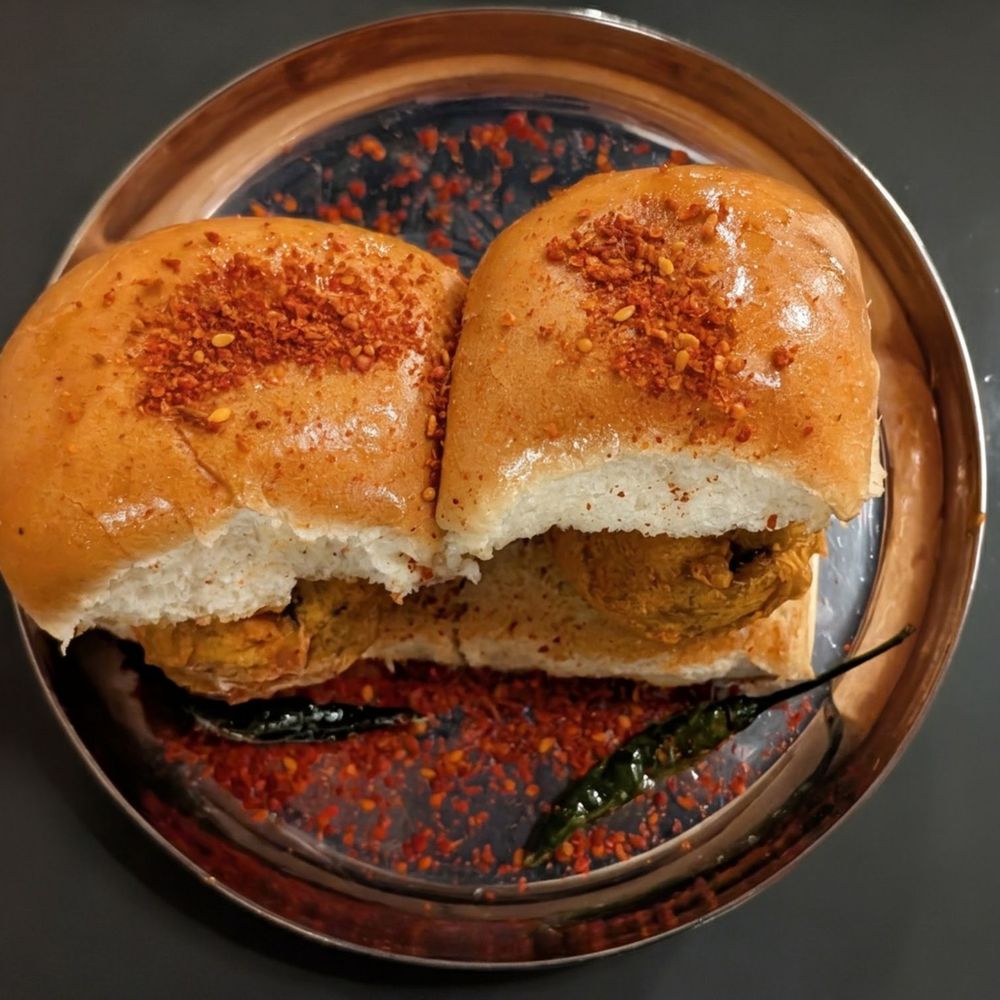
Vada pav is a famous Mumbai street-food specialty consisting of a spiced potato fritter served inside a soft pav bun.
It is often accompanied by chutneys and spicy condiments. Despite its simple appearance, vada pav can deliver plenty of flavor and heat.
For diners interested in western Indian street food, this is one of the dishes worth seeking out.
Pav Bhaji
Pav bhaji is another Mumbai favorite. It consists of a thick, spiced vegetable mixture served with buttered pav bread.
The vegetables are cooked and mashed together with spices to create a rich, savory preparation. The bread is then used to scoop up the bhaji.
It is a satisfying option when you want something more substantial than a small snack.
Kathi Rolls
Kathi rolls originated in Kolkata and have become popular far beyond eastern India.
A typical roll combines a flatbread with a flavorful filling such as spiced vegetables, paneer, chicken, or other ingredients. Onions, chutneys, herbs, and sauces can add additional layers of flavor.
Kathi rolls are also particularly convenient for takeout because they are portable and can be eaten without the need for a full dining setup.
Dosa
Dosa is a South Indian staple made from a fermented rice-and-lentil batter. It is cooked on a hot griddle until it develops a distinctive texture, ranging from soft and flexible to thin and crispy.
Masala dosa is filled with a spiced potato mixture and commonly served with sambar and coconut chutney.
For anyone exploring Indian street food around Downtown Brooklyn, dosa is an especially important dish because several nearby restaurants specialize in South Indian cuisine.
Idli and Medu Vada
Idli consists of soft, steamed fermented rice-and-lentil cakes, while medu vada is a savory fried lentil doughnut.
Both are traditionally served with sambar and chutneys.
They are particularly popular as breakfast and snack foods and provide a different experience from fried North Indian street foods.
Chole Bhature
Chole bhature combines spicy chickpea curry with large, fluffy fried bread known as bhature.
The chickpeas are heavily seasoned, while the bread provides a rich and satisfying contrast. It is a popular North Indian dish and can be substantial enough to serve as a complete meal.
If you want a hearty Indian street-food-style lunch rather than a light snack, chole bhature is worth trying.
Pakoras
Pakoras are vegetables or other ingredients coated in a seasoned gram-flour batter and fried until crisp.
Common versions include onion, potato, spinach, and mixed vegetable pakoras.
They are particularly enjoyable as a shared appetizer or snack, especially when served with mint or tamarind chutney.
Indian Sweets and Drinks
A street-food experience does not have to end with savory food.
Indian sweets such as gulab jamun, jalebi, ras malai, and ladoo can provide a sweet finish. Drinks such as mango lassi, masala chai, and traditional Indian coffee can also complement spicy foods.
A cold lassi can be especially refreshing after a meal featuring spicy chaat or curry.
How to Build Your First Indian Street Food Meal
If you are visiting Indian restaurants in Downtown Brooklyn for the first time, avoid ordering only one large entrée. Street food is better experienced through variety.
A simple combination could be:
- Start: Samosa or pakora
- Try chaat: Samosa chaat or bhel puri
- Explore South India: Masala dosa or idli
- Try Mumbai flavors: Vada pav or pav bhaji
- Choose a hearty option: Chole bhature or a kathi roll
- Finish: Gulab jamun or mango lassi
This approach allows you to experience different textures, spice levels, cooking methods, and regional traditions in one outing.
The best Indian street food experience is ultimately about curiosity. Start with the dishes you recognize, then use each meal as an opportunity to discover something unfamiliar. Downtown Brooklyn’s Indian food scene makes that exploration particularly rewarding because South Indian, North Indian, western Indian, and other regional influences can all be found within the wider Brooklyn dining landscape.
Vegetarian and Vegan Indian Street Food Options
One of the biggest advantages of exploring Indian street food is the enormous variety of vegetarian dishes available. Indian cuisine has developed generations of recipes around vegetables, lentils, chickpeas, potatoes, rice, grains, and spices, making it relatively easy to find satisfying meat-free meals.
For anyone searching for vegetarian and vegan Indian food in Downtown Brooklyn, street food offers plenty of choices. From crispy samosas and tangy chaat to dosa, idli, vada pav, and vegetable pakoras, many popular Indian snacks are naturally vegetarian. However, vegan diners should pay closer attention to ingredients such as yogurt, butter, ghee, paneer, and cream.
Vegetarian Chaat
Chaat is one of the best categories to explore if you are vegetarian.
Popular options include samosa chaat, aloo tikki chaat, bhel puri, papdi chaat, and other combinations of potatoes, chickpeas, crispy components, chutneys, spices, yogurt, and fresh vegetables.
The variety of textures makes chaat particularly satisfying even without meat. A single plate can include crunchy crackers, soft potatoes, chickpeas, fresh onions, tangy chutneys, and aromatic spices.
Vegetarians should have plenty of choices, although ingredients can vary from restaurant to restaurant.
Samosas
The classic vegetable samosa is usually filled with potatoes, peas, and spices.
It is one of the easiest vegetarian Indian snacks to find and works well as an appetizer, afternoon snack, or part of a larger meal.
If you follow a vegan diet, ask whether the pastry contains dairy or whether the samosas are fried in a shared fryer. Recipes and preparation methods can differ between restaurants.
Pani Puri
Pani puri is another exciting option for vegetarian diners.
The crispy shells are generally filled with potato, chickpeas, chutneys, and flavored water. The combination is light but highly flavorful.
Vegan diners should specifically ask whether yogurt is included, particularly if ordering a prepared chaat variation. The flavored water and chutneys can also contain different ingredients depending on the restaurant.
Bhel Puri
Bhel puri is a particularly useful choice for plant-based diners because its main ingredients are puffed rice, vegetables, chutneys, herbs, and spices.
It is crunchy, fresh, tangy, and relatively light compared with fried street foods.
However, chutney recipes can differ, so vegan diners should confirm that the sauces do not contain dairy.
Aloo Tikki
Aloo tikki is based around seasoned potato patties and can be served in several different ways.
A simple aloo tikki may be vegetarian and sometimes vegan, while chaat versions may include yogurt.
If you are vegan, ordering the tikki without yogurt and confirming the ingredients in the chutneys can make this a good plant-based option.
Vada Pav
Vada pav is another vegetarian-friendly street food with roots in Mumbai.
The central component is a spiced potato fritter served in a pav bun, usually with chutneys and spicy condiments.
Because bread recipes and toppings can vary, vegan diners should ask whether the pav contains dairy or butter and whether the vada is prepared with any dairy ingredients.
Dosa
Dosa is one of the most important foods for vegetarian and vegan diners exploring South Indian cuisine.
The basic dosa batter is traditionally made from fermented rice and lentils. A plain dosa with chutney and sambar can therefore be a naturally plant-based meal depending on how the restaurant prepares it.
Masala dosa is another popular option, usually filled with spiced potatoes.
The main point for vegan diners is to ask about ghee or butter. Some restaurants use oil, while others may cook certain dosa varieties with ghee.
Idli
Idli is a soft, steamed South Indian dish made primarily from fermented rice and lentils.
It is commonly served with sambar and coconut chutney, making it a simple and filling vegetarian meal.
Because it is steamed rather than fried, idli can also be a lighter choice when you want something less oily.
Again, diners following a strict vegan diet should confirm the ingredients in the accompanying sauces and preparations.
Medu Vada
Medu vada is made from seasoned lentil batter and fried until crisp on the outside while remaining soft inside.
It is traditionally served with sambar and chutney.
The vada itself can be vegetarian and sometimes vegan, but preparation methods differ. Asking whether ghee, butter, or dairy ingredients are used is the safest approach for strict vegan diners.
Vegetable Pakoras
Pakoras are another easy vegetarian street-food choice.
Vegetables such as onions, potatoes, spinach, cauliflower, and other seasonal ingredients can be coated in seasoned chickpea flour and fried.
They make excellent sharing dishes because several varieties can be ordered together.
For vegans, the batter itself is usually worth checking, as some restaurants may use only chickpea flour while others could add different ingredients.
Chole and Chickpea-Based Dishes
Chickpeas are an important source of plant-based protein in Indian cuisine.
Chole, or spiced chickpea curry, can be served with bread, rice, bhature, or other accompaniments.
When prepared without dairy, chickpea dishes can provide a more substantial vegan meal than lighter snack foods.
Watch for Dairy Ingredients
The biggest challenge for vegan diners is not usually finding vegetables—it is identifying hidden dairy ingredients.
Common ingredients to ask about include:
- Ghee: Clarified butter commonly used for cooking
- Butter: Sometimes used on pav, dosa, or other breads
- Yogurt: Common in chaat and sauces
- Paneer: Fresh Indian cheese used in many dishes
- Cream: Used in some richer curries
- Milk: May appear in drinks, desserts, and sauces
A dish that appears vegetarian is not automatically vegan.
Ask About Chutneys and Preparation
Chutneys are an important part of Indian street food, but recipes can vary.
Mint and coriander chutneys are often plant-based, while some preparations may include yogurt. Tamarind chutney is generally sweet and tangy, but ingredients can differ between restaurants.
For strict dietary requirements, the best approach is to clearly tell the restaurant that you are vegan and ask which dishes can be prepared without dairy.
Building a Vegetarian or Vegan Street Food Meal
A vegetarian food tour around Downtown Brooklyn could include a samosa to start, followed by bhel puri or aloo tikki, then a masala dosa or idli and vada. Finish with a plant-based drink if available.
For vegan diners, the same experience can often be adapted by requesting dishes without yogurt, butter, ghee, paneer, or cream.
The great thing about Indian cuisine is that choosing vegetarian or vegan food does not mean sacrificing variety. In fact, it can open the door to some of India’s most traditional street foods and regional specialties.
For anyone exploring the best Indian street food in Downtown Brooklyn, vegetarian and vegan dishes are not simply alternatives to meat-based food. They are an important part of the cuisine itself—and often some of the most flavorful dishes on the menu.
Budget-Friendly Indian Restaurants
Indian street food is naturally well suited to budget-conscious dining. Many dishes were traditionally created as affordable, filling foods that could be enjoyed quickly, making snacks such as samosas, vada pav, pakoras, chaat, dosa, and idli excellent choices when you want plenty of flavor without ordering an expensive entrée.
For visitors searching for budget-friendly Indian restaurants in Downtown Brooklyn, the key is to look beyond large dinner portions and explore snack menus, vegetarian dishes, lunch specials, and South Indian options. A few smaller orders can also let you try several different flavors while keeping the overall cost manageable.
Start With Indian Street Food Snacks
One of the simplest ways to control your budget is to build your meal around smaller dishes.
A samosa, pakora, vada, or small chaat can provide a flavorful introduction to Indian cuisine without the price of a full entrée. Ordering several different snacks can also be more interesting than choosing one large dish.
For example, two people might share samosas, bhel puri, and another snack before deciding whether they need a larger meal. This approach gives everyone an opportunity to taste something different.
Choose Dosa and South Indian Meals
South Indian food can be particularly useful for budget-conscious diners.
Dosa, idli, and medu vada are generally filling because they are made from ingredients such as rice, lentils, potatoes, and fermented batters. They also come with flavorful accompaniments such as sambar and chutney.
A masala dosa, for example, can work as a complete meal rather than simply an appetizer. Restaurants such as Filter Kaapi and other South Indian-focused destinations around Downtown Brooklyn make this style of dining accessible to people who want something flavorful and substantial.
Vegetarian Food Can Stretch Your Budget
Vegetarian Indian food offers another way to enjoy a satisfying meal while controlling costs.
Chickpeas, lentils, potatoes, rice, vegetables, and breads form the foundation of countless Indian dishes. These ingredients can create hearty meals without requiring expensive meat or seafood.
Dishes such as chole, aloo-based preparations, vegetable curries, dal, dosa, idli, and vegetable biryani can be useful choices when dining on a budget.
Vegetarian dishes are also excellent for sharing. A group can order several different vegetable dishes and breads rather than giving each person a separate entrée.
Look for Lunch Specials
Lunch can sometimes provide better value than dinner.
Indian restaurants may offer lunch combinations that pair a main dish with rice, bread, or other accompaniments. These meals can be especially useful for office workers, students, and visitors who want a substantial meal during the middle of the day.
When planning a food outing, check the restaurant’s current menu and lunch offerings before visiting because prices, portions, and availability can change.
Share Several Small Dishes
Indian cuisine is particularly well suited to group dining.
Instead of ordering four large entrées, a group of friends can share samosas, pakoras, chaat, dosa, vegetable dishes, and breads. This creates a more varied meal while allowing everyone to sample multiple preparations.
Sharing is especially useful when exploring street food because the goal is often discovery rather than ordering one familiar dish.
A table with several small plates can provide a much better introduction to Indian flavors than a single large entrée.
Choose Takeout Carefully
Takeout can also help manage a food budget, particularly when ordering for several people.
Dishes such as samosas, kathi rolls, biryani, dosa, and some curries travel relatively well. However, certain foods—especially crispy chaat and pani puri—are better enjoyed soon after preparation.
If you are ordering delivery, compare the actual food price with delivery fees, service charges, and minimum-order requirements. A restaurant that appears inexpensive on the menu may cost considerably more after additional fees.
Pickup can sometimes be a practical alternative when the restaurant is nearby.
Drinks Can Increase the Bill
Indian drinks such as mango lassi, chai, and specialty beverages can be delicious additions, but ordering several drinks can noticeably increase the total cost of a casual meal.
If you are focused on keeping your meal inexpensive, consider sharing drinks or choosing water while spending more of your budget on dishes you want to explore.
Of course, if mango lassi or masala chai is part of the experience you are looking for, it can be worth including one traditional drink rather than several separate beverages.
Best Budget Strategy for First-Time Visitors
If you are visiting Downtown Brooklyn specifically to explore Indian street food, consider creating a simple tasting-style meal.
For example:
- Start with two samosas
- Share a plate of bhel puri or aloo tikki
- Order one dosa to share
- Add idli or vada if you want another South Indian dish
- Finish with one dessert or traditional drink
This gives two diners an opportunity to experience several Indian flavors without immediately ordering multiple full entrées.
Affordable Does Not Mean Limited
Budget-friendly Indian dining is not simply about finding the cheapest meal. It is about getting variety and value from the food you order.
A well-planned Indian street-food meal can include several regional dishes, different textures, multiple chutneys, and both vegetarian and vegan options while remaining relatively casual.
Downtown Brooklyn is especially convenient for this style of dining because nearby neighborhoods provide additional options. You can compare South Indian snacks with North Indian chaat, explore Mumbai-style street foods, or combine a quick snack with a more substantial meal.
For anyone looking for the best affordable Indian food in Downtown Brooklyn, street food provides an excellent starting point. Focus on smaller dishes, vegetarian specialties, sharing, lunch options, and smart takeout choices, and you can enjoy a broad taste of Indian cuisine without needing a large restaurant budget.
Fine Dining Indian Restaurants
Indian street food is usually associated with busy markets, casual cafés, food stalls, and quick meals. But the flavors and ingredients that make Indian street food exciting can also appear in more refined restaurant settings.
Around Downtown Brooklyn, diners looking for a more polished Indian experience can explore contemporary restaurants and upscale dining rooms in Downtown Brooklyn and nearby neighborhoods. These restaurants may focus less on the traditional street-food format and more on presentation, regional cooking, carefully prepared sauces, premium ingredients, and a longer dining experience.
For visitors exploring Indian restaurants in Downtown Brooklyn, this provides an opportunity to experience the contrast between casual street food and sophisticated Indian cuisine.
What Makes Indian Dining Feel More Upscale?
Fine dining Indian cuisine does not necessarily mean completely different food. In many cases, the same familiar flavors are presented in a more elaborate way.
A samosa might become a carefully plated appetizer. Chaat flavors may appear as part of a composed starter. A traditional curry can be prepared with a more carefully developed sauce, while grilled meats or vegetables may receive more attention to marination and cooking technique.
The biggest difference is often the overall experience.
Upscale Indian restaurants may offer:
- More detailed presentation
- A broader selection of regional dishes
- Carefully prepared sauces and marinades
- Specialty cocktails or Indian beverages
- Larger dining spaces
- Table service
- More extensive menus
- A setting suited to celebrations and longer dinners
Kashi Indian Cuisine & Bar
Kashi Indian Cuisine & Bar on Livingston Street is one of the nearby options for diners looking for a more polished Indian restaurant experience.
Rather than focusing exclusively on street food, a restaurant like Kashi can be useful for experiencing Indian cuisine in a more contemporary setting. Diners can explore appetizers, vegetarian dishes, curries, rice preparations, breads, and other Indian specialties.
If you have already spent the day exploring casual dishes such as samosas, dosa, or chaat, moving into a more formal Indian restaurant can provide an interesting contrast.
The experience is less about eating quickly and more about enjoying a complete meal.
Best for: Contemporary Indian dining, dinner, groups, special occasions
Price level: Moderate to upscale depending on the order
Area: Downtown Brooklyn
Contemporary Indian Interpretations
Modern Indian restaurants often take inspiration from traditional recipes while changing the presentation or combining regional influences.
For example, classic ingredients such as paneer, chicken tikka, lamb, potatoes, chickpeas, and seasonal vegetables can be incorporated into dishes designed for a more contemporary dining room.
This style of cooking can be particularly interesting for diners who already know Indian food and want to discover a different interpretation.
Instead of asking whether modern Indian food is “authentic,” it can be more useful to consider what tradition the restaurant is drawing from and how it is adapting that tradition.
Upscale Chaat and Indian Appetizers
Chaat is one of the best examples of how street food can inspire a more refined dining experience.
Traditional chaat combines multiple elements—crispy components, potatoes, chickpeas, chutneys, yogurt, herbs, and spices. A contemporary chef can preserve those flavor relationships while changing the presentation and proportions.
The same idea applies to other Indian appetizers.
Tandoori vegetables, paneer, kebabs, stuffed breads, and spiced seafood or meat can all take inspiration from traditional Indian cooking while being served in a more sophisticated format.
Regional Indian Cuisine
Another advantage of exploring higher-end Indian restaurants is the opportunity to look beyond the most familiar dishes.
Indian cuisine includes culinary traditions from Punjab, Rajasthan, Gujarat, Maharashtra, Bengal, Kerala, Tamil Nadu, Karnataka, Andhra Pradesh, and many other regions.
A restaurant that highlights regional cooking can provide a more detailed understanding of Indian food than a generic menu built around a small selection of popular American-Indian dishes.
For diners who have already tried butter chicken and tikka masala, regional specialties can make the next meal much more interesting.
Fine Dining for Special Occasions
A polished Indian restaurant can be a good choice for birthdays, anniversaries, business dinners, date nights, or family celebrations.
The advantage is not simply the food. A longer meal allows diners to explore several courses, discuss dishes with the staff, and enjoy the atmosphere.
Indian food also works naturally for group dining because many dishes are designed to be shared. A table can order several appetizers, vegetarian dishes, grilled specialties, curries, rice, and breads.
Street Food vs. Fine Dining
The contrast between Indian street food and fine dining is worth experiencing.
Indian street food is generally:
- Casual
- Quick
- Affordable
- Snack-oriented
- Designed around bold flavors
- Ideal for exploration and sharing
Fine dining Indian cuisine is more likely to be:
- Slower paced
- Presentation-focused
- More elaborate
- Suitable for special occasions
- Built around multiple courses
- Focused on detailed preparation
Neither style needs to replace the other. They offer different ways to experience the same enormous culinary tradition.
Building an Indian Food Tour Around Downtown Brooklyn
One interesting way to explore Indian cuisine is to combine both experiences.
Start during the day with casual street food such as a samosa, chaat, dosa, or vada pav. Later, choose a more polished Indian restaurant for dinner and explore regional appetizers, curries, breads, and desserts.
This approach lets you see how Indian cuisine can move from quick neighborhood snacks to elaborate restaurant meals.
For anyone researching the best Indian street food in Downtown Brooklyn, fine dining may seem like a completely separate category. In reality, the two are connected by ingredients, spices, regional traditions, and cooking techniques.
Exploring both sides of Indian cuisine can provide a much broader understanding of what makes Indian food so diverse—and why its street-food traditions continue to inspire chefs and restaurants far beyond India’s streets and markets.
Indian Street Food Takeout and Delivery Tips
Indian street food is perfect for casual dining, but not every dish travels equally well. Some foods can arrive almost as enjoyable as they are in the restaurant, while others depend heavily on freshness, crispness, and serving temperature.
If you are ordering Indian street food in Downtown Brooklyn for takeout or delivery, choosing the right dishes and handling them properly can make a major difference. A little planning helps preserve the textures, sauces, aromas, and flavors that make Indian street food so enjoyable.
Choose Foods That Travel Well
Some Indian street foods are naturally suited to takeout.
Samosas, kathi rolls, pakoras, vada pav, biryani, and many curry-based dishes can generally handle a short trip without losing too much of their character.
Samosas are particularly convenient. Their crisp exterior may soften slightly during delivery, but they can often be reheated quickly at home.
Kathi rolls are another practical choice because the filling and bread are already designed to be eaten together. They are also easy to carry and eat without requiring plates and multiple utensils.
Eat Chaat as Soon as Possible
Chaat can be more challenging to order for delivery.
Many chaat dishes depend on contrasting textures. Crispy components are combined with chutneys, yogurt, chickpeas, potatoes, and other ingredients. Once everything sits together for too long, the crunchy elements can become soft.
If you are ordering samosa chaat, papdi chaat, or bhel puri, eating it soon after arrival will usually provide a better experience.
If the restaurant offers the option to pack components separately, take advantage of it.
Be Careful With Pani Puri
Pani puri is one of the foods that is best enjoyed immediately.
The crispy puri shells are filled with flavored water and other ingredients just before eating. If they are filled too early, the shells lose their crisp texture.
For delivery, some restaurants may provide the puris and filling separately so you can assemble them yourself.
This is actually an advantage. You can fill each puri immediately before eating and enjoy the texture closer to what you would get at the restaurant.
Dosa Is Best When Fresh
Dosa is another dish where timing matters.
A freshly prepared dosa can have a crisp exterior and a delicate texture. During a longer delivery journey, steam inside the container can soften it.
If you are ordering dosa for takeout, eat it as soon as possible after pickup or delivery.
If available, pickup may be preferable to delivery when the restaurant is nearby. This reduces the amount of time the dosa spends inside a closed container.
Keep Chutneys and Sauces Separate
Chutneys are an essential part of Indian food, but keeping them separate can help preserve the main dish.
Mint chutney, tamarind chutney, coconut chutney, and other sauces can change the texture of fried foods when they sit together for too long.
When ordering takeout, look for packaging that keeps sauces separate.
This is particularly useful for:
- Samosas
- Pakoras
- Dosa
- Vada
- Kathi rolls
- Chaat
- Fried appetizers
You can then add the chutney immediately before eating.
Reheating Samosas and Fried Snacks
If your samosas or pakoras have softened during transportation, reheating them correctly can help restore some crispness.
An oven or air fryer is generally more useful than a microwave when crisp texture matters. Microwaving can warm the food quickly but may leave the exterior softer.
Avoid overheating because the filling can become excessively hot while the exterior becomes dry.
Biryani and Curries Travel Well
Although biryani is not necessarily a street food, it is one of the more practical Indian dishes for delivery.
The rice and spices generally hold up well during transportation, and many biryani dishes can be reheated without significantly changing the overall experience.
Curries also tend to travel well because sauces help protect the food from drying out.
Pairing a curry with rice or naan can therefore be a practical choice when ordering a complete Indian meal for home.
Order Strategically for Groups
Indian street food is excellent for group orders because many dishes can be shared.
Instead of ordering the same entrée for everyone, consider creating a combination of snacks and larger dishes.
For example, a group could order:
- Samosas
- Vegetable pakoras
- Samosa chaat
- Dosa
- Kathi rolls
- Biryani
- One or two curries
- Rice or naan
- Several chutneys
This gives everyone the opportunity to sample different flavors.
When ordering for a larger group, check portion sizes carefully. Some street-food dishes are individual snacks, while others are large enough to share.
Pickup vs. Delivery
If the restaurant is only a short distance away, pickup can sometimes provide a better experience than delivery.
Pickup reduces travel time and gives you more control over when you begin eating. This can be particularly important for dosa, pani puri, pakoras, and other foods where texture matters.
Delivery is more convenient when you are ordering from home, an office, or a hotel, especially when ordering dishes that travel well.
Check the Order Before Eating
When your food arrives, take a moment to check that everything is included.
Indian meals can involve several small containers of:
- Chutneys
- Sambar
- Yogurt
- Pickles
- Rice
- Curries
- Bread
- Desserts
Missing chutney or sambar can make a significant difference to dishes such as dosa or samosa chaat.
Make Your Own Street-Food Experience at Home
Takeout does not have to feel like a compromise.
Arrange the dishes on plates, keep chutneys in small bowls, add fresh onions or herbs when appropriate, and serve everything while it is still warm.
For chaat, add wet ingredients just before eating. For dosa, serve the sambar and coconut chutney immediately. For samosas, reheat them if necessary.
These small steps can make restaurant takeout feel much closer to a freshly prepared meal.
Final Takeout Tip
When choosing Indian street food for delivery around Downtown Brooklyn, think about texture first.
Foods that are saucy, steamed, wrapped, or rice-based generally travel well. Crispy foods and dishes that depend on freshness require more care.
The best approach is simple: choose the right dish, minimize travel time, keep sauces separate when possible, and eat texture-sensitive foods quickly.
With a little planning, takeout and delivery can still provide an enjoyable way to explore the best Indian street food in Downtown Brooklyn from the comfort of your home, hotel, or office.
How to Find Authentic Indian Food
Finding authentic Indian food is not simply about choosing a restaurant that serves familiar dishes. Indian cuisine is incredibly diverse, with different regions, communities, ingredients, cooking techniques, and spice combinations contributing to the food.
When searching for authentic Indian food in Downtown Brooklyn, it helps to look beyond popular dishes such as chicken tikka masala and butter chicken. Exploring regional specialties, traditional snacks, fresh chutneys, dosa, chaat, and other street foods can provide a much better understanding of Indian culinary traditions.
Look for Regional Variety
One of the strongest signs of a diverse Indian food scene is regional variety.
Indian food from Punjab is different from food associated with Kerala, Tamil Nadu, Gujarat, Maharashtra, Bengal, Rajasthan, Karnataka, or Andhra Pradesh.
For example, dosa and idli represent South Indian culinary traditions, while samosas and chole are strongly associated with North Indian food culture. Vada pav and pav bhaji reflect the street-food traditions of Maharashtra, while kathi rolls are associated with Kolkata.
A restaurant that clearly identifies the regional inspiration behind its dishes can give diners a more meaningful food experience.
Pay Attention to the Menu
An authentic Indian menu does not necessarily need to be extremely long.
Sometimes a focused menu can be more informative than one containing every popular Indian-American dish imaginable.
Look for dishes that go beyond the standard combination of naan, butter chicken, and tikka masala. Regional breads, specialty rice dishes, traditional snacks, vegetarian preparations, South Indian breakfast dishes, and different types of chaat can all be signs that a restaurant is exploring a broader Indian culinary tradition.
Fresh Chutneys Matter
Chutneys are an important part of Indian street food.
Mint and coriander chutney can provide freshness and herbal flavor, while tamarind chutney contributes sweetness and acidity. Coconut chutney is an important accompaniment for many South Indian dishes.
Freshly prepared chutneys can make a significant difference because they provide contrast to fried, spicy, or savory foods.
When eating dosa, samosa, chaat, or pakoras, pay attention to the accompanying sauces. They are not simply decorative extras—they are an important part of the dish.
Look for Balance, Not Just Heat
Authentic Indian food is not necessarily extremely spicy.
One common misconception is that the hotter the food, the more authentic it must be. In reality, Indian cuisine uses spices for aroma, depth, warmth, acidity, sweetness, and complexity—not simply heat.
A well-balanced dish may combine cumin, coriander, turmeric, cardamom, cloves, mustard seeds, chilies, ginger, garlic, curry leaves, or other spices without overwhelming the palate.
If you prefer less heat, ask the restaurant about spice levels rather than assuming that mild food is less authentic.
Pay Attention to Texture
Texture is an important part of Indian street food.
A good samosa should have a satisfying crisp exterior and flavorful filling. Pakoras should have a crisp coating. Dosa can range from soft and flexible to thin and crunchy depending on the variety.
Chaat adds another level of texture by combining crispy ingredients with potatoes, chickpeas, yogurt, chutneys, and fresh vegetables.
If a dish depends on crispness, freshness matters. This is one reason street food often tastes best soon after it is prepared.
Explore Vegetarian Food
Indian cuisine has one of the world’s richest traditions of vegetarian cooking.
If you want to understand Indian food more deeply, do not limit yourself to meat dishes.
Try:
- Dosa
- Idli
- Medu vada
- Samosas
- Aloo tikki
- Bhel puri
- Pakoras
- Chole
- Vegetable curries
- Dal
- Vada pav
These dishes can reveal how Indian cooks use lentils, vegetables, grains, potatoes, herbs, and spices to create complex flavors.
Ask Questions
Do not hesitate to ask restaurant staff about unfamiliar dishes.
If you see a regional specialty that you do not recognize, ask what it contains, where it comes from, and how it is traditionally eaten.
This can lead to a much more interesting dining experience than simply ordering the dishes you already know.
You can also ask about:
- Spice level
- Regional origin
- Vegetarian or vegan preparation
- Dairy ingredients
- Recommended accompaniments
- How the dish is traditionally served
Restaurants that are knowledgeable about their food can often help first-time diners make better choices.
Avoid Judging Authenticity by Appearance
Authenticity is not determined by décor, restaurant size, price, or whether the staff comes from a particular part of India.
A modern Brooklyn restaurant can prepare traditional food, while a small casual restaurant can offer contemporary interpretations.
Instead of judging authenticity based on appearance, focus on the food itself: ingredients, preparation, regional identity, flavors, textures, and the context behind the dishes.
Try Something You Have Never Had
One of the easiest ways to discover authentic Indian cuisine is to move outside your comfort zone.
If you normally order butter chicken, try dosa.
If you always choose naan, try a regional bread.
If you like samosas, try samosa chaat.
If you enjoy mild curries, try a South Indian dish featuring coconut, curry leaves, mustard seeds, or tamarind.
Trying unfamiliar dishes gives you a broader understanding of Indian cuisine and can reveal flavors you might otherwise miss.
Use Street Food as Your Starting Point
Street food is particularly valuable for discovering Indian culinary traditions because many dishes have deep connections to regional food culture.
A simple plate of pani puri can introduce you to the importance of texture and acidity. Chaat demonstrates how sweet, sour, spicy, and savory flavors can work together. Dosa introduces fermented batters and South Indian accompaniments. Vada pav provides a taste of Mumbai’s casual food culture.
These dishes are more than quick snacks. They represent different culinary traditions from across India.
Finding Authentic Indian Food in Downtown Brooklyn
For anyone searching for authentic Indian food in Downtown Brooklyn, the best approach is to stay curious.
Look for regional specialties, explore vegetarian dishes, try fresh chutneys, ask questions, pay attention to texture and flavor balance, and avoid assuming that authenticity means maximum spice or traditional-looking décor.
Most importantly, explore beyond the dishes you already recognize.
Downtown Brooklyn and its surrounding neighborhoods provide an opportunity to experience several sides of Indian cuisine, from South Indian dosa and idli to North Indian chaat and samosas and other regional street-food traditions.
The more dishes you try, the easier it becomes to understand the incredible variety that makes Indian food so distinctive.
Final Guide to the Best Indian Street Food in Downtown Brooklyn
Downtown Brooklyn is an exciting place to explore Indian food because the experience goes far beyond the familiar curry-and-naan combination. The area’s restaurants and nearby neighborhoods provide opportunities to discover South Indian specialties, North Indian snacks, Mumbai-style street food, chaat, vegetarian dishes, and contemporary interpretations of Indian cuisine.
For anyone searching for the best Indian street food in Downtown Brooklyn, the best strategy is not to focus on finding one perfect dish or restaurant. Instead, approach the area as a food journey and explore different flavors, textures, and regional traditions.
Best Dishes for First-Time Diners
If this is your first experience with Indian street food, begin with approachable favorites.
A crispy samosa is an easy starting point, while samosa chaat introduces a more complex combination of chutneys, chickpeas, yogurt, spices, and textures.
For South Indian flavors, try a masala dosa with sambar and coconut chutney. If you want something lighter, idli and medu vada are excellent choices.
Those interested in Mumbai-style street food can look for vada pav or pav bhaji, while a kathi roll provides a convenient option for diners who prefer something wrapped and portable.
Best Choices for Spice Lovers
Indian food is about much more than heat, but diners who enjoy spicy flavors have plenty to explore.
Chaat can provide layers of chili, tangy tamarind, fresh herbs, and spices. South Indian dishes may incorporate chilies, curry leaves, mustard seeds, and other aromatic ingredients.
When ordering, ask about the restaurant’s spice levels. Authentic Indian food does not need to be extremely hot, and a balanced dish should allow you to taste the underlying spices and ingredients.
Best Vegetarian and Vegan Options
Vegetarians have an enormous selection of Indian street foods to choose from.
Some excellent options include:
- Samosas
- Bhel puri
- Aloo tikki
- Pani puri
- Dosa
- Idli
- Medu vada
- Vegetable pakoras
- Vada pav
- Chole
- Dal and vegetable dishes
Vegan diners should ask about butter, ghee, yogurt, paneer, and cream. Preparation methods can vary between restaurants, so confirming ingredients is particularly important for strict dietary requirements.
Best Options for Budget Dining
Indian street food can be an excellent choice when you want a flavorful meal without spending heavily.
Samosas, pakoras, vada, chaat, dosa, and idli can work well as affordable meals or snacks. Vegetarian dishes can also provide substantial portions at reasonable prices.
Another smart strategy is to share several dishes rather than ordering a separate entrée for every person. This lets a group experience more of the menu while keeping the meal varied.
Lunch specials and casual South Indian restaurants can also be useful for budget-conscious diners.
Best Foods for Sharing
Indian cuisine is naturally suited to group dining.
A table can start with samosas and pakoras, move into chaat, then share dosa, curries, rice dishes, breads, and other specialties.
Sharing is especially useful when exploring unfamiliar food. Instead of committing to one large dish, everyone can taste several preparations.
This turns a meal into a small culinary tour through different parts of India.
Dine-In vs. Takeout
Both dining styles have advantages.
Dine-in is especially useful for dishes that depend on freshness and texture. Dosa, pani puri, pakoras, and chaat are generally best enjoyed soon after preparation.
Takeout works particularly well for samosas, kathi rolls, biryani, curries, and other foods that travel well.
If ordering delivery, consider the travel time and ask whether sauces and chutneys can be packed separately. This can help preserve the texture of crispy foods.
Explore More Than Downtown Brooklyn
Although Downtown Brooklyn is the starting point, some of the most interesting Indian food experiences can be found in nearby neighborhoods.
Brooklyn Heights, Boerum Hill, Court Street, Cobble Hill, Fort Greene, Atlantic Avenue, and Prospect Heights can all become part of a wider Indian food exploration.
This is particularly useful for diners who want to compare different restaurant styles and regional cuisines rather than staying within a single block.
Experience Different Regions of India
Perhaps the most important lesson from exploring Indian street food is that Indian cuisine is not one cuisine.
South Indian dosa and idli are different from North Indian chaat and samosas. Mumbai’s vada pav and pav bhaji have their own identity, while Kolkata’s kathi rolls represent another regional tradition.
Exploring these differences makes the dining experience much more interesting.
Instead of ordering the same dishes every time, choose one familiar favorite and one unfamiliar regional specialty. Over several visits, you can build a much broader understanding of Indian cuisine.
A Simple Indian Street Food Itinerary
If you have only one day to explore Indian food around Downtown Brooklyn, consider a simple progression:
Morning: Start with idli, medu vada, dosa, or South Indian coffee.
Afternoon: Try samosas, chaat, or another Indian snack.
Evening: Explore a larger meal with kathi rolls, curries, biryani, or regional specialties.
Dessert: Finish with an Indian sweet or traditional drink.
You do not need to eat every dish in one day. The idea is to experience different styles and discover which flavors you enjoy most.
Final Thoughts
The best Indian street food experience in Downtown Brooklyn is ultimately about variety, curiosity, and discovery.
Try the familiar dishes, but do not stop there. Explore regional specialties, sample vegetarian and vegan foods, compare South Indian and North Indian flavors, and give lesser-known dishes a chance.
Whether you are a Brooklyn local, a visitor exploring New York City, a vegetarian looking for flavorful options, or someone trying Indian cuisine for the first time, Downtown Brooklyn provides a convenient starting point for discovering the diversity of Indian food.
From crispy samosas and tangy chaat to dosa, vada pav, kathi rolls, idli, pakoras, and countless regional specialties, Indian street food offers something for almost every type of diner.
So the next time you are looking for the best Indian street food in Downtown Brooklyn, think beyond a single restaurant. Explore the surrounding neighborhoods, try different regional dishes, share several plates, and let each meal introduce you to another part of India’s remarkable culinary tradition.