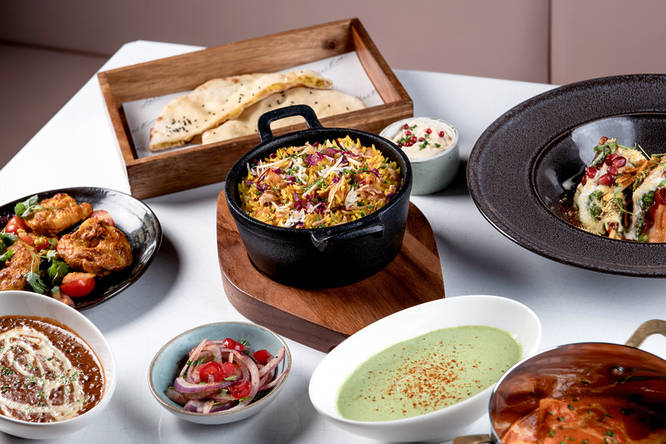
SoHo is one of Manhattan’s most recognizable neighborhoods, famous for its cast-iron architecture, independent boutiques, art galleries, cafés, and constantly changing restaurant scene. While the neighborhood is often associated with fashionable shopping and upscale dining, it also puts visitors within easy reach of some excellent Indian food throughout downtown Manhattan.
For this guide, “Indian restaurants in SoHo” includes SoHo itself and carefully selected restaurants in nearby neighborhoods such as Nolita, Greenwich Village, and Tribeca. That distinction matters because SoHo’s strict boundaries are relatively compact, while some of the most worthwhile Indian dining experiences are only a short walk away. Current restaurant listings, for example, place INDAY at 240 Lafayette Street in the SoHo/Nolita area, while Indian restaurants such as Paisley and Tamarind Tribeca are located nearby in Tribeca.
This broader approach is useful for both locals and tourists. If you’re spending the afternoon shopping on Broadway, visiting nearby galleries, or exploring the streets around Prince and Spring Streets, you don’t necessarily want to restrict your dinner search to a tiny map boundary. A short walk or quick subway ride can open up considerably more choices.
A Diverse Indian Dining Experience
One of the most exciting things about Indian food in downtown New York is the variety. Indian cuisine isn’t one uniform style. Different regions of India have their own ingredients, cooking methods, spice combinations, breads, rice dishes, and traditions.
A good Indian food guide should therefore go beyond the familiar combination of curry and naan.
You might be in the mood for:
- Aromatic biryani
- Tandoori chicken and kebabs
- South Indian dosa
- Vegetarian curries
- Indian street food
- Chaat
- Paneer specialties
- Dal and chickpea dishes
- Regional seafood
- Contemporary Indian cuisine
- Upscale Indian fine dining
That variety makes exploring Indian restaurants near SoHo particularly rewarding. A casual lunch can introduce you to Indian street food, while a more elaborate dinner can showcase regional dishes and modern interpretations of traditional recipes.
A Guide for Locals and Visitors
This guide is designed for different types of diners.
If you’re a tourist visiting SoHo for the first time, you’ll find practical recommendations for combining Indian food with a day of downtown sightseeing.
If you’re a local, the guide can help you compare restaurants based on cuisine, atmosphere, price, and dining occasion.
Vegetarians and vegans will find information about plant-based Indian dishes, while budget-conscious diners can look for lunch specials, dosa, thali meals, and casual restaurants.
And if you’re searching for an authentic Indian food experience, we’ll also look at regional cooking and what to consider when choosing a restaurant.
The goal isn’t simply to identify restaurants with Indian dishes on their menus. It’s to help you understand which type of Indian dining experience is right for you.
Whether you want a quick meal between SoHo shopping stops, a relaxed dinner with friends, an affordable vegetarian lunch, or an upscale Indian meal for a special occasion, the downtown Manhattan area offers plenty of possibilities.
Why SoHo Is a Great Place for Indian Food
SoHo may not be the first New York neighborhood that comes to mind when you think about Indian cuisine, but its location makes it an excellent base for exploring Indian food across downtown Manhattan. The neighborhood sits within walking distance of Nolita, Greenwich Village, Tribeca, Chinatown, and the Lower East Side, giving diners access to a surprisingly broad range of Indian restaurants and culinary styles.
There is also a practical reason to search beyond SoHo’s exact boundaries. Current listings show only a small number of restaurants categorized specifically within SoHo, while the broader downtown Manhattan area contains a much larger selection of Indian restaurants.
A Convenient Location for Food Lovers
SoHo is already one of Manhattan’s busiest destinations for shopping, architecture, galleries, and dining. That makes Indian food particularly easy to incorporate into a day in the neighborhood.
You might start with coffee and shopping in the morning, explore the cast-iron buildings and boutiques during the afternoon, and then walk toward Greenwich Village or Tribeca for dinner.
For a quick meal, INDAY at 240 Lafayette Street is particularly convenient. Its fast-casual format and relatively accessible price point make it useful for visitors who want Indian flavors without committing to a lengthy restaurant meal.
If you’re looking for something more substantial, the surrounding neighborhoods offer everything from casual Indian restaurants to upscale dining rooms.
Downtown Manhattan Offers Real Variety
One of the strongest reasons to explore Indian food around SoHo is the variety of restaurant styles.
For example, Mint Masala on MacDougal Street gives diners a casual Greenwich Village option, while Paisley in Tribeca offers a more polished downtown dining experience.
For special occasions, Tamarind Tribeca provides an upscale Indian setting. Current downtown restaurant listings also feature Tamarind, Benares, Mint Masala, and other Indian restaurants among the area’s notable choices.
This variety means you don’t have to settle for one particular style of Indian food.
Indian Cuisine Goes Far Beyond Curry and Naan
Another reason SoHo is a worthwhile destination for Indian food lovers is the opportunity to explore different regional traditions.
A typical American diner may begin with familiar dishes such as butter chicken, chicken tikka masala, naan, and samosas. Those are excellent starting points, but Indian cuisine extends much further.
Depending on the restaurant, you may encounter:
- South Indian dosa and idli
- Hyderabadi-style biryani
- Punjabi tandoori cooking
- Indian street food and chaat
- Paneer specialties
- Regional vegetarian dishes
- Lamb and goat curries
- Coastal seafood preparations
- Contemporary Indian small plates
Downtown Manhattan’s restaurant scene makes it possible to experience several of these styles without traveling across the entire city.
Excellent Options for Vegetarian Diners
Indian cuisine is also particularly attractive for vegetarians. Lentils, chickpeas, paneer, potatoes, spinach, cauliflower, eggplant, rice, and other vegetables appear throughout Indian cooking.
That means vegetarian diners can build a complete meal rather than simply choosing a meat-free side dish.
Look for options such as:
- Chana masala
- Dal tadka
- Palak paneer
- Paneer tikka
- Vegetable biryani
- Dosa
- Samosa
- Chaat
- Vegetable curries
Vegan diners can also find many possibilities, although they should confirm whether dishes contain ghee, butter, cream, yogurt, or paneer.
From Quick Lunches to Fine Dining
SoHo’s location also makes Indian food suitable for almost any occasion.
If you’re shopping and need something fast, choose a casual restaurant or Indian street-food option.
If you’re meeting friends, consider ordering several dishes to share.
For a date night or celebration, explore the upscale restaurants around Tribeca and other nearby neighborhoods.
And if you’re simply curious about Indian cuisine, start with an affordable lunch and use the experience to discover dishes you may want to try on a future visit.
Ultimately, the appeal of Indian restaurants in SoHo is not just about the restaurants located on a particular block. It’s about the neighborhood’s position at the center of one of Manhattan’s most diverse and walkable food areas.
Once you are willing to explore a few blocks beyond SoHo itself, the possibilities become much greater—and that’s where the real fun of discovering authentic Indian food in downtown New York begins.
Best Indian Restaurants in SoHo
When people search for the best Indian restaurants in SoHo, it helps to distinguish between restaurants located directly in SoHo and excellent Indian restaurants in the nearby downtown neighborhoods. SoHo itself is relatively compact, while Nolita, Greenwich Village, Tribeca, and the East Village are only a short distance away.
The following selection focuses on restaurants that can be useful to someone exploring SoHo, while clearly identifying the neighborhood where each restaurant is located. Restaurant menus, pricing, hours, and availability can change, so check the restaurant’s current official information before visiting.
INDAY
Located at 240 Lafayette Street, INDAY is one of the more convenient choices for people exploring SoHo and nearby Nolita. Its fast-casual approach makes it especially useful when you want an Indian-inspired meal without committing to a long sit-down dinner.
The restaurant is known for customizable bowls and modern Indian flavors, making it approachable for first-time diners as well as people looking for a quick lunch. Known for: fast-casual Indian-inspired food. Popular choices: rice bowls, vegetables, curries, and protein combinations. Approximate cost: $15–$25 per person. Area: SoHo/Nolita. Official website: Check INDAY’s current website before visiting.
Paisley
Located in Tribeca, Paisley is a convenient option for diners willing to walk south from SoHo. The restaurant offers a contemporary Indian dining experience with familiar favorites alongside a broader selection of Indian-inspired dishes.
It works well for a relaxed lunch or dinner, particularly if you want a full-service restaurant rather than a quick counter-service meal. Diners can explore curries, tandoori preparations, rice dishes, naan, paneer, and vegetable options. Known for: contemporary Indian cuisine in Lower Manhattan. Popular dishes: chicken tikka, curries, biryani, naan, and paneer. Approximate cost: $35–$70 per person. Area: Tribeca. Official website: Check Paisley’s current website for menus and reservations.
Tamarind Tribeca
For a more upscale Indian experience, Tamarind Tribeca is one of the strongest choices near SoHo. The restaurant’s polished setting and refined menu make it particularly suitable for celebrations, date nights, business dinners, and visitors looking for fine Indian dining.
Rather than treating Indian cuisine as casual comfort food, Tamarind presents it as a sophisticated dining experience, with carefully prepared dishes, premium ingredients, and attentive service. Known for: upscale Indian cuisine. Popular dishes: tandoori specialties, curries, seafood, lamb, paneer, and rice dishes. Approximate cost: $50–$100+ per person. Area: Tribeca. Official website: Check Tamarind Tribeca’s current website for reservations and menu information.
Masala Times
Located in Greenwich Village, Masala Times is worth considering if you want a more casual Indian meal after exploring SoHo. The restaurant’s downtown location makes it particularly convenient for visitors continuing west toward Washington Square Park and the Village.
The menu focuses on approachable Indian comfort food, making it suitable for casual dinners, quick meals, and diners who want recognizable flavors. Vegetarian diners can also find plenty of choices. Known for: casual Indian comfort food. Popular dishes: curries, rice dishes, kati-style preparations, samosas, and vegetarian options. Approximate cost: $15–$30 per person. Area: Greenwich Village. Official website: Check the restaurant’s current website for its latest menu and hours.
Mint Masala
Mint Masala on MacDougal Street offers another useful option for people exploring Greenwich Village. The restaurant provides a broad selection of Indian dishes and can be a good choice when you’re looking for familiar Indian flavors in a casual downtown setting.
The menu includes dishes such as biryani, chana masala, paneer, tandoori preparations, and other traditional favorites. Its location also makes it easy to combine an Indian meal with a visit to Washington Square Park and nearby Village attractions. Known for: traditional Indian comfort food. Popular dishes: biryani, tandoori chicken, chana masala, paneer dishes, and naan. Approximate cost: $20–$35 per person. Area: Greenwich Village. Official website: Check Mint Masala’s current website for updated information.
Musaafer
Musaafer offers a considerably more elaborate interpretation of Indian cuisine. Although it is not in SoHo itself, it is relevant for readers willing to travel farther for a destination-style Indian meal.
The restaurant focuses on contemporary Indian cuisine and a visually impressive dining environment. Its menu draws inspiration from different parts of India, making it appealing to diners who want something more creative than a standard neighborhood curry restaurant. Known for: contemporary Indian cuisine and upscale presentation. Popular dishes: kebabs, curries, biryani, seafood, and vegetarian specialties. Approximate cost: $60–$120+ per person. Area: Manhattan. Official website: Check Musaafer’s current website for its latest location and menu.
Farzi NYC
Farzi NYC is another contemporary Indian concept to consider when you want a modern interpretation of Indian food. Rather than relying entirely on traditional restaurant presentation, contemporary Indian restaurants such as this focus on creativity, presentation, and combinations of familiar Indian flavors with modern techniques.
It is best suited to diners who enjoy trying something different and are interested in a more experience-driven meal. Known for: modern Indian cuisine and creative presentation. Popular dishes: contemporary kebabs, curries, small plates, and Indian-inspired specialties. Approximate cost: $40–$80+ per person. Area: Manhattan. Official website: Check the restaurant’s current official information before planning a visit.
Ambo
Ambo is another option for diners interested in contemporary Indian cooking rather than a strictly traditional curry-house experience. The restaurant style is particularly appealing to younger diners and visitors who enjoy modern presentation and shareable plates.
A meal here can be approached as a tasting experience: choose several dishes rather than ordering one large entrée for everyone. Known for: contemporary Indian flavors. Popular dishes: modern Indian small plates, grilled preparations, curries, and vegetarian dishes. Approximate cost: $40–$75 per person. Area: Downtown Manhattan. Official website: Verify the current restaurant information before visiting.
Adda
Adda is worth considering for diners who want a stronger focus on traditional Indian flavors. Its approach is particularly appealing if your priority is hearty regional cooking rather than a heavily modernized menu.
The restaurant can be a good choice for diners who enjoy sharing several dishes, particularly curries, rice preparations, breads, and vegetarian specialties. Known for: regional Indian cooking. Popular dishes: biryani, curries, kebabs, dal, and vegetarian preparations. Approximate cost: $30–$60 per person. Area: Manhattan. Official website: Check the current official restaurant information for location and menu details.
Dravida
For diners who want to explore South Indian cuisine, Dravida provides a useful alternative to the more familiar North Indian restaurant format.
South Indian food can introduce you to dishes such as dosa, idli, vada, sambar, chutneys, and vegetarian rice preparations. This makes it particularly interesting for someone who has already tried butter chicken and naan and wants to understand the broader diversity of Indian cuisine. Known for: South Indian-inspired dishes. Popular dishes: dosa, idli, vada, sambar, chutneys, and vegetarian specialties. Approximate cost: $20–$40 per person. Area: Manhattan. Official website: Verify the current location and operating details before visiting.
How to Choose Among These Restaurants
Your best choice depends on the experience you’re looking for:
| Dining Preference | Best Type of Restaurant |
|---|---|
| Quick and casual | INDAY |
| Downtown dinner | Paisley |
| Fine dining | Tamarind Tribeca |
| Greenwich Village meal | Masala Times or Mint Masala |
| Modern Indian experience | Contemporary Indian concepts |
| Regional Indian flavors | Adda-style restaurants |
| South Indian food | Dravida-style restaurants |
| Special occasion | Tamarind Tribeca |
One important takeaway is that not every restaurant in this list is physically inside SoHo. That distinction is intentional. A local-style guide should help readers discover the best Indian food they can realistically reach while exploring SoHo, rather than incorrectly labeling every nearby restaurant as a SoHo business.
For the most accurate planning, verify each restaurant’s current location, menu, prices, opening hours, and reservation options before visiting.
Best Areas for Indian Food Near SoHo
One of the biggest advantages of looking for Indian food in SoHo is that you are surrounded by several neighborhoods with very different dining personalities. If you restrict your search to SoHo’s exact boundaries, you may miss restaurants that are only a short walk away.
For visitors, this means you can choose your Indian restaurant based on the rest of your day. Shopping in SoHo, exploring Greenwich Village, visiting Tribeca, or heading toward the East Village can all lead to a different Indian dining experience.
SoHo and Nolita
Start with SoHo itself and the neighboring Nolita area if convenience is your top priority.
The streets around Lafayette Street provide easy access to restaurants and casual food options while keeping you close to SoHo’s major shopping and sightseeing areas.
This is the best area for travelers who don’t want to spend much time commuting for a meal. You can shop during the afternoon, explore the cast-iron architecture, and then find Indian food without leaving the downtown core.
For a quick lunch, fast-casual Indian restaurants can be particularly convenient.
Greenwich Village
If you don’t mind walking west, Greenwich Village is one of the most useful areas to add to your Indian food search.
The neighborhood is known for its independent restaurants and lively streets, and it offers a good mixture of casual Indian dining, street-food-style options, and restaurants serving traditional favorites.
MacDougal Street and the streets surrounding Washington Square Park are especially convenient for visitors who want to combine food with sightseeing.
Greenwich Village is also a strong option for people searching for affordable Indian food near SoHo. Casual restaurants, rolls, dosa, snacks, and vegetarian dishes can make it easier to stay within a reasonable budget.
Washington Square Park
The area around Washington Square Park deserves its own mention because it can be an excellent destination for South Indian and vegetarian food.
Dosa, idli, vada, sambar, and chutneys provide an alternative to the North Indian dishes many American diners already know.
If your usual Indian order is butter chicken and naan, this is a great opportunity to try something completely different.
The area is also ideal for tourists because you can easily combine an Indian meal with a walk through Washington Square Park and the surrounding Village streets.
Tribeca
Head south from SoHo and you enter Tribeca, which is particularly useful if you’re looking for a more upscale Indian dining experience.
Restaurants such as Tamarind Tribeca and Benares make the area relevant for diners searching for Indian fine dining near SoHo.
Tribeca works particularly well for:
- Date nights
- Anniversaries
- Business dinners
- Celebrations
- Upscale group meals
- Visitors seeking a polished restaurant atmosphere
It may cost more than a casual Indian restaurant, but the experience can be significantly more elaborate.
East Village
If you’re willing to travel a little farther east, the East Village opens up another side of Manhattan’s Indian food scene.
The neighborhood has a reputation for independent restaurants and creative dining concepts, including contemporary Indian restaurants and places emphasizing regional flavors.
This is a particularly good area for diners who have already explored the most familiar Indian dishes and want to try something more adventurous.
You may find modern interpretations of Indian classics, small plates, cocktails, and regional specialties.
Lower Manhattan
Traveling south toward Lower Manhattan can also be worthwhile.
The area around the Financial District and World Trade Center provides additional Indian dining options and can be convenient if your sightseeing plans already take you in that direction.
For tourists, this means you can combine Indian food with attractions such as the 9/11 Memorial, One World Observatory, and the broader Lower Manhattan waterfront area.
How Far Should You Travel?
You don’t need to travel across New York City just to find Indian food.
A practical strategy is to establish a 15–30 minute walking or subway radius around SoHo. This gives you access to several distinct neighborhoods while keeping your dining plans convenient.
Think about your itinerary:
Shopping in SoHo: Stay around SoHo or Nolita.
Visiting Washington Square Park: Choose Greenwich Village.
Looking for fine dining: Consider Tribeca.
Exploring contemporary restaurants: Try the East Village.
Heading toward Lower Manhattan: Search around Tribeca and the Financial District.
The Best Area Depends on Your Dining Goal
If convenience matters most, stay close to SoHo.
If value is your priority, Greenwich Village can offer more casual choices.
If you’re interested in South Indian food, explore the Village and nearby downtown areas.
For an elegant dinner, head toward Tribeca.
And if you want contemporary Indian cuisine, expand your search toward the East Village and other downtown neighborhoods.
This broader approach makes your search for the best Indian restaurants in SoHo much more useful. Instead of treating a neighborhood boundary as a limitation, you can use SoHo as your starting point and explore the diverse Indian food scene that surrounds it.
Popular Indian Dishes to Try in SoHo
One of the best ways to explore Indian restaurants in SoHo is to approach the menu with curiosity. Indian cuisine is incredibly diverse, and a restaurant visit can introduce you to dishes that range from smoky tandoori meats and aromatic biryani to crisp dosa, tangy chaat, creamy curries, and hearty vegetarian preparations.
If you’re new to Indian food, familiar dishes can provide an easy starting point. If you’ve already explored Indian cuisine, SoHo and nearby downtown neighborhoods give you an opportunity to go beyond the usual favorites.
Butter Chicken
Butter chicken is one of the most recognizable Indian dishes in the United States and remains an excellent choice for first-time diners.
Tender pieces of chicken are generally cooked in a tomato-based sauce with butter, cream, and aromatic spices. The result is rich, smooth, and flavorful, with a level of heat that is often manageable for diners who aren’t accustomed to spicy food.
Pair it with garlic naan or basmati rice so you can enjoy every bit of the sauce.
Chicken Tikka Masala
Chicken tikka masala is another popular choice among American diners.
Although its history and exact origins are debated, it has become a familiar part of Indian restaurant menus in the United States and United Kingdom. The dish typically combines grilled chicken with a spiced tomato-based sauce.
If you enjoy grilled flavors and creamy curries, it can be a good choice.
Biryani
For rice lovers, biryani should be near the top of your list.
Biryani combines fragrant rice with spices and ingredients such as chicken, lamb, goat, seafood, or vegetables. Different regions prepare biryani differently, so the version you encounter at one restaurant may be very different from another.
Look for:
- Chicken biryani
- Lamb biryani
- Goat biryani
- Vegetable biryani
- Seafood biryani
- Regional biryani specialties
The best biryani should be aromatic and layered rather than simply hot.
Tandoori Chicken
Tandoori chicken is a great choice if you prefer grilled food over saucy curries.
Chicken is traditionally marinated with yogurt and spices before being cooked in a hot tandoor. This produces a smoky aroma and characteristic charred edges.
It can be ordered as an appetizer or part of a larger shared meal.
Chicken Tikka
Chicken tikka consists of marinated pieces of chicken cooked until tender and lightly charred.
It is particularly good for sharing and works well as an introduction to tandoori cooking.
Pair it with mint chutney for a fresh contrast to the smoky chicken.
Samosas
Few Indian appetizers are as recognizable as the samosa.
These crisp pastries are commonly filled with potatoes, peas, and spices, although meat and other variations are also available.
Samosas are ideal for sharing and can be paired with mint or tamarind chutney.
Chaat
If you want something more adventurous, try Indian chaat.
Chaat is a broad category of Indian street-food dishes that often combine contrasting flavors and textures. Depending on the preparation, you may encounter potatoes, chickpeas, yogurt, chutneys, crispy elements, herbs, and spices.
The result can be simultaneously sweet, sour, spicy, savory, and crunchy.
It’s one of the best ways to understand why Indian street food is so popular.
Chana Masala
Chana masala is a vegetarian favorite made primarily with chickpeas, tomatoes, onions, and spices.
It’s hearty enough to serve as a main dish and works beautifully with rice, roti, or naan.
For vegetarians or anyone looking for a lighter alternative to meat-based curries, this is an excellent choice.
Palak Paneer
Palak paneer combines paneer cheese with a spinach-based sauce.
The paneer provides a mild, satisfying texture while the spinach and spices create a savory sauce that pairs well with naan or rice.
Remember that paneer is dairy, so this dish is vegetarian but not vegan.
Dal Makhani
Dal is fundamental to Indian cuisine, and dal makhani is one of the richer preparations.
Black lentils and other legumes are slow-cooked with spices and commonly finished with butter or cream. It is particularly satisfying with naan.
If you are vegan, ask whether the restaurant can prepare the dish without dairy.
Dosa
Dosa is one of the most important dishes to seek out if you want to explore beyond North Indian cuisine.
This South Indian specialty is a thin, crisp crepe traditionally made from fermented rice and lentil batter.
A masala dosa is commonly filled with seasoned potatoes and served with sambar and chutneys.
The combination of crisp dosa, soft potato filling, tangy sambar, and fresh chutneys makes it completely different from the typical curry-and-naan meal.
Indian Street Food
Indian street food deserves special attention because it can offer some of the most exciting flavor combinations.
Depending on the restaurant, look for:
- Kati rolls
- Samosa chaat
- Bhel puri
- Pani puri
- Aloo tikki
- Pav bhaji
- Vada pav
These dishes are often ideal for casual lunches, snacks, and sharing.
Indian Breads
Don’t underestimate the importance of Indian bread.
Naan is perhaps the most familiar, but you may also encounter:
- Roti
- Tandoori roti
- Paratha
- Garlic naan
- Butter naan
- Laccha paratha
- Regional breads
Different breads work better with different dishes. A flaky paratha can be excellent with rich curries, while naan is particularly useful for scooping up creamy sauces.
What Should First-Time Diners Order?
If you’ve never eaten Indian food before, try a balanced combination such as:
Starter: Samosas or chicken tikka
Main: Butter chicken
Vegetarian side: Chana masala
Bread: Garlic naan
Rice: Basmati rice
Drink: Mango lassi
Dessert: Gulab jamun
This gives you a mixture of crispy, grilled, creamy, savory, and sweet flavors.
What Should Experienced Diners Try?
If you already know the classics, skip the standard order and look for something regional.
Try:
- A regional biryani
- South Indian dosa
- Indian chaat
- Goat or lamb curry
- Regional seafood
- Gujarati vegetarian dishes
- Less familiar vegetable preparations
- Regional Indian breads
The best Indian restaurants in SoHo and nearby downtown Manhattan aren’t just places to order the same dishes you already know. They can be an opportunity to discover how dramatically Indian cuisine changes from one region to another.
And that’s perhaps the most rewarding part of exploring Indian food in New York: every new restaurant can introduce you to a different combination of spices, ingredients, cooking techniques, and culinary traditions.
Best Vegetarian and Vegan Indian Food Near SoHo
Indian cuisine is an excellent choice for vegetarian and vegan diners because plant-based cooking is deeply rooted in many Indian culinary traditions. Instead of treating vegetables as an afterthought, Indian cuisine uses lentils, chickpeas, beans, paneer, rice, vegetables, herbs, and spices as the foundation of complete and satisfying meals.
Around SoHo and nearby downtown Manhattan neighborhoods, vegetarian diners can find everything from classic North Indian curries to South Indian dosa, Indian street food, vegetable biryani, and regional specialties.
Paneer for Vegetarian Diners
Paneer is one of the most popular ingredients to look for when ordering vegetarian Indian food.
This mild, fresh Indian cheese works particularly well with spices and sauces. Depending on the restaurant, you may find:
- Palak paneer
- Paneer tikka
- Kadai paneer
- Shahi paneer
- Matar paneer
- Paneer butter masala
Paneer tikka is a good choice if you prefer grilled food, while palak paneer works well if you enjoy a rich spinach-based curry.
Because paneer is made from milk, these dishes are vegetarian but not vegan.
Dal: A Vegetarian Indian Essential
If you’re looking for a satisfying vegetarian meal, don’t overlook dal.
Dal refers broadly to lentil and legume dishes, and there are countless regional variations.
Popular preparations include:
- Dal tadka
- Dal fry
- Dal makhani
- Chana dal
- Yellow dal
- Mixed lentil preparations
Dal is typically served with rice or Indian bread and can be a complete meal when combined with a vegetable dish.
For vegan diners, ask whether the dal contains ghee or butter.
Chana Masala
Chana masala is another excellent option for vegetarian and vegan diners.
The dish centers around chickpeas cooked with tomatoes, onions, ginger, garlic, and spices. It’s hearty, flavorful, and generally works well with both rice and bread.
It can also be a good choice if you want a substantial meal without cream-based sauces.
South Indian Vegetarian Food
If you’re looking for a naturally vegetarian-friendly Indian dining experience, South Indian cuisine deserves your attention.
Dosa, idli, vada, and sambar are all excellent dishes to explore.
Masala dosa is particularly popular. The crisp fermented crepe is filled with seasoned potatoes and usually served with sambar and chutneys.
Other options can include:
- Plain dosa
- Mysore dosa
- Idli
- Medu vada
- Uttapam
- Vegetable sambar
- Lemon rice
- Coconut rice
Always check preparation if you follow a strict vegan diet.
Indian Street Food for Vegetarians
Vegetarian Indian street food offers another huge range of possibilities.
Look for dishes such as:
- Samosas
- Samosa chaat
- Bhel puri
- Pani puri
- Aloo tikki
- Pav bhaji
- Vegetable kati rolls
- Vada pav
These foods are particularly enjoyable for groups because you can order several small dishes and share.
However, vegan diners should ask about yogurt, butter, ghee, and other dairy ingredients.
Vegetable Biryani
Vegetable biryani is an excellent choice if you’re craving a rice-based meal.
The dish combines aromatic rice with vegetables and spices. Depending on the restaurant, it may include potatoes, carrots, peas, cauliflower, beans, or other ingredients.
Ask whether the rice contains ghee or butter if you’re vegan.
Vegan Indian Food: What to Watch For
Indian food can look vegan while still containing dairy.
Common ingredients to check include:
- Ghee
- Butter
- Cream
- Yogurt
- Milk
- Paneer
Naan is another food worth checking carefully because some preparations may include dairy or butter.
When ordering, don’t simply say “vegetarian” if you need completely plant-based food. Instead, tell the restaurant that you need the dish to be vegan and dairy-free.
Vegetarian Thali
A vegetarian thali can be one of the best ways to sample several Indian dishes at once.
A typical thali may include:
- Dal
- Vegetable curry
- Rice
- Roti
- Pickles
- Chutney
- Yogurt
- Dessert
The exact combination varies considerably by region and restaurant.
For vegan diners, ask whether the restaurant can provide a dairy-free version.
Best Indian Food for Plant-Based Groups
If you’re dining with a group containing vegetarians, vegans, and meat eaters, Indian cuisine makes sharing relatively easy.
You could order:
- Chicken tikka
- Chana masala
- Dal
- Paneer tikka
- Vegetable curry
- Basmati rice
- Naan
- Vegan-friendly roti
This allows everyone to share without forcing the entire table to choose one dietary style.
How to Find the Best Vegetarian Indian Restaurants Near SoHo
Don’t judge a restaurant’s vegetarian quality simply by the number of vegetarian items listed on the menu.
Look for variety.
A restaurant with several kinds of dal, vegetable curries, South Indian dishes, paneer preparations, rice dishes, and street food usually gives vegetarian diners a more interesting experience than a restaurant where the only vegetarian options are rice and one paneer curry.
Also look for regional specialties. Gujarati, South Indian, Rajasthani, and other culinary traditions have particularly rich vegetarian food cultures.
Final Tip for Vegan Diners
If you’re vegan, communication is essential.
Ask your server:
“Is this cooked with ghee, butter, cream, or yogurt?”
Also ask about the bread and rice rather than assuming they’re dairy-free.
With a little planning, vegan and vegetarian diners can enjoy a full Indian meal near SoHo without feeling restricted to a small portion of the menu.
From crispy dosa and tangy chaat to comforting dal, spicy vegetable curries, chickpeas, rice, and paneer, the vegetarian side of Indian cuisine can easily become the highlight of your dining experience.
Best Affordable Indian Restaurants Near SoHo
You don’t need a large Manhattan dining budget to enjoy satisfying Indian food. In fact, Indian cuisine can be one of the better choices for travelers who want a flavorful, filling meal without spending the kind of money often associated with upscale New York dining.
The trick is to look for lunch specials, casual Indian restaurants, dosa, kati rolls, street food, vegetarian dishes, and fast-casual restaurants rather than automatically choosing a high-end dinner restaurant.
Choose Lunch Over Dinner
If your schedule allows, lunch can be one of the smartest times to search for affordable Indian food near SoHo.
Many Indian restaurants structure their midday menus around combinations that include a curry, rice, bread, vegetables, or another side. These meals can provide more variety than ordering a single entrée at dinner.
For tourists, lunch is particularly convenient because you can eat well and still have the afternoon available for shopping, galleries, architecture, and sightseeing.
Before visiting, check the restaurant’s current menu because lunch specials and their prices can change.
Dosa Is an Excellent Budget Choice
If you want something filling and affordable, look for South Indian restaurants serving dosa.
A masala dosa can be a complete meal, with a crisp fermented rice-and-lentil crepe wrapped around seasoned potatoes and served with sambar and chutneys.
It’s also a great choice if you’ve already eaten plenty of North Indian food and want to try something different.
Other relatively affordable South Indian choices may include:
- Idli
- Medu vada
- Uttapam
- Sambar
- Lemon rice
- Vegetable dosa
Try Indian Street Food
Indian street food can also be an excellent way to keep costs under control.
Kati rolls are particularly convenient because they combine flavorful fillings with flatbread in a handheld meal.
Other options include:
- Samosas
- Chaat
- Bhel puri
- Aloo tikki
- Pav bhaji
- Vada pav
- Pakoras
Street food is also ideal for travelers who don’t want to spend an hour sitting down for lunch.
You can grab something quickly, continue exploring SoHo, and save your larger meal for dinner.
Vegetarian Food Can Be Great Value
Vegetarian Indian food often provides some of the best value on a menu.
A combination of dal, rice, roti, and chana masala can be filling without the higher price of a meat or seafood entrée.
Other budget-friendly choices can include:
- Vegetable curries
- Aloo dishes
- Chana masala
- Dal tadka
- Vegetable biryani
- Dosa
- Vegetarian thali
If you’re vegan, confirm whether ghee, butter, cream, or yogurt is used.
Fast-Casual Indian Restaurants
Fast-casual restaurants are another useful option when you’re trying to balance quality, convenience, and price.
INDAY, located on Lafayette Street, is one example of a modern fast-casual Indian concept that can fit easily into a SoHo sightseeing itinerary.
The advantage of this restaurant format is speed. You can order a customized bowl or combination meal without spending the time and money associated with a full-service dinner.
It’s especially useful for:
- Solo travelers
- Office workers
- Shoppers
- Families
- Students
- Quick lunches
Share Several Dishes
If you’re traveling with friends, sharing Indian food can make your budget go further.
Instead of ordering one large entrée per person, consider ordering several dishes for the table.
For two diners, for example:
- One appetizer
- One meat or paneer dish
- One vegetable or dal dish
- Rice
- One or two naan
This gives you variety without necessarily ordering a huge amount of food.
For larger groups, sharing becomes even more practical.
Look for Thali Meals
A thali can provide several different Indian dishes in one meal.
Depending on the restaurant, a thali may contain rice, dal, vegetables, bread, chutney, pickles, and dessert.
This is useful for budget diners because you get variety without individually ordering every component.
It’s also an excellent option if you’re new to Indian cuisine and want to taste several preparations at once.
Approximate Budget Planning
As a general planning guide, you might expect:
- Indian snack: around $5–$15
- Casual lunch: around $15–$25
- Casual dinner: around $25–$40
- Upscale dinner: $50+
These are only approximate ranges. New York restaurant prices can change, and drinks, tax, tip, and additional sides can increase the final bill.
Always check the current menu before visiting if you’re traveling on a strict budget.
Don’t Forget Drinks and Extras
A meal can become more expensive than expected when you add appetizers, cocktails, multiple breads, rice, and dessert.
If you’re trying to control spending, decide whether you really need every extra.
For example, two people may not need multiple rice and bread orders if they’re already sharing several curries.
On the other hand, a small appetizer such as samosas can be a relatively inexpensive way to add variety.
Best Strategy for Budget Travelers
If affordability is your main priority, consider this approach:
Lunch: Look for an Indian lunch special or thali.
Snack: Try a samosa, chaat, or kati roll while exploring.
Dinner: Share two or three dishes rather than ordering individual meals.
Vegetarian: Choose dal, chickpeas, vegetables, and rice for filling lower-cost options.
Drinks: Check prices before ordering cocktails or specialty beverages.
The best affordable Indian restaurants near SoHo aren’t necessarily the cheapest restaurants in Manhattan. Instead, they’re the places that give you good portions, flavorful food, variety, and a satisfying experience for the money you spend.
For travelers, that can make Indian food one of the smartest choices in downtown Manhattan—especially when you combine an affordable lunch or casual meal with a full day of exploring SoHo.
Best Indian Fine Dining Near SoHo
Indian food is often associated with casual curries, neighborhood restaurants, and inexpensive street food, but New York City’s Indian dining scene also includes sophisticated restaurants where traditional flavors are presented through a fine-dining lens.
For visitors staying in or exploring SoHo, nearby Tribeca and other downtown neighborhoods provide opportunities to turn an Indian meal into a special occasion. These restaurants can be ideal for anniversaries, birthdays, romantic dinners, business meals, or simply an evening when you want a more polished dining experience.
Tamarind Tribeca
For upscale Indian dining near SoHo, Tamarind Tribeca is one of the most notable choices.
Located south of SoHo in Tribeca, the restaurant offers a refined atmosphere and a menu that presents Indian cuisine in an elegant setting. It is a particularly good option when the restaurant itself is meant to be part of the evening rather than simply a convenient place to eat.
The menu can include sophisticated tandoori preparations, curries, seafood, lamb, vegetarian dishes, rice, and Indian breads.
Best for: anniversaries, date nights, celebrations, business dinners
Style: upscale Indian dining
Approximate budget: $50–$100+ per person
Area: Tribeca
Benares
Benares is another downtown option for diners interested in contemporary Indian cuisine in a more formal setting.
The restaurant takes inspiration from Indian culinary traditions while presenting dishes in a modern New York environment. It can be particularly interesting for diners who already know classic Indian food and want to explore more sophisticated preparations.
Rather than ordering only one entrée, consider sharing several dishes so you can compare different cooking techniques and spice profiles.
Best for: refined dinners and special occasions
Style: contemporary Indian
Approximate budget: $50–$90+ per person
Area: Tribeca/Lower Manhattan
What Makes Indian Fine Dining Different?
Fine dining isn’t simply about charging more for familiar dishes.
At a strong upscale Indian restaurant, you may notice greater attention to:
- Presentation
- Ingredient quality
- Regional cooking
- Spice balance
- Tandoor preparation
- Sauce development
- Service
- Cocktails and wine
- Dessert
A familiar dish may be presented differently, but the goal should still be to preserve the essential flavors and techniques of Indian cuisine.
Regional Indian Cuisine at a Higher Level
One of the most interesting aspects of modern Indian fine dining is the growing emphasis on regional cuisine.
India contains an enormous variety of food traditions. A sophisticated restaurant may highlight dishes inspired by specific regions rather than presenting a generic “Indian” menu.
You may encounter influences from:
- Punjab
- Rajasthan
- Gujarat
- Bengal
- Kerala
- Goa
- Hyderabad
- Tamil Nadu
- Uttar Pradesh
For food lovers, this regional approach can make an upscale meal particularly rewarding.
Fine Dining for Vegetarians
Vegetarian diners should not assume that fine dining Indian restaurants are primarily focused on meat.
Indian cuisine has an extraordinary vegetarian tradition, and upscale restaurants can showcase vegetables, lentils, paneer, mushrooms, rice, and regional preparations with the same care given to meat and seafood.
A multi-course vegetarian meal might include:
- A vegetable or chaat appetizer
- Paneer or mushroom preparation
- Dal
- Regional vegetable curry
- Rice
- Indian bread
- Dessert
For vegan diners, ingredient confirmation remains important because butter, cream, yogurt, and ghee are commonly used in Indian cooking.
A Romantic Indian Dinner
Indian food can be particularly enjoyable for couples because many dishes are designed for sharing.
Instead of each person ordering a separate entrée, consider choosing several dishes together.
A romantic dinner might include:
- One appetizer
- One tandoori dish
- One signature curry
- One vegetarian dish
- Rice
- Naan
- Dessert
This creates a more varied experience and gives both diners the opportunity to discover new flavors.
Business Dining
Indian fine dining can also work well for business meals.
A full-service restaurant provides a more relaxed environment for conversation than a busy fast-casual restaurant, while shared dishes can create a natural way to discuss the menu and dining experience.
If you’re hosting clients or colleagues unfamiliar with Indian food, consider asking the restaurant staff for recommendations and selecting a mixture of approachable and distinctive dishes.
What Should You Order?
If you’re spending more on the meal, don’t use the entire budget on one familiar curry.
Instead, explore the restaurant’s specialties.
Ask:
“Which dishes best represent the chef’s approach to Indian cuisine?”
You can also ask about regional dishes, seasonal ingredients, and tandoor specialties.
This can give you a much better understanding of what makes the restaurant different from a casual Indian restaurant.
How Much Should You Budget?
Upscale Indian dining near SoHo can vary significantly in price.
As a rough planning range:
- Upscale lunch: $30–$60+ per person
- Fine-dining dinner: $50–$100+ per person
- Premium tasting or multi-course experience: potentially more
Drinks, tax, tip, and additional courses can increase the final bill.
Because prices and menus change, always review the current restaurant menu before making your reservation.
When Is Fine Dining Worth It?
Fine dining makes the most sense when the experience matters as much as the food.
Choose an upscale Indian restaurant when you’re celebrating, meeting someone important, planning a date, or simply want to explore Indian cuisine in a more sophisticated setting.
If you’re hungry after a day of shopping and simply want a quick bowl of curry and rice, a casual restaurant will probably offer better value.
But if you’re looking for an evening to remember, Indian fine dining near SoHo can demonstrate just how sophisticated, diverse, and elegant Indian cuisine can be.
Best Indian Food for Different Dining Occasions
The best Indian restaurant near SoHo depends on more than food quality. A restaurant that works perfectly for a quick tourist lunch may not be the right choice for a romantic dinner, family meal, or business meeting.
The good news is that Indian cuisine around downtown Manhattan is diverse enough to accommodate almost every type of diner. Whether you’re looking for something affordable, vegetarian-friendly, upscale, casual, or adventurous, you can choose a restaurant based on the occasion rather than trying to find one restaurant that does everything.
For Tourists Visiting SoHo
Tourists often have limited time and packed itineraries, so convenience matters.
If you’re spending the day shopping, exploring galleries, or walking around SoHo, a casual Indian restaurant can be an excellent lunch choice. Fast-casual restaurants, dosa spots, kati rolls, and Indian street food allow you to enjoy something flavorful without spending several hours at the table.
For a quick meal, consider:
- Dosa
- Kati rolls
- Samosas
- Chaat
- Rice bowls
- Lunch specials
If you have more time, consider walking toward Greenwich Village or Tribeca for a sit-down dinner.
For Local Residents
Locals have different priorities. Instead of simply looking for a restaurant near a tourist attraction, you may want somewhere suitable for repeat visits.
For a regular weekday meal, look for:
- Reasonable pricing
- Consistent food quality
- Takeout
- Delivery
- Lunch specials
- Vegetarian options
- Convenient location
A casual Indian restaurant that offers reliable dal, biryani, curries, and naan can become a useful neighborhood staple.
For Couples
Indian cuisine can make a great date-night choice because many dishes are naturally suited to sharing.
For a romantic evening, look for a restaurant with:
- Comfortable seating
- Full table service
- A quieter atmosphere
- Cocktails or wine
- Shareable dishes
- Reservations
Tribeca’s upscale Indian restaurants can be particularly suitable if you’re celebrating an anniversary or planning a special dinner.
For the meal itself, order several dishes rather than two identical entrées.
A good combination might include:
- One appetizer
- One tandoori dish
- One curry
- One vegetarian dish
- Rice
- Naan
- Dessert
For Families
Indian food can be surprisingly family-friendly because the menu offers different levels of spice and many familiar ingredients.
For children who aren’t used to spicy food, consider:
- Plain rice
- Naan
- Mild chicken tikka
- Butter chicken
- Paneer
- Samosas
- Mild dal
Adults can order more adventurous dishes separately.
Sharing also works well because children can taste small portions without committing to an entire entrée.
For Vegetarians
Vegetarian diners have a major advantage when exploring Indian cuisine.
Instead of looking for one meat-free entrée, build a meal around several dishes.
Try:
- Paneer tikka
- Chana masala
- Dal
- Vegetable curry
- Dosa
- Vegetable biryani
- Roti or naan
If you’re vegan, confirm the use of ghee, butter, cream, yogurt, and paneer.
For Vegan Diners
Vegan dining requires slightly more planning, but Indian restaurants can still offer excellent choices.
Ask about:
- Dairy-free curries
- Lentil dishes
- Chickpea dishes
- Vegetable preparations
- Rice
- Dosa
- Chutneys
Don’t assume naan is vegan. Ask about butter, milk, yogurt, or ghee in the dough or finishing process.
For Groups
Indian food is one of the easiest cuisines for group dining because sharing is built into the experience.
For a group of four or more, order a mixture of:
- Appetizers
- Tandoori dishes
- Curries
- Vegetarian dishes
- Biryani
- Rice
- Several types of naan
This gives everyone something to try.
A shared meal is also a good way to accommodate different preferences. One person can enjoy a mild curry while another chooses something much spicier.
For Business Dinners
For business dining, choose an Indian restaurant with comfortable seating and attentive service.
A sit-down restaurant in Tribeca or another nearby upscale neighborhood may be more appropriate than a busy counter-service location.
When ordering for colleagues who aren’t familiar with Indian food, choose a mixture of recognizable dishes and one or two specialties.
For example:
- Chicken tikka
- One mild curry
- One vegetarian dish
- Dal
- Biryani
- Naan
This provides variety without making the meal intimidating.
For Budget Travelers
If you’re watching your spending, focus on casual Indian food.
The best choices can include:
- Lunch specials
- Dosa
- Kati rolls
- Thali
- Samosas
- Chaat
- Vegetarian curries
- Rice bowls
A simple combination of dal, rice, and vegetables can be filling without the cost of an upscale dinner.
For Indian Food Experts
If you already know Indian cuisine well, challenge yourself to move beyond familiar restaurant favorites.
Ask about regional dishes.
Look for:
- Hyderabadi biryani
- South Indian specialties
- Gujarati vegetarian food
- Bengali dishes
- Goan seafood
- Regional kebabs
- Less familiar curries
- Regional breads
Tell your server that you’re interested in something traditional or region-specific.
You may discover a dish that you would never have ordered based on the menu description alone.
For First-Time Indian Food Diners
If this is your first Indian meal, don’t overcomplicate things.
Start with a few approachable dishes:
Appetizer: Samosa or chicken tikka
Main: Butter chicken
Vegetarian: Chana masala
Bread: Garlic naan
Rice: Basmati rice
Drink: Mango lassi
Then explore more regional dishes on your next visit.
Choose the Experience, Not Just the Restaurant
When searching for the best Indian restaurants in SoHo, start by asking what you want from the meal.
Want speed? Choose casual.
Want value? Look for lunch specials or vegetarian dishes.
Want romance? Choose an atmospheric full-service restaurant.
Want variety? Order several dishes to share.
Want authenticity? Look for regional specialties.
Want luxury? Explore upscale Indian dining in nearby Tribeca.
This simple approach makes it much easier to find an Indian restaurant that fits your particular needs—and turns your SoHo food search into a more enjoyable part of your New York experience.
Best Indian Dishes for First-Time Visitors
If you’re trying Indian food for the first time in SoHo, the size of the menu can feel intimidating. Indian restaurants often offer dozens of curries, breads, rice dishes, appetizers, vegetarian specialties, and regional dishes, and many names may be unfamiliar.
The easiest approach is to start with a few approachable dishes and then gradually explore. You don’t need to order the spiciest curry on the menu to have an authentic Indian meal. Instead, focus on dishes that introduce you to different Indian cooking techniques, textures, and flavors.
Start With Samosas
Samosas are one of the easiest Indian appetizers for first-time diners.
These crisp, triangular pastries are traditionally filled with seasoned potatoes and peas, although restaurants may also offer meat or other variations. They are usually served with chutneys that add sweet, tangy, herbal, or spicy flavors.
For a first visit, order one portion to share rather than filling up before the main meal.
Try Chicken Tikka
Chicken tikka is another excellent introduction to Indian cuisine.
Small pieces of chicken are marinated, seasoned, and cooked, traditionally in a tandoor. The result is tender meat with smoky aromas and lightly charred edges.
Unlike some creamy curries, chicken tikka lets you experience the spices and grilled cooking technique more directly.
Pair it with mint chutney for a refreshing contrast.
Butter Chicken Is a Safe Starting Point
If you prefer saucy dishes, butter chicken is an approachable option.
The chicken is typically served in a rich tomato-based sauce containing butter, cream, and aromatic spices. The flavor is generally mild to medium rather than aggressively hot.
It’s particularly good with garlic naan because the bread can be used to scoop up the sauce.
However, don’t feel that you need to stop there. Once you’ve tried butter chicken, consider exploring a different curry or regional specialty during your next visit.
Chicken Tikka Masala
Chicken tikka masala is another familiar option for first-time diners.
It typically combines grilled chicken pieces with a seasoned tomato-based sauce.
If you enjoy tomato-based pasta sauces or other rich, savory dishes, this can be an approachable introduction to Indian curry.
Keep in mind that recipes vary considerably from one restaurant to another.
Order Garlic Naan
Naan is one of the easiest Indian breads for newcomers to enjoy.
Garlic naan adds roasted garlic and herbs to the soft, chewy bread, making it especially good with rich curries.
Other breads worth trying include:
- Plain naan
- Butter naan
- Roti
- Tandoori roti
- Paratha
If you’re vegan, ask whether the bread contains butter, milk, yogurt, or ghee.
Add Basmati Rice
Rice provides another way to enjoy curry.
Fragrant basmati rice has long, delicate grains and works particularly well with saucy Indian dishes.
You don’t necessarily need both rice and naan if you’re dining alone, but sharing both can provide more variety when you’re with friends.
Try Chana Masala
Chana masala is a great way to introduce yourself to vegetarian Indian food.
The dish centers around chickpeas cooked with tomatoes, onions, ginger, garlic, and spices.
It’s hearty, flavorful, and works well with both rice and bread.
It can also help demonstrate that Indian vegetarian food is not simply a collection of side dishes.
Don’t Ignore Dosa
Once you’re comfortable with the basics, try dosa.
Dosa comes from South Indian culinary traditions and is completely different from butter chicken or naan.
It’s a thin, crisp fermented rice-and-lentil crepe, often served with a seasoned potato filling, sambar, and chutneys.
If you want to understand the diversity of Indian cuisine, dosa is one of the best dishes to add to your list.
Try Biryani
Biryani is another must-try dish for first-time visitors who enjoy rice.
The rice is cooked with spices and combined with ingredients such as chicken, lamb, goat, vegetables, or seafood.
Because recipes vary by region, ask the restaurant which biryani they recommend.
A well-prepared biryani should be fragrant and flavorful rather than simply spicy.
Mango Lassi
If you want a refreshing drink alongside your meal, mango lassi is a popular choice.
It’s generally made with yogurt, mango, and other ingredients, creating a creamy, sweet drink that can balance spicy or savory food.
Because it contains dairy, it isn’t suitable for vegans.
Indian Desserts for Beginners
Don’t automatically skip dessert.
If you’re new to Indian sweets, gulab jamun is an easy place to start. These soft, syrup-soaked dumplings provide a rich and sweet finish to the meal.
Other possibilities include:
- Kulfi
- Ras malai
- Kheer
- Gajar halwa
Ask your server which dessert is most popular or freshly prepared.
A Simple First-Time Order
If you’re dining with another person, consider this combination:
To start: Samosas + chicken tikka
Main dishes: Butter chicken + chana masala
Sides: Garlic naan + basmati rice
Drink: Mango lassi
Dessert: Gulab jamun
This gives you a balanced introduction to Indian cuisine without overwhelming you with unfamiliar dishes.
How to Handle Spice Levels
One of the most important tips for first-time Indian diners is to communicate your spice preference.
If you’re sensitive to heat, ask for mild or medium spice.
Don’t worry that choosing mild food makes your meal less authentic. Indian cuisine uses dozens of spices for flavor and aroma, and chili heat is only one component.
You can always increase the heat on a future visit once you understand your preferences.
Be Curious After Your First Meal
The first visit should be an introduction, not the end of your Indian food journey.
After you’ve tried familiar dishes, return and explore something different.
Try a regional biryani.
Order dosa.
Explore Indian chaat.
Try a vegetarian thali.
Ask about regional curries.
That progression—from familiar dishes to regional specialties—is one of the best ways to discover the depth of Indian cuisine.
For first-time visitors searching for the best Indian food in SoHo, the goal isn’t to order everything at once. Start with a few approachable dishes, enjoy the experience, and let each meal introduce you to something new.
Indian Takeout and Delivery in SoHo
Indian food is not limited to sit-down restaurants. For visitors staying in SoHo hotels, locals working downtown, families looking for an easy dinner, or travelers who simply want to relax after a long day, Indian takeout and delivery can be an excellent way to enjoy the neighborhood’s food scene.
The key is choosing dishes that travel well. Curries, biryani, dal, rice, and many Indian breads can remain delicious during a short delivery trip, while some crispy foods need a little extra attention once they arrive.
Best Indian Foods for Takeout
Some Indian dishes are naturally better suited to takeout than others.
Good choices include:
- Butter chicken
- Chicken tikka masala
- Chana masala
- Dal
- Paneer curries
- Vegetable curries
- Chicken biryani
- Lamb or goat biryani
- Tandoori chicken
- Kati rolls
Saucy dishes generally travel well because the sauce helps prevent meat and vegetables from drying out.
Biryani is another excellent takeout choice because its aromatic rice and spices remain flavorful even after a short trip.
Biryani for a Relaxed Hotel Dinner
If you’re staying in a hotel near SoHo, biryani can be one of the easiest Indian meals to order.
A chicken biryani can work as a complete meal, while lamb or goat versions offer a richer option.
You can add:
- Raita
- Salad
- Pickles
- Chutney
- Samosas
If you follow a vegan diet, remember that raita contains yogurt and may not be suitable.
Curries Are Delivery-Friendly
Curries such as butter chicken, chicken tikka masala, chana masala, dal, and paneer dishes are generally good choices for delivery.
Order rice or bread separately so you can control the combination.
For a couple, a practical order might include:
- One chicken curry
- One vegetarian curry
- One rice dish
- Naan
- One appetizer
This provides enough variety without requiring every person to order an individual entrée.
What About Naan?
Naan can be slightly tricky for delivery.
Fresh naan is soft and often lightly charred, but steam inside a sealed container can make it lose some of its original texture.
If your naan arrives soft, don’t assume it’s ruined. A quick reheating in an oven, toaster oven, or air fryer can help restore some of its texture.
If you’re vegan, confirm whether the naan contains butter, ghee, milk, or yogurt.
Indian Street Food for Takeout
Street food can be another convenient option.
Kati rolls are particularly well suited to takeout because they are already designed as handheld meals.
Samosas and pakoras can also travel reasonably well, although their crispness may decrease during delivery.
For crispy foods, reheating them in an oven or air fryer is generally preferable to microwaving.
Ordering Indian Food for a Group
Indian cuisine is ideal for group takeout because dishes can be shared.
For a group of four, you could consider:
- Two appetizers
- One chicken curry
- One lamb or seafood dish
- One vegetarian curry
- One dal
- One biryani
- Several naan
- Chutneys and pickles
Adjust quantities according to restaurant portion sizes.
Ordering several different dishes also allows guests with different preferences to find something they enjoy.
Vegetarian and Vegan Takeout
Indian takeout is especially convenient for vegetarian diners.
Good options can include:
- Chana masala
- Dal
- Paneer dishes
- Vegetable curry
- Vegetable biryani
- Dosa
- Vegetable rice
- Roti
For vegan orders, carefully check sauces and breads.
A dish may appear completely plant-based but still contain ghee, butter, cream, or yogurt.
When ordering online, read ingredient descriptions when available. If something isn’t clear, contact the restaurant before placing the order.
Hotel Delivery Tips
Tourists staying in downtown Manhattan hotels should check the hotel’s delivery policy.
Some hotels allow drivers to come directly to guest rooms, while others require guests to meet delivery drivers in the lobby.
During busy dinner periods, allow additional delivery time.
Weather, traffic, restaurant volume, and delivery demand can all affect arrival times.
If you’re ordering for a specific event or group dinner, it’s better to order earlier rather than relying on an exact last-minute arrival.
Takeout vs. Dining In
There are situations where dining in is clearly better.
Choose dining in if you want:
- Fresh naan straight from the kitchen
- Tandoori food at its best
- Table service
- A special occasion
- Cocktails or wine
- A restaurant atmosphere
Choose takeout or delivery if you want:
- Convenience
- A relaxed hotel meal
- Food for a family
- A casual dinner
- A group meal
- A quick meal after sightseeing
Both formats can provide an excellent Indian food experience.
Check Current Delivery Options
Delivery availability can change by restaurant and by neighborhood. A restaurant may offer delivery through its own website, while others may use third-party services.
Before ordering, confirm:
- Current delivery area
- Estimated delivery time
- Minimum order
- Delivery fees
- Current menu
- Dietary information
- Restaurant hours
This is especially important when you’re staying just outside SoHo’s boundaries.
Make Your Takeout Meal Better
A few simple choices can make Indian takeout feel much more like a restaurant meal.
Transfer food to serving dishes instead of eating directly from containers. Reheat naan if necessary. Put chutneys and pickles into small bowls. Add rice and curry separately.
If you’re ordering for friends or family, set everything out together and let everyone share.
The result can be a surprisingly enjoyable Indian dining experience without leaving your hotel or apartment.
For travelers searching for the best Indian takeout in SoHo, focus on dishes that travel well, verify dietary ingredients, and check current delivery information before ordering. With the right choices, biryani, curries, dal, vegetarian dishes, and Indian breads can make an easy and satisfying downtown New York meal.
How to Find Authentic Indian Food in SoHo
Finding authentic Indian food in SoHo isn’t simply a matter of choosing the restaurant with the largest menu or the hottest curry. Indian cuisine is incredibly diverse, and what feels authentic to one diner may be completely different from another person’s expectations.
A better approach is to look at the restaurant’s regional influences, cooking techniques, ingredients, menu variety, and attention to traditional flavors. This is particularly important in New York City, where Indian restaurants range from traditional neighborhood establishments to modern restaurants that reinterpret classic dishes.
Look Beyond Butter Chicken and Naan
Butter chicken, chicken tikka masala, samosas, and naan are popular for good reason. They are delicious and approachable.
But if you want to discover authentic Indian cuisine in SoHo, don’t stop with the most familiar dishes.
Look for restaurants offering dishes such as:
- Dosa and idli
- Regional biryani
- Chaat
- Tandoori kebabs
- Dal preparations
- Gujarati vegetarian dishes
- South Indian curries
- Regional seafood
- Goat or lamb specialties
- Traditional Indian breads
A broader menu can give you a better understanding of India’s culinary diversity.
Learn About Regional Indian Cuisine
India has hundreds of culinary traditions, and regional differences can be dramatic.
North Indian cuisine often features tandoori cooking, breads, dairy-based sauces, legumes, and rich curries.
South Indian cuisine commonly incorporates rice, lentils, coconut, curry leaves, fermented batters, and dishes such as dosa and idli.
Gujarati cuisine has a strong vegetarian tradition, while Bengali cuisine is known for distinctive seafood and mustard-based preparations.
Goan cuisine reflects coastal ingredients and Portuguese influence, while Hyderabadi cuisine is particularly famous for biryani and slow-cooked dishes.
When a restaurant clearly identifies regional influences, that can be a useful starting point for diners who want to explore beyond generic Indian food.
Don’t Assume Authentic Means Extremely Spicy
This is one of the most common misconceptions about Indian cuisine.
Authentic Indian food does not have to be extremely hot.
Spices such as cumin, coriander, cardamom, turmeric, cinnamon, cloves, mustard seeds, fenugreek, ginger, and garlic contribute aroma and complexity. Chilies provide heat, but they are only one part of the overall flavor profile.
If you don’t enjoy very spicy food, ask for a mild or medium preparation.
You can still experience the restaurant’s cooking without overwhelming your palate with chili heat.
Look for Traditional Cooking Techniques
Cooking methods can tell you a lot about an Indian restaurant.
For example, dishes cooked in a tandoor can develop smoky aromas and charred edges that are difficult to reproduce with ordinary cooking equipment.
Dosa should ideally have a crisp exterior and delicate fermented flavor.
Biryani should have fragrant, well-separated rice and layered seasoning.
Fresh naan should be warm and soft, often with some char from the tandoor.
These details don’t automatically determine whether a restaurant is authentic, but they can demonstrate attention to traditional techniques.
Explore Vegetarian Indian Cuisine
Vegetarian food can be another excellent way to experience authentic Indian cooking.
Many Indian culinary traditions have developed elaborate vegetarian dishes based around ingredients such as:
- Lentils
- Chickpeas
- Eggplant
- Okra
- Cauliflower
- Potatoes
- Spinach
- Paneer
- Seasonal vegetables
- Rice
Try dishes such as chana masala, dal, baingan bharta, aloo gobi, dosa, or regional vegetable curries.
This approach can reveal a completely different side of Indian food than simply ordering meat-based curries.
Ask Your Server for Regional Recommendations
One of the easiest ways to discover something authentic is simply to ask.
Instead of asking:
“What’s your most popular dish?”
try asking:
“Which dish best represents your regional cooking?”
You can also ask:
- Which dishes are traditional?
- What region does this dish come from?
- What would you recommend for an experienced Indian food lover?
- Which dishes are prepared in the tandoor?
- Do you have any regional specialties?
- What’s something first-time diners often overlook?
These questions can lead you toward dishes you might otherwise skip.
Read Reviews for Specific Details
Online reviews can be useful, but don’t rely solely on star ratings when searching for authentic Indian food.
Instead, look for comments about:
- Flavor
- Freshness
- Regional dishes
- Spice balance
- Tandoori cooking
- Vegetarian choices
- Portion sizes
- Consistency
- Service
Be careful with reviews that simply describe a restaurant as “authentic” without explaining why. Authenticity is subjective, and diners come from different culinary backgrounds.
A restaurant that specializes in South Indian food may not satisfy someone specifically looking for Punjabi cuisine, even though both can be excellent examples of Indian cooking.
Check Vegetarian and Vegan Ingredients
Authentic Indian cooking often uses dairy products such as ghee, butter, cream, yogurt, and paneer.
If you’re vegetarian, these ingredients may be perfectly acceptable.
If you’re vegan, however, you’ll need to ask questions.
For example:
“Is this cooked with ghee or butter?”
“Does the sauce contain cream or yogurt?”
“Is the naan dairy-free?”
Clear communication is particularly important when ordering unfamiliar dishes.
Modern Indian Food Can Still Be Authentic
Authenticity does not require a restaurant to look traditional.
A modern restaurant with contemporary décor, creative plating, cocktails, and updated techniques can still respect Indian culinary traditions.
Likewise, a restaurant with traditional décor isn’t automatically more authentic.
Focus on the food itself: ingredients, flavors, cooking techniques, regional influences, and the restaurant’s understanding of Indian cuisine.
This is particularly relevant in New York, where chefs often combine traditional culinary knowledge with modern restaurant techniques.
Try Something You Have Never Ordered
Perhaps the most useful authenticity tip is to leave your comfort zone.
If you always order butter chicken, try biryani.
If you always order naan, try dosa.
If you usually choose meat, order a vegetable or lentil specialty.
If you’re familiar with North Indian food, explore South Indian cuisine.
You don’t have to understand every ingredient before ordering. Ask questions and let the restaurant guide you.
Authentic Indian Food Is About Diversity
Ultimately, authentic Indian food cannot be reduced to one flavor, spice level, or restaurant style.
The cuisine is defined by extraordinary regional diversity. A simple vegetarian dal, a smoky tandoori kebab, a fragrant biryani, and a crisp dosa can all represent authentic Indian culinary traditions while tasting completely different.
That’s what makes searching for the best Indian restaurants in SoHo so rewarding.
Rather than asking whether a restaurant looks “Indian enough,” look for thoughtful cooking, regional identity, quality ingredients, traditional techniques, and a menu that gives you opportunities to explore.
When you approach Indian food with that mindset, even a familiar dish can become the starting point for discovering something new.
Tips for Finding the Best Indian Restaurant in SoHo
With so many dining options around downtown Manhattan, choosing the right Indian restaurant can feel overwhelming. A restaurant that receives excellent reviews may not necessarily be the best choice for your particular needs. The ideal option depends on your budget, dining occasion, dietary requirements, preferred cuisine, and how much time you have.
If you’re searching for the best Indian restaurants in SoHo, a few simple strategies can make the decision much easier.
Start With Your Dining Goal
Before choosing a restaurant, decide what kind of meal you want.
Are you looking for a quick lunch between shopping stops? A casual dinner with friends? A romantic evening? A vegetarian meal? Or an upscale Indian dining experience?
Your answer can immediately narrow down the choices.
For a quick meal: Look for fast-casual restaurants, dosa, kati rolls, or Indian street food.
For a family: Prioritize restaurants with mild dishes, comfortable seating, and a broad menu.
For a date: Look for a quieter restaurant with full service and a strong atmosphere.
For a celebration: Consider upscale Indian restaurants in nearby Tribeca.
For a budget meal: Focus on lunch specials, thalis, vegetarian dishes, and casual restaurants.
Don’t Restrict Your Search to SoHo’s Exact Boundaries
This is one of the most useful tips for anyone searching for Indian food in SoHo.
SoHo itself is relatively compact. Some excellent Indian restaurants that make sense for a SoHo visitor are located in nearby neighborhoods such as Nolita, Greenwich Village, Tribeca, and the East Village.
Instead of searching only for restaurants with a “SoHo” address, consider a reasonable walking or subway radius.
This gives you substantially more choices without requiring a long trip across Manhattan.
Check the Current Menu
Restaurant menus change frequently.
A dish mentioned in an old article or review may no longer be available, while prices can also change as restaurants update their menus.
Before visiting, check the restaurant’s current menu for:
- Signature dishes
- Vegetarian options
- Vegan choices
- Lunch specials
- Biryani
- Dosa
- Regional specialties
- Dessert
- Current prices
This is especially important if you’re visiting New York for only a few days and have a specific dish in mind.
Look at Recent Reviews
Online reviews can be useful, but focus on recent reviews rather than relying entirely on an overall rating.
Pay attention to comments about:
- Food consistency
- Service
- Portion sizes
- Cleanliness
- Wait times
- Spice levels
- Vegetarian options
- Takeout quality
A review from several years ago may describe a completely different restaurant experience.
You should also remember that taste is subjective. One diner may complain that a dish isn’t spicy enough, while another considers the same level perfect.
Ask About Spice Levels
If you’re unfamiliar with Indian cuisine, don’t assume every dish will be extremely spicy.
Indian cooking uses a wide variety of spices for flavor and aroma, while chili heat varies significantly from dish to dish.
Check Dietary Options Before You Arrive
Vegetarians generally have plenty of options at Indian restaurants, but vegan diners and people with food allergies should investigate ingredients more carefully.
For vegan diners, ask about:
- Ghee
- Butter
- Cream
- Yogurt
- Milk
- Paneer
If you have an allergy, communicate it clearly before ordering and ask whether the restaurant can accommodate your needs safely.
Consider Lunch Instead of Dinner
If your schedule is flexible, lunch can offer excellent value.
Some restaurants offer special midday menus, combination meals, thalis, or other options that cost less than a typical dinner.
Lunch can also be easier for tourists because restaurants may be less crowded than during peak dinner hours.
You can enjoy Indian food and still have the rest of the afternoon available for shopping and sightseeing.
Make Reservations for Popular Restaurants
For a casual lunch, walking in may be perfectly fine.
For an upscale dinner, however, reservations are often the safer choice.
This is particularly important for:
- Friday evenings
- Saturday evenings
- Holidays
- Large groups
- Anniversaries
- Business dinners
- Special celebrations
Always check the restaurant’s current reservation policy before visiting.
Compare the Restaurant With Your Itinerary
Think about where you’ll be before and after your meal.
If you’re shopping in SoHo, staying nearby may be most convenient.
If you’re heading toward Washington Square Park, Greenwich Village could make more sense.
If you’re visiting Lower Manhattan afterward, Tribeca may be a better choice.
This simple strategy can save you time and prevent unnecessary travel.
Look Beyond the Star Rating
A high rating is useful, but it doesn’t tell the whole story.
A restaurant may be highly rated because of its atmosphere and cocktails even though another restaurant has better regional Indian food.
Ultimately, there isn’t one restaurant that can honestly be called the best Indian restaurant for every person.
The right choice depends on what you want.
A budget traveler may prefer a casual dosa or kati roll. A family may prioritize variety and mild dishes. A vegetarian may care most about plant-based choices. An experienced Indian food lover may want a regional specialty. And someone celebrating an anniversary may prioritize atmosphere and fine dining.
That’s why the best approach is to match the restaurant to your specific dining goal.
When you combine recent reviews, current menus, location, price, dietary options, and the type of cuisine you’re interested in, finding excellent Indian food near SoHo becomes much easier.
What to Order for the Ultimate Indian Food Experience
Once you’ve chosen an Indian restaurant near SoHo, the next challenge is deciding what to order. Indian menus can be extensive, and ordering one dish per person doesn’t always give you the best introduction to the cuisine.
A better approach is to build your meal around variety. Combine different cooking techniques, textures, spice levels, and regional influences so you can experience more than one side of Indian cuisine.
A Classic Indian Dinner for Two
If you’re dining with a partner or friend and want a balanced introduction to Indian food, start with one shared appetizer and then order two different main dishes.
A classic combination could include:
- Samosas
- Chicken tikka
- Butter chicken
- Chana masala
- Basmati rice
- Garlic naan
- Mango lassi
This combination gives you something crispy, grilled, creamy, vegetarian, and aromatic.
If you prefer less dairy, replace butter chicken with a tomato-based or dry curry and ask about the ingredients.
A Vegetarian Indian Feast
Vegetarian diners can create an especially diverse meal.
Try combining:
- Paneer tikka
- Dal tadka
- Chana masala
- Palak paneer
- Vegetable biryani
- Garlic naan or roti
You don’t necessarily need all of these dishes. Two or three mains with rice and bread can be enough for two people, depending on portion sizes.
For vegan diners, replace paneer and dairy-based preparations with suitable vegetable and lentil dishes after confirming ingredients.
A South Indian Meal
If you want to explore beyond North Indian curry, build your meal around dosa.
A simple South Indian order could include:
- Masala dosa
- Medu vada
- Sambar
- Coconut chutney
- Tomato chutney
- Filter coffee, if available
This is one of the best ways to experience how different Indian regional cuisines can be.
The crisp dosa, fermented batter, lentil-based sambar, and chutneys create a flavor profile very different from a typical curry-and-naan meal.
An Indian Street Food Experience
For something casual and social, order several street-food dishes to share.
You might choose:
- Samosa chaat
- Bhel puri
- Aloo tikki
- Pani puri
- Kati rolls
- Vada pav
Street food is particularly fun for groups because you can order small portions and try several different flavors.
Expect combinations of sweet, sour, spicy, salty, crunchy, and creamy elements.
A Biryani-Focused Meal
If biryani is the main reason you’re visiting an Indian restaurant, let it be the centerpiece.
For two diners, you could order:
- Chicken or lamb biryani
- One vegetable side
- Raita
- One appetizer
- Naan, if you’re particularly hungry
Biryani can be quite filling, so ordering multiple heavy curries alongside it may be unnecessary.
If you’re vegan, ask whether the biryani and raita contain dairy.
A Tandoori Dinner
For diners who prefer grilled food, choose a meal centered around the tandoor.
Consider:
- Chicken tikka
- Tandoori chicken
- Seekh kebab
- Paneer tikka
- Tandoori vegetables
- Naan
- Mint chutney
The smoky, lightly charred flavors of tandoori cooking pair particularly well with fresh chutneys and simple rice.
A Special-Occasion Indian Dinner
For a birthday, anniversary, or romantic evening, order several courses instead of one large entrée.
Start with two appetizers, then choose a mixture of meat, vegetarian, and rice dishes.
For example:
First course: Chicken tikka + paneer tikka
Main course: Signature curry + vegetarian specialty
Rice: Biryani
Bread: Garlic naan + roti
Dessert: Gulab jamun or kulfi
This approach creates a more complete dining experience and gives you a chance to explore different parts of the menu.
A Budget-Friendly Lunch
If you’re trying to keep the meal affordable, look for a lunch special, thali, dosa, or kati roll.
A simple meal could be:
- Samosa
- Lunch curry
- Rice
- Roti
- Chai
You can also choose a vegetarian combination of dal, chana masala, rice, and roti.
This is often more practical than ordering a large dinner-style spread during a busy sightseeing day.
A Family Meal
For families, focus on dishes that can be shared and offer different spice levels.
A good starting point could include:
- Mild chicken tikka
- Butter chicken
- Dal
- Paneer
- Plain or garlic naan
- Rice
- Samosas
Adults can add a spicier curry or regional specialty after ordering the basics.
Don’t Forget Chutneys and Pickles
Chutneys and pickles aren’t merely decorations on the plate.
Mint chutney can provide freshness and herbal notes, while tamarind chutney adds sweetness and acidity.
Indian pickles can be considerably stronger and spicier, but they can add an intense burst of flavor to rice, bread, and curries.
Taste them separately before mixing them with your food so you can understand their flavors.
Leave Room for Dessert
Indian desserts can be an important part of the dining experience.
Try:
- Gulab jamun
- Kulfi
- Ras malai
- Kheer
- Gajar halwa
Gulab jamun is rich and syrupy, while kulfi is denser and colder than traditional ice cream.
If you’re unsure what to choose, ask the server which dessert is most popular or freshly prepared.
Ask for Recommendations
Don’t hesitate to ask your server for help.
Useful questions include:
“What is your signature dish?”
“Which dish represents the region your restaurant specializes in?”
“What should I order if I already know the basic Indian dishes?”
“Which dishes are best for sharing?”
These questions can lead you toward dishes that aren’t necessarily the first items you would notice on the menu.
The Secret Is Variety
The best Indian meal isn’t necessarily the one with the most expensive dishes or the most familiar flavors.
It’s the meal that allows you to experience variety.
Combine something crispy with something creamy. Add something grilled. Include a vegetable or lentil dish. Choose rice or bread. Try a chutney you’ve never tasted. Finish with an Indian dessert.
That approach turns dinner into a genuine exploration of Indian cuisine.
Whether you’re searching for the best Indian food in SoHo, an authentic regional meal, vegetarian Indian food, Indian street food, or an upscale dining experience, ordering a thoughtful combination of dishes can make your restaurant visit far more memorable.
Final Thoughts: Finding the Best Indian Food in SoHo
Finding the best Indian restaurants in SoHo is less about identifying one restaurant that works for everyone and more about finding the experience that matches what you’re looking for.
SoHo is a compact neighborhood, but its location puts you close to a much larger Indian dining scene across downtown Manhattan. By expanding your search into nearby areas such as Nolita, Greenwich Village, Tribeca, and the East Village, you can discover everything from quick Indian lunches and street food to regional cuisine and upscale Indian fine dining.
Explore Beyond the Familiar
If you’re new to Indian food, there’s nothing wrong with starting with familiar favorites.
Butter chicken, chicken tikka, samosas, garlic naan, and biryani are popular for a reason. They provide an accessible introduction to Indian spices, cooking techniques, and flavors.
But once you’ve tried the classics, take the opportunity to explore further.
Try a crisp dosa.
Order a regional biryani.
Explore Indian chaat.
Try a vegetarian thali.
Ask about a regional curry.
Discover a dish you’ve never heard of before.
Indian cuisine becomes much more interesting when you move beyond a small group of familiar dishes.
There Is Something for Every Budget
Indian food near SoHo can also fit different budgets.
If you’re looking for an affordable meal, consider:
- Dosa
- Kati rolls
- Samosas
- Chaat
- Vegetarian curries
- Dal and rice
- Lunch specials
- Thali meals
If you’re willing to spend more, downtown Manhattan also offers sophisticated Indian restaurants suitable for celebrations, business dinners, and romantic evenings.
This flexibility makes Indian cuisine particularly useful for tourists and locals alike.
Vegetarians and Vegans Have Plenty of Choices
Vegetarian diners can enjoy a wide range of Indian dishes without feeling limited.
Dal, chana masala, paneer, vegetable curries, dosa, biryani, and chaat can all become part of a satisfying meal.
Vegan diners should take an extra moment to ask about ghee, butter, cream, yogurt, and paneer. A dish that appears vegetarian isn’t necessarily vegan.
The good news is that Indian cuisine offers so many naturally plant-focused preparations that there is still plenty to explore.
Choose the Restaurant Based on Your Occasion
Your dining occasion should influence your choice.
For a quick lunch: Look for fast-casual Indian food, dosa, street food, or a lunch special.
For tourists: Choose a restaurant that fits naturally into your SoHo sightseeing route.
For families: Look for broad menus and mild options.
For couples: Consider an atmospheric full-service restaurant.
For groups: Choose dishes designed for sharing.
For special occasions: Explore upscale Indian restaurants in nearby Tribeca.
For experienced Indian food lovers: Search for regional specialties instead of familiar Americanized favorites.
Don’t Forget the Neighborhoods Around SoHo
One of the most important lessons from this guide is that you shouldn’t treat the word “SoHo” as an absolute restaurant boundary.
Some of the most worthwhile Indian restaurants for a SoHo visitor may be located just outside the neighborhood.
Greenwich Village can offer casual and South Indian options.
Tribeca can be a strong choice for upscale dining.
Nolita can provide convenient downtown options.
The East Village can introduce you to contemporary and regional Indian restaurants.
Ultimately, the best way to experience Indian food around SoHo is to approach it with curiosity.
Start with the dishes you know. Then explore something new.
Try a restaurant that specializes in a different region. Ask your server for recommendations. Share several dishes with friends. Taste different chutneys. Order a dessert you’ve never tried.
Indian cuisine is built around variety, and downtown Manhattan gives you an opportunity to experience that variety in many different forms.
Whether you’re searching for authentic Indian food in SoHo, the best biryani, vegetarian Indian restaurants, Indian street food, an affordable lunch, or Indian fine dining, there is no shortage of ways to explore.
So the next time you’re walking through SoHo and wondering where to eat, don’t just search for the closest Indian restaurant. Think about what kind of Indian food experience you want, how far you’re willing to walk, and which dishes you haven’t tried yet.
That mindset can turn a simple meal into one of the most memorable parts of your New York City visit.